Image: Wikimedia Commons
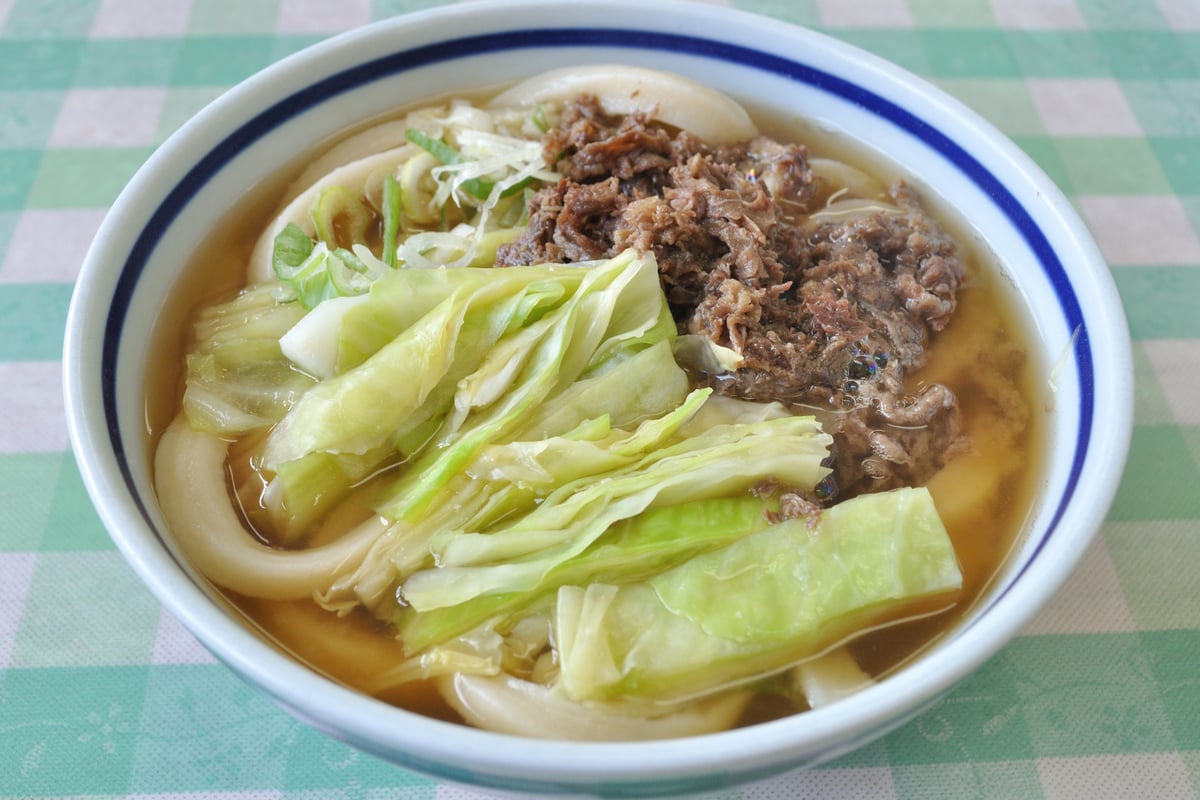
Yoshida Udon is a hard, very firm udon eaten in the Gunnai region centered on Fujiyoshida City. Thick, handmade noodles are eaten in a broth made by combining miso and soy sauce with dashi from niboshi (dried sardines) and other ingredients. The standard toppings are boiled cabbage and horse meat simmered in a sweet and savory sauce. As a condiment, 'suridane' is used, a mixture of red chili pepper with sesame, sansho pepper, and other ingredients. The northern foot of Mt. Fuji is high in elevation and cool, and its volcanic-ash soil made it unsuitable for rice cultivation. For this reason, a flour-based diet (funshoku) using wheat and other grains took root. In the early Showa period, the textile industry flourished, and it is said that men made the udon for lunch in place of the women who were weaving. Their powerful kneading is said to have led to its distinctive chewiness. In 2007 it was selected as one of the '100 Selected Local Dishes of Farming, Mountain and Fishing Villages.' There are about 50 specialty shops in the city, and they are also characterized by storefronts that look like private homes and by opening only at lunchtime.
Origin
Fujiyoshida City lies at the northern foot of Mt. Fuji, on cool land at an elevation of about 700 to 900 m. Its soil, derived from volcanic ash and lava, retains water poorly and has long been unsuitable for rice cultivation. Wheat was therefore grown using methods such as 'mizukake-mugi,' in which water is run between the furrows of the fields in winter to prevent freezing, and buckwheat and other grains were also cultivated. In this way, dishes using wheat flour took root as everyday meals, and udon has been loved as one of them.
History
In the Edo period, Fuji-ko (Mt. Fuji worship groups) flourished, and it is said that udon came to be served in the town of the oshi, who received the pilgrims. From the late Edo period through the Showa period, the main industries of the Gunnai region were sericulture and weaving, which were carried out by women. It is said that so the women's hands would not become rough and damage the silk thread, the men, who handled peddling, made the udon for lunch. Later, households with a good reputation converted their homes into shops, leading to today's homelike shops.
Features
The noodles are thick and so hard that they will not break unless chewed firmly. Because they are handmade and cut irregularly, many of the noodles twist loosely once boiled. In a home-style method, the dough, brought together with salt water, is put in a bag and kneaded by stepping on it, then cut into strips about 5 mm wide. The broth is often a combination of miso and soy sauce, but the blend varies from shop to shop. The practice of topping it with boiled cabbage is said to have been started by Sakurai Udon.
Main Ingredients
Food Culture
Because udon is a long food, it has been regarded as a good-luck food expressing wishes for longevity and lasting happiness. It is served at celebratory occasions such as Obon, New Year, and weddings, and even today udon is said to often be served to close out gatherings. At ceremonial occasions such as weddings and funerals, a common style is to dip noodles served on a large platter into a warm broth.
How It Differs from Home Cooking
At home, as hospitality for weddings, funerals, and other ceremonial occasions, the common style is for each person to eat noodles from a large platter with a dipping broth. Shops offer not only warm kake udon but also cold 'hiyashi' and 'tsuke,' in which cold noodles are dipped in a warm broth, and niku udon topped with horse meat is the standard. Many shops are open only at lunchtime.
Famous Shops
桜井うどん
山梨県富士吉田市下吉田5-1-33
A shop regarded as the original of Yoshida Udon, said to have started the practice of topping it with boiled cabbage. The menu consists only of warm 'kake' and cold 'tsuke,' and the toppings are cabbage and aburaage. Cabbage udon costs about 500 yen. The shop closes once it sells out.
みうらうどん
山梨県富士吉田市下吉田1-22-5
A popular shop where local customers line up on weekends. Its handmade noodles are very firm and are enjoyed in a light broth that combines soy sauce and miso. The recommendation is the traditional niku udon topped with sweet simmered horse meat, which costs about 600 yen. The suridane, with its strong sansho flavor, also goes well with it.
ふじ山食堂。
山梨県富士吉田市上吉田6-9-6
An eatery in a renovated old house near Kitaguchi Hongu Fuji Sengen Shrine. Here you can try 'yumori udon,' said to have been eaten by Fuji-ko climbers to purify themselves, for about 700 yen. The Fuji Tozan Udon (regular size), topped with a Mt. Fuji-shaped kakiage fritter and pork, costs about 800 yen.
FAQ
Q. Why is Yoshida Udon so hard?
A. One reason is said to be that men made the udon in place of the women, who were busy weaving. It is said that because the men kneaded the dough powerfully to make filling udon, a strong chewiness and firmness resulted. There is also a tendency to prefer wheat flour that produces a hard finish.
Q. What is 'suridane'?
A. It is a spicy condiment based on red chili pepper and mixed with sesame, sansho pepper, and other ingredients. The blend varies from shop to shop and gives each shop its own character. You add as much as you like to the udon and enjoy the change in flavor.
Q. Why are so many shops open only at lunchtime?
A. This is said to be a remnant of the days when the textile industry flourished and udon was served as lunch for family members and for people who came to buy fabric. Because households whose udon became popular converted their homes into shops, many shops still look like private homes and are open only at lunchtime.