 Image: Wikimedia Commons
Yamanashi Prefecture
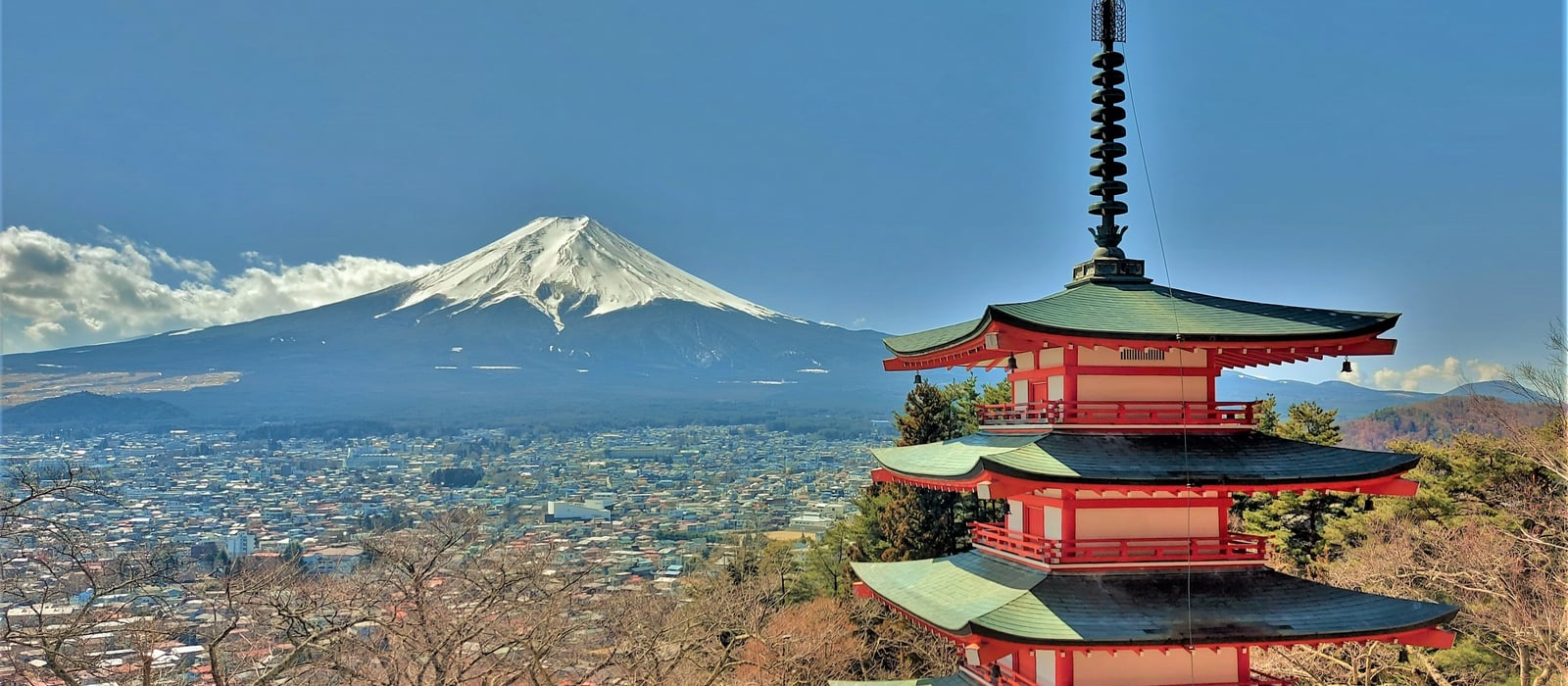
Surrounded by Mt. Fuji and the Southern Alps, Yamanashi Prefecture has nurtured different crafts and food cultures in the Kuninaka region, centered on the Kofu Basin, and the Gunnai region at the northern foot of Mt. Fuji. The prefecture has three Traditional Crafts Designated by the Minister of Economy, Trade and Industry: Koshu Crystal and Gemstone Carving, Koshu Inden (Lacquered Deerskin) and Koshu Hand-Carved Seals. In Kofu, inden, in which patterns are applied to deerskin with urushi lacquer, and crystal polishing have been handed down, and the latter led to the jewelry industry. Rokugo in Ichikawamisato Town is known as the home of hanko seals, and along the Fuji River are the production areas of Nishijima Washi and Amehata inkstones. Fujiyoshida City and Nishikatsura Town in the Gunnai region produce yarn-dyed textiles descended from Kaiki silk. In food, Yamanashi is known for hoto, flat noodles simmered in a miso-based broth, and the firm, chewy Yoshida Udon. Visitors can also enjoy local specialties such as Kofu Torimotsu-ni, Awabi no Nigai (soy-simmered abalone), Shingen Mochi and the Korogaki dried persimmons of Koshu City.
Yamanashi's Traditional Crafts
Koshu Inden (Lacquered Deerskin)
Koshu Inden
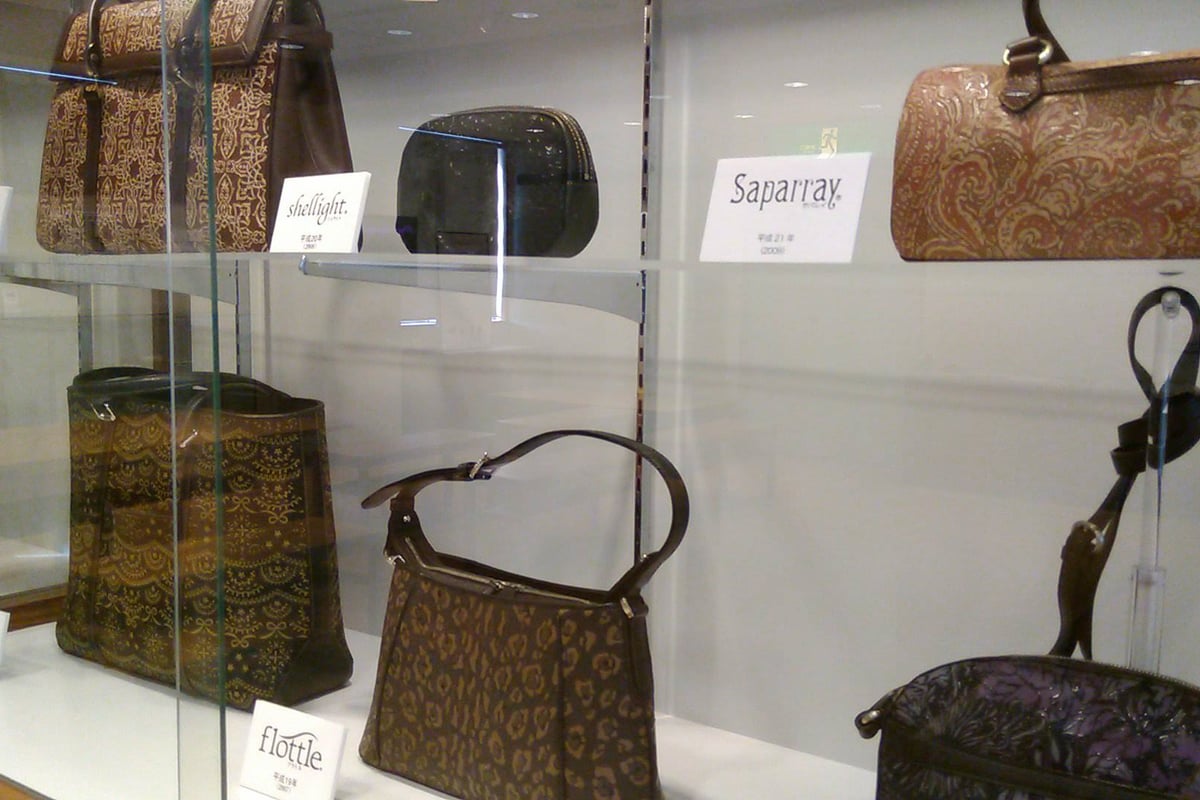
Koshu Inden is a deerskin craft made in Kofu City, Yamanashi Prefecture. Its defining feature is that a stencil is laid over tanned and dyed deerskin and urushi lacquer is rubbed in to apply patterns. The name 'inden' is said to come from decorative leather brought from India in the days of the Nanban trade (trade with the Portuguese and Spanish). Koshu Inden is said to have begun in the late Edo period, when Uehara Yushichi of Kofu devised a technique of applying lacquer to deerskin. In the Edo period inden was made in many places, but Koshu is the only place where its production methods survive today. Besides lacquer application, the techniques include 'fusube,' in which the leather is colored with the smoke of burning straw, and 'sarasa,' in which a different stencil is used for each color to create multicolored patterns. Deerskin is soft, strong and light, and the more it is used, the better it fits the hand. Over time the colors of the lacquer patterns grow clearer and take on a deep luster. In 1987 it became a Traditional Craft Designated by the Minister of Economy, Trade and Industry. On the second floor of Inden-ya's main store in Kofu City is the Inden Museum, which introduces the history and patterns of inden.

Koshu Hand-Carved Seals
Koshu Hand-carved Seals
Koshu Hand-Carved Seals are hand-carved hanko (personal seals) made in Yamanashi Prefecture. Every step, from designing the characters on the seal face through jiwari (character spacing), jiire (writing the characters), rough carving and finishing, is done by hand with traditional tools. The craft began with the discovery of large, high-quality crystal veins in the Mitake mountains. Craftsmen who worked crystal and tenkoku (seal engraving) artists emerged, and their skills were passed on to seal making. The main production area, the Rokugo district of Ichikawamisato Town, is called 'Japan's No. 1 Hanko Village,' and businesses related to seals, from carving and wholesale to the manufacture of seal cases, are concentrated there. Besides crystal, seal materials include boxwood and water buffalo horn. Hand-carved crystal seals are hardly made anywhere outside Yamanashi Prefecture. They were designated a Yamanashi Prefecture Designated Local Traditional Craft in 1994 and a Traditional Craft Designated by the Minister of Economy, Trade and Industry in 2000. At the Seal Museum in Rokugo, visitors can learn about the history of seals and try tenkoku.
Koshu Crystal and Gemstone Carving
Koshu Crystal and Gemstone Carving
Koshu Crystal and Gemstone Carving is a craft in which natural stones such as rock crystal, agate and jade are carved and painstakingly polished. Its production area is Kofu City and its surroundings, and items ranging from incense burners, Buddhist statues and ornamental figures of dragons and hawks to accessories such as necklaces and rings are made. It is said to have originated about 1,100 years ago, when raw crystal was found on Mt. Kinpu, deep in the interior beyond Mitake Shosenkyo Gorge. In the Tenpo era of the Edo period, craftsmen were invited from Kyoto, bringing a method of polishing crystal by scattering kongosha (a hard abrasive sand) on an iron plate. Crystal is very hard, and carving and polishing it takes a long time. This polishing technique spread to the processing of gemstones and laid the foundation for Yamanashi to become one of Japan's leading jewelry production areas. In 1976 it was designated a Traditional Craft Designated by the Minister of Economy, Trade and Industry. At the Yamanashi Jewelry Museum in Kofu City, visitors can learn about the history of Yamanashi jewelry, which began with crystal.
Koshu Amehata Inkstone
Koshu Amehata Inkstone
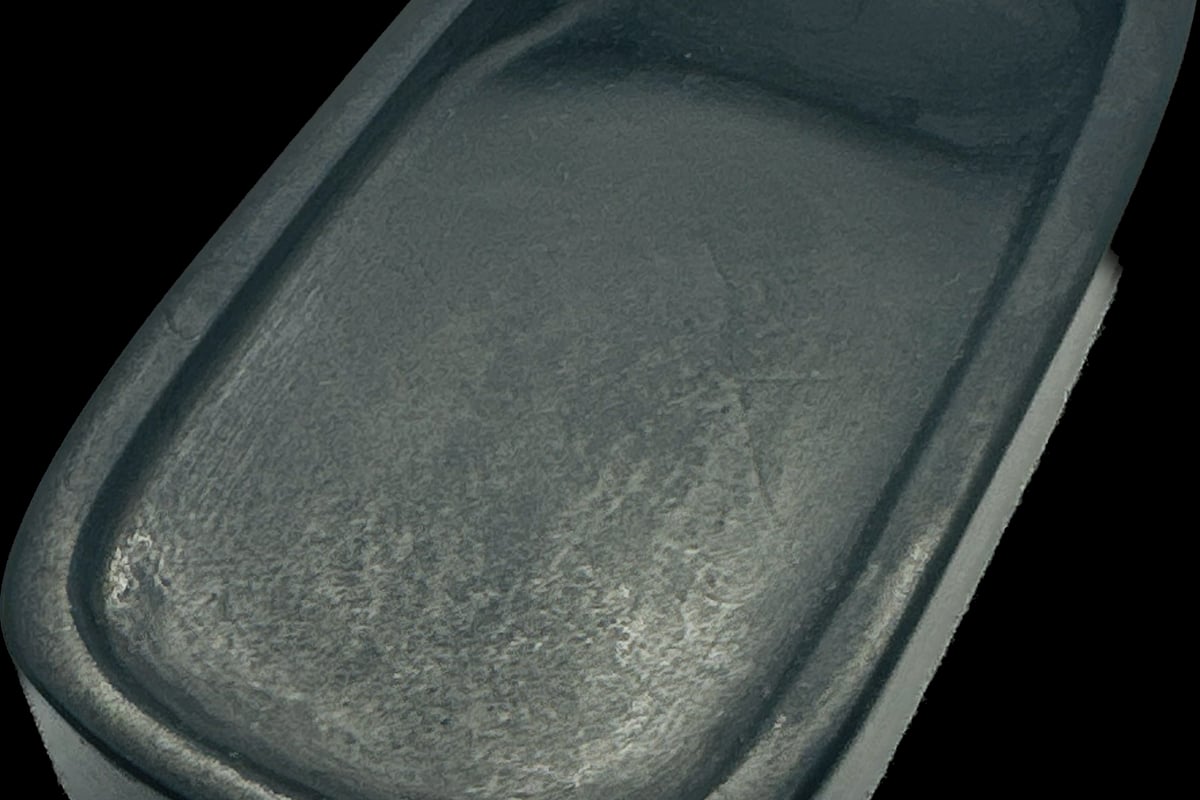
Koshu Amehata Inkstones are inkstones carved from 'Amehata Shinseki' (true Amehata stone), quarried in the Amehata district of Hayakawa Town, Yamanashi Prefecture. The stone is a black, dense slate (a rock formed from hardened mud that splits easily into thin layers) with no uneven patches. The fine, uniform particles on its surface, called 'hobo,' grind ink just right, and because it absorbs little water, it holds water well. It has long been regarded as a fine stone that surpasses even Chinese inkstones. The craft is said to have begun in Genroku 3 (1690), when Amemiya Magoemon, while traveling to worship at Mt. Minobu, picked up a black stone on the bank of the Hayakawa River and made it into an inkstone. Locally, an even older legend connected with Saint Nichiro, a disciple of Nichiren, has also been handed down. Today the production areas are Hayakawa Town and Fujikawa Town, and in Kajikazawa, Fujikawa Town, there are inkstone workshops that have continued for generations. In 1994 it was designated a Yamanashi Prefecture Designated Local Traditional Craft. At 'Amehata Suzuri no Sato Kenshoan' in Hayakawa Town, visitors can view renowned inkstones and try inkstone making.
Koshu Oishi Tsumugi (Pongee Silk)
Koshu Oishi Tsumugi
Koshu Oishi Tsumugi is a hand-woven silk fabric that has long been woven in the Oishi district of Fujikawaguchiko Town, Yamanashi Prefecture, and its official name in the prefectural designation is 'Koshu Oishi Tsumugi Orimono.' In this area on the northern shore of Lake Kawaguchi, everything from sericulture to thread making and weaving has been done by hand in one continuous process. The warp uses thread from honmayu (single cocoons), each spun by one silkworm, and the weft uses thread from tamamayu (double cocoons), spun jointly by two silkworms. The thread is drawn out of the cocoons by hand with a tool called a zaguri. The fabric is characterized by a texture that is strong, light and soft, with the smoothness unique to silk. For textiles of the Gunnai region, there is a record of silk being presented to the imperial court in 915. In the late Edo period, the fabric was sold widely by members of the Fuji-ko (Mt. Fuji worship groups) and by peddlers. In 1994 it was designated a Yamanashi Prefecture Designated Local Traditional Craft. At the Oishi Tsumugi Traditional Craft Museum, visitors can watch weaving and try hand weaving.
Gunnai Textiles (Kaiki Silk)
Gunnai Textiles (Kaiki Silk)
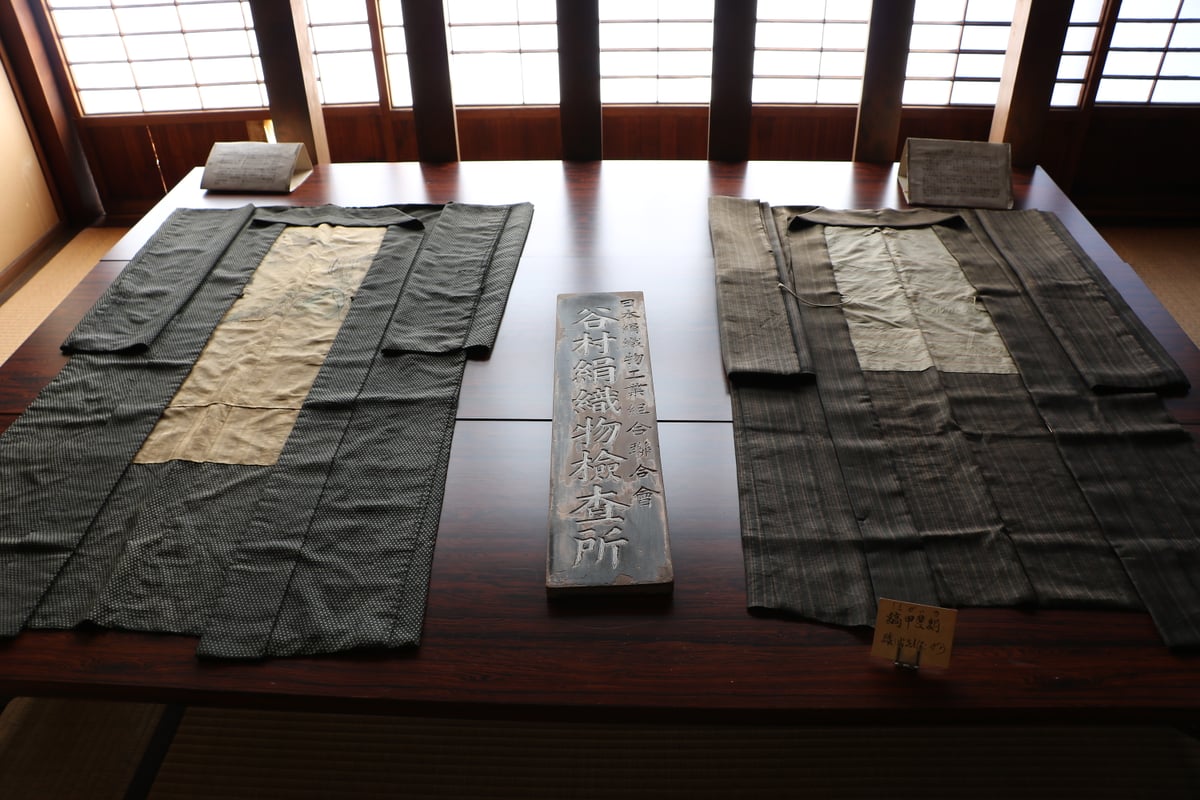
Gunnai Textiles are yarn-dyed (sakizome) fabrics that have been woven in the Gunnai region of eastern Yamanashi Prefecture, centered on Fujiyoshida City and Nishikatsura Town at the foot of Mt. Fuji. The Engishiki, a Heian-period collection of laws and regulations, lists Kai Province as a province that paid taxes in cloth, and the area is regarded as a textile-producing region with a history of more than 1,000 years. In the Edo period, silk fabrics such as Gunnai-jima (Gunnai stripes) were so well known that they appeared in the ukiyo-zoshi novels of Ihara Saikaku. Kaiki silk, which traces its roots to a fabric called 'kaiki' (海気) brought to Japan through the Nanban trade, was woven extensively from the Edo period to the early Showa period as a luxury silk used for the linings of haori jackets. Kaiki silk itself disappeared in the 1940s, but its techniques of 'yarn dyeing, fine-count yarns and high density' are still carried on today. The area now produces umbrella fabrics, necktie fabrics, apparel fabrics and interior textiles, and its fabrics are used for 40 percent of Japan's domestically made necktie fabric. Fujiyoshida, where many weaving mills (hataya) are gathered, is also called Hataori-machi (Weaving Town).
Koshu Warrior Banners and Carp Streamers
Koshu Musha Nobori and Koinobori
Koshu Warrior Banners and Carp Streamers are banners for Tango no Sekku (the Boys' Festival) that are hand-dyed in Minami-Alps City, Yamanashi Prefecture. They are said to have originated when the hata-sashimono (battle flags) and fukinagashi (streamers) that fluttered over battlefields in the Sengoku (Warring States) period came to be raised as banners celebrating the festival in the latter half of the Edo period. In Yamanashi, musha nobori (warrior banners) have been raised in the hope that children will grow up strong like Lord Takeda Shingen. Carrying on their production is Inoue Dyeworks in Furuichiba, Minami-Alps City, which began with indigo dyeing at the end of the Edo period. Using hon-zome (authentic hand dyeing), in which outlines are drawn on cotton cloth with paste and pigments and dyes are layered on, the workshop dyes brave warriors and carp in vivid colors. Everything is done by hand, and it is said to take more than two weeks to complete a banner. In 1994 (Heisei 6), they were designated a Yamanashi Prefecture Designated Local Traditional Craft. In recent years, small carp streamers that can be displayed indoors have also been made.
Nishijima Washi (Japanese Paper)
Nishijima Washi
Nishijima Washi is handmade paper made in the Nishijima district of Minobu Town, Minamikoma District, Yamanashi Prefecture. According to tradition, it began in 1571 (Genki 2), when Mochizuki Seibei, who had studied papermaking at Shuzenji in Izu on the orders of Takeda Shingen, brought the method back to Nishijima, Seibei's hometown. Shingen was pleased with the smooth, glossy paper made mainly from mitsumata (Oriental paperbush), and gave it the name '西未.' In the Edo period, paper was made widely along the Fuji River basin, and papermakers continued to make paper by hand after the Meiji era. After World War II, when calligraphy and painting paper could no longer be obtained from China, Nishijima became the first in Japan to develop handmade gasenshi (calligraphy and painting paper) blended with recycled paper and rice straw. It excels in ink color, ink bleeding and the feel of the brush, and is favored by calligraphers. In 1994 (Heisei 6), it was designated a Yamanashi Prefecture Designated Local Traditional Craft. In 2025 the roadside station (michi-no-eki) 'Nishijima Washi no Sato Kamisuki Park' opened, where visitors can also try papermaking.
Ichikawa Daimon Handmade Washi
Ichikawa Daimon Washi
Ichikawa Daimon Handmade Washi is washi that has long been made in the Ichikawa Daimon district of Ichikawamisato Town, Nishiyatsushiro District, Yamanashi Prefecture. Records of paper from Kai date back to the Nara period, and the Shosoin documents of 773 (Hoki 4) list Kai as a paper-producing area. In Ichikawa, papermaking is said to have begun when Jinzaemon, a paper craftsman who served Minamoto no Yoshikiyo, regarded as the founder of the Kai Genji clan, taught papermaking techniques to the local people. In the time of the Takeda clan, 'Hadayoshi-gami' paper, likened to being 'as beautiful as the skin of a beautiful woman,' was made here, and the papermakers were generously protected as the 'Hadayoshi-shu.' In the Edo period, the paper was presented to the shogunate as official paper. Later the area became a major production center for shoji paper, boasting the largest output in Japan. The raw materials are kozo (paper mulberry) and mitsumata (Oriental paperbush), and the paper is also well suited to art paper and gasenshi (calligraphy and painting paper). In 1995 (Heisei 7), it was designated a Yamanashi Prefecture Designated Local Traditional Craft.
Fuji Katsuyama Suzutake Bamboo Craft
Fuji Katsuyama Suzutake Craft
Fuji Katsuyama Suzutake Bamboo Craft is a bamboo craft handed down in the Katsuyama district of Fujikawaguchiko Town, Minamitsuru District, Yamanashi Prefecture. Thin suzutake bamboo that grows wild around the second station of Mt. Fuji is split and woven into everyday tools such as zaru (bamboo colanders) and baskets. Improvements were made over generations in the lives of the villagers from around the beginning of the Edo period, and there is said to be a record of baskets being offered when the main shrine of Fuji Omuro Sengen Shrine was built in 1610 (Keicho 15). The Kai Kokushi, a regional gazetteer of 1814 (Bunka 11), also records that suzutake from the northern foot of Mt. Fuji was used as material for making mi (winnowing baskets) and zaru. Suzutake is supple and fragrant, and the woven products are light, sturdy and drain water well. With careful use they are said to last 30 or 40 years, and they have long been valued as kitchen tools such as rice-washing colanders. In 1998 (Heisei 10), the craft was designated a Yamanashi Prefecture Designated Local Traditional Craft. Today, makers carry on the techniques at the Katsuyama Suzutake Traditional Craft Center.
Yamanashi's Local Food
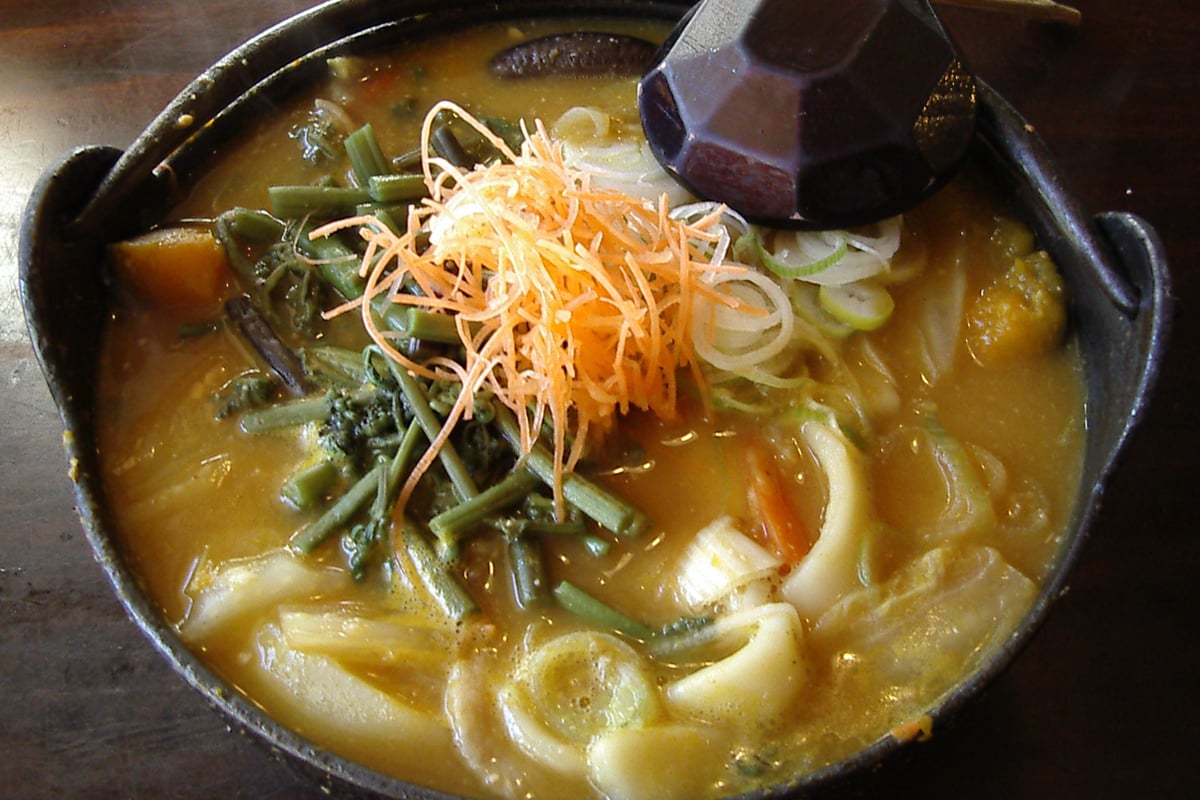
Hoto (Flat Noodles Simmered in Miso)
Hoto
Hoto is a local dish of Yamanashi Prefecture in which fresh noodles, made by kneading wheat flour and cutting it into wide strips, are simmered in a miso-based broth together with kabocha squash and other vegetables. Because the noodles are made without salt, they can go straight into the pot without being boiled first. Since they are simmered with the dusting flour still on them, the broth thickens, stays hot for a long time, and warms the body. It is so well loved that there is even a saying, 'Umai mon da yo, kabocha no hoto' (Kabocha hoto is a tasty thing), and in 2007 it was selected for the Ministry of Agriculture, Forestry and Fisheries (MAFF)'s '100 Selected Local Dishes of Farming, Mountain and Fishing Villages.' About 80 percent of Yamanashi Prefecture is covered by mountain forests, and paddy fields for growing rice were limited. For this reason, a flour-based diet (funshoku), in which wheat and other grains are ground into flour and eaten, took root, and hoto became a staple food in place of rice. In the Kyonan region it is also called 'noshi-ire' or 'noshi-komi.' Today there are many specialty shops in the prefecture, and it is common for them to serve it in individual iron pots.
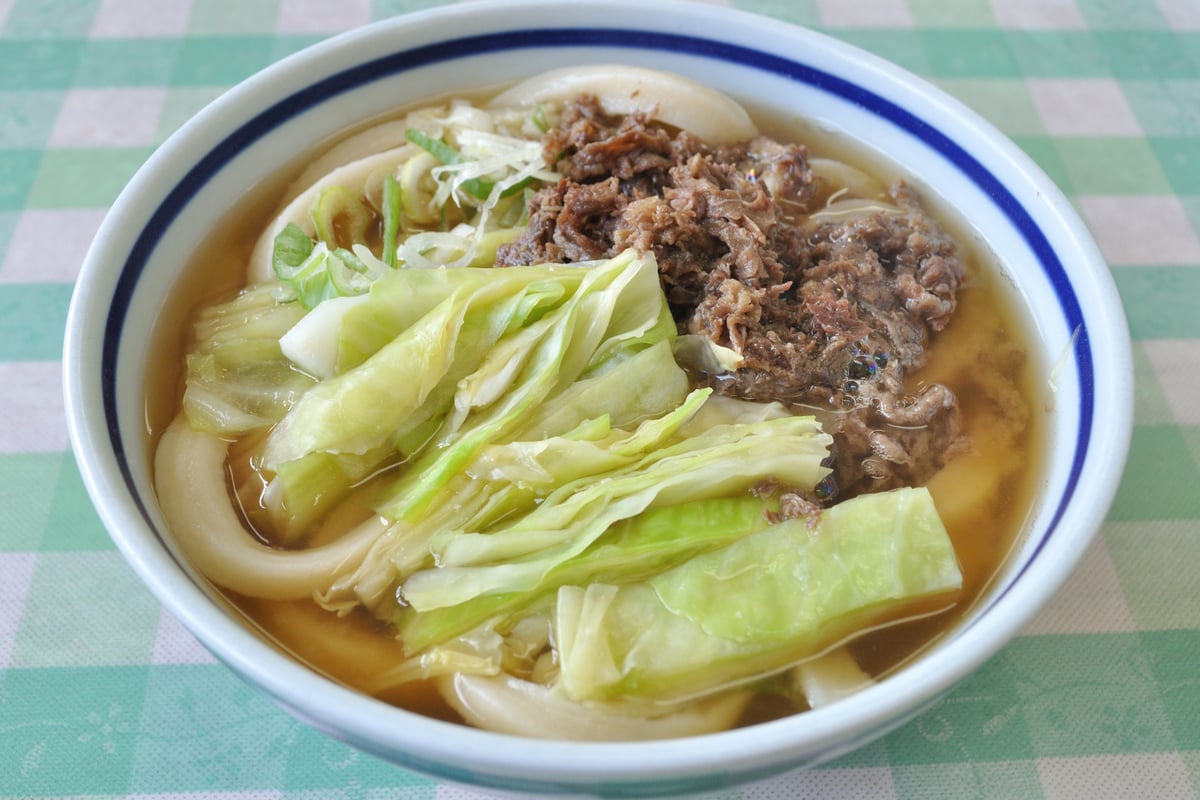
Yoshida Udon
Yoshida Udon
Yoshida Udon is a hard, very firm udon eaten in the Gunnai region centered on Fujiyoshida City. Thick, handmade noodles are eaten in a broth made by combining miso and soy sauce with dashi from niboshi (dried sardines) and other ingredients. The standard toppings are boiled cabbage and horse meat simmered in a sweet and savory sauce. As a condiment, 'suridane' is used, a mixture of red chili pepper with sesame, sansho pepper, and other ingredients. The northern foot of Mt. Fuji is high in elevation and cool, and its volcanic-ash soil made it unsuitable for rice cultivation. For this reason, a flour-based diet (funshoku) using wheat and other grains took root. In the early Showa period, the textile industry flourished, and it is said that men made the udon for lunch in place of the women who were weaving. Their powerful kneading is said to have led to its distinctive chewiness. In 2007 it was selected as one of the '100 Selected Local Dishes of Farming, Mountain and Fishing Villages.' There are about 50 specialty shops in the city, and they are also characterized by storefronts that look like private homes and by opening only at lunchtime.
Mimi (Winnow-Shaped Flour Dumplings)
Mimi
Mimi is a local dish handed down in the Jikkoku district of Fujikawa Town, Yamanashi Prefecture. Wheat flour is kneaded, rolled out thin, and cut into squares about 5 cm on each side. Two corners on one side are pressed together to make a triangle, and the piece is shaped like a 'mi,' a winnowing basket used as a farm tool. These are simmered in niboshi (dried sardine) dashi together with vegetables such as daikon radish, taro, and burdock, and seasoned with miso. The dough is similar to that of Hoto (Flat Noodles Simmered in Miso), but the shape is completely different, and no pre-boiling is needed. The name is said to come from its resemblance to the shape of a mi, and there is also a theory that it is because it resembles an ear (mimi). The mi carries the meaning of 'scooping up good fortune,' and it is also said that 'fukumi' (lucky winnow) changed into 'mimi.' As an auspicious dish, in Jikkoku it is still offered to Toshigami-sama (the deity of the New Year) on the morning of New Year's Day before the family eats it. Mimi-making experiences are also available at a local facility.
Azuki Hoto (Sweet Red Bean Hoto)
Azuki Hoto
Azuki Hoto is a local dish of Yamanashi Prefecture in which hoto noodles are simmered in a soup of azuki red beans sweetened with sugar. In both appearance and taste it is close to oshiruko (sweet red bean soup), and it is also called 'shiruko hoto.' It is sometimes written with a voiced sound as 'azuki boto.' Originally, mochi (rice cake) is considered the proper thing to put in azuki soup. However, in Yamanashi, where paddy fields were few, mochi was extremely precious, so according to tradition, thickly cut hoto noodles were used in place of mochi. Unlike everyday hoto simmered in miso, it has been eaten on days of events and celebrations, such as New Year, Obon, village festivals, and the rice-planting season. The summer festival of Miwa Shrine in Wakamiko, Sutama-cho, Hokuto City, is also called the 'Hoto Festival' because Azuki Hoto is served there. Today it is handed down in places such as Hokuto City, Kofu City, and Kai City, and it can also be enjoyed at hoto specialty restaurants.
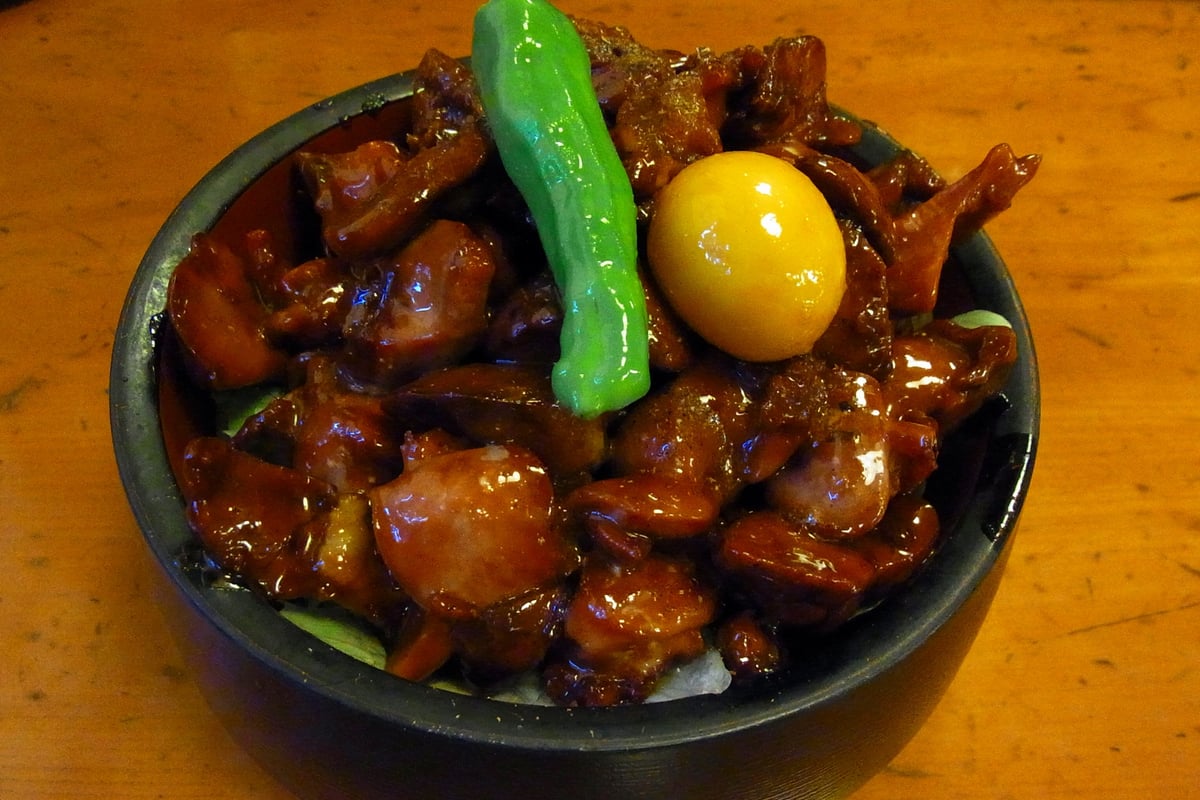
Kofu Torimotsu-ni (Glazed Chicken Giblets)
Kofu Torimotsu-ni
Kofu Torimotsu-ni is a dish of Kofu City in which chicken gizzards, hearts (hatsu), liver, and kinkan (unlaid eggs) are glazed and simmered in a sweet and savory sauce of sugar and soy sauce. Although it is called 'motsu-ni' (simmered giblets), it is not a soupy stew. A small amount of sauce is reduced over high heat for a short time, and the giblets are finished so that they are coated in the syrupy sauce. It is said to have been devised around 1950 (Showa 25), shortly after the war, at Okuto, a soba restaurant in Kofu City. It began as an attempt to make use of chicken giblets that were being thrown away. It then spread from the soba restaurant to other eateries and became part of Kofu's food culture alongside Hoto (Flat Noodles Simmered in Miso) and Awabi no Nigai (Soy-Simmered Abalone). In 2008, a volunteer group of Kofu City employees formed 'Minasama no En wo Torimotsu-tai' (literally, the squad that brings everyone together, a pun on torimotsu) and began promoting it nationwide. At the '5th B-1 Grand Prix in Atsugi' in 2010, it won the top prize, the Gold Grand Prix, in its first appearance.
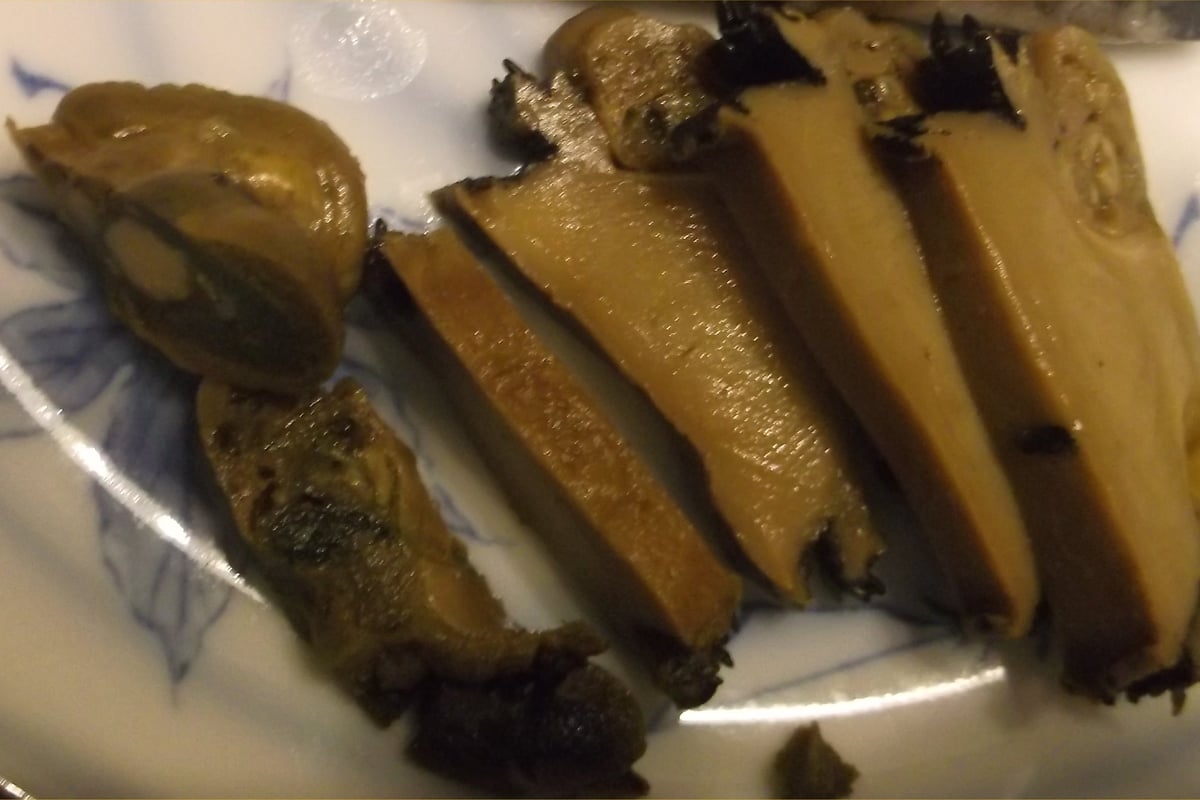
Awabi no Nigai (Soy-Simmered Abalone)
Awabi no Nigai (Simmered Abalone)
Awabi no Nigai is a specialty of Yamanashi Prefecture in which abalone is simmered in soy sauce and then steeped in the simmering liquid to absorb its flavor. It is known as a processed seafood product born in landlocked Koshu (Kai Province). According to tradition, it began in the Edo period when abalone landed at Numazu on Suruga Bay was packed into barrels with soy sauce, loaded onto horseback, and carried over mountain passes. During the long journey the soy sauce soaked in just right, and by the time it reached Kai it had reached the perfect flavor. It was praised by the samurai serving at Kofu Castle and eventually became known in Edo as well. There is also a story that Takeda Shingen used it as field rations, but this is only one of several theories. Today, some long-established makers use domestic black abalone and finish it with the liver still attached. The classic way to enjoy it is sliced thin like sashimi, and it is prized for celebrations such as New Year and weddings and as a gift.
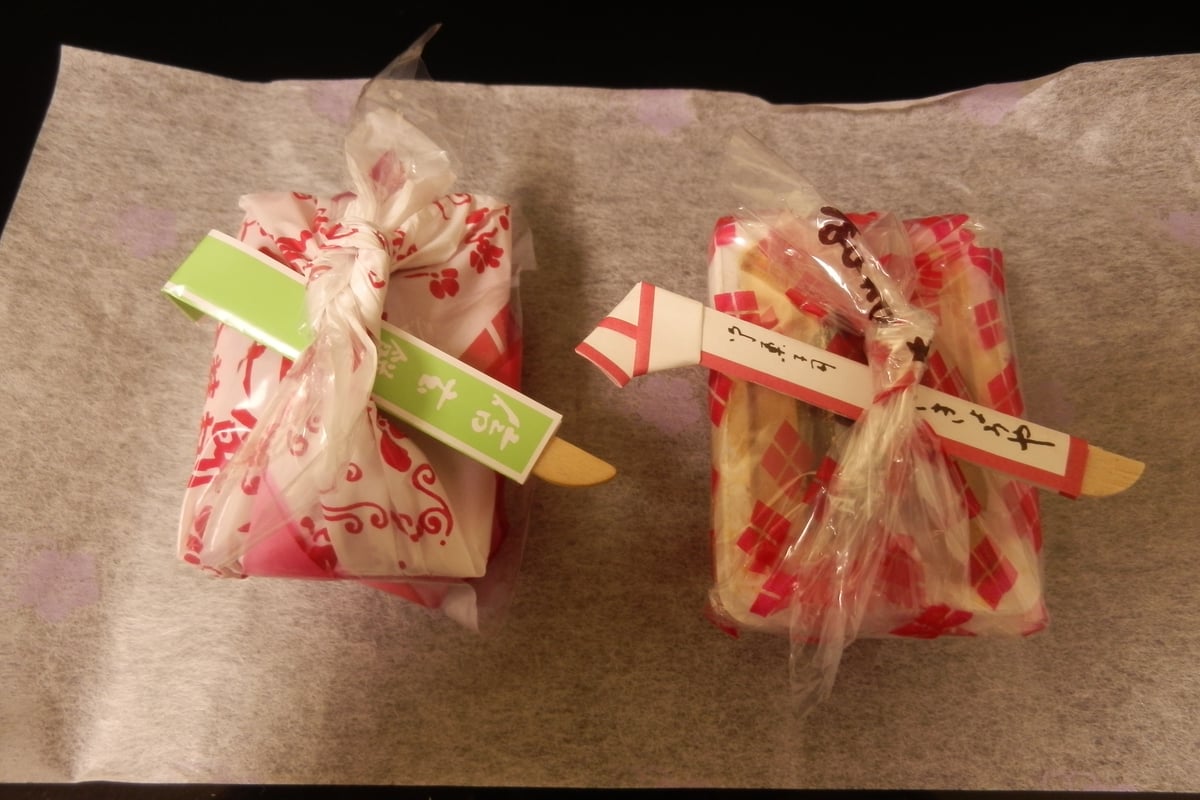
Shingen Mochi
Shingen Mochi
Shingen Mochi is a signature confection of Yamanashi Prefecture: soft mochi coated in kinako (roasted soybean flour) and eaten with kuromitsu (brown sugar syrup) poured over it. Bite-sized pieces of mochi come in a small container with a generous amount of fragrant kinako. In 1968 (Showa 43), Kikyouya of Fuefuki City launched 'Kikyou Shingen Mochi,' and it became known nationwide as a classic Yamanashi souvenir. Kinseiken, a long-established shop in Hokuto City, also makes 'Shingen Mochi,' and both companies' products are loved in their own right. The name comes from Takeda Shingen, the Sengoku-period feudal lord of Kai. It is said to derive either from the mochi Shingen used as emergency rations when going into battle, or to have been inspired by abekawa mochi, which is eaten in Yamanashi during Obon. Each Kikyou Shingen Mochi is wrapped in a vinyl furoshiki (wrapping cloth), and the knots are tied by hand by craftspeople. At the factory in Fuefuki City, visitors can tour the production process and enjoy all-you-can-pack sweets.
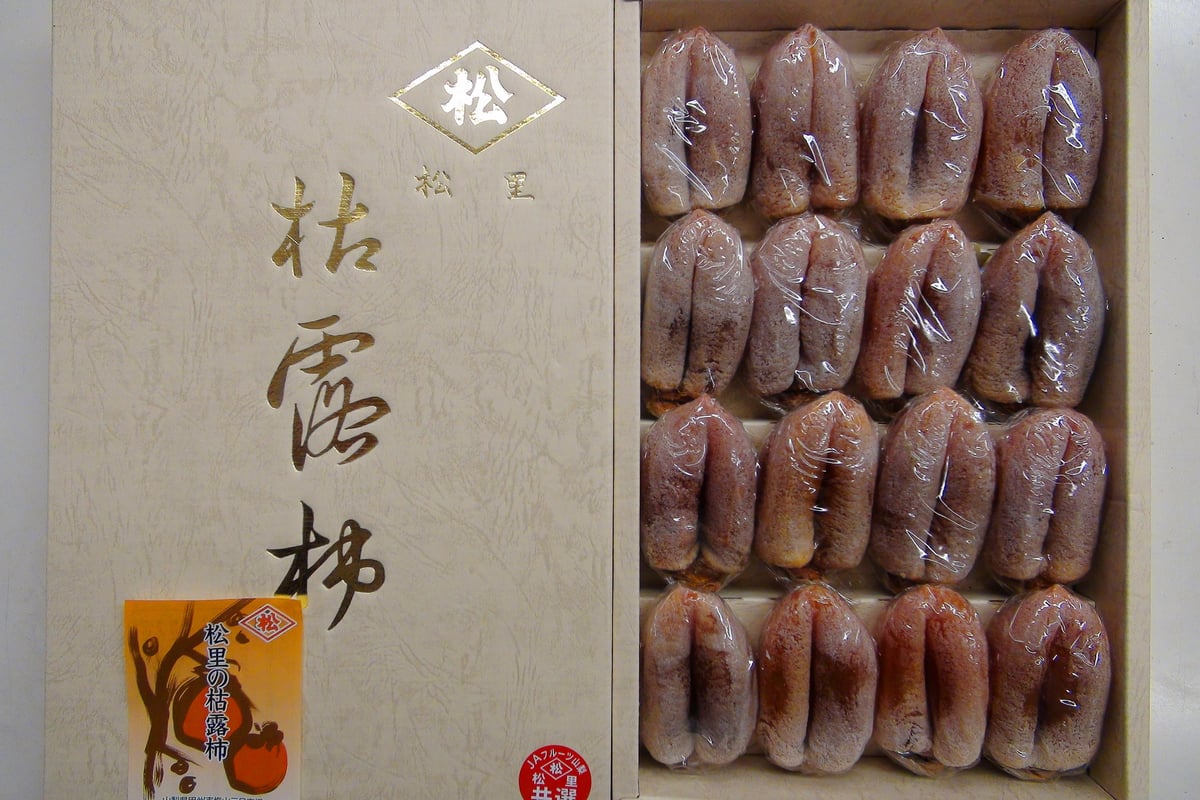
Korogaki (Koshu Dried Persimmons)
Koshu Korogaki
Korogaki are dried persimmons handed down in Koshu City and other parts of Yamanashi Prefecture, made by peeling large astringent persimmons and drying them in the sun. They mainly use 'Koshu Hyakume-gaki' persimmons grown in Koshu City, which are dried slowly until a white powder blooms on the surface. The name is said to come from rolling (korokoro) the fruit to change its orientation so that it receives sunlight evenly while drying. It is also said to have begun when Takeda Shingen encouraged their production as field rations, and in the Edo period they were used as a Koshu specialty presented to the shogunate. The Matsusato district of Enzan in Koshu City is known as a renowned production area, and from early November to early December, the eaves of houses are decorated with orange kaki-sudare (curtains of hanging persimmons). With their deep sweetness and thick, meaty texture, they are a winter delicacy of Yamanashi.
Minobu Yuba (Tofu Skin)
Minobu Yuba
Minobu Yuba is yuba (tofu skin) handed down in Minobu Town, Yamanashi Prefecture, which flourished as the temple town of Minobusan Kuonji Temple, the head temple of the Nichiren sect. It is the thin film that forms on the surface of heated soy milk, lifted off; there is nama yuba (fresh yuba), eaten just as it is lifted, and kanso yuba (dried yuba). Minobu Town is known as a yuba-producing area alongside Kyoto and Nikko. It is said to have begun in the Kamakura period, around the time the priest Nichiren entered Mt. Minobu, and according to tradition, his disciples made it as a source of nourishment out of concern for their master's health. Yuba, which contains high-quality plant protein and fat, has been handed down together with Kuonji Temple as an important ingredient of shojin ryori (Buddhist vegetarian cuisine), which uses no meat or fish. A popular dish is yuba sashimi, in which nama yuba is cut into bite-sized pieces and eaten with wasabi and soy sauce. Restaurants serving yuba dishes, shukubo (temple lodging), and yuba makers with direct sales shops are scattered around the town.
Shoyu no Mi (Fermented Soybean Relish)
Shoyu no Mi
Shoyu no Mi is a traditional preserved food of Yamanashi Prefecture made by fermenting soybeans with barley koji. According to tradition, households in Yamanashi once made their own soy sauce from soybeans, and the soybeans left over in the process were fermented and called 'shoyu no mi.' It was once a traditional food of the Kyochu area of the Kofu Basin, but today it is handed down only in the Ashiyasu area of Minami-Alps City. Ashiyasu is a cold, high-altitude area at the foot of the Southern Alps with much sloping land. Because the land is unsuited to growing vegetables and rice, soybeans, which are hardy against the cold, have long been widely cultivated. Boiled soybeans are mixed with barley koji, left to grow mold in wooden boxes, and dried; they are then rehydrated with water and sake and seasoned with salt to finish. The traditional way to enjoy it is with green onions or shirasu-boshi (dried baby sardines) added, served on barley rice. As a valuable source of protein, it has supported winter meals in the mountains.
Model Course
A Course Around Kofu Station: Inden, Crystal, Torimotsu-ni and Nigai
Walk from the south exit of JR Kofu Station to the Yamanashi Jewelry Museum (山梨ジュエリーミュージアム) to see crystal accessories and works by craftsmen (free admission, closed Tuesdays). For lunch, enjoy Kofu Torimotsu-ni from its shop of origin with handmade soba at Okuto Honten Kofu Ekimae (奥藤本店 甲府駅前店). In the afternoon, head to Inden-ya Honten (印傳屋本店) in Chuo, Kofu City, and learn about the history and patterns of inden at the Inden Museum (印傳博物館) on the second floor. At Minayo (みな与) nearby, you can choose Awabi no Nigai as a souvenir.
A Course Through Fujiyoshida and Kawaguchiko: Textiles, Suzutake Craft and Local Noodles
At the Hataori-machi Information Center (ハタオリマチ案内所) in Fujisan Station on the Fujikyuko Line, look at Gunnai textiles and their history, and gather information for touring the weaving mills. For lunch, enjoy Yoshida Udon topped with horse meat and cabbage at Miura Udon (みうらうどん). In the afternoon, watch weaving demonstrations at the Oishi Tsumugi Traditional Craft Museum (大石紬伝統工芸館) on the shore of Lake Kawaguchi, where you can also try hand weaving (reservation required). At the nearby Fuji Oishi Hana Terrace (富士大石ハナテラス) is Medetaya Kawaguchiko (めでたや 河口湖店), which sells small goods made of Ichikawa washi. For dinner, have hoto at Hoto Fudo Kawaguchiko Kita Honten (ほうとう不動 河口湖北本店).
A Course Along the Fuji River in the Kyonan Region: Hanko, Washi, Inkstones and Minobu Yuba
Visit the Seal Museum (印章資料館) in the local industry hall of Ichikawamisato Town, then carve your name into stone at the tenkoku (seal engraving) workshop of the Rokugo Seal Industry Association (六郷印章業連合組合) (Wednesday to Friday, reservation required). Head south to Minobu Town and try papermaking at the roadside station (michi-no-eki) Nishijima Washi no Sato Kamisuki Park (道の駅 にしじま和紙の里 かみすきパーク). For lunch, enjoy a yuba set meal at Minobu Yuba no Sato (みのぶ ゆばの里). If you have a car, go on to Amehata Suzuri no Sato Kenshoan (雨畑硯の里 硯匠庵) in Hayakawa Town to see fine inkstones on display and try inkstone making (reservation required).
A Course in the Eastern Kofu Basin: Shingen Mochi Factory Tour and Hanging Korogaki
At the Kikyou Shingen Mochi Factory Theme Park (桔梗信玄餅工場テーマパーク) in Fuefuki City, watch through glass as craftsmen wrap Shingen Mochi in furoshiki cloths (free). The all-you-can-pack sweets sale from 9 a.m. is also popular. Next, head to the Former Takano Family Residence (Kanzo Yashiki) (旧高野家住宅(甘草屋敷)) in front of JR Enzan Station. In autumn, korogaki persimmons hang from the eaves, and you can see the curtain of drying persimmons up close. On the way back, you can also pick up processed products such as korogaki at the JA Fruits Yamanashi Fruit Direct Sales Store (JAフルーツ山梨フルーツ直売所).
Events
Shingen-ko Festival (信玄公祭り)
Every April (April 3-5 in 2026; the Koshu Army Departure on April 4) / Around Maizuru Castle Park, Kofu City
View details →Hataori-machi Festival (ハタオリマチフェスティバル)
Usually mid-October (October 18 and 19 in 2025) / Shimoyoshida area, Fujiyoshida City (Komuro Sengen Shrine and other venues)
View details →