Image: Wikimedia Commons
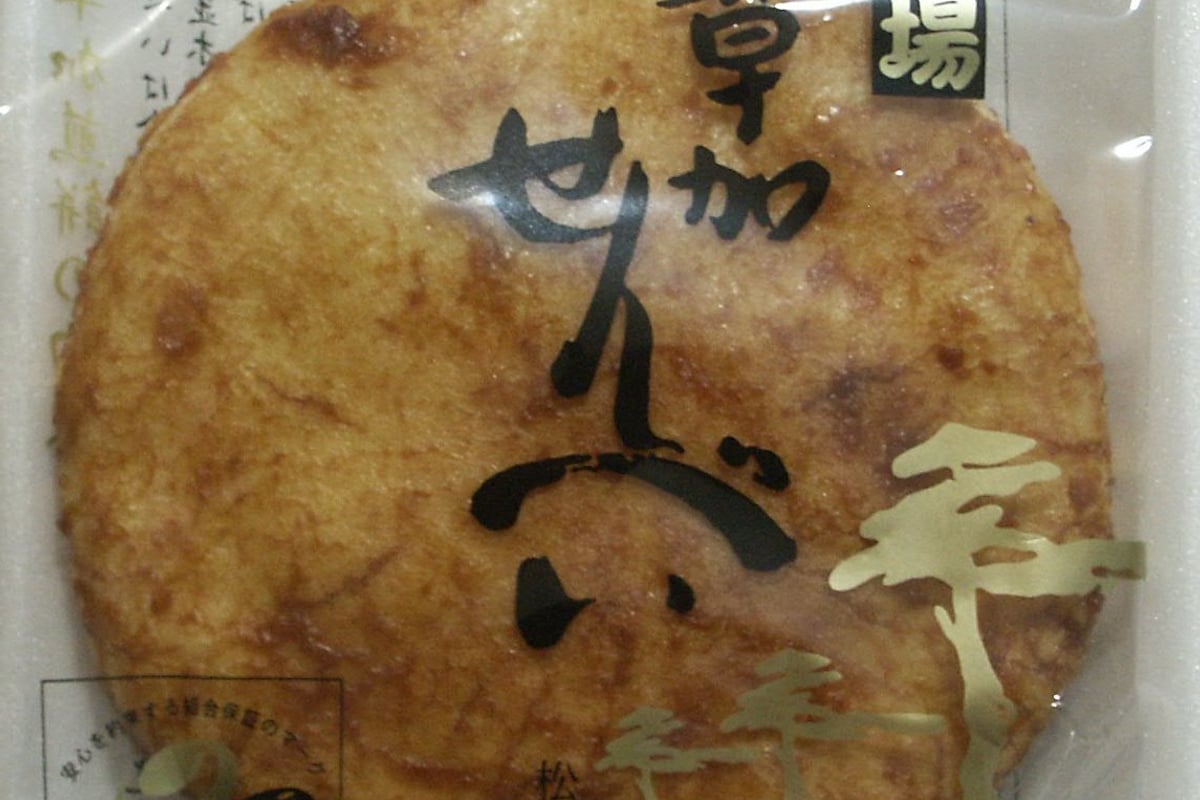
Soka senbei is a hard-baked soy sauce rice cracker that originated in Soka City, Saitama Prefecture. Rice steamed and pounded into dough is sun-dried, then slowly grilled over charcoal before being brushed with soy sauce. Soka has long been known as a rice-growing region, and as a post town on the Nikko Kaido highway lined with teahouses for travelers, a trade grew up selling grilled rice cakes made from dumpling-shaped dried rice, a preserved food. When soy sauce production flourished in the late Edo period, the current style of brushing soy sauce onto grilled dough took hold, and from the Meiji era onward specialist cracker shops multiplied, spreading Soka senbei's fame. It is known for its crisp bite and fragrant soy sauce aroma, and today many shops in the city still make and sell it, making it one of Saitama's best-loved souvenir sweets.
Origin
Soka is a rice-growing region, and it is thought that the cracker originated as a preserved food made by farmers who dried surplus rice, shaped into dumplings, so it would not go to waste. As Soka developed into a post town on the Nikko Kaido highway lined with teahouses, making senbei to sell to travelers is believed to have spread as a trade. A well-known origin legend tells of a woman named Osen who, on a samurai's advice, turned her dumplings into grilled rice cakes, but this story is considered to have been created during the Showa era.
History
Originally the dough was kneaded with salt to make 'shio senbei' (salted crackers), but once soy sauce became widespread in the late Edo period, it became customary to brush soy sauce onto the grilled dough. In the latter half of the Meiji era, shops specializing in senbei increased, and Soka developed into a town of crackers, with long-established shops claiming to be the originator gathering along the Nikko Kaido; today the city has around 40 manufacturers and retailers. In 2006, 94 products submitted by the Soka Senbei Promotion Council were certified as 'Honmono no Honba' (Authentic Local Products) by the Ministry of Agriculture, Forestry and Fisheries. The industry has also signed an agreement with Soka City to establish the brand, cementing its status as a production area.
Features
Because the dough, made from steamed and pounded non-glutinous rice, is sun-dried before being grilled, the cracker has a firm, crisp bite and the fragrant aroma of rice. The classic shape is a round about 9 cm in diameter, brushed with soy sauce by hand after grilling. There are many flavor variations, including coarse sugar, chili pepper, and nori-wrapped versions, and each shop has its own character in how it grills the dough and applies the soy sauce. As a simple confection that makes the most of rice and soy sauce themselves, it has become one of Saitama's representative souvenir products.
Main Ingredients
Food Culture
Soka senbei grew out of the teahouse culture of a post town on the Nikko Kaido highway, developing as a way to welcome travelers and as a souvenir for them to take home. It is also tied to the rice-consuming culture of Soka, a rice-growing region, and remains popular at home as a treat for guests.
Famous Shops
A long-established shop said to have been founded in 1865. Its boxed assortments start at around 6,480 yen, and it is also known for the sumo-wrestling-themed senbei sold at Ryogoku Kokugikan.
A long-established shop said to have been founded when its first-generation owner, Genbei, moved from Niigata to Soka in 1870 and opened a teahouse.
| An assortment centered on soy sauce flavor, with each maker offering its own variations such as coarse sugar, chili pepper, and nori-wrapped crackers, is a standard souvenir choice. |