Image: Wikimedia Commons
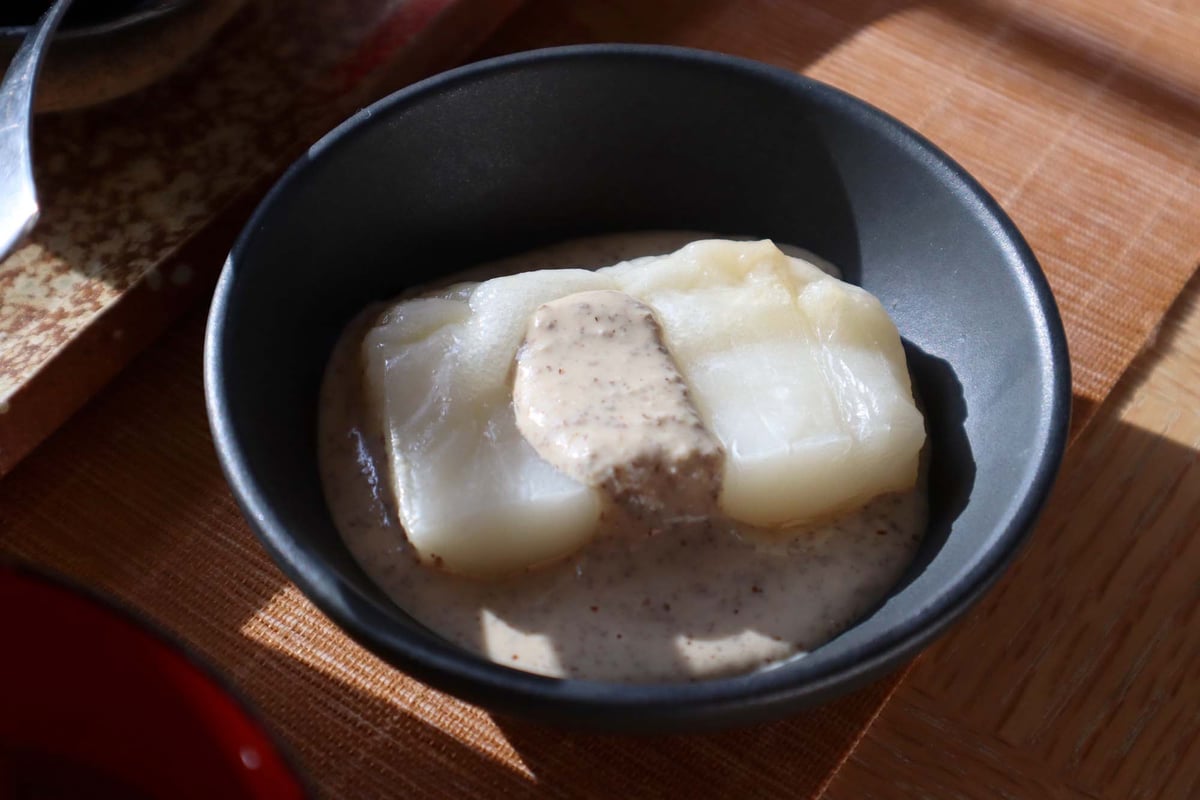
Mochi cuisine from Ichinoseki and Hiraizumi is a food culture handed down in Ichinoseki City and Hiraizumi Town, Iwate Prefecture, encompassing a reported 300-plus varieties of mochi dishes. The custom of pounding mochi persists not only at New Year but also for weddings, funerals, and other ceremonial occasions, at seasonal farming milestones such as rice planting and harvest, and at life's rites of passage — a practice so deeply woven into daily life that the area is known as 'the village of mochi.' Alongside sweet red-bean mochi ('anko-mochi'), the region is known for a rich variety of distinctive mochi that draw on the bounty of mountain and river, including 'jyune-mochi' made with ground perilla seeds, 'fusube-mochi' dressed with grated daikon and soy sauce, and 'numa-ebi-mochi' made with freshwater shrimp. On formal occasions, a unique dining style called the 'mochi honzen' is followed, in which guests taste a sequence of flavors in an order set by a facilitator; this custom is said to derive from the practices of the Date domain, which governed the Ichinoseki region during the Edo period.
Origin
During the Edo period, the Date domain, which governed the Ichinoseki region, had a custom of pounding mochi on the 1st and 15th of every month to offer to gods and Buddhist deities, and this practice is said to have spread to the lives of ordinary people as well. In land not well suited to rice farming, people devised 'shiina-mochi,' made by mixing in broken rice grains and other cereals, and this ingenuity is considered one of the reasons the region developed such a diverse range of mochi dishes, forming the foundation of Ichinoseki and Hiraizumi's distinctive food culture.
History
The custom of eating mochi on 'hare' (special, ceremonial) days, which continued from the domain era, took root in Ichinoseki and Hiraizumi as festive food for New Year, weddings, funerals, and farming milestones such as rice planting and harvest, and has been passed down through generations with each household adding its own flavors and ingredients. More than 300 varieties of mochi dishes are said to survive today, and community-wide efforts continue to carry forward this mochi food culture.
Features
In addition to anko-mochi, the region is characterized by its abundance of distinctive mochi that make use of mountain and river ingredients, such as 'jyune-mochi' coated with ground perilla seeds, 'fusube-mochi' dressed with grated daikon and soy sauce, and 'numa-ebi-mochi' made with freshwater shrimp. At the formal 'mochi honzen,' a distinctive custom is followed of tasting anko-mochi, ryori-mochi (savory or distinctive mochi), and zoni-mochi (mochi in soup), in that order.
Main Ingredients
Food Culture
The custom of pounding mochi extends beyond New Year and celebratory occasions to farming milestones such as rice planting and harvest, reflecting a way of life in which the seasons and life's milestones are marked through mochi. Locally, organizations such as the 'Ichinoseki Mochi Food Promotion Council' work to preserve and promote this mochi food culture.
Famous Shops
蔵元レストラン せきのいち(世嬉の一酒造)
岩手県一関市田村町5-42
A restaurant run by a sake brewery founded in 1918. Offers the 'Ichinoseki Mochi Zen' course featuring nine kinds of mochi sauces along with zoni soup.
View details →三彩館ふじせい
岩手県一関市上大槻街3-53
Known for its 'original bite-sized mochi course' (with zoni soup) priced at 1,750 yen.
View details →FAQ
Q. What kind of etiquette is followed at the 'mochi honzen'?
A. It is a formal dining custom handed down in the Ichinoseki and Hiraizumi region, in which guests follow the instructions of a facilitator known as the 'otorimochi' and taste anko-mochi, ryori-mochi (savory mochi), and zoni-mochi (mochi in soup), in that order.