Image: Wikimedia Commons
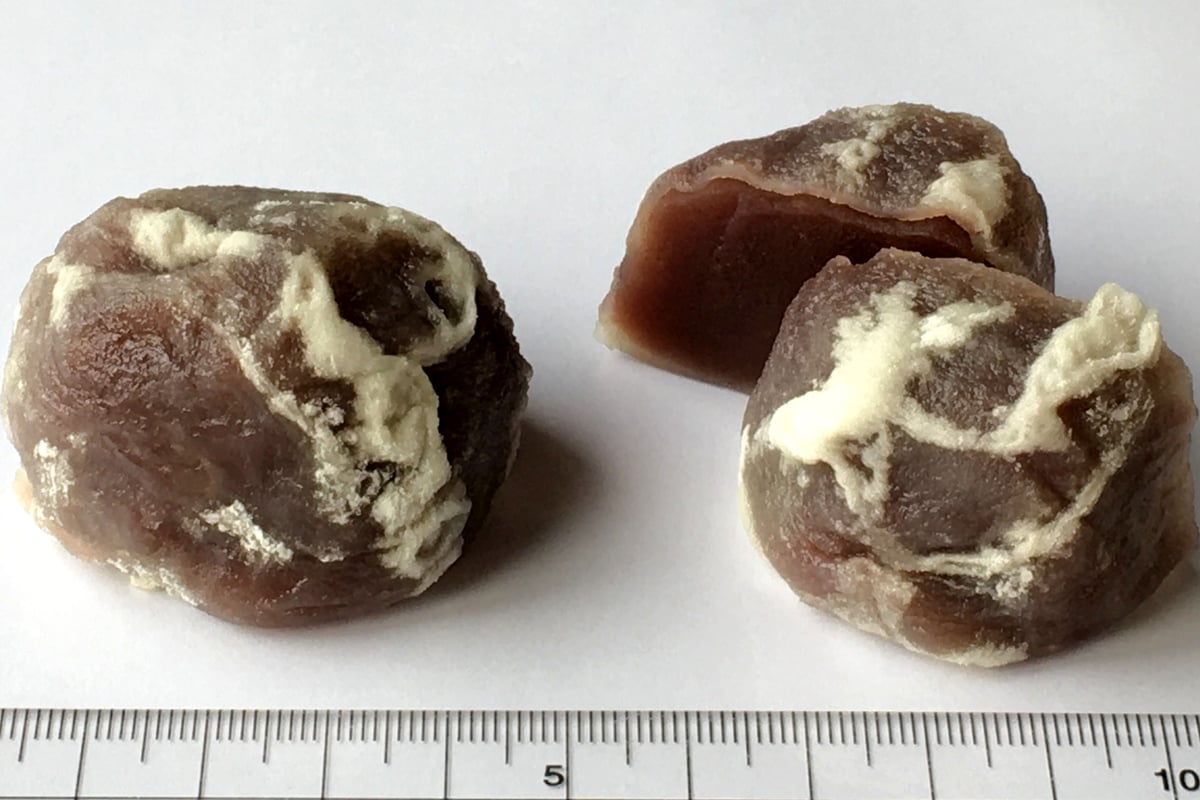
Ote Manju (also written Otemanju) is a signature sake-leavened manju made by Otemanju Imbeya, a confectionery shop founded in 1837 (Tenpo 8), and one of Okayama's representative confections. The dough is kneaded with amazake brewed from Bizen rice, then wrapped around smooth koshi-an bean paste made from Hokkaido azuki beans in a thin skin and steamed, resulting in a flavor where the gentle aroma and richness of the amazake harmonize with the refined sweetness of the bean paste. The shop takes its name 'Ote Manju' from its location in Kyobashi-cho, near Ote-mon, the main gate of Okayama Castle, and it is said to have been served, along with Bizen ware tea utensils, at tea gatherings held by the Ikeda family, lords of the Okayama domain, during the Edo period. It has since been cherished as a signature confection with ties to the Okayama domain, and remains widely sold today as one of Okayama's most representative souvenirs.
Origin
Ote Manju traces its origins to 1837 (Tenpo 8), when Ebeya Eikichi opened a confectionery shop in Kyobashi-cho in the castle town of Okayama. Because the shop was located near Ote-mon, the main gate of Okayama Castle, the Ikeda family, lords of the Bizen-Okayama domain, is said to have given the shop's leading product the name 'Ote Manju,' and it has been known by this name ever since.
History
Ote Manju developed as a signature confection beloved even by the domain lord, served at Ikeda family tea gatherings alongside Bizen ware tea utensils. Since its founding, the shop has passed down a method that places great importance on amazake made from Bizen rice and on the preparation of its bean paste, and Otemanju Imbeya continues to make and sell it from its main shop today. Locally it is sometimes counted among Japan's three great manju, and it remains cherished as one of Okayama's most representative souvenirs.
Features
Its defining feature is amazake, brewed over several days from koji made with Bizen rice, which is kneaded into the dough. The fragrant, well-fermented skin thinly wraps smooth koshi-an bean paste made from Hokkaido azuki beans before being steamed. The richness of the amazake harmonizes with the refined sweetness of the bean paste, producing a mellow aftertaste. It is a traditional sake-leavened manju made with careful attention to ingredients and method.
Famous Shops
大手饅頭伊部屋 京橋本店
岡山県岡山市北区京橋町8-2
The main shop of Otemanju Imbeya, founded in 1837 (Tenpo 8) and said to be the birthplace of Ote Manju. A box of 10 Ote Manju costs around 972 yen (tax included).
View details →FAQ
Q. What does 'Ote' in 'Ote Manju' mean?
A. It is said to derive from Ote-mon, the main gate of Okayama Castle. Because the shop was located in Kyobashi-cho, near the Ote-mon, the Ikeda family, lords of the Bizen-Okayama domain, is said to have given this name to the shop's leading product.