Image: Wikimedia Commons
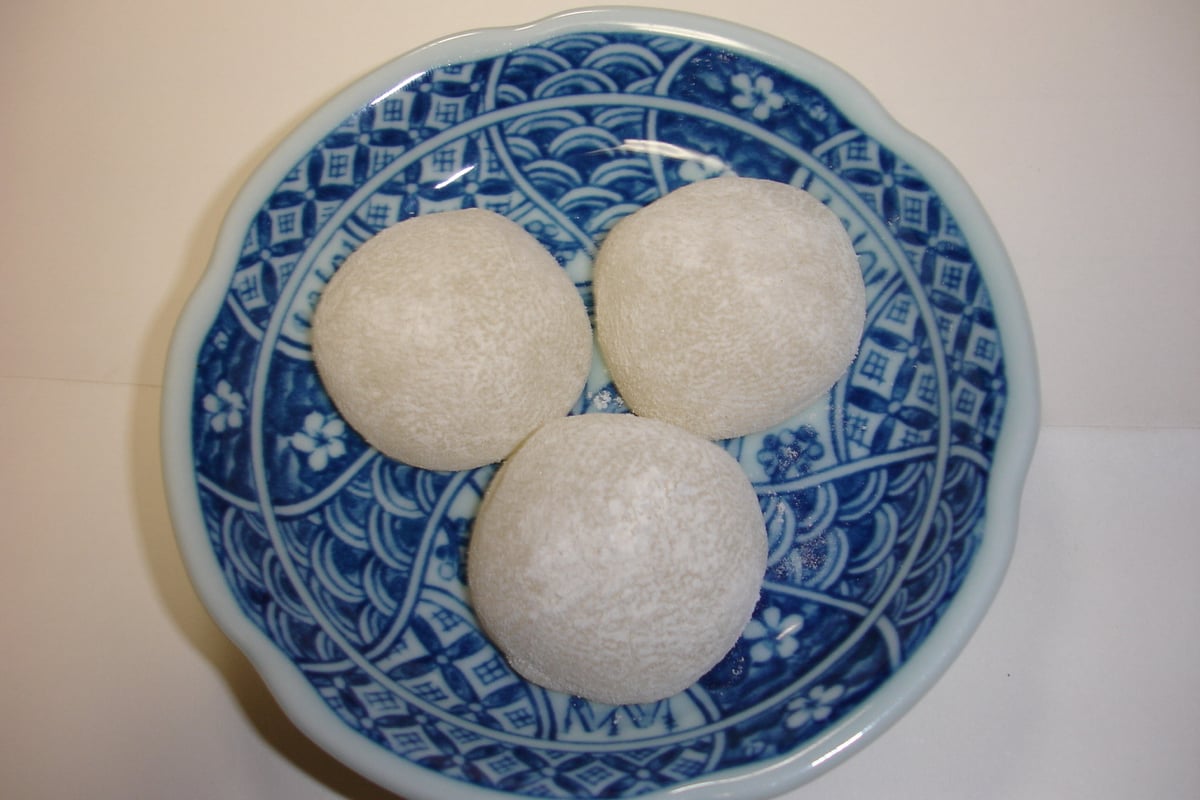
Kibi Dango (written 吉備団子) is a signature confection of Okayama and one of the most famous Okayama souvenirs, closely associated with the legend of Momotaro (the Peach Boy). The name is written with characters referring to 'Kibi,' the old provincial name for the Okayama area, and does not actually mean a dumpling made from millet (also pronounced kibi in Japanese), despite the similar-sounding name. It began as a simple steamed dumpling made from millet flour eaten as everyday food, but the confectionery shop Koeido, founded in 1856 (Ansei 3), transformed it into an elegant gyuhi-style confection suitable for tea gatherings under the guidance of Sanenzai Igi, a senior retainer of the Okayama domain at the time, establishing its status as a signature confection. Because Okayama is home to many sites associated with the legend of Kibitsuhiko-no-Mikoto and Ura, said to be the origin of the folktale Momotaro, the confection became linked in people's minds with the 'kibi dango' Momotaro carried in the story, and it grew into Okayama's most iconic souvenir.
Origin
Kibi Dango was originally a simple dumpling made by steaming millet flour, eaten every day topped with sweet bean paste or covered in syrup. In 1856 (Ansei 3), toward the end of the Edo period, Koeido, a shop that had turned to making Japanese confectionery, transformed the simple millet dumpling into an elegant gyuhi-style confection suitable for tea gatherings under the guidance of Sanenzai Igi, a senior retainer of the Okayama domain at the time. This is considered the beginning of Kibi Dango as the signature confection known today.
History
Koeido's Kibi Dango was granted permission by the lord of the Okayama domain to use the nail-puller crest, the official emblem of Bizen Province, and was recognized as an official confection of the domain. The name 'Kibi Dango' (吉備団子) is written with characters referring to the old province of Kibi, which is originally a different meaning from a dumpling made from the grain millet. It became linked with the legend of Kibitsuhiko-no-Mikoto, said to be the origin of the folktale Momotaro, and from the Meiji era onward it became known nationwide as Okayama's most representative souvenir.
Features
It is a bite-sized confection made by wrapping sweet bean paste in a soft dough based on gyuhi (a pounded rice-flour sweet), characterized by a refined sweetness and a chewy, mochi-like texture. Koeido's original Kibi Dango is said to still be made using nearly the same method as when the shop was founded, and it is sometimes sold skewered on sticks. It is also known for being a favorite of the Okayama-born writer Hyakken Uchida, and it appears in his works as well.
Famous Shops
廣榮堂本店
岡山県岡山市中区中納言町7-32
A long-established confectionery shop founded in 1856 (Ansei 3), said to be the birthplace of Kibi Dango. The original Kibi Dango costs around 540 yen for a box of 10 and around 810 yen for a box of 15 (tax included).
View details →FAQ
Q. Is 'Kibi Dango' the same as the millet dumplings Momotaro carried?
A. Although they share the same name, they are considered different things. The dumpling in the folktale is made from the grain millet (kibi), while Okayama's signature confection 'Kibi Dango' (吉備団子) takes its name from the old province of Kibi, and was reinvented as a gyuhi-based confection at the end of the Edo period.