Image: Wikimedia Commons
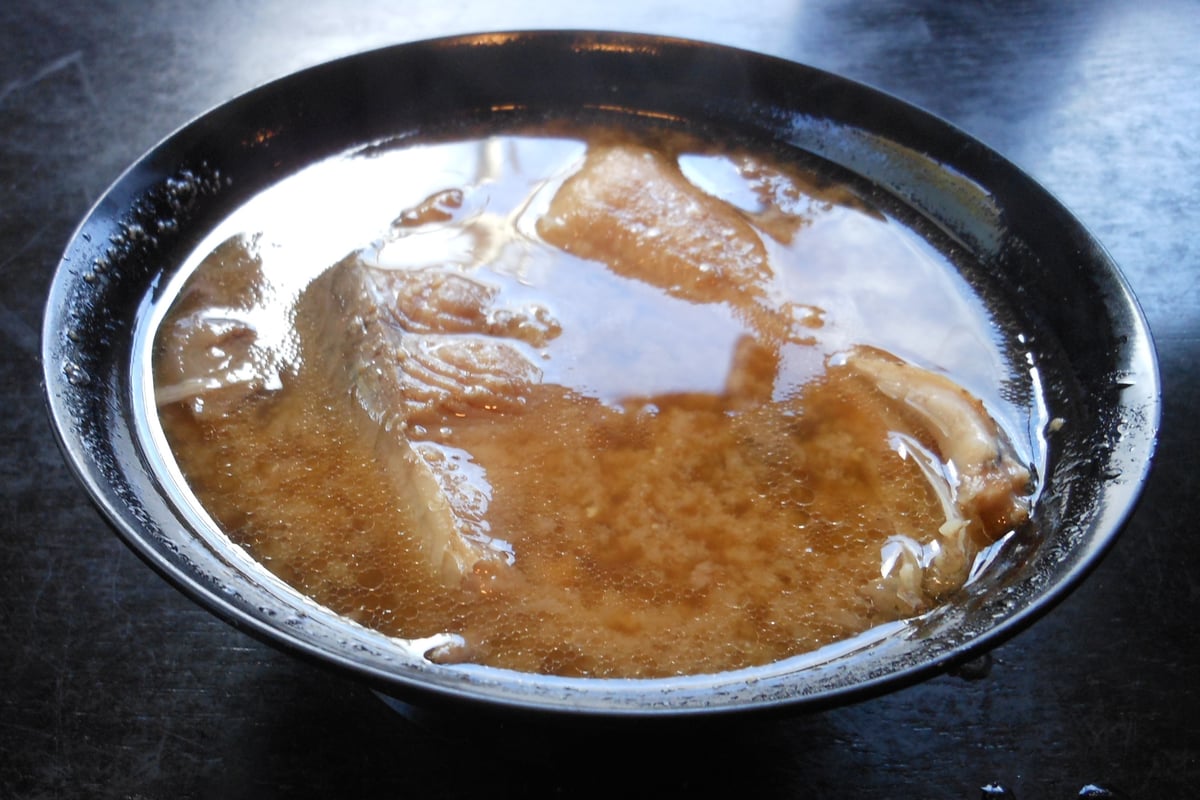
Saku Carp (Saku-goi) refers both to the edible carp raised in the Saku area of eastern Nagano Prefecture and to the local carp dishes made with them. It is said to have begun when a merchant from the Sakurai district of Saku City brought back 'Yodo-goi' (Yodo carp) from the Yodo River in Osaka during the Tenmei era of the Edo period. Because they are raised in the cold, clear water of the Chikuma River, the carp grow slowly and are shipped after about three years, longer than in other production areas. The flesh is firm with little odor and a moderate amount of fat. From the Meiji period onward, production increased through methods such as raising carp in rice paddies, and in the early Showa period the name was unified as 'Saku Carp.' Traditional ways of eating it include 'koikoku,' carp cut into round slices and simmered in miso; 'umani,' simmered in a sweet-savory sauce; and 'arai,' thin slices firmed up in cold water. It is still treasured by the people of Saku as a feast for New Year and celebrations.
Origin
Saku Carp is said to have begun in the Tenmei era of the Edo period (1781 to 1789). It is said to have originated when 臼田丹右衛門, a kimono fabric merchant in the Sakurai district of Saku City, brought back 'Yodo-goi' from the Yodo River in Osaka. On the other hand, the oldest record of Saku Carp is said to date from 1746 (Enkyo 3), when the head of an old family in Saku is said to have served carp dishes to a priest of Ise Grand Shrine. It is also said that this led to the custom of eating koikoku at New Year.
History
Carp, whose farming began in the Edo period, were also called 'medicinal fish' (薬魚) because they were considered good for health, and they appeared on the menus of post towns. From the beginning of the Meiji period, production increased through methods such as raising carp in rice paddies, and sales channels expanded beyond Saku. In the late Meiji period, Saku Carp was purchased by the Imperial Household Ministry (now the Imperial Household Agency), and in the Taisho period it won awards at competitive exhibitions again and again. In the early Showa period the name was unified as 'Saku Carp,' and there was a time when its production volume was the largest in Japan.
Features
Saku has a cool climate, and the water drawn from the Chikuma River is also cold, so the carp grow slowly. While carp in other production areas are often shipped after about two years, Saku Carp are raised for about three years. As a result, the flesh is said to become firm, with almost no odor and a moderate amount of fat. In 2008 (Heisei 20), the Saku Aquaculture Fisheries Cooperative obtained a Regionally Based Collective Trademark for 'Saku Carp.'
Main Ingredients
Food Culture
In the Saku area, koikoku is regarded as an indispensable New Year dish, and carp has also been prized as a feast for celebrations. Even now, when carp farming is struggling, the people of Saku are said to have a strong attachment to carp. In addition to the traditional koikoku, umani, arai, and salt-grilled carp, new ways of eating it have also emerged, such as koi-don (carp rice bowl) and 'koi senbei,' fried carp scales.
How It Differs from Home Cooking
Home-made koikoku differs from region to region and family to family, for example in whether sugar is added to the miso and whether the scales are removed. At restaurants, you can enjoy carp cuisine served in kaiseki style, including arai, which takes time and effort to make at home, and koi senbei. Some long-established restaurants claim to be the originator of carp cuisine, and each has its own secret flavor.
Famous Shops
佐久ホテル
長野県佐久市岩村田今宿553
A hot-spring inn in Iwamurada-juku, a post town on the Nakasendo highway, said to have been founded in 1428 (Shocho 1). It is known as 'the inn where carp cuisine originated' and serves carp dishes made with a secret sauce. It is said to be run by the family connected with the oldest record of Saku Carp.
割烹花月
長野県佐久市原481-3
A kappo (Japanese fine-dining) restaurant founded in the Taisho period that calls itself 'the original carp cuisine restaurant.' You can enjoy kaiseki-style courses that include carp arai and the delicacy 'koi senbei,' made by frying carp scales. It also serves koi-don, familiar to the people of Saku, for about 1,080 yen.
三河屋食堂
長野県佐久市中込1-21-4
A restaurant near Nakagomi Station on the JR Koumi Line where you can enjoy a variety of carp dishes, such as a koikoku set meal, an arai set meal, and rice bowls. The koikoku set meal starts at about 1,950 yen. There are also dishes other than carp on the menu, so it is easy to drop in.
| 魚甲本店 | A shop at 457 Hara, Saku City, selling processed river fish products such as carp kanroni (sweet-simmered carp). Its kanroni, made by simmering carp raised in the flowing water of the Chikuma River using a traditional method, starts at about 2,592 yen. It also sells 'koi-maki,' carp flesh rolled in kombu and simmered, as well as kanroni of crucian carp and ayu sweetfish. |
|---|---|
| 楽群堂本舗 | A long-established carp farm dating back to the Meiji period, located at 663 Sakurai, Saku City, which is said to be the birthplace of Saku Carp. Its kanroni of young carp, simmered down with local seasonings, starts at about 1,080 yen for 170 g. It also sells 'suzume-yaki,' carp fry dried in the sun and then fried. |
FAQ
Q. Why does Saku Carp have so little odor?
A. It is said to be because the carp are raised slowly over about three years in Saku's cold, clear water. In other production areas they are often shipped after about two years, and the longer they are raised, the firmer the flesh becomes. The result is meat with almost no odor and a moderate amount of fat.
Q. What kind of dish is koikoku?
A. It is a soup in which carp is boldly cut into thick round slices and simmered in miso. It is regarded as an indispensable dish at New Year in the Saku area and is eaten with ground sansho pepper sprinkled on according to taste. Whether the scales are removed and whether sugar is added to the miso vary by region and household.
Q. What kind of dish is carp arai?
A. It is a dish in which carp flesh is sliced thin, blanched in hot water, and then firmed up in cold water. Because freshness is essential, it is regarded as a way of eating that is possible only in production areas where fresh carp is available. In Saku, you can enjoy it in kaiseki meals at kappo restaurants and in set meals at casual restaurants.