Wasabi-zuke (Wasabi Pickled in Sake Lees)
Wasabi-zuke (Wasabi Pickled in Sake Lees)
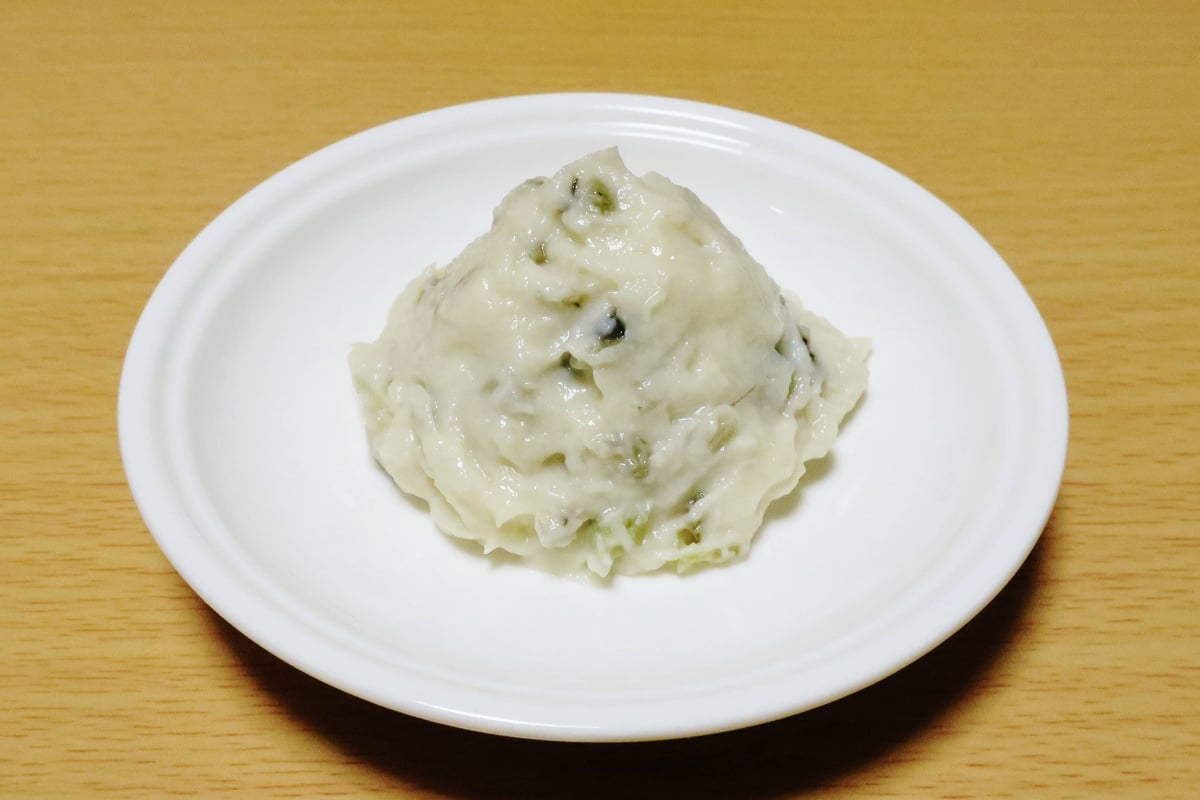
Image: Wikimedia Commons
Wasabi-zuke is a famous product of Shizuoka Prefecture made by salting finely chopped wasabi rhizomes, stems, and leaves and then pickling them together with sake lees. Within the mellow flavor of the sake lees, you can taste the sharp, nose-tingling heat and aroma of wasabi. It is said to have been devised in the mid-Edo period by 田尻屋利助, a wasabi merchant of Sunpu (present-day Shizuoka City). 田尻屋利助 improved on something that had been made in Utogi Village and pickled it in sake lees, and it gained a reputation and became a specialty of Sunpu. Wasabi cultivation is said to have originated in Utogi, in the mountains of Aoi Ward, Shizuoka City. Shizuoka Prefecture is still the nation's top producer of wasabi in both output value and cultivated area. When Shizuoka Station on the Tokaido Line opened in 1889 (Meiji 22), wasabi-zuke became known throughout the country as a station souvenir. It is eaten every day, all year round, for example on top of warm rice or as a snack with sake. It is still one of the souvenirs that represent Shizuoka.
Origin
Wasabi is a plant native to Japan that has long grown wild in the mountains. In Utogi, in Aoi Ward, Shizuoka City, cultivation is said to have begun in the Keicho era (1596–1615), when wasabi growing wild in the mountains was planted at a spring in the village. In 1607 (Keicho 12), wasabi from Utogi was presented to Tokugawa Ieyasu, who had moved into Sunpu Castle. It is said that Ieyasu praised its flavor and even forbade taking wasabi outside the village.
History
Wasabi-zuke is said to have begun in the mid-Edo period, when 田尻屋利助, a wasabi merchant of Sunpu, improved on something made in Utogi Village and pickled it in sake lees. Pickling in sake lees made it keep longer, and it is said to have gained a reputation as a souvenir along the highway. In the 19th century, the Tatami-ishi style of wasabi field, with stones stacked in tiers, was developed, and cultivation spread to Izu and eventually throughout the country. In 2018 (Heisei 30), 'Traditional Shizuoka Water-Grown Wasabi Cultivation' was designated under the Globally Important Agricultural Heritage Systems (GIAHS).
Features
Not only the wasabi rhizome but also the stems and leaves are finely chopped and used. The chopped wasabi is salted overnight, drained, and then mixed with sake lees. The mellowness of the sake lees wraps around the heat of the wasabi, and when you put it in your mouth an aroma spreads that seems to rise up through your nose. Varieties range from strongly spicy to mild, and the flavor differs from shop to shop.
Main Ingredients
Food Culture
Wasabi-zuke is eaten all year round, for example on top of warm rice or as a snack with sake. It spread as a station souvenir with the opening of Shizuoka Station and is still a representative souvenir of Shizuoka. In Utogi, the birthplace of wasabi cultivation, visitors can also enjoy dishes made with wasabi, such as tempura of wasabi leaves.
How It Differs from Home Cooking
To make it at home, wasabi is chopped, salted, and mixed with sake lees. Among specialty shops, some keep to the traditional handmade method of carefully chopping the wasabi with a kitchen knife and pickling it in large barrels. Manufacturers offer several products with different heat levels and flavors by changing the proportion of wasabi and other factors.
Famous Shops
田尻屋総本家
静岡県静岡市葵区新通1-3-2
A shop regarded as the originator of wasabi-zuke, said to have been founded in 1753 (Horeki 3). It uses wasabi from Utogi, the birthplace of wasabi cultivation, and keeps to a handmade method of chopping the wasabi with a kitchen knife and pickling it in large barrels. Because everything is handmade, a reservation is recommended to be sure of buying it.
田丸屋本店 紺屋町本店
静岡県静岡市葵区紺屋町6-7
A long-established wasabi processing company founded in 1875 (Meiji 8), known as the company that spread wasabi-zuke throughout the country. The main store is a few minutes' walk from JR Shizuoka Station and sells wasabi-zuke and a variety of other foods made with wasabi. There is also a shop in パルシェ, the Shizuoka Station building.
View details →有東木 農林産物加工販売所 うつろぎ
静岡県静岡市葵区有東木280-1
A processing and sales facility for agricultural and forest products in Utogi, the birthplace of wasabi cultivation. Visitors can enjoy handmade soba made by local people, the signature 'Sabimeshi set meal,' and tempura of wasabi leaves. Soba-making and wasabi-zuke-making experiences are available by reservation, and locally produced wasabi products can also be purchased.
View details →FAQ
Q. Why is wasabi-zuke pickled in sake lees?
A. Fresh wasabi cannot be kept for long as it is. It is said that when 田尻屋利助 pickled wasabi in sake lees in the Edo period, it kept better, and it became possible to take it home as a souvenir from the highway. The mellowness of the sake lees combines with the heat of the wasabi to create a unique flavor.