 Image: Wikimedia Commons
Shizuoka Prefecture
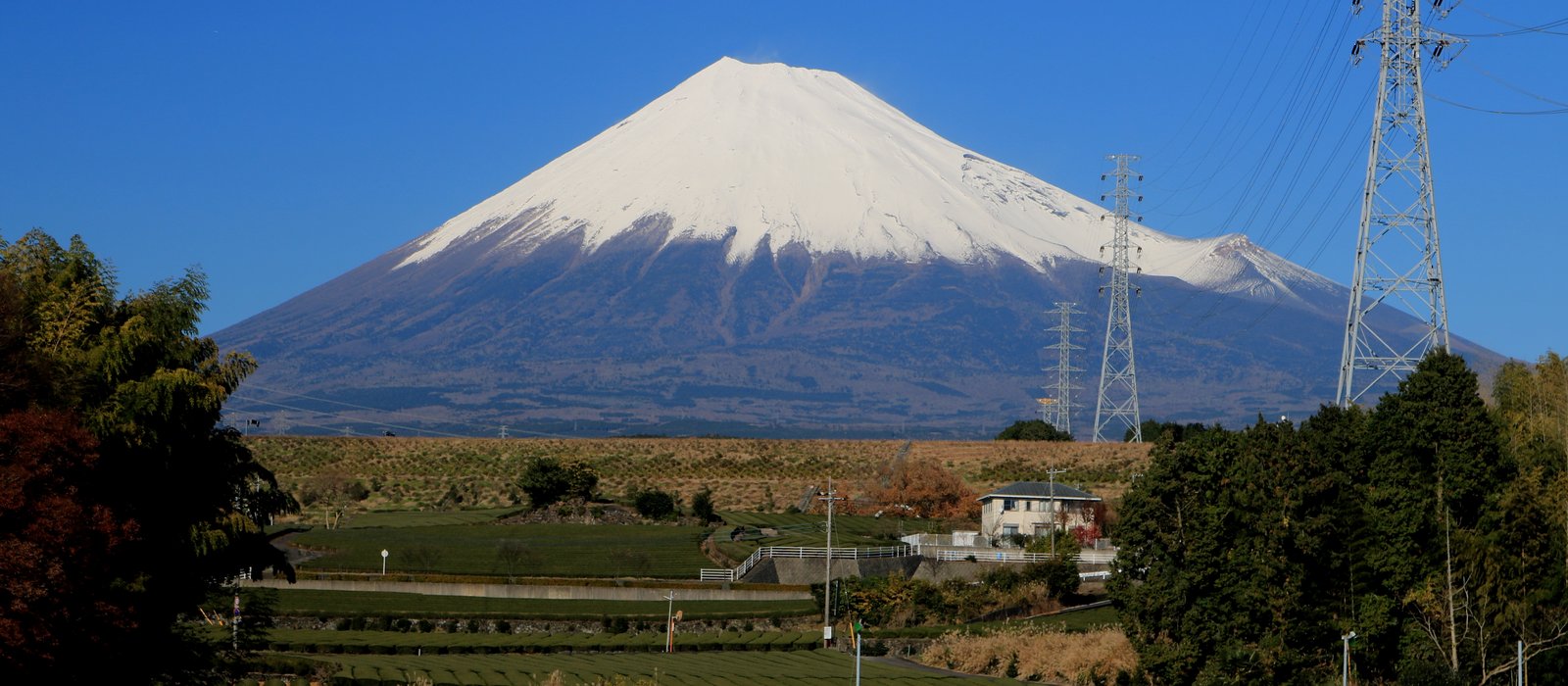
Embraced by Mount Fuji and Suruga Bay, Shizuoka Prefecture has nurtured cultures of handcraft and food along the Tokaido, which stretches long from east to west. In Sunpu (present-day Shizuoka City), where Tokugawa Ieyasu lived out the final years of life, craftspeople gathered from all over Japan for the construction of Kunozan Toshogu Shrine and Shizuoka Sengen Shrine. Suruga Bamboo Sensuji Ware and Suruga Hina Doll Furnishings and Hina Dolls, which carry on those skills, are Traditional Crafts Designated by the Minister of Economy, Trade and Industry. Suruga Lacquerware, Suruga Lacquered Geta and Shizuhata-yaki are also made in Shizuoka City. In the western part of the prefecture, known as Enshu, dyeing and weaving such as Hamamatsu Chusen Dyeing, Enshu Cotton Tsumugi and Kakegawa Kuzufu flourish. Shitoro-yaki from Kanaya in Shimada City and Shuzenji Washi from Izu City also have long histories. For food, the prefecture is known for Shizuoka Oden in its dark broth, kuro hanpen, and kakiage made with sakura shrimp from Suruga Bay. Hamamatsu Gyoza, Lake Hamana Eel and Fujinomiya Yakisoba are local specialties of their respective areas. Flavors long loved as souvenirs of the highway, such as Abekawa Mochi, Oiwake Yokan and wasabi-zuke, also live on.
Shizuoka's Traditional Crafts
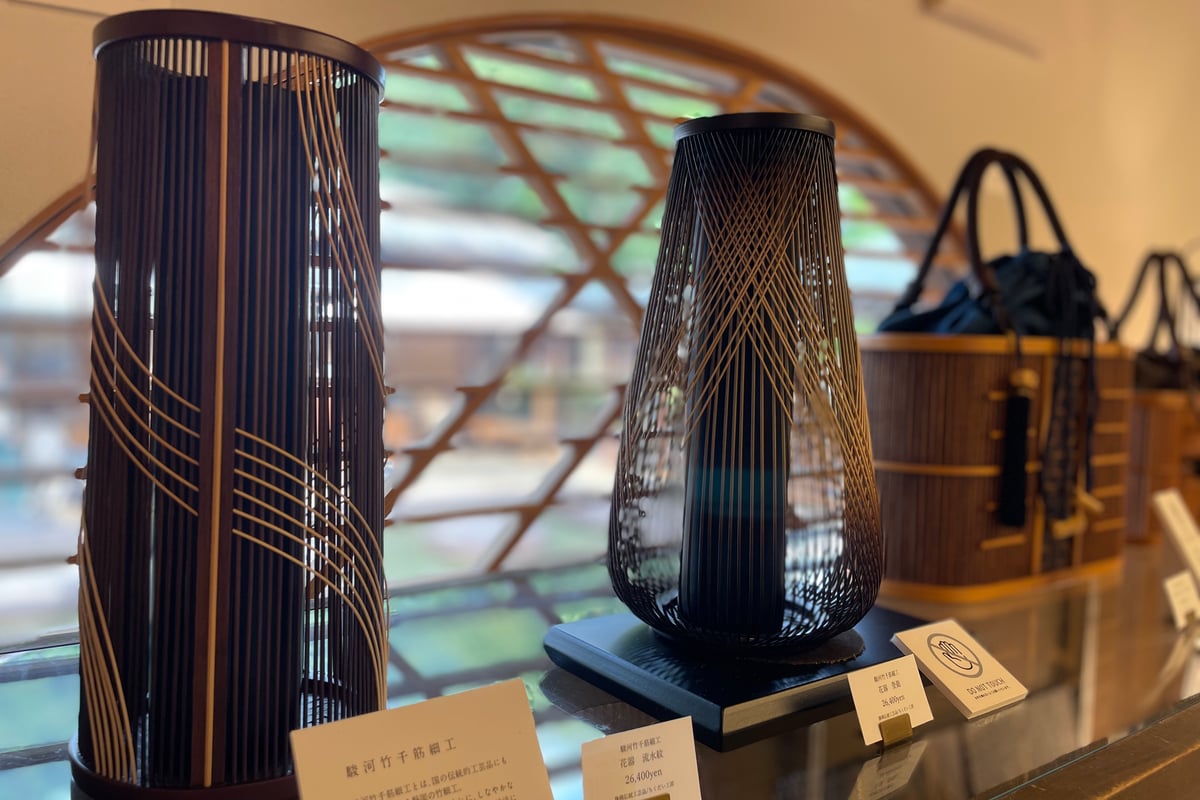
Suruga Bamboo Sensuji Ware
Suruga Take Sensuji Zaiku (Suruga Fine Bamboo Ware)
Suruga Bamboo Sensuji Ware (Suruga Take Sensuji Zaiku) is a bamboo craft made in Shizuoka City. Bamboo is split into thin pieces and finished into round bamboo strips (maru-higo), which are inserted one by one into holes drilled in bamboo rings to build up each piece. While most other production areas weave flat strips, this craft 'assembles' round strips, creating clean straight lines and graceful curves. In Shizuoka, traces of bamboo products have been found at the Yayoi-period Toro site, and bamboo work has long been rooted in daily life. In the Edo period it was called 'Suruga crafts' (駿河細工) and was popular with the daimyo and travelers who came and went along the Tokaido. In 1840 (Tenpo 11), Suganuma Ichiga, a samurai of the Okazaki Domain, passed on the technique of round bamboo strips, and this is said to have laid the foundation of today's delicate style. In 1976 it became a Traditional Craft Designated by the Minister of Economy, Trade and Industry. Besides flower vases, insect cages and confectionery containers, andon lanterns and wind chimes are also made.
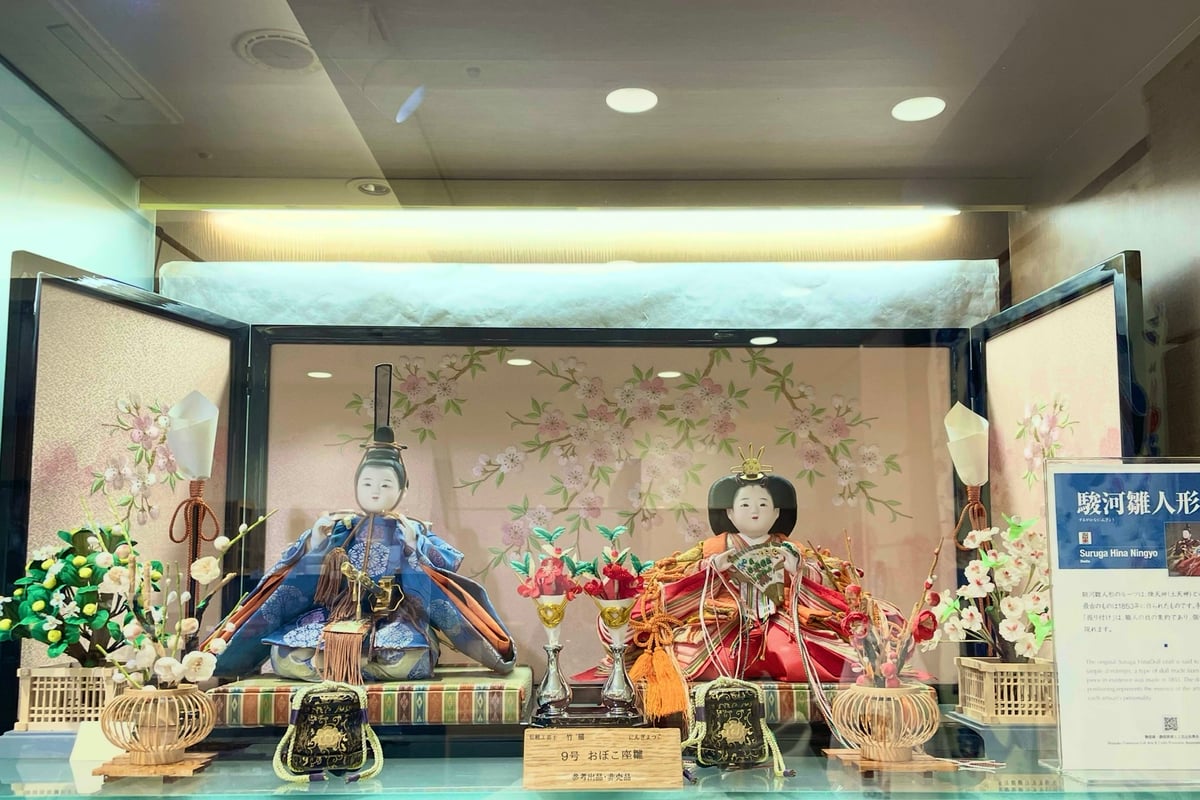
Suruga Hina Doll Furnishings and Hina Dolls
Suruga Hinagu and Suruga Hina Ningyo (Suruga Doll Furnishings and Hina Dolls)
Suruga Hinagu (Suruga hina doll furnishings) and Suruga Hina Ningyo (Suruga hina dolls) are decorations for the Hinamatsuri doll festival made mainly in Shizuoka City. Both became Traditional Crafts Designated by the Minister of Economy, Trade and Industry in 1994. Hina doll furnishings (hinagu) are the small furnishings displayed together with hina dolls, such as tansu chests, nagamochi trunks, mirror stands and goshoguruma ox carriages. There are about 40 kinds among the traditional items alone, and they are made with the same processes as real furniture. The joiners and wood turners who make the wooden bases work together with lacquerers, maki-e artists and metal-fitting makers, dividing the work to complete each piece. By the Showa 40s, hinagu had come to account for about 90% of the national market share. The hina dolls have their roots in the Tenjin dolls made in central Shizuoka Prefecture. They use a thick straw body (warado) made of tightly bundled rice straw, and the craftsperson's skill shows in furitsuke, the step in which both arms are bent to set the doll's pose. In doll bodies, the area came to account for about 70% of national production.

Suruga Lacquerware
Suruga Shikki (Suruga Lacquerware)
Suruga Lacquerware (Suruga Shikki) is lacquerware made in Shizuoka City. In the Kan'ei era of the Edo period, skilled lacquerers gathered from all over Japan to build Shizuoka Sengen Shrine. Lacquerware making is said to have taken root because the craftspeople who stayed in Shizuoka after the construction passed on their skills. Its greatest characteristic is kawari-nuri (decorative lacquer finishes), which applies the basic techniques of lacquering and uses a variety of materials and methods to express distinctive patterns and textures. Kongo Ishime-nuri, devised in the Taisho period, is a technique that uses river sand in the groundwork, and it has been designated a Shizuoka Prefecture Intangible Cultural Property. From the end of the Edo period through the Meiji period, the lacquerware was exhibited at world's fairs and won recognition overseas, and the area eventually became a major production center of export lacquerware. Today it is designated a Shizuoka Prefecture Designated Local Traditional Craft, and in 2007 it became the first regional collective trademark registered in Shizuoka City.
Suruga Lacquered Geta
Suruga Nuri Geta (Suruga Lacquered Geta Clogs)
Suruga Lacquered Geta (Suruga Nuri Geta) are lacquered geta clogs made in Shizuoka City. They are characterized by lacquer applied to the wooden base and by gorgeous decoration with maki-e, carving and other techniques. They are said to have begun in the Meiji period, when the geta maker 本間久次郎 conceived of high-end lacquered geta by applying lacquer to geta, which until then had been inexpensive everyday items. Mass production was pursued using light Abe cedar (Abe-sugi), and once the geta were shipped through wholesalers they became a nationwide fashion. In the Taisho period, craftspeople from the struggling export lacquerware industry turned to making lacquered geta. The kawari-nuri (decorative lacquer finishes) techniques of Suruga Lacquerware were applied to geta as well, and the area grew into such a production center that people said, 'For high-end lacquered geta, it has to be Shizuoka.' Today they are designated a Shizuoka Prefecture Designated Local Traditional Craft, and craftspeople in the city carry on the traditional techniques.
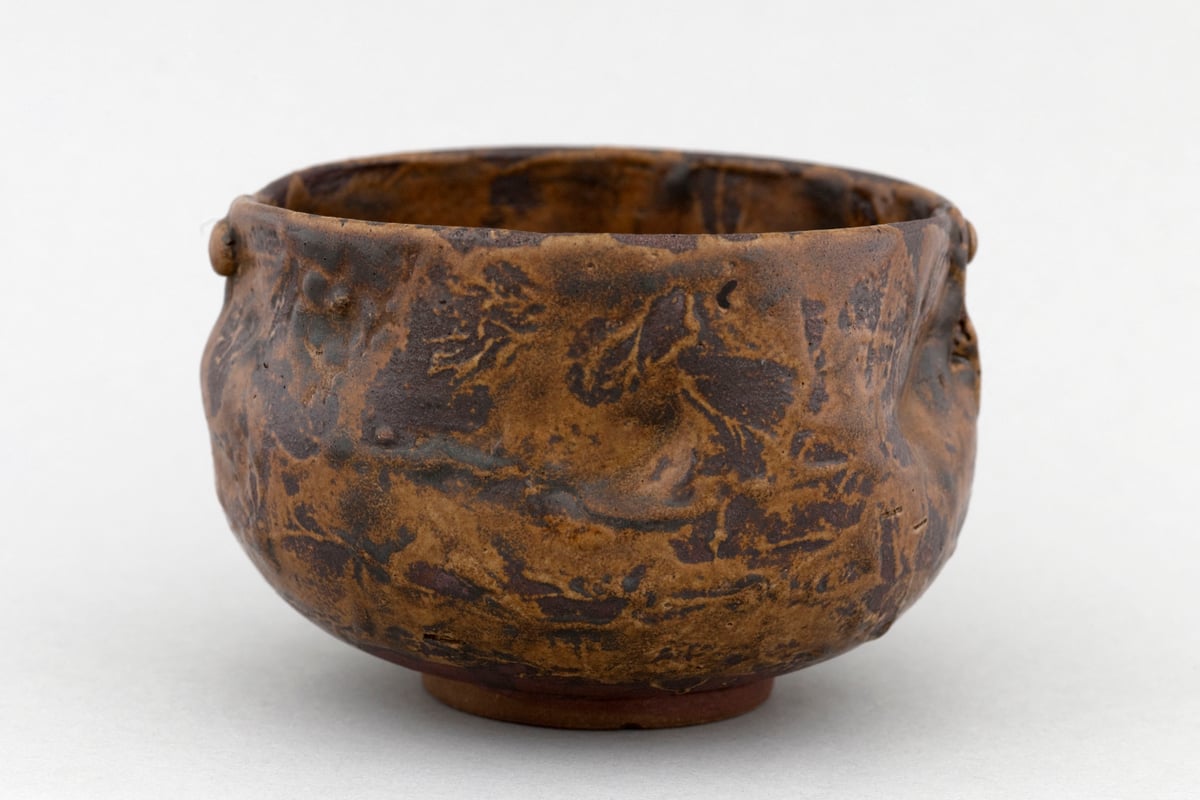
Shitoro-yaki
Shitoro Yaki (Shitoro Ware)
Shitoro-yaki is pottery that has been fired for generations in the Kanaya district of Shimada City, Shizuoka Prefecture. Its name comes from the fact that the area around Kanaya on the west bank of the Oi River was once called '志戸呂郷' (the Shitoro district). Based on excavations of kiln sites, its origins are thought to date back to the late Muromachi period. It is said to have begun when potters who had moved from Seto and Mino built kilns here. It later received the patronage of Tokugawa Ieyasu, and it is also said that Ieyasu granted it a shuinjo (vermilion-seal document). In the Edo period it was counted among Enshu's Seven Kilns (Enshu Nanagama), favored by the tea master Kobori Enshu, and became known throughout Japan as a production center of tea ceramics. The local iron-rich clay fires hard and dense, and is said to suit tea jars, which must be kept away from moisture. Its charm lies in the simple, subdued tones of brown and black iron glazes. Today there are kilns in areas such as 横岡 in Kanaya, making mainly tea utensils for matcha and sencha. It is designated a Shizuoka Prefecture Designated Local Traditional Craft.
Shizuhata-yaki
Shizuhata Yaki (Shizuhata Pottery)
Shizuhata-yaki is pottery fired in Aoi Ward, Shizuoka City. According to tradition, it began in the early Edo period when 太田七郎右衛門, a retainer of the Tokugawa family, was granted shuin-chi (land granted by vermilion-seal certificate) at the foot of Mt. Shizuhata (Shizuhatayama) and the title 'Shizuhata-yaki' by Tokugawa Ieyasu, who was then residing at the castle in Sunpu. It is said to have flourished thereafter as an official kiln (purveyor kiln) of the Tokugawa family. However, toward the end of the Bunsei era, a great flood of the Abe River washed away the kiln site, and the ware died out for a time. A movement to revive it arose in the Meiji era, and it was brought back to life by 青島庄助, a potter invited by Shizuoka Prefecture. Later, the second generation of the 青島 family introduced the techniques of Tokoname-yaki, and the third generation adopted nanban-style firing and the underglaze copper red (yuriko) technique, developing it into a distinctive pottery of its own. It is well known for Onifuku, a good-luck piece shaped like an ogre-faced roof tile (onigawara) on the outside and a 'fuku' (good fortune) face on the inside. Today the fifth generation of the 青島 family continues making pottery at 秋果陶房, and Shizuhata-yaki is a Shizuoka Prefecture Designated Local Traditional Craft.
Hamamatsu Chusen Dyeing
Hamamatsu Chusen Zome (Hamamatsu Pour-Dyed Textiles)
Hamamatsu Chusen Dyeing (Hamamatsu Chusen Zome) is a type of stencil dyeing handed down in Hamamatsu City, Shizuoka Prefecture. Chusen (pour-dyeing) is a dyeing technique unique to Japan that was devised in the Meiji era. Cotton fabric on which resist paste has been applied through a stencil is placed on a table, and dye is poured from above and drawn through to the bottom to dye the cloth. The front and back of the fabric are dyed to the same depth, and the finish has a soft texture that makes use of bleeding and gradation. In Hamamatsu it began with dyeing tenugui hand towels in the Meiji 20s, and by the Taisho era yukata dyeing had become the core of the work. Blessed with abundant groundwater and river water and the dry Enshu wind, Hamamatsu has developed into a yukata-producing area ranking alongside Tokyo and Osaka. Today, besides yukata and tenugui, items such as noren curtains and tenugui for the Hamamatsu Festival are also dyed. It is a Shizuoka Prefecture Designated Local Traditional Craft, and dye works in the city continue to preserve the technique.
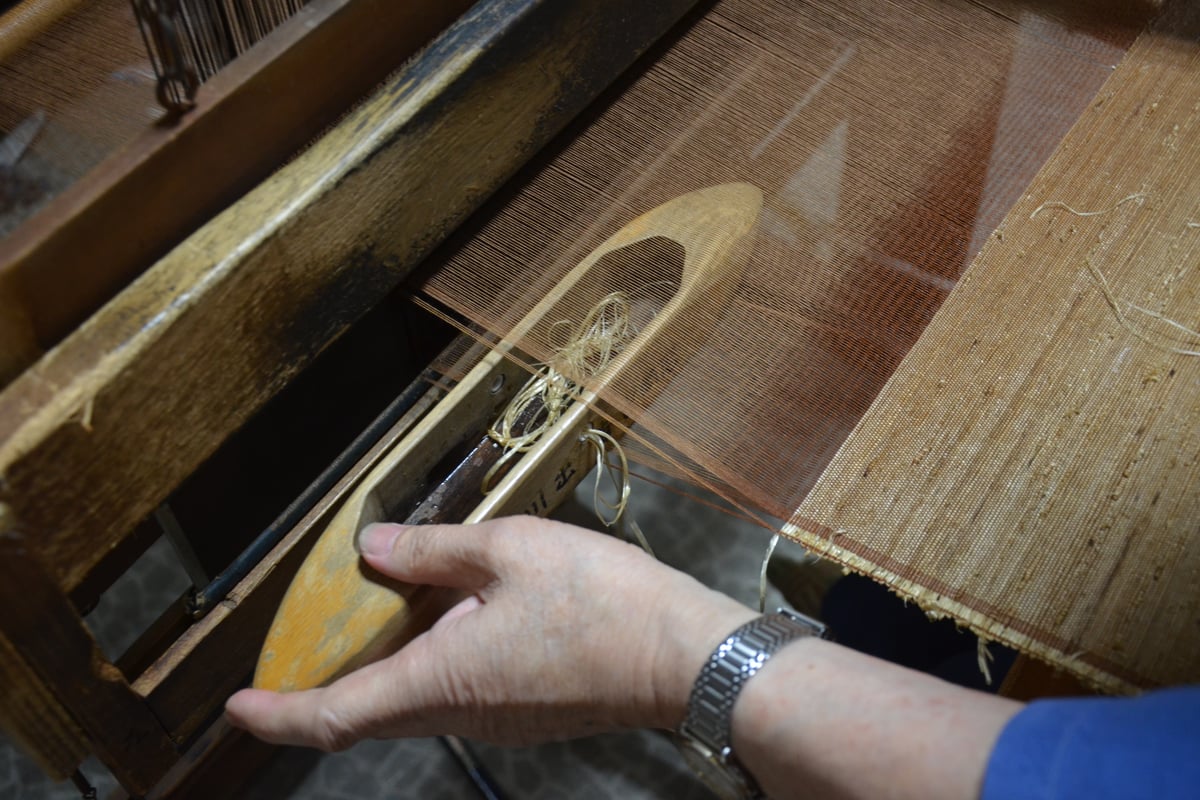
Kakegawa Kuzufu (Kudzu Cloth)
Kakegawa Kuzufu (Kakegawa Kudzu Cloth)
Kakegawa Kuzufu is cloth that has been woven for generations in Kakegawa City, Shizuoka Prefecture. Fibers are taken from the vines of kudzu, which grows wild in the hills and fields, made into thread, and hand-woven in as the weft. Its appeal lies in a gentle, subdued luster and an understated refinement that differ from silk or hemp. It is said to have already been used for samurai attire and other garments in the Kamakura period. In the Edo period, under the protection and encouragement of the Kakegawa Domain, it was prized as fabric for kamishimo, hakama and kappa raincoats. It also became a souvenir for daimyo traveling on sankin-kotai through Kakegawa-juku, a post town on the Tokaido. When samurai demand was lost in the Meiji era, it was revived by shifting its use to fabric for fusuma sliding doors. From around Meiji 30, it was exported to the United States as wallpaper. Today two weaving houses preserve the traditional handwork, from gathering the vines to weaving by hand. It is a Shizuoka Prefecture Designated Local Traditional Craft under the name Kakegawa Hand-woven Kuzufu (Kakegawa Teori Kuzufu).
Enshu Cotton Tsumugi
Enshu Men Tsumugi (Enshu Cotton Pongee)
Enshu Cotton Tsumugi (Enshu Men Tsumugi) is a cotton textile that has been woven in the Enshu region of western Shizuoka Prefecture. Enshu is warm with long hours of sunshine, and from the Edo period it flourished as a cotton-producing area alongside Mikawa and Senshu. Hand-woven cotton textiles spread as a side job for farming households, and the striped cotton came to be called Enshu stripes (Enshu-jima). Using uneven nep yarn and slub yarn for both warp and weft and weaving slowly on traditional shuttle looms produces a rustic texture like that of tsumugi (pongee). Another feature is that with each wash the twist of the yarn loosens and takes in air, making the cloth softer to the touch. From the Meiji era onward, helped by loom inventions by Toyoda Sakichi and others, Enshu grew into one of Japan's leading textile-producing areas. Today ぬくもり工房 in Hamamatsu City produces fabrics and small items, with more than 100 patterns available at any given time. Said to be a root of Hamamatsu's textile design, it is cherished as a textile that represents the region.
Shuzenji Washi
Shuzenji Gami (Shuzenji Washi Paper)
Shuzenji Washi (Shuzenji-gami) is washi that has been made in the Kamiya district of Shuzenji, Izu City, Shizuoka Prefecture. Its origins are unclear, but it is said to have been made from around the Heian period, and it is thought to have a history spanning a thousand years. Its name appears in The Tale of the Heike, and it is said to have been used for the documents Minamoto no Yoritomo sent to warriors in the Kanto region when raising an army. In the Edo period, Tokugawa Ieyasu recognized its quality and encouraged its production, and it is said to have been used as official paper for the shogunate. In the past it was a thin paper with a pale pink tint, characterized by a pattern of bamboo screen lines (sudareme). From the Meiji to the Taisho era, production died out due to factors such as the spread of Western paper. In 1985 a workshop was built in Kamiya with the cooperation of local residents, and efforts to restore the paper began. Today papermaking continues at 修善寺紙谷和紙工房, which also offers hands-on papermaking experiences.
Shizuoka's Local Food
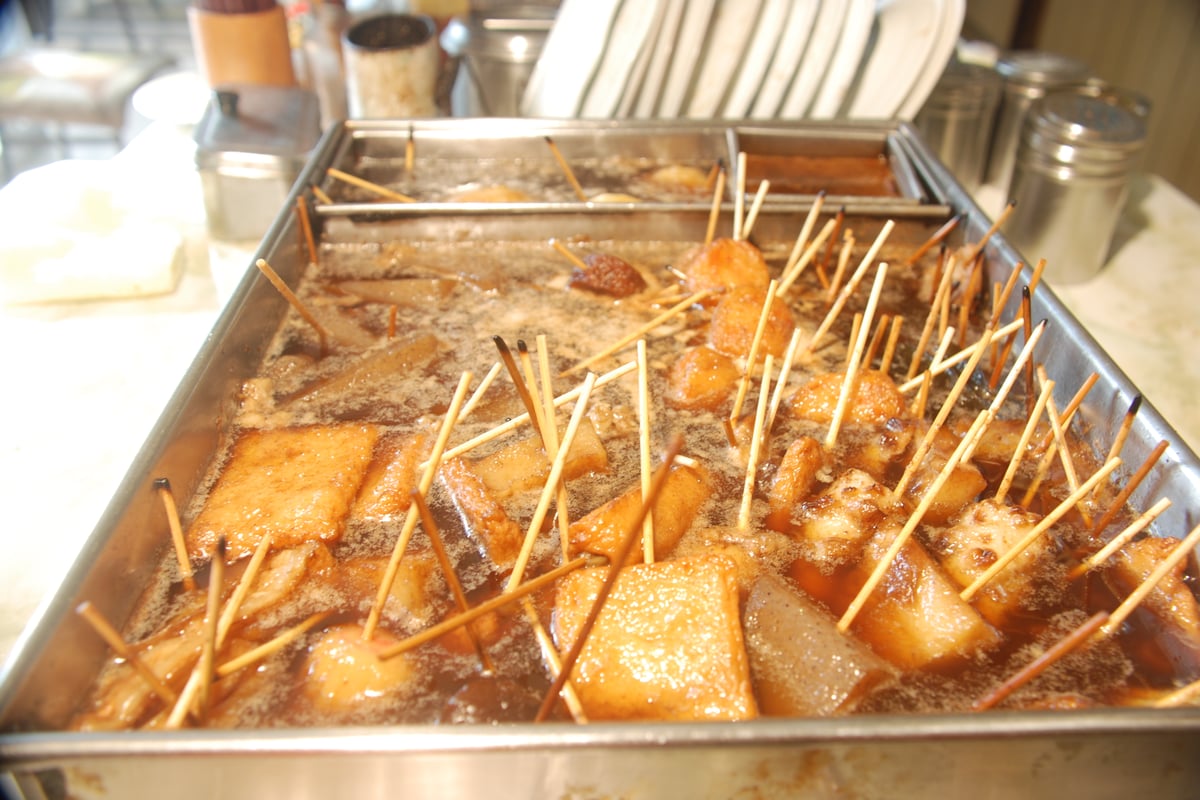
Shizuoka Oden
Shizuoka Oden
Shizuoka oden is a local dish of Shizuoka City in which skewered ingredients are simmered in a dark broth made from beef tendon and other ingredients. Ingredients include kuro hanpen, beef tendon, daikon radish, konnyaku, and eggs. A distinctive feature is the generous sprinkling of dashi-ko (powdered fish flakes), made by grinding dried fish shavings into powder, and aonori (green laver) just before eating. Because the broth uses dark soy sauce and is simmered while being topped up over and over, it takes on a blackish color. It is said to have begun in the Taisho period, and after the war it grew in popularity when beef tendon and pork offal, which had been discarded, began to be used as ingredients. A very Shizuoka touch is that oden can be bought one skewer at a time not only at specialty shops and izakaya but also at delis and at dagashiya (old-fashioned penny-candy shops). Children have grown up eating oden at dagashiya as an afternoon snack. After the war, a large number of oden stalls lined the streets near Shizuoka City Hall. Their successors, Aoba Oden-gai and Aoba Yokocho, are still lined with oden shops today.
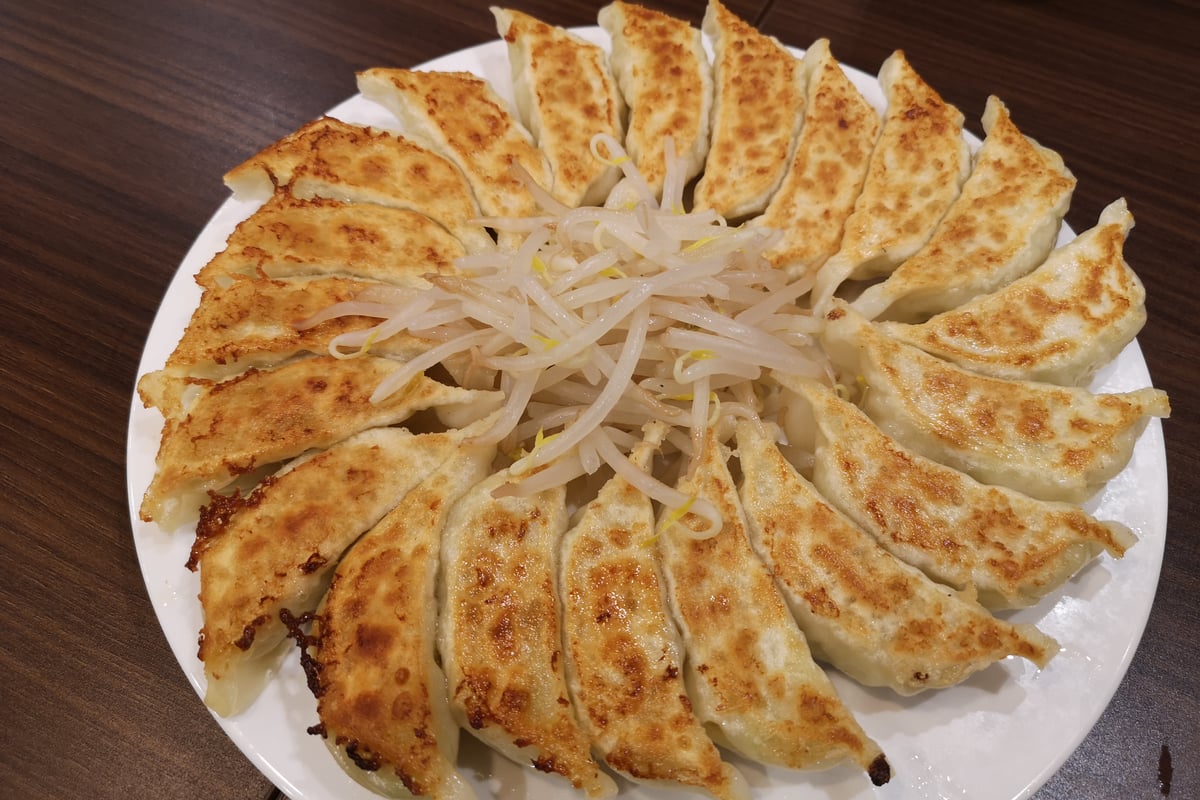
Hamamatsu Gyoza
Hamamatsu Gyoza
Hamamatsu Gyoza is a local style of gyoza enjoyed in Hamamatsu City, Shizuoka Prefecture. It is characterized by a light filling packed with plenty of cabbage, combined with the richness of pork. It is well known for its presentation: the pan-fried gyoza are arranged in a circle, keeping the shape of the frying pan, with boiled bean sprouts placed in the center. Food stalls that operated around Hamamatsu Station in the postwar period are considered one of its roots, and 石松餃子, founded in 1953 (Showa 28), is sometimes called the originator of Hamamatsu Gyoza. In the mid-2000s, a group of volunteer citizens launched the Hamamatsu Gyoza Association, which has worked to promote the city as a gyoza town. In the Ministry of Internal Affairs and Communications' Family Income and Expenditure Survey, Hamamatsu competes with Utsunomiya City and others for the top spot in annual household spending on gyoza. Hamamatsu City ranked first nationwide for the first time in 2011, and in the 2025 survey it ranked first for the third consecutive year. The city has many specialty restaurants and takeout shops, making gyoza a familiar dish both when eating out and at the family table.
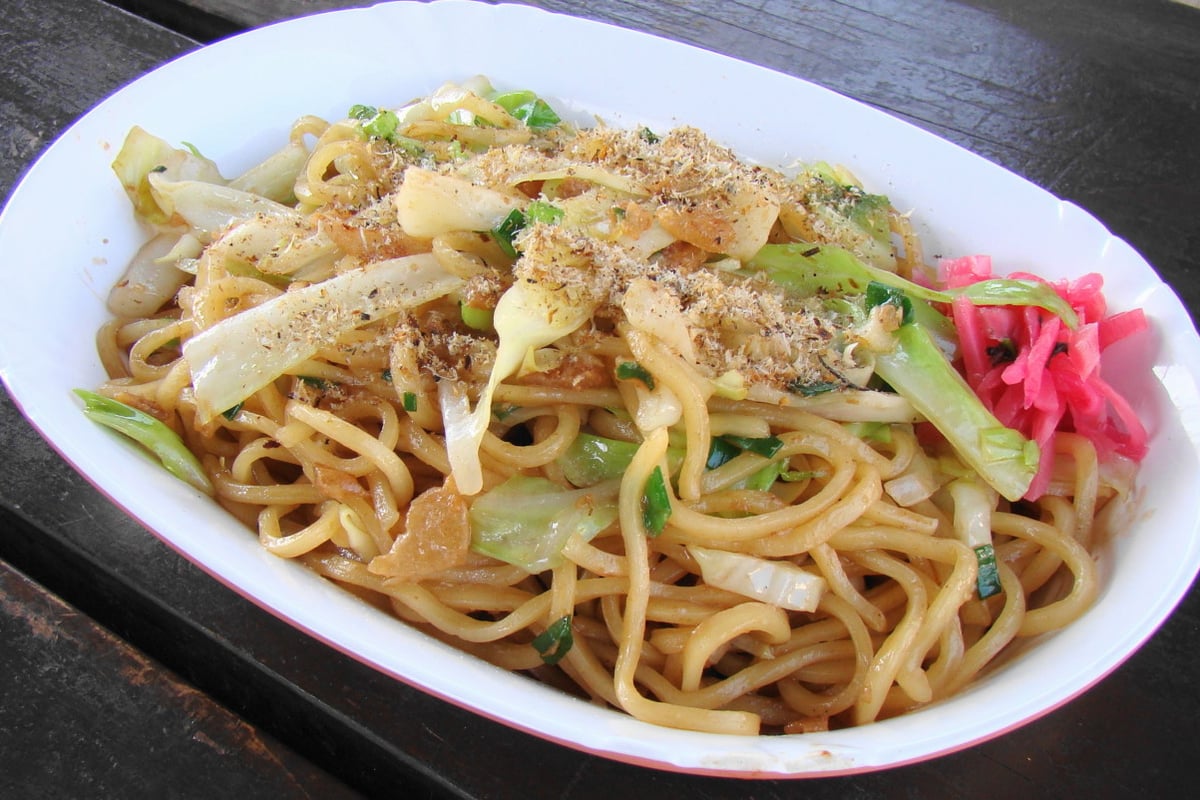
Fujinomiya Yakisoba
Fujinomiya Yakisoba
Fujinomiya Yakisoba is a local style of yakisoba enjoyed in Fujinomiya City, Shizuoka Prefecture. It uses firm, chewy steamed noodles made by designated noodle makers in the city, with 'nikukasu' (pork cracklings left after rendering lard) added as an ingredient. A distinctive finishing touch is a sprinkle of shaved sardine or mackerel flakes (dashi-ko). The unique steamed noodles are said to have been born during the postwar food shortage, in the course of efforts to recreate the rice noodles (bifun) eaten on the battlefield. In 2000 (Heisei 12), volunteer citizens launched the Fujinomiya Yakisoba Society and began revitalizing the town through yakisoba. Its unique, pun-filled promotional activities made it known nationwide, and it won the grand prize at the B-1 Grand Prix two years in a row, in 2006 and 2007. Fujinomiya is the shrine town of Fujisan Hongu Sengen Taisha, and the city is said to have around 150 establishments serving yakisoba. It is an everyday taste for local residents and, at the same time, a dish that tourists come specifically to try.
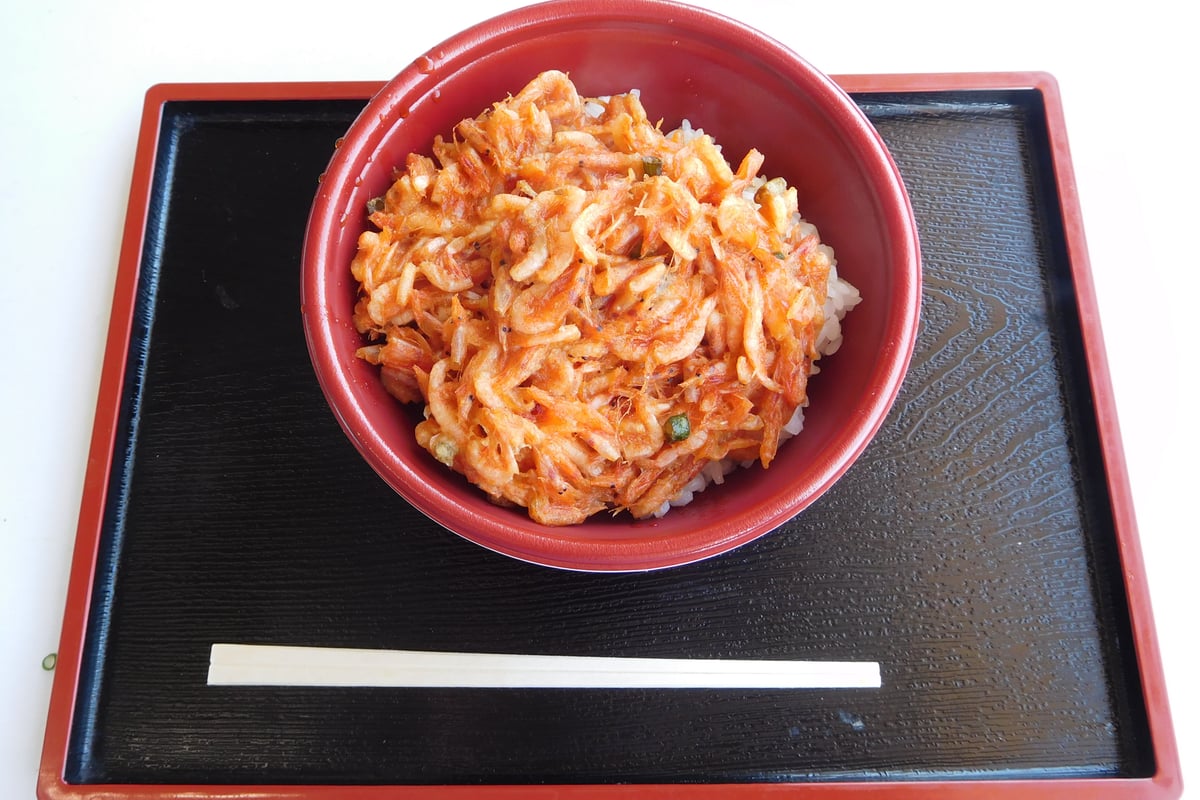
Sakura Shrimp Kakiage
Sakura Ebi Kakiage (Sakura Shrimp Tempura Fritters)
Sakura shrimp kakiage is a specialty of Shizuoka Prefecture made with plenty of sakura shrimp caught in Suruga Bay, fried until crisp with only a light amount of batter. Sakura shrimp are small, translucent, cherry-blossom-pink shrimp, and Suruga Bay is the only place in Japan where they are landed as a fishery. The ports where they are landed are limited to Yui Port in Shimizu Ward, Shizuoka City, and Oigawa Port in Yaizu City. Fishing takes place twice a year, in spring and autumn, and is said to be carried out on only about 40 days in total per year. The fishery began in the Meiji period, reportedly when fishermen from Yui happened to catch a large haul of sakura shrimp in their nets. In the producing areas of Yui and Kanbara, besides kakiage (mixed tempura fritter), people have also eaten 'okiagari,' raw sakura shrimp simmered with tofu and green onions. Inside the crunchy batter, the shrimp are tightly packed, offering both a fragrant aroma and sweetness. It is also standard to enjoy it as kakiage-don (a rice bowl) or on top of soba or udon noodles.
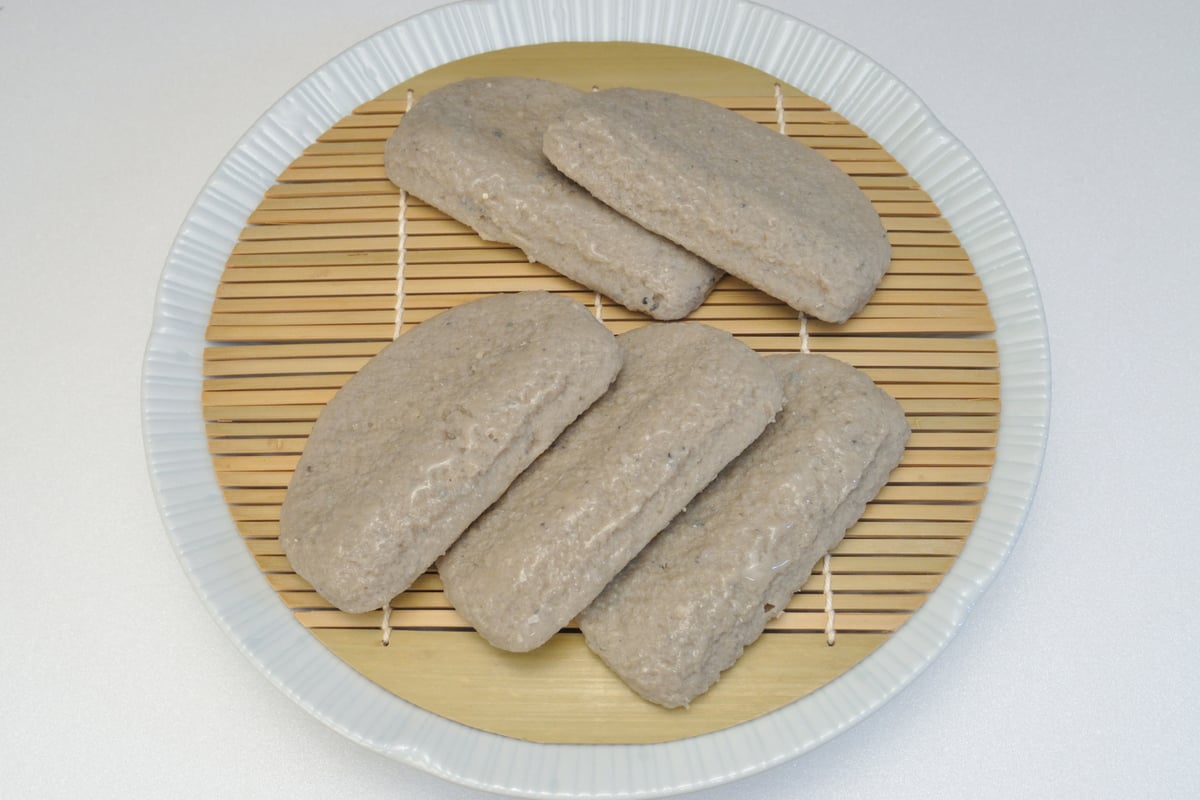
Kuro Hanpen (Black Fish Cake)
Kuro Hanpen (Black Fish Cake)
Kuro hanpen is a fish-paste product (nerimono) of Shizuoka Prefecture made by grinding blue-backed fish such as mackerel, horse mackerel, and sardine into paste, bones and skin included, and then boiling it. Because the whole fish is kneaded in, it has a grayish, blackish color. It is shaped like a half-moon, and each piece has traditionally been shaped one at a time using a mold. It is said to have originated in Yaizu and is now eaten throughout Shizuoka Prefecture. Within the prefecture, 'hanpen' means kuro hanpen, which is different from the white, fluffy hanpen. It can be eaten in many ways: as is, grilled, or simmered. 'Kuro hanpen fry,' coated in breadcrumbs and deep-fried, is a standard side dish at home and in supermarkets. It is also an essential ingredient of Shizuoka oden, enjoyed sprinkled with dashi-ko (powdered fish flakes) and aonori (green laver). It also appears in school lunches and is loved across generations, from children to adults.
Lake Hamana Eel
Hamanako Unagi (Lake Hamana Eel)
Lake Hamana Eel is a specialty farmed around Lake Hamana in western Shizuoka Prefecture and enjoyed throughout the Hamamatsu City area as kabayaki and other dishes. Lake Hamana is considered the birthplace of eel farming in Japan. It is said to have begun in 1900 (Meiji 33), when 服部倉治郎, a river-fish merchant who had been researching eel farming in Tokyo, judged Lake Hamana to be a suitable site and built eel-farming ponds there. Glass eels (shirasu-unagi), the young eels, were caught in the area, and the region was also blessed with a mild climate and abundant groundwater, so it developed into a major production area. Eels from Lake Hamana are prized for their rich fat and soft, plump flesh. In July 2026 (Reiwa 8), 'Hamanako Unagi' was registered under the Geographical Indication (GI) protection system. In downtown Hamamatsu and around Kanzanji Onsen, there are many eel restaurants, including long-established shops founded in the Meiji era. Besides unaju and unadon, you can also enjoy shirayaki, eel grilled without sauce.
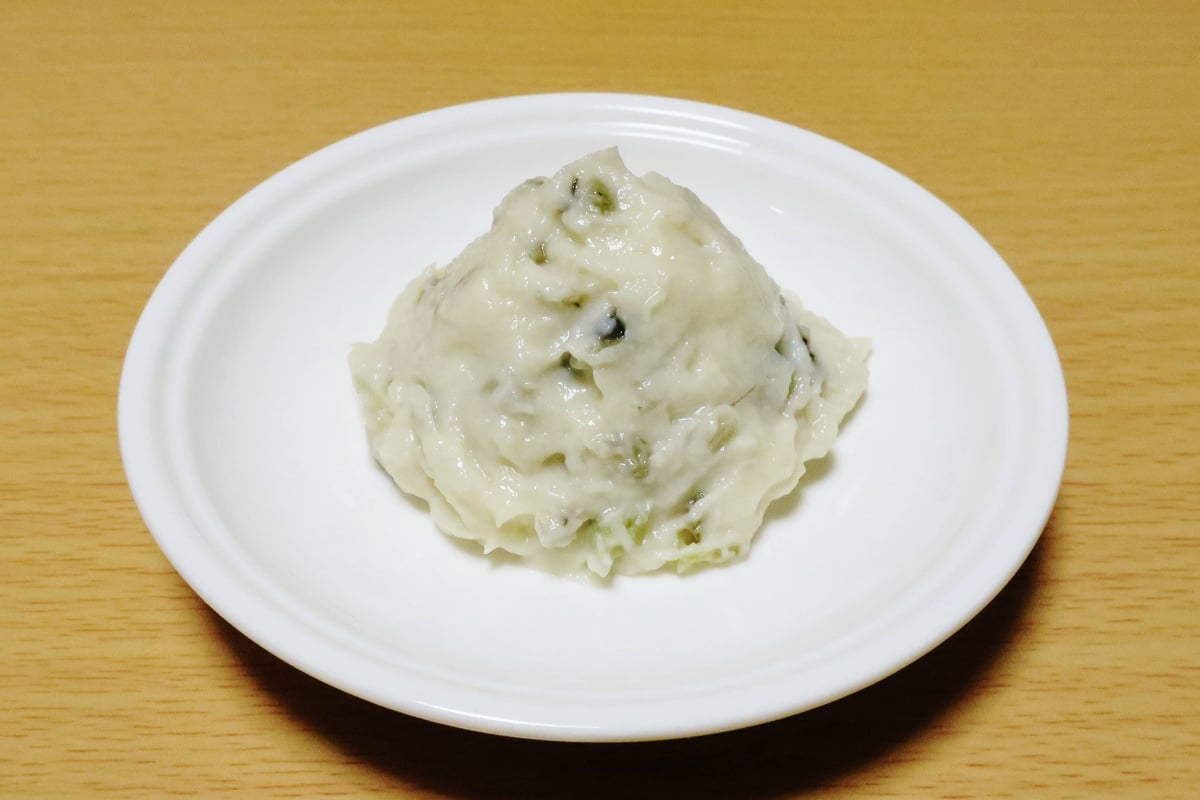
Wasabi-zuke (Wasabi Pickled in Sake Lees)
Wasabi-zuke (Wasabi Pickled in Sake Lees)
Wasabi-zuke is a famous product of Shizuoka Prefecture made by salting finely chopped wasabi rhizomes, stems, and leaves and then pickling them together with sake lees. Within the mellow flavor of the sake lees, you can taste the sharp, nose-tingling heat and aroma of wasabi. It is said to have been devised in the mid-Edo period by 田尻屋利助, a wasabi merchant of Sunpu (present-day Shizuoka City). 田尻屋利助 improved on something that had been made in Utogi Village and pickled it in sake lees, and it gained a reputation and became a specialty of Sunpu. Wasabi cultivation is said to have originated in Utogi, in the mountains of Aoi Ward, Shizuoka City. Shizuoka Prefecture is still the nation's top producer of wasabi in both output value and cultivated area. When Shizuoka Station on the Tokaido Line opened in 1889 (Meiji 22), wasabi-zuke became known throughout the country as a station souvenir. It is eaten every day, all year round, for example on top of warm rice or as a snack with sake. It is still one of the souvenirs that represent Shizuoka.
Hama Natto (Fermented Salted Soybeans)
Hama Natto (Fermented Salted Soybeans)
Hama Natto is a traditional fermented food of Hamamatsu City, Shizuoka Prefecture, made by fermenting soybeans with koji mold, aging them in salt water, and then drying them. The blackish-brown beans are not stringy and have a saltiness and umami resembling rich miso. This type of natto is called salted fermented soybeans (shiokara natto) or temple natto (tera-natto); it was introduced from China long ago and has been made at temples. The production method is said to have been transmitted during the Muromachi period to Daifukuji Temple in Mikkabi-cho, Hamana Ward, Hamamatsu City, where it is still handmade at the temple today as 'Daifukuji Natto.' It is said to have been a favorite of Tokugawa Ieyasu, and the name is said to come from the words Ieyasu spoke while eagerly awaiting an offering of it: 'Has the Hamana natto not come yet?' In the Edo period it also became an offering to successive shoguns. Today it is also produced by breweries in the city, among others. Besides being eaten as is as a snack with drinks, it is used as a seasoning and as a secret ingredient in curry and mapo tofu. In elementary and junior high school lunches in Hamamatsu, curry with Hama Natto as a secret ingredient is also served.
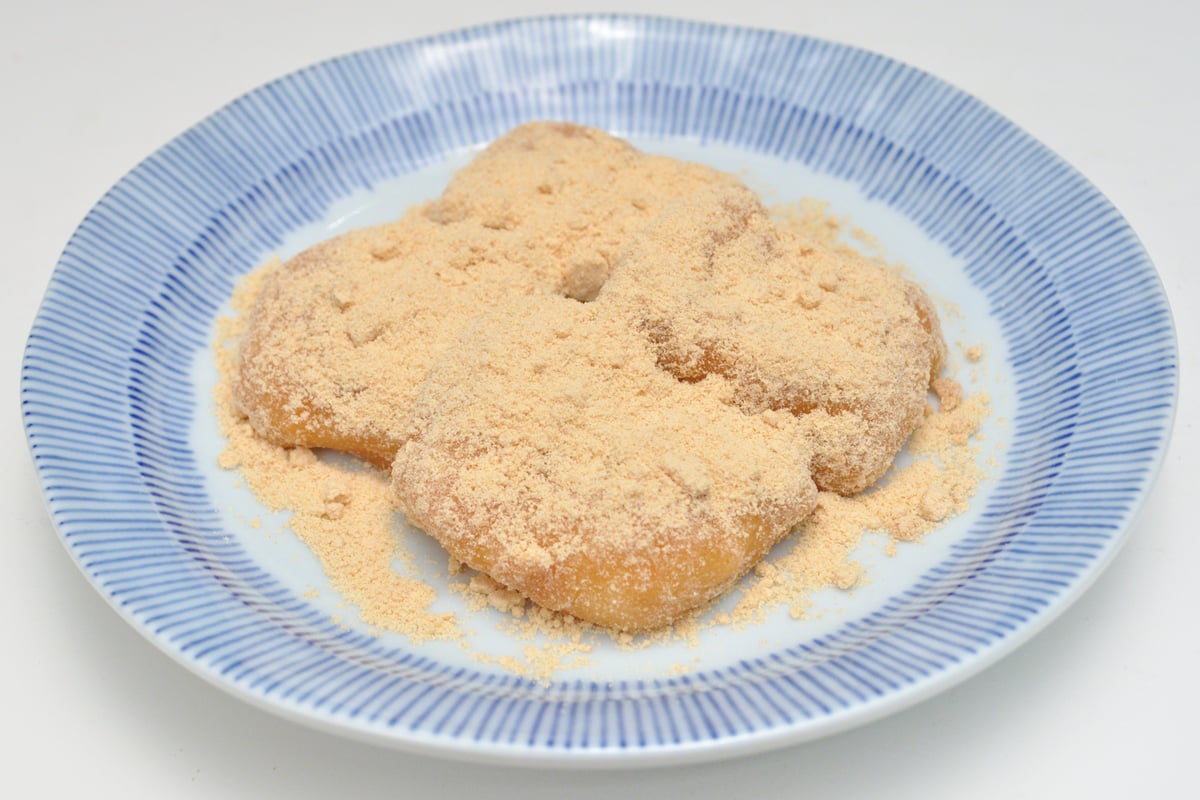
Abekawa Mochi
Abekawa Mochi (Rice Cakes with Sweet Soybean Flour)
Abekawa mochi is a famous sweet of Shizuoka City made by coating freshly pounded mochi in kinako (roasted soybean flour) and sprinkling it with white sugar. It is often served together with mochi wrapped in smooth red bean paste (koshian), and since the Edo period it has been loved by travelers as a specialty of the Tokaido. The name is said to come from the fact that it became famous when sold at teahouses on the banks of the Abe River, which flows through Shizuoka City. There is also a legend that Tokugawa Ieyasu named it, and an anecdote remains that Ieyasu likened the kinako to the gold dust of the Abe River and called it 'kinako mochi' written with the character for gold (金な粉餅). In the Edo period, white sugar was very rare, so mochi topped with sugar delighted travelers. It also appears as a specialty of the Abe River in Jippensha Ikku's 'Tokaidochu Hizakurige.' During the war it disappeared because sugar became hard to obtain, but it was revived after the war. Today it can be enjoyed at long-established shops at the foot of Abekawa Bridge, and it is also loved as a classic Shizuoka souvenir.
Oiwake Yokan
Oiwake Yokan (Bamboo-Wrapped Steamed Yokan)
Oiwake Yokan is a steamed yokan wrapped in bamboo sheath, made by 追分羊かん本店 in Oiwake, Shimizu Ward, Shizuoka City, Shizuoka Prefecture. The shop is said to have been founded in 1695 (Genroku 8). It stands on the outskirts of Ejiri-juku post town on the old Tokaido, at the fork (oiwake) where the Kuno road branches off toward Kunozan. Beloved by travelers coming and going on the Tokaido, it has been handed down as a specialty of the highway for more than 300 years. Because azuki bean paste mixed with glutinous rice is wrapped in bamboo sheath and steamed, the fragrance of the bamboo transfers to it. It has a distinctive sticky, smooth texture and a simple taste with restrained sweetness. Another distinctive feature is that it is cut with a knife through the bamboo sheath, and the sheath is peeled off before eating. It is also said to have been a favorite of Tokugawa Yoshinobu, the last shogun of the Edo shogunate. It is also one of the component cultural properties of the Japan Heritage story themed on travel along the Tokaido, 'Yaji-san and Kita-san, Who Started Japan's First Travel Boom: A Journey through Sunshu.'
Model Course
A Course to Choose Sunpu Crafts Around Shizuoka Station and Enjoy Shizuoka Oden at Aoba Yokocho
At 駿府楽市 in the ASTY Shizuoka West Building at JR Shizuoka Station, compare crafts such as Suruga Bamboo Sensuji Ware, Suruga Lacquerware and Suruga Lacquered Geta. At 田丸屋本店 紺屋町本店, a few minutes' walk from the station, you can choose wasabi-zuke as a souvenir. In the evening, head to Aoba Yokocho. At shops such as 三河屋, which dates back to the days of street stalls, you can enjoy skewered oden sprinkled with dashi-ko and aonori, including kuro hanpen and beef tendon.
A Course for Bamboo and Lacquer Workshops at Takumishuku in Mariko and Abekawa Mochi by the Abe River
At 駿府の工房 匠宿 in Mariko, Suruga Ward, Shizuoka City, try making insect cages or flower vases in Suruga Bamboo Sensuji Ware, or a lacquer workshop inspired by Suruga Lacquerware (advance online booking is recommended). On the way back, head to Miroku at the foot of Abekawa Bridge. At 石部屋, said to have been founded in 1804, you can enjoy freshly pounded Abekawa Mochi and karami-mochi. If you have time, it is also worth visiting 秋果陶房 in 柳町, Aoi Ward, to see Shizuhata-yaki such as Onifuku pieces.
A Course from Oiwake Yokan in Shimizu to Yui, for Sakura Shrimp and Suruga Hina Dolls
At 追分羊かん本店, which stands at the fork between the Ejiri-juku post town on the old Tokaido and the road to Kuno, buy steamed yokan wrapped in bamboo sheath. Take the Tokaido Line to Yui, and at 桜えび・磯料理 くらさわや, on high ground along the old Tokaido, enjoy sakura shrimp kakiage while looking out over Suruga Bay. At 望月人形, about a 15-minute walk from JR Yui Station, you can see Suruga Hina Dolls with straw bodies and Tenjin dolls. At the direct sales shop at Yui Fishing Port, you can buy frozen raw sakura shrimp even outside the fishing season.
A Course to Compare Gyoza and Eel in Hamamatsu and Encounter Enshu Cotton Weaving and Chusen Dyeing
For lunch, enjoy Hamamatsu Gyoza, fried in a circle with bean sprouts in the center, at gyoza specialty shops such as むつぎく in Chuo Ward, Hamamatsu City. In the afternoon, head to ぬくもり工房 本店 in 染地台, Hamana Ward, where you can choose bolts of cloth and small items of Enshu Cotton Tsumugi woven on old-fashioned shuttle looms (closed Wednesdays). For dinner, try the signature ohitsu unagi chazuke (eel over rice in a wooden tub, finished with tea) at restaurants such as うなぎ 八百徳 本店, founded in the Meiji period. Souvenir shops at Hamamatsu Station also sell Hama Natto from ヤマヤ醤油. Chusen-dyed tenugui towels can be purchased from the online shops of dye works in the city.
A Course to Try Weaving at a Kuzufu Workshop in Kakegawa and Visit a Shitoro-yaki Kiln in Kanaya
At 小崎葛布工芸 in 城下, Kakegawa City, learn how kudzu thread is made through a video, then weave a coaster on a loom used by the craftspeople (reservation by phone required, closed Tuesdays). At 川出幸吉商店, a 6 to 7-minute walk from Kakegawa Station, you can also tour the weaving house and try weaving by reservation. In the afternoon, take the Tokaido Line to Kanaya. At 志戸呂焼 彦次窯 in 横岡, you can try a pottery experience that takes about 30 minutes, and the fired pieces are sent to you later by mail.
A Course to Eat Your Way Through Fujinomiya Yakisoba in the Shrine Town of Fujisan Hongu Sengen Taisha
After visiting Fujisan Hongu Sengen Taisha, head to Omiya Yokocho at the entrance to the approach. At the antenna shop run directly by the Fujinomiya Yakisoba Society and at すぎ本, said to be one of the long-established shops, you can enjoy Fujinomiya Yakisoba made with nikukasu and dashi-ko. Going a little further, it is also fun to compare popular local shops such as うるおいてい and お好み食堂 伊東 in 淀師. For souvenirs, home-cooking sets that include steamed noodles, nikukasu and dashi-ko are convenient.
A Course to Try Making Shuzenji Washi by Hand in Kamiya, Beyond Shuzenji Onsen
At 修善寺紙谷和紙工房 in the Kamiya district, about a 5-minute drive from the Shuzenji Onsen hot spring town, try making paper such as business cards or postcards by hand (reservations required by the day before, for 2 or more people, ages elementary school and up). If you choose postcards, you can also create designs with flowers and plants made into the paper. At SHUZENJI WASHI LABORATORY in Shuzenji, you can touch the raw materials and tools of washi and choose washi products available only there (check the opening days and hours in advance).
Events
Hamamatsu Festival (浜松まつり)
May 3 to 5 every year (in 2026: May 3 to 5, with kite battles from 10:00 to 15:00) / Hamamatsu City (Nakatajima kite-flying venue and the city center)
View details →Yui Sakura Shrimp Festival (由比桜えびまつり)
May 3 (in 2026: May 3, 8:00 to 14:00) / Yui, Shimizu Ward, Shizuoka City (Yui Fishing Port)
View details →