Image: Wikimedia Commons
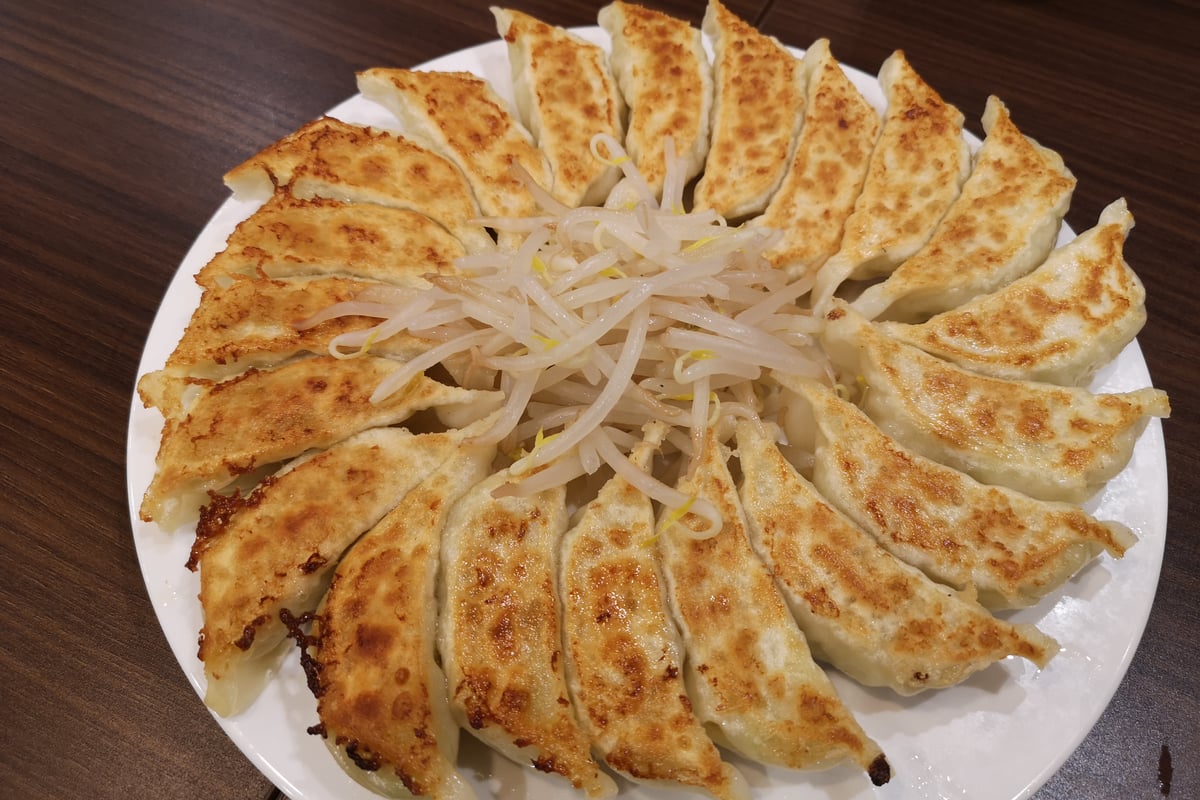
Hamamatsu Gyoza is a local style of gyoza enjoyed in Hamamatsu City, Shizuoka Prefecture. It is characterized by a light filling packed with plenty of cabbage, combined with the richness of pork. It is well known for its presentation: the pan-fried gyoza are arranged in a circle, keeping the shape of the frying pan, with boiled bean sprouts placed in the center. Food stalls that operated around Hamamatsu Station in the postwar period are considered one of its roots, and 石松餃子, founded in 1953 (Showa 28), is sometimes called the originator of Hamamatsu Gyoza. In the mid-2000s, a group of volunteer citizens launched the Hamamatsu Gyoza Association, which has worked to promote the city as a gyoza town. In the Ministry of Internal Affairs and Communications' Family Income and Expenditure Survey, Hamamatsu competes with Utsunomiya City and others for the top spot in annual household spending on gyoza. Hamamatsu City ranked first nationwide for the first time in 2011, and in the 2025 survey it ranked first for the third consecutive year. The city has many specialty restaurants and takeout shops, making gyoza a familiar dish both when eating out and at the family table.
Origin
The roots of Hamamatsu Gyoza are said to lie in food stalls that operated around Hamamatsu Station in the postwar period. 石松餃子, founded in 1953 (Showa 28), is said to have started pan-frying gyoza at a food stall after learning how to make them from a person who had returned from Manchuria (present-day northeastern China). On the other hand, it is also said that people from China living in the city had been serving pan-fried gyoza since before the war, and there are various theories about its origin.
History
After the war, gyoza specialty restaurants and takeout shops increased in Hamamatsu City, and gyoza became established at the family table as well. In the mid-2000s, volunteer citizens who noticed that the city's spending on gyoza purchases was among the highest in the nation launched the Hamamatsu Gyoza Association. The association designated the days of the month containing the number 3 as 'Gyoza Days' and has continued its promotional activities, such as holding the Hamamatsu Gyoza Festival. In 2011, Hamamatsu City ranked first nationwide for the first time in gyoza spending in the Family Income and Expenditure Survey, and it has continued to compete for the top spot with Utsunomiya City and Miyazaki City since then.
Features
The filling uses a generous amount of cabbage as its main ingredient, combined with the richness of pork, for a light, slightly sweet flavor. The cooked gyoza are served arranged in a circle in the shape of the frying pan, with boiled bean sprouts placed in the open space in the center. The Hamamatsu Gyoza Association defines Hamamatsu Gyoza as gyoza made in Hamamatsu City by people who have lived in Hamamatsu for three years or more. The thickness of the wrappers, the blend of the filling, and the degree of browning vary from shop to shop.
Main Ingredients
Food Culture
In Hamamatsu, gyoza is enjoyed not only at specialty restaurants but also as an everyday side dish, bought at takeout shops and served at the family table. The rankings in the Family Income and Expenditure Survey become a local topic of conversation every year, and the whole community joins in to promote the city as a gyoza town.
How It Differs from Home Cooking
At home, gyoza is easily made with store-bought wrappers, cabbage, and ground meat. Specialty restaurants are particular about their wrappers and the filling recipe handed down from their founders, pan-frying the gyoza in a round shape in a frying pan and placing bean sprouts in the center. This presentation is a style that has continued since the days of the food stalls. The thickness of the wrappers and the degree of browning differ from shop to shop, so comparing different shops is also enjoyable.
Famous Shops
石松餃子 本店
静岡県浜松市浜名区平口252-1
Founded in 1953 (Showa 28), this shop is sometimes called the originator of Hamamatsu Gyoza. It uses sweet cabbage and pork, and its 'tsunagi' (binding ingredient) handed down from the founder is said to be the key to its rich yet light flavor. The gyoza are pan-fried in a circle and served with bean sprouts in the center. Pan-fried gyoza start from about 670 yen for 10 pieces.
むつぎく
静岡県浜松市中央区砂山町356-5
A gyoza specialty restaurant founded in 1962 (Showa 37). Since its founding, it has kept the style of pan-frying the gyoza in a round shape in a frying pan and placing boiled bean sprouts in the middle. The filling is packed with vegetables, with finely chopped cabbage as the star, and the garlic is kept modest. A large serving (16 pieces) is about 1,120 yen.
餃子の店 福みつ
静岡県浜松市中央区佐藤1-25-8
A specialty restaurant that limits its meal menu to gyoza and gyoza set meals. Its vegetable-centered gyoza, wrapped in slightly thick wrappers, are pan-fried until crisp on the outside and juicy on the inside. Fifteen pieces cost about 1,050 yen, and it is known as a restaurant so popular that lines of cars form because the parking lot cannot hold them all.
喜慕里(きぼり)
静岡県浜松市中央区増楽町563-3
A popular restaurant known for its ultra-thin wrappers, said to be about half the usual thickness. The gyoza are pan-fried in oil blended with sesame oil for a light texture. There are also gyoza with shrimp and squid added to the filling, and a medium serving of 15 pieces starts from about 870 yen.
FAQ
Q. Why are bean sprouts served with Hamamatsu Gyoza?
A. It is said to have begun when the previous owner of 石松餃子, back in the food stall days, arranged gyoza in a circle to pan-fry them in a household frying pan and placed boiled bean sprouts in the gap that formed in the center. This presentation spread to restaurants throughout the city and has now become the signature style of Hamamatsu Gyoza.
Q. Does Hamamatsu consume the most gyoza in Japan?
A. The figure often cited is the annual household spending on 'gyoza' in the Ministry of Internal Affairs and Communications' Family Income and Expenditure Survey. It covers gyoza purchased at shops and similar outlets, and does not include eating out. Hamamatsu City ranked first for the first time in 2011, and ranked first for three consecutive years from 2023 to 2025. The rankings change from year to year, with Hamamatsu competing against Utsunomiya City and Miyazaki City.