Image: Wikimedia Commons
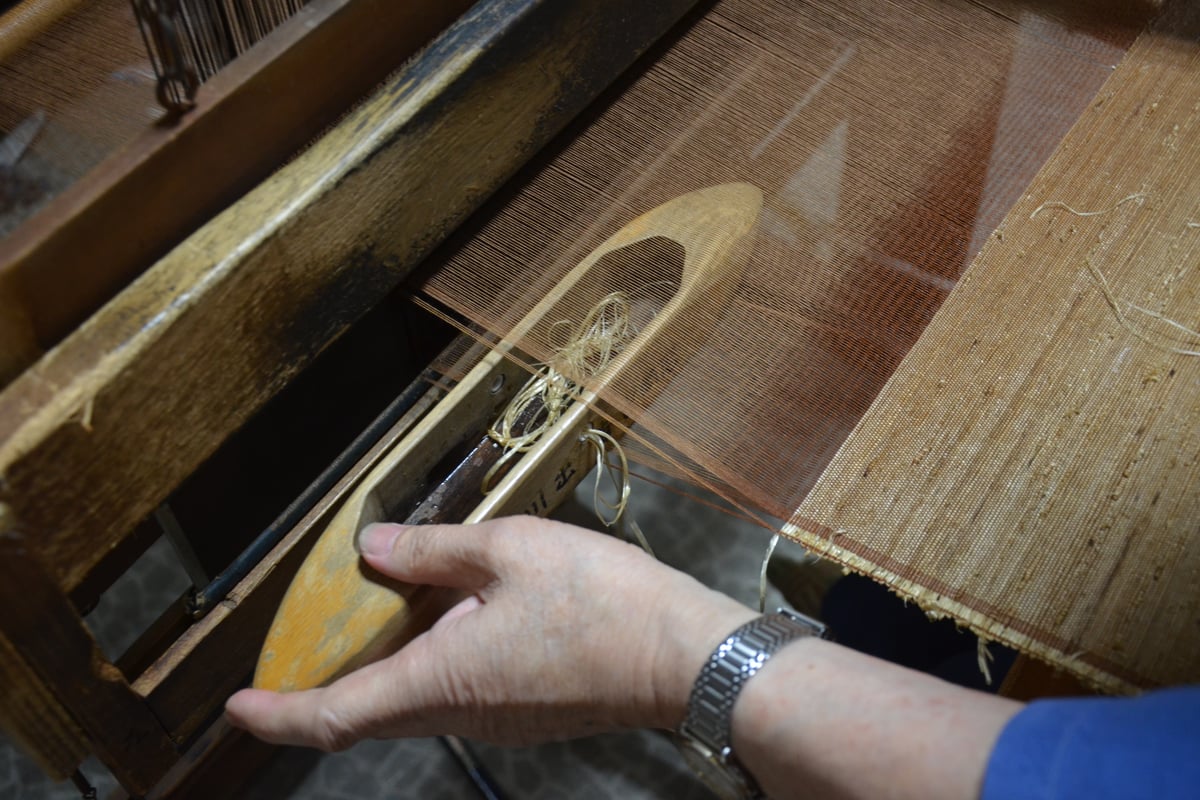
Kakegawa Kuzufu is cloth that has been woven for generations in Kakegawa City, Shizuoka Prefecture. Fibers are taken from the vines of kudzu, which grows wild in the hills and fields, made into thread, and hand-woven in as the weft. Its appeal lies in a gentle, subdued luster and an understated refinement that differ from silk or hemp. It is said to have already been used for samurai attire and other garments in the Kamakura period. In the Edo period, under the protection and encouragement of the Kakegawa Domain, it was prized as fabric for kamishimo, hakama and kappa raincoats. It also became a souvenir for daimyo traveling on sankin-kotai through Kakegawa-juku, a post town on the Tokaido. When samurai demand was lost in the Meiji era, it was revived by shifting its use to fabric for fusuma sliding doors. From around Meiji 30, it was exported to the United States as wallpaper. Today two weaving houses preserve the traditional handwork, from gathering the vines to weaving by hand. It is a Shizuoka Prefecture Designated Local Traditional Craft under the name Kakegawa Hand-woven Kuzufu (Kakegawa Teori Kuzufu).
Origin
Kakegawa has a legend about the beginnings of kuzufu. An ascetic noticed that the kudzu vines found at a waterfall could provide material for cloth, and taught an elderly woman among the believers how to extract the fibers. In the Kamakura period, it is said to have been used for samurai horse-riding hakama, kemari (court football) attire and other garments. Kakegawa has long been known as a center of kuzufu production, and the cloth appears in Edo-period documents as a famous product of Kakegawa.
History
In the Edo period, the 太田 clan, lords of the Kakegawa Domain, encouraged its production, and kuzufu was prized as fabric for kamishimo, riding hakama, kappa raincoats and more. It was also known as a souvenir for daimyo traveling on sankin-kotai who passed through Kakegawa-juku on the Tokaido. When samurai demand was lost with the Meiji Restoration, the weavers took inspiration from fusuma door pulls, widened the weaving width, and revived the craft by shipping the cloth to Tokyo as fusuma fabric. From around Meiji 30, it was exported to the United States as wallpaper. After the war the industry shrank due to factors such as an increase in imports, and today there are two weaving houses.
Features
Kakegawa Kuzufu is woven with kudzu fiber as the weft and silk, hemp or cotton as the warp. It has an elegant, understated luster, and its gentle, calm sheen, different from that of silk or hemp, is its hallmark. The cloth is crisp and durable, and is said to stand up well to water. Another attraction is that it gradually turns an amber color (ame-iro) over the years. Today, besides fusuma fabric and wallpaper, it is also made into bags, small accessories, parasols, sudare blinds and more.
Materials Used
Production Process
- 1
Harvesting
Gather kudzu from June to August and strip it down to the vines alone.
- 2
Boiling
Coil the vines into rings, boil them in a large cauldron, and soak them overnight in running water.
- 3
Fermentation
Lay them in a bed lined with green grasses such as susuki (Japanese pampas grass) and leave them for two days and two nights.
- 4
Refining
Wash off the outer skin in a river, remove the core, and soak the inner bark overnight in water used to rinse rice.
- 5
Drying and thread-making
Split the fibers, dried on poles, into fine strands and knot them together into long kudzu thread.
- 6
Weaving
Weave by hand with kudzu thread as the weft and silk, hemp or cotton as the warp.
| Main Production Areas |
|
|---|
Artisans & Workshops
川出幸吉商店
A weaving house of Kakegawa Hand-woven Kuzufu founded in Meiji 3 (1870). It is located in 仁藤町, Kakegawa City, a 6-7 minute walk from Kakegawa Station. It makes wallpaper, fusuma fabric, cushions and more, and also takes custom orders.
Official site →小崎葛布工芸
A kuzufu workshop in 城下, Kakegawa City, that has continued since the Meiji era. It offers kuzufu accessories, bags, fusuma fabric, sudare blinds, paper made with kudzu fiber and more. It also offers weaving experiences inside the workshop where the artisans work.
Official site →How to Buy
- 小崎葛布工芸
- Kuzufu products can be purchased at the shop in 城下, Kakegawa City. A set of five coasters costs about 4,400 yen, and a parasol about 52,000 yen. Open 9:00-17:00 on weekdays and 10:00-17:00 on Sundays and public holidays; closed on Tuesdays (or the following Wednesday when Tuesday is a public holiday).Where to buy →PR
- 川出幸吉商店
- A weaving house in 仁藤町, Kakegawa City. It handles wallpaper, fusuma fabric, cushions and more, and also accepts inquiries about custom orders. According to the introduction by the Shizuoka Prefecture Local Traditional Crafts Promotion Association (静岡県郷土工芸品振興会), Kakegawa Hand-woven Kuzufu products are available from about 440 yen for a bookmark.Where to buy →PR
Hands-on Experiences
小崎葛布工芸
静岡県掛川市城下3-4
After learning about kudzu thread-making through a video, you can try weaving on the looms used by the artisans. A course weaving one coaster costs about 4,000 yen, and courses weaving items such as a table runner start from about 8,000 yen. Reserve by phone; finished pieces are shipped about 10-14 days after finishing.
View details →川出幸吉商店
静岡県掛川市仁藤町7-3
By reservation, you can tour the weaving house and try weaving. It is about a 6-7 minute walk from Kakegawa Station and about 5 minutes by car from the Kakegawa Interchange on the Tomei Expressway. There is parking for two standard-size cars.
View details →FAQ
Q. How is 葛布 read?
A. It is read 'kuzufu', and it is also called 'kappu'. It is a general term for cloth woven from the fibers of kudzu vines, and as a Shizuoka Prefecture Designated Local Traditional Craft it is designated under the name Kakegawa Hand-woven Kuzufu. 小崎葛布工芸 introduces it as one of Japan's three great ancient textiles.
Q. Was it also exported overseas?
A. From around Meiji 30, Kakegawa kuzufu was exported to the United States as wallpaper. There it was prized as top-quality wallpaper under the name 'Grass Cloth', and it is said to have become one of Kakegawa's major industries.