Image: Wikimedia Commons
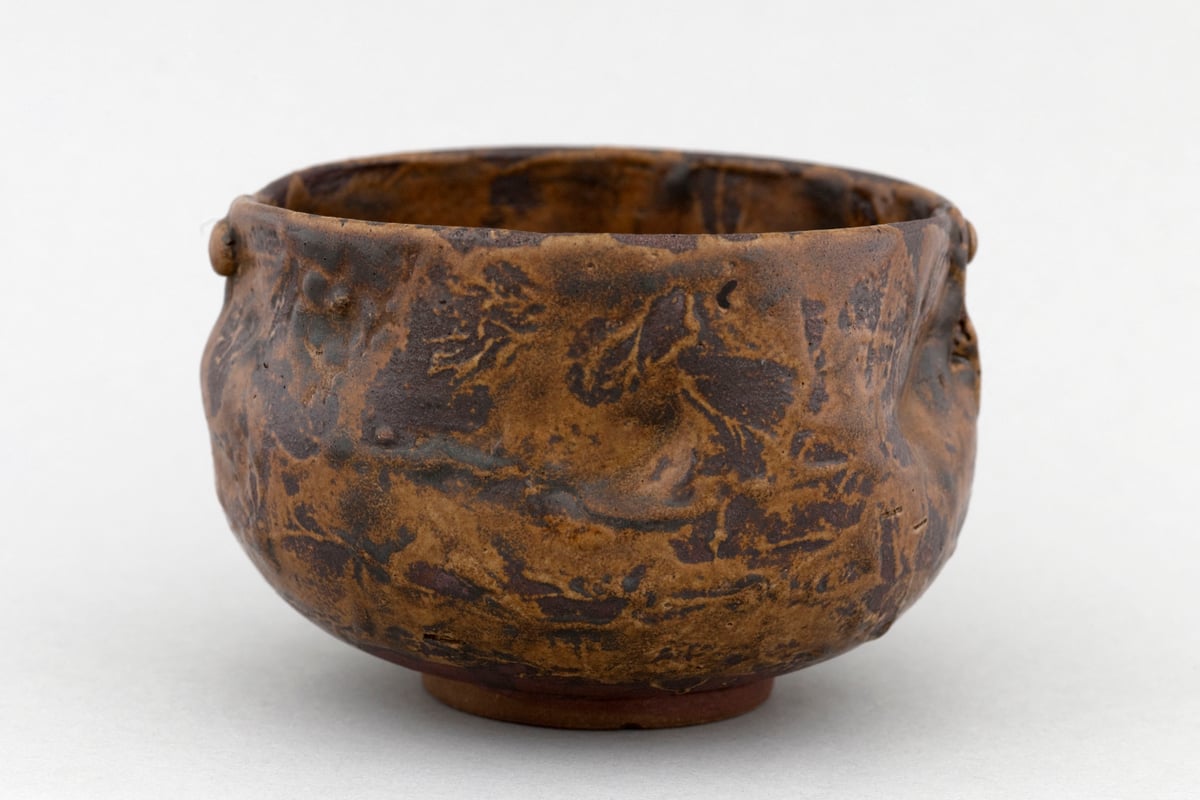
Shitoro-yaki is pottery that has been fired for generations in the Kanaya district of Shimada City, Shizuoka Prefecture. Its name comes from the fact that the area around Kanaya on the west bank of the Oi River was once called '志戸呂郷' (the Shitoro district). Based on excavations of kiln sites, its origins are thought to date back to the late Muromachi period. It is said to have begun when potters who had moved from Seto and Mino built kilns here. It later received the patronage of Tokugawa Ieyasu, and it is also said that Ieyasu granted it a shuinjo (vermilion-seal document). In the Edo period it was counted among Enshu's Seven Kilns (Enshu Nanagama), favored by the tea master Kobori Enshu, and became known throughout Japan as a production center of tea ceramics. The local iron-rich clay fires hard and dense, and is said to suit tea jars, which must be kept away from moisture. Its charm lies in the simple, subdued tones of brown and black iron glazes. Today there are kilns in areas such as 横岡 in Kanaya, making mainly tea utensils for matcha and sencha. It is designated a Shizuoka Prefecture Designated Local Traditional Craft.
Origin
The name Shitoro-yaki comes from the fact that the area around present-day Kanaya in Shimada City, on the west bank of the Oi River, was called '志戸呂郷.' Based on excavations of kiln sites in places such as the 横岡 area of Kanaya, its origins are thought to date back to the late Muromachi period. It is said to have begun when potters who had moved from Seto and Mino built kilns in this area and fired tea utensils. The Shimada City Museum describes it as having begun with pottery fired in the 横岡 area during the Sengoku period.
History
From the end of the Sengoku period through the Edo period, Shitoro-yaki is said to have received the patronage of Tokugawa Ieyasu. It is also said that Ieyasu granted it a shuinjo, and besides tea utensils, everyday wares such as oil-lamp dishes and mortars came to be fired as well. In the Kan'ei era (1624-1644), Kobori Enshu, who served as tea ceremony instructor to the third shogun, Tokugawa Iemitsu, is said to have guided the making of tea utensils. Its fame spread after it was counted among Enshu's Seven Kilns, which reflected Enshu's taste. The kiln fires have been passed down through the Taisho and Showa periods to today's potters.
Features
Shitoro-yaki makes use of iron-rich clay found around Shimada City. This clay fires hard and dense and has long been considered ideal for tea jars, which must be kept away from moisture. Most of the glazes are brown or black iron glazes, and its charm lies in its archaic tones and simple, rustic character. At some kilns, a technique of firing pieces with a distinctive pattern called torafu ('tiger stripes') has also been handed down. From the Edo period into the Meiji period, tea ceramics such as tea bowls, tea caddies (chaire) and fresh-water jars (mizusashi) were made, and tea utensils for matcha and sencha remain the main products today.
Materials Used
| Main Production Areas |
|
|---|
Artisans & Workshops
志戸呂焼 彦次窯
A kiln in 横岡, Shimada City. The kiln, kept going through the Taisho and Showa periods by the grandfather of 丸山成己, has been taken over by 丸山成己, the grandchild. Making use of local clay with components unique to this land, the kiln produces vessels with a subdued, calm character. It also offers pottery experiences.
遠州志戸呂 利陶窯
A Shitoro-yaki kiln in 横岡, Shimada City. Visitors can view and buy works, and tours of the kiln are also available. It is one of the Shitoro-yaki producers introduced by the Shizuoka Prefecture Local Traditional Crafts Promotion Association (静岡県郷土工芸品振興会), and travel information websites also list it as a facility offering pottery classes and pottery experiences.
直透窯(鈴木青宵)
The kiln of the potter 鈴木青宵, located in 横川, Tenryu Ward, Hamamatsu City. Since 1998, 鈴木青宵 has worked in earnest on Shitoro-yaki, focusing mainly on tea ceremony utensils such as Ido tea bowls modeled on Korean (Korai) wares. Pottery classes and pottery experiences are also offered.
Official site →志戸呂焼 細井陶游
The kiln of the potter 細井陶游, who moved to Kanaya, Shimada City, in 2002. With a gallery in Shitoro, Shimada City, 細井陶游 creates original works grounded in the traditions of Shitoro-yaki.
How to Buy
- Direct sales at each kiln
- Each Shitoro-yaki kiln sells its works directly, and some kilns also run pottery classes. According to the Shizuoka Prefecture Local Traditional Crafts Promotion Association, products range widely from about 3,300 yen to about 110,000 yen. When visiting, it is best to contact the kiln in advance.Where to buy →PR
Hands-on Experiences
志戸呂焼 彦次窯
静岡県島田市横岡914
The kiln offers pottery experiences in which you can make a piece in about 30 minutes. The fired pieces are mailed to you at a later date. Reservations are accepted through travel booking websites and other channels.
直透窯(鈴木青宵)
静岡県浜松市天竜区横川364-3
Reservations are required, and bookings are accepted for two or more people. The experience course of about an hour and a half starts from about 3,500 yen, and the mini experience of about 30 minutes costs about 2,000 yen. It takes about two months for the finished piece to be completed. As the kiln is in a mountain area with no public transportation, visitors are expected to come by car.
View details →FAQ
Q. What are 'Enshu's Seven Kilns'?
A. It is a name for seven kilns said to have been favored by the Edo-period tea master Kobori Enshu. Shitoro-yaki is counted as one of them. According to an introduction by the Enshu school of tea ceremony, Enshu guided the making of Shitoro-yaki tea utensils in the Kan'ei era, and the tea caddy (chaire) '初桜' is regarded as a piece that reflects Enshu's taste well.
Q. Is there anywhere I can see old Shitoro-yaki?
A. The Shimada City Museum holds Shitoro-yaki in its collection and frequently displays it in collection exhibitions and other shows. As the timing and content of exhibitions change, please check the museum's information before visiting.