Image: Wikimedia Commons
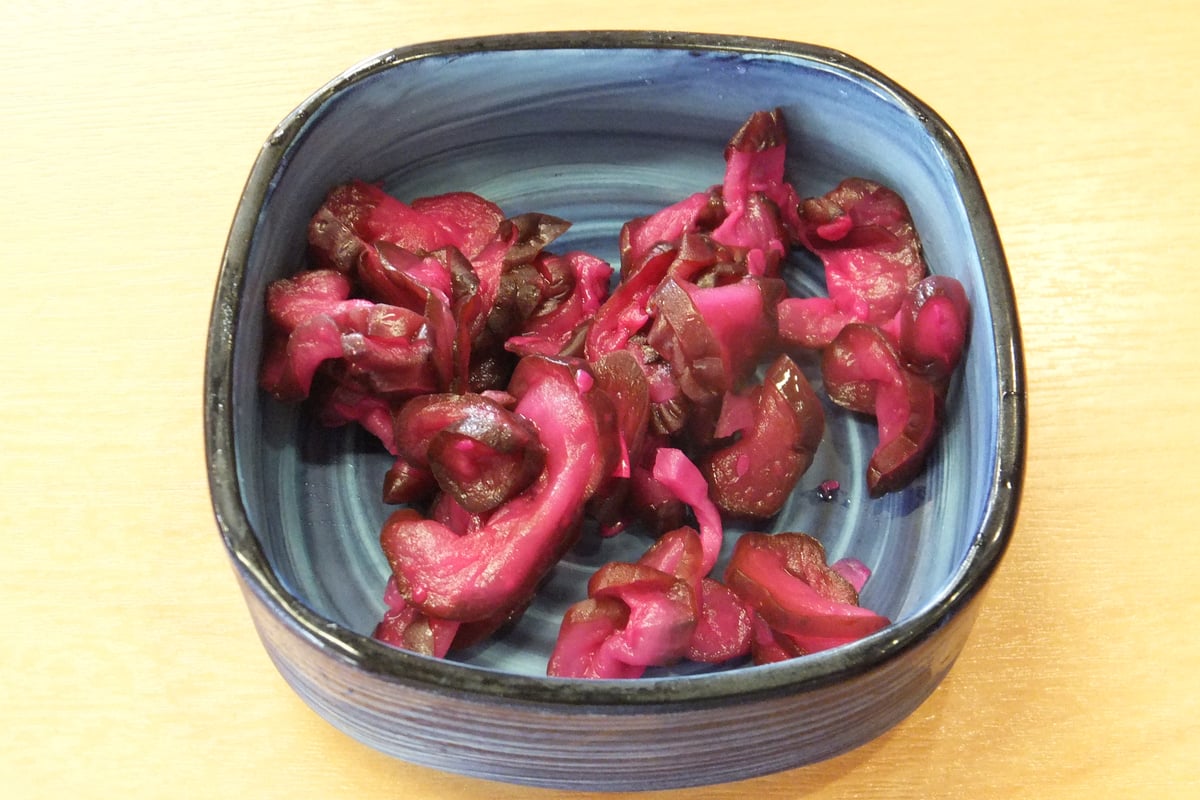
Shibazuke is a vividly purple Kyoto pickle made by salting summer vegetables such as eggplant and cucumber together with red shiso leaves and allowing them to lactic-ferment. Alongside sugukizuke and senmaizuke, it is one of "Kyoto's three great pickles," and the high-quality red shiso grown in the Ohara district of Sakyo Ward, Kyoto City, is an indispensable ingredient. The name is said to originate from an anecdote in which Kenreimon-in Tokuko, the empress consort of Emperor Takakura, spent her remaining years at Jakko-in Temple in Ohara; delighted by the beautiful purple color of the shiso pickles presented to her by local villagers, she named it "murasaki-ha-zuke" ("purple leaf pickle"). While many commercial products are pickled with seasoned vinegar, Ohara still upholds the traditional method of "nama-shibazuke," fermented with only salt and red shiso.
Origin
One theory holds that shibazuke was created by a monk associated with Sanzen-in, a renowned temple in Ohara. As for the origin of the name, a widely known anecdote tells of Kenreimon-in Tokuko, empress consort of Emperor Takakura, who retired to Jakko-in Temple in Ohara after the fall of the Taira clan; she was greatly delighted by the beautiful purple color of the shiso pickles presented to her by local villagers and named them "murasaki-ha-zuke."
History
Ohara, with its basin-like terrain, is little affected by pollen from outside, and cultivation there has long continued as a production area for red shiso. From the Edo period onward, it became established as a pickle combining locally grown red shiso with summer vegetables such as eggplant, and from the Meiji era it came to be known throughout Japan as a specialty product of Ohara.
Features
Its distinctive features are the vivid purple color and refreshing tartness that result from salting eggplant, cucumber, myoga ginger, and other vegetables together with red shiso leaves and lactic-fermenting them. Because the traditional method uses no seasoned vinegar and ferments with only salt and red shiso, its flavor differs from that of commercially sold, sweet-vinegar-style shibazuke.
Main Ingredients
Food Culture
As one of Kyoto's three great pickles alongside senmaizuke and sugukizuke, it is cherished nationwide as an accompaniment to rice or a snack with sake, and in the Ohara district, a food culture intertwined with red shiso cultivation continues to be passed down.
How It Differs from Home Cooking
Much of the shibazuke found in households and at supermarkets is typically pickled using seasoned vinegar, but some long-established shops in Ohara continue to uphold the traditional method of "nama-shibazuke," lactic-fermented using only salt and red shiso.
Famous Shops
土井志ば漬本舗 総本店
京都市左京区大原勝林院町(三千院参道)
Founded in 1901 (Meiji 34). Shibazuke is about 540 yen and up.
View details →志ば久
京都市左京区大原勝林院町58
Grows its own red shiso on its farm. Green shiba and red shiba are each about 540 yen and up.
View details →FAQ
Q. What is the origin of the name shibazuke?
A. It is said to derive from an anecdote in which Kenreimon-in Tokuko, who retired to Jakko-in Temple in Ohara after the fall of the Taira clan, was delighted by the purple color of shiso pickles presented to her by local villagers and named them "murasaki-ha-zuke."