Image: Wikimedia Commons
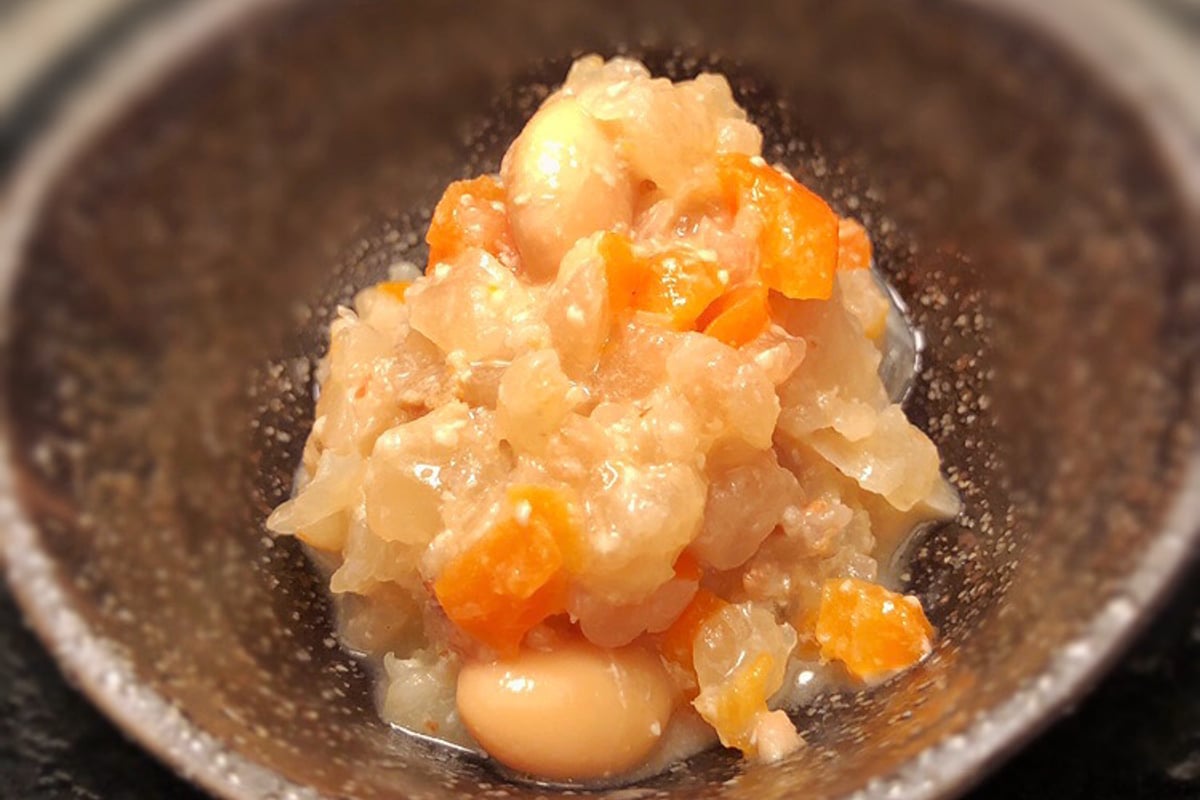
Shimotsukare is a local dish of northern Kanto centered on Tochigi Prefecture, made by simmering together leftover salted salmon heads from New Year's, leftover lucky soybeans from Setsubun, grated daikon radish and carrot, and sake lees. It is said to have been made in households since before the Edo period as a ceremonial dish offered together with red rice to Inari shrines on Hatsu-uma, the first Horse Day of the second lunar month. Its history is so old that a similar dish is said to appear in a Kamakura-era collection of tales, and there is a saying that eating shimotsukare from seven different households brings freedom from illness. Known also as a dish whose distinctive appearance and tangy, fermentation-derived flavor divide opinion, it embodies the wisdom of earlier generations who made full use of leftovers from Setsubun and New Year's without waste, and in 2023 it was designated in the traditional category of the Agency for Cultural Affairs' '100-Year Foods.' Still passed down today in homes and at direct-sales markets, it stands as a symbol of Tochigi Prefecture's food culture.
Origin
Shimotsukare's origins are old, so old that a similar description is said to appear in the Kamakura-era collection of tales Uji Shui Monogatari. There are several theories about the origin of its name, including one that it derives from 'Shimotsuke karei,' meaning 'a dish made in the households of Shimotsuke Province' (present-day Tochigi Prefecture), and another that it comes from a corruption of 'suri-tsuke,' referring to a pickled dish made with vinegar.
History
On Hatsu-uma, the first Horse Day of the second lunar month, a custom took root across northern Kanto of placing shimotsukare in a fresh straw wrapper and offering it together with red rice at Inari shrines to pray for fire safety and household well-being. The salmon head was believed to have the power to ward off evil, and the leftover beans from Setsubun were considered auspicious as well, since 'mame' (beans) evokes 'mame' meaning to drive away demons; for these reasons, shimotsukare has been passed down through generations as an auspicious dish that makes use of the remnants of New Year's and Setsubun. In 2023, it was designated in the traditional category of the Agency for Cultural Affairs' '100-Year Foods,' drawing renewed attention as a food culture to be passed on to future generations.
Features
The basic method is to simmer together, for a long time, the head of salted salmon, leftover soybeans from New Year's, daikon radish and carrot grated coarsely with a device called an oni-oroshi (demon grater), and sake lees. Its distinctive flavor comes from the combination of the ingredients' natural taste and the tangy notes derived from the fermentation of the sake lees, along with the chunky texture of the coarsely grated vegetables; the proportions of ingredients and simmering time vary from household to household.
Main Ingredients
Food Culture
Born from the wisdom of earlier generations who made full use of leftover Setsubun beans and New Year's salted salmon heads without waste, shimotsukare has been passed down through generations as a ceremonial dish tied to the Inari faith of Hatsu-uma. In rural areas of northern Kanto, the custom of sharing it with neighbors also survives.
How It Differs from Home Cooking
At home, it strongly retains its character as a ceremonial dish made using leftovers from New Year's and Setsubun, and it is notable that each household still preserves its own recipe, including the coarse texture achieved with an oni-oroshi grater and the proportion of sake lees used.
| Shimotsukare from Michi-no-Eki Bato | At Michi-no-Eki Bato in Nakagawa Town, the roadside station's restaurant-made shimotsukare is a popular item sold at the direct-sales corner from mid-December to early March the following year, priced from around 450 yen per pack. It offers an easy way to bring home an authentic taste of local home cooking.Where to buy →PR |
|---|
FAQ
Q. Why does shimotsukare have such a distinctive appearance?
A. Because the salmon head, soybeans, and coarsely grated daikon radish and carrot are simmered as they are, the dish retains a distinctive appearance in which the shape of the ingredients remains visible. This is because it was originally a dish designed to use up leftovers from New Year's and Setsubun without waste, and historically greater importance was placed on auspiciousness and wishes for good health than on seasoning.