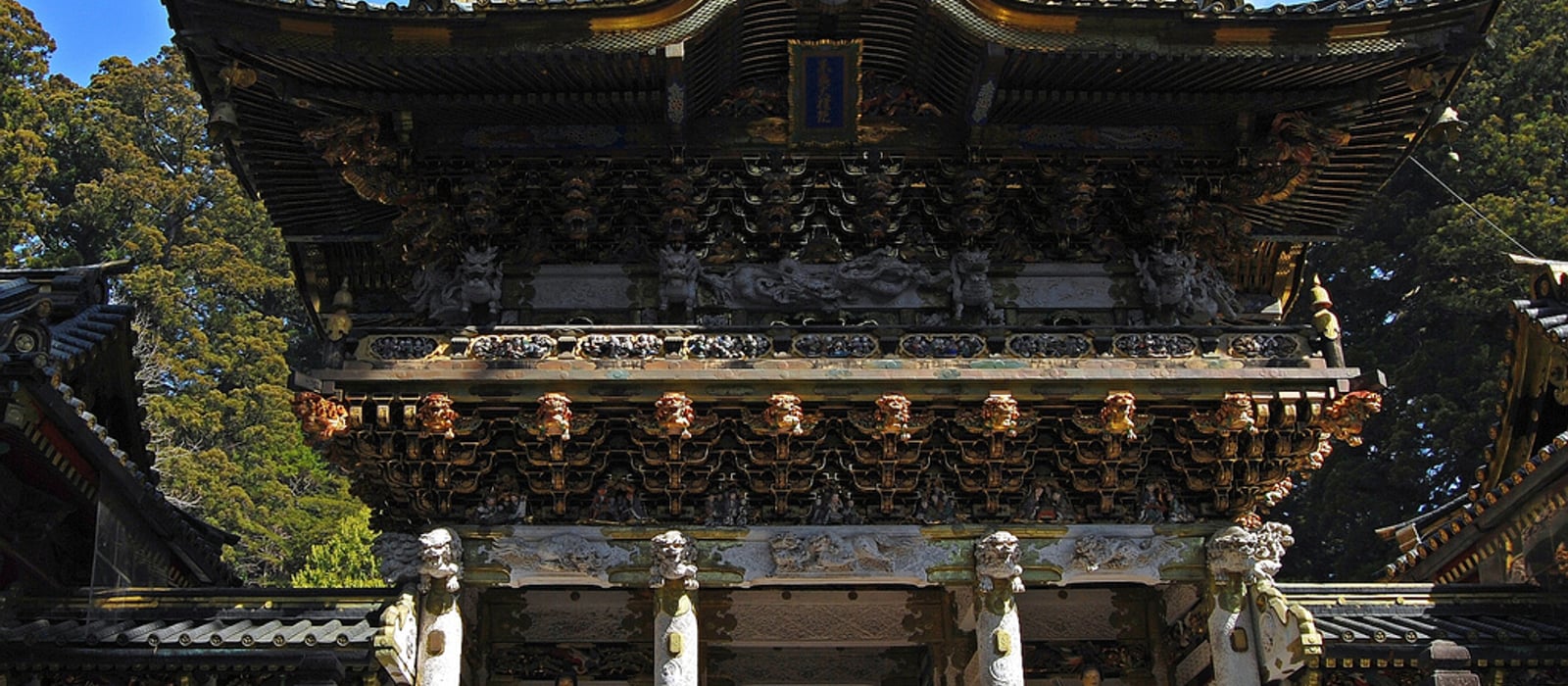
 Image: Wikimedia Commons
Tochigi Prefecture
A prefecture where the shrines and temples of Nikko and the grand nature of the Nasu Highlands coexist with handcraft and food traditions passed down for generations. Diverse traditional crafts have flourished here, from Mashiko-yaki, which the potter Hamada Shoji made a center of the Mingei (Folk Craft) Movement, to the UNESCO Intangible Cultural Heritage of Yuki-tsumugi silk, and Nikko-bori, which carries on the techniques of the carvers of Nikko Toshogu Shrine. Its food culture is equally rich in local color, from Utsunomiya Gyoza, brought back by soldiers returning from Manchuria, to Sano Ramen with its distinctive hand-pulled noodles made with bamboo poles, and Shimotsukare, offered to Inari shrines on Hatsu-uma day. Blessed with the granary of the Kanto Plain and clear mountain streams, the prefecture is also known for agricultural products such as wheat, kanpyo (dried gourd strips), and strawberries, and continues to invest in building the Tochigi Wagyu beef brand.
Tochigi's Traditional Crafts

Kanuma Kumiko
Kanuma Kumiko
Kanuma Kumiko is a representative woodcraft of Kanuma City, Tochigi Prefecture, known as 'the town of woodworking.' It is said to have originated when woodworking craftsmen gathered from across the country for the construction of Nikko Toshogu Shrine settled in the area and used fine local Nikko cedar to beautifully decorate shoji screen lattices, a tradition carried on for about 400 years. Woods such as Kiso cypress, Akita cedar, and Nikko cedar are finely processed and assembled entirely by hand, without any nails or metal fittings, to intricately render geometric patterns such as asanoha (hemp leaf), gomagara (sesame), and kikko (tortoiseshell). Traditionally used in fittings such as shoin-style shoji screens, ranma transoms, and Buddhist altars, in recent years it has also expanded into interior goods such as coasters, vases, and lighting, gaining popularity across generations. It is designated a Traditional Craft of Tochigi Prefecture and has also been certified under Kanuma City's own 'Kanuma Brand,' continuing to be promoted as a craft representative of the region.
Karasuyama Washi
Karasuyama Washi
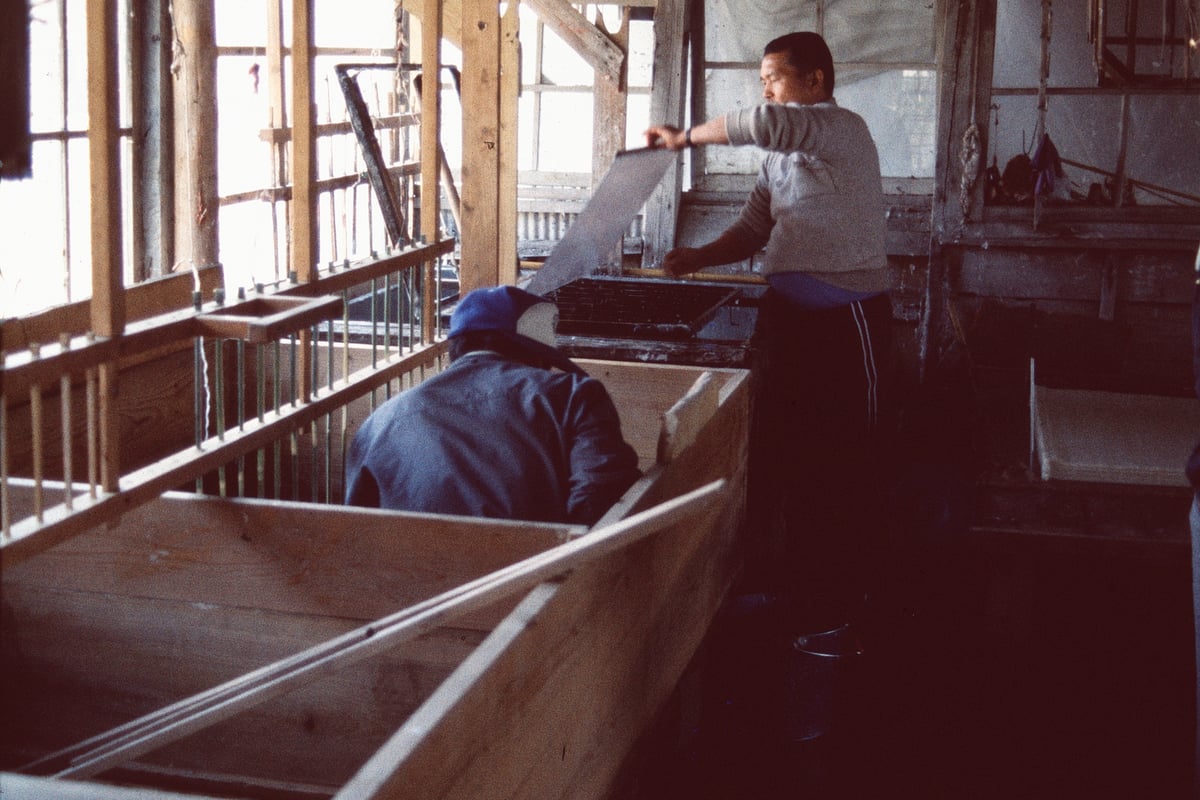
Karasuyama Washi is a handmade Japanese paper passed down in Nasukarasuyama City, Tochigi Prefecture. It is said to have originated in the Kenpo era (1213-1219) of the Kamakura period, when the Nasu clan, who ruled this region, invited paper-making artisans from Echizen (present-day Fukui Prefecture) to produce Nasu-hosho paper in Mukoda village (now Nasukarasuyama City). Made by hand from kozo (mulberry bark) fiber, it is characterized by a thick, dense texture, and by the mid-Edo period it was known as a fine paper on par with Echizen hosho, Mino-gami, and Nishinouchi paper. Among its varieties, the Hodomura-gami handed down in the Shimosakai area is a thick paper made from Nasu kozo, a high-quality mulberry bark unique to the Nasu region, using traditional techniques such as the distinctive hannagashi ('half-flow') papermaking method and sun-drying on ginkgo wood boards. Prized for combining strength with an elegant character, it was designated a National Selected Intangible Cultural Property in 1977. Today, Fukuda Washi Seishijo, the only remaining paper mill in Nasukarasuyama City, carries on this tradition, and the paper is used for a wide range of purposes, from diplomas and craftwork to decorations for the floats of the Yamaage Festival.
Kosunago-yaki
Kosunago-yaki
Kosunago-yaki is pottery fired in Kosunago, Nakagawa Town, Nasu District, Tochigi Prefecture. Tradition holds that it began around 1830 (Tenpo 1), in the late Edo period, when Tokugawa Nariaki, lord of the Mito Domain, discovered high-quality clay in the area and had it used as raw material for the domain's official pottery works. The area became established as a production center when the potter known as first-generation Hanpei (Saito Eizaburo), who had come from Etchu Toyama, was invited by the Fujita family, village headmen of Kosunago, from Shitori Village (present-day Nasukarasuyama City) to build a climbing kiln there. Its representative features are a golden-hued 'kinkessho' (gold crystal) glaze and a softly pink-tinted 'shinsha' (cinnabar) glaze; because the local Kosunago clay is rich in kaolin, it produces ware with a distinctive character combining qualities of both pottery and porcelain. Today, kilns in the area such as Fujita Seitosho and Ichikawa Gama continue to carry on the tradition, and in 2013 the Kosunago district became the first area in Tochigi Prefecture to join the 'Most Beautiful Villages in Japan' association.
Kurobane Aizome
Kurobane Aizome
Kurobane Aizome is an indigo-dyeing tradition passed down in the Kurobane district of Otawara City, Tochigi Prefecture. It is said to have originated when the first-generation dyer, Konya Shinbei, buried indigo vats in the ground at Kurobane and began kon-zome dyeing during the Bunka-Bunsei era (around 1804-1829). The technique uses a traditional dye made by adding wheat bran, lime, and sake to sukumo (fermented indigo leaves) from Tokushima and fermenting it further in the indigo vats, and combines this with a pre-dyeing process called kon-zome, using pine soot ink (shoen-boku) and soybean liquid, to achieve a deep, rich indigo blue that resists fading. Kurobane Aizome Konya, which has tended its indigo vats for around 200 years, is now the only workshop known to carry on this technique, and it has been designated a Tochigi Prefecture Traditional Craft. Kurobane is also known as the place where the haiku poet Matsuo Basho stayed longest during his journey recorded in Oku no Hosomichi (The Narrow Road to the Deep North) - thirteen nights over fourteen days - and the culture of indigo dyeing lives on alongside the atmosphere of this merchant town dating back to the Edo period.
Mamada Himo
Mamada Himo
Mamada Himo is a braided cord (kumihimo) technique said to have been passed down since the Kamakura period in Mamada, Oyama City, Tochigi Prefecture. Using a technique in which weights are attached to both ends of the threads to keep them constantly taut while crossing many strands, it produces cords with intricate, finely detailed patterns. Its beautiful finish, achieved with gold and silver thread and plant-dyed pure silk thread, is a hallmark, and it was once used for the cords of samurai armor and sword sageo (hanging cords). The area's modern history as a production center began in 1922 (Taisho 11), when first-generation Watanabe Asaichi returned to Mamada after completing an apprenticeship in kumihimo braiding in Kinshicho, Tokyo, and opened a shop. In 1954, Yanagi Muneyoshi of the Mingei (Folk Craft) Movement named the technique 'Mamada Himo,' and it was designated an Intangible Cultural Property of Oyama City in 1964 and of Tochigi Prefecture in 1973. The Watanabe family has carried on the technique across generations, and today it is enjoyed as a kimono accessory and everyday item, used for obi cords, haori cords, and loop ties.
Mashiko-yaki
Mashiko-yaki
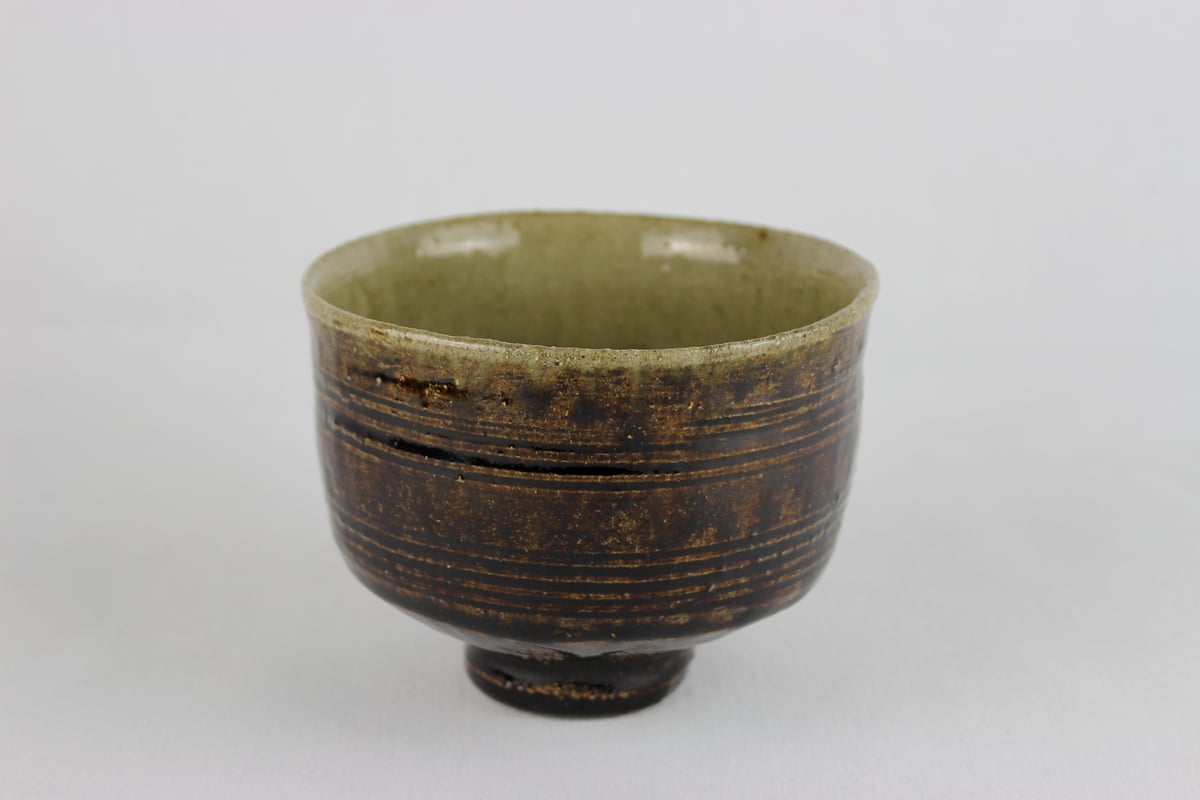
Mashiko-yaki is pottery produced in Mashiko, Haga District, Tochigi Prefecture, designated a Traditional Craft by the Minister of Economy, Trade and Industry on August 3, 1979. Its origins are said to trace back to around 1853, when Otsuka Keizaburo, who had trained in Kasama, opened a kiln in Mashiko; the area first developed as a production center for everyday earthenware such as jars, teapots, and mortars. In 1924, near the end of the Taisho era, the potter Hamada Shoji settled in Mashiko and made it a base for advancing the Mingei (Folk Craft) Movement together with Yanagi Muneyoshi and Kawai Kanjiro, while his deep friendship with the British potter Bernard Leach also helped spread the fame of Mashiko-yaki. Fired with thick applications of persimmon glaze and rice-husk-ash white glaze over coarse, iron-rich clay, the ware has a rustic, warm texture combined with a sense of weight. Another hallmark is its free style, unbound by any fixed convention and shaped by each maker's individuality, ranging from everyday tableware to works with strong artistic character. Today, many kilns are gathered in Mashiko, and the spring and autumn pottery markets together draw around 600,000 visitors.
Nikko-bori
Nikko-bori
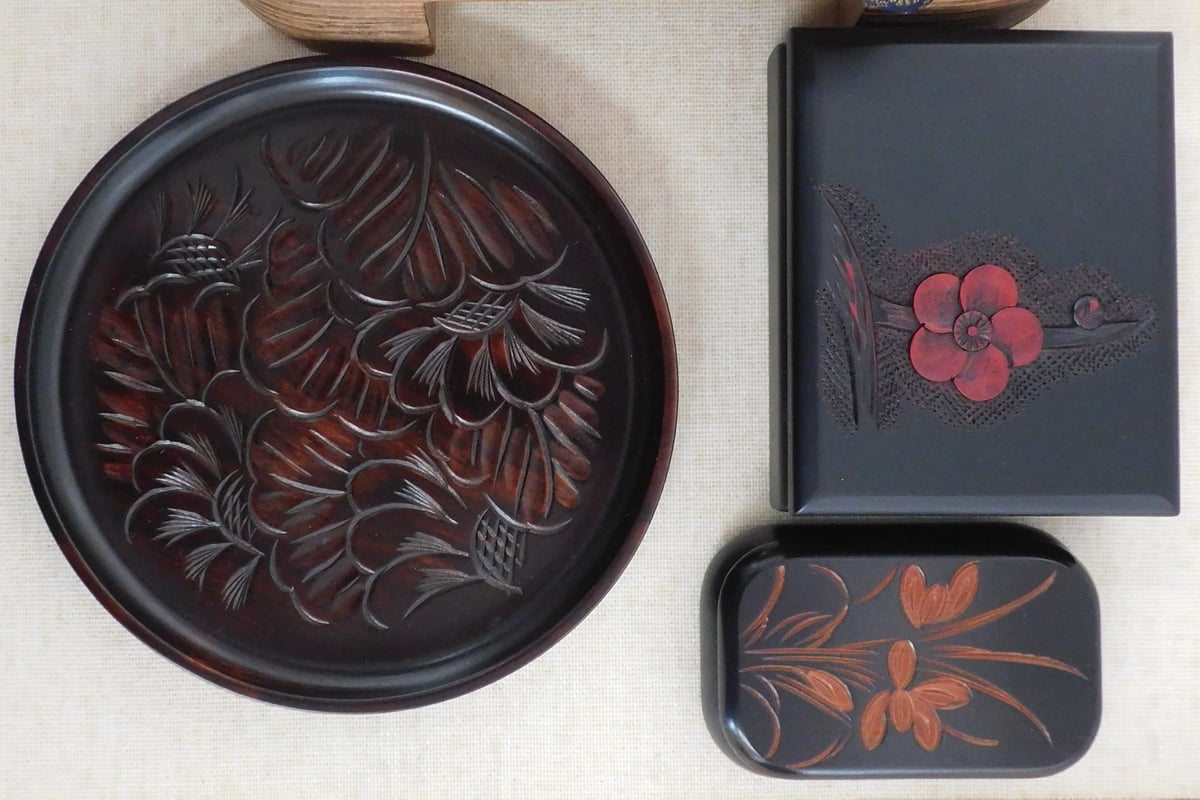
Nikko-bori is a traditional wood-carving craft passed down in Nikko City, Tochigi Prefecture. It is said to have originated as a sideline pursued in their spare time by master craftsmen gathered from across the country for the rebuilding of Nikko Toshogu Shrine (1634-1636) under the third Tokugawa shogun, Iemitsu. Its most distinctive feature is a unique carving knife called the 'hikkaki,' or 'Nikko sankakuto' (Nikko triangular knife), originally a tool used to scrape off lacquer during shrine repairs. Carving by folding the blade tip and pulling it toward oneself produces Nikko-bori's characteristic flowing curves, and designs are strongly influenced by the Toshogu carvings, centering on plant motifs such as peonies, chrysanthemums, plum blossoms, and cherry blossoms. The carved wood is finished with layers of lacquer, and the craft has long been cherished for everyday items such as trays, tea-cup stands, and small drawers. Today, visitors to workshops and hands-on facilities in Nikko City can try carving a hand mirror or confectionery dish using the hikkaki knife themselves.
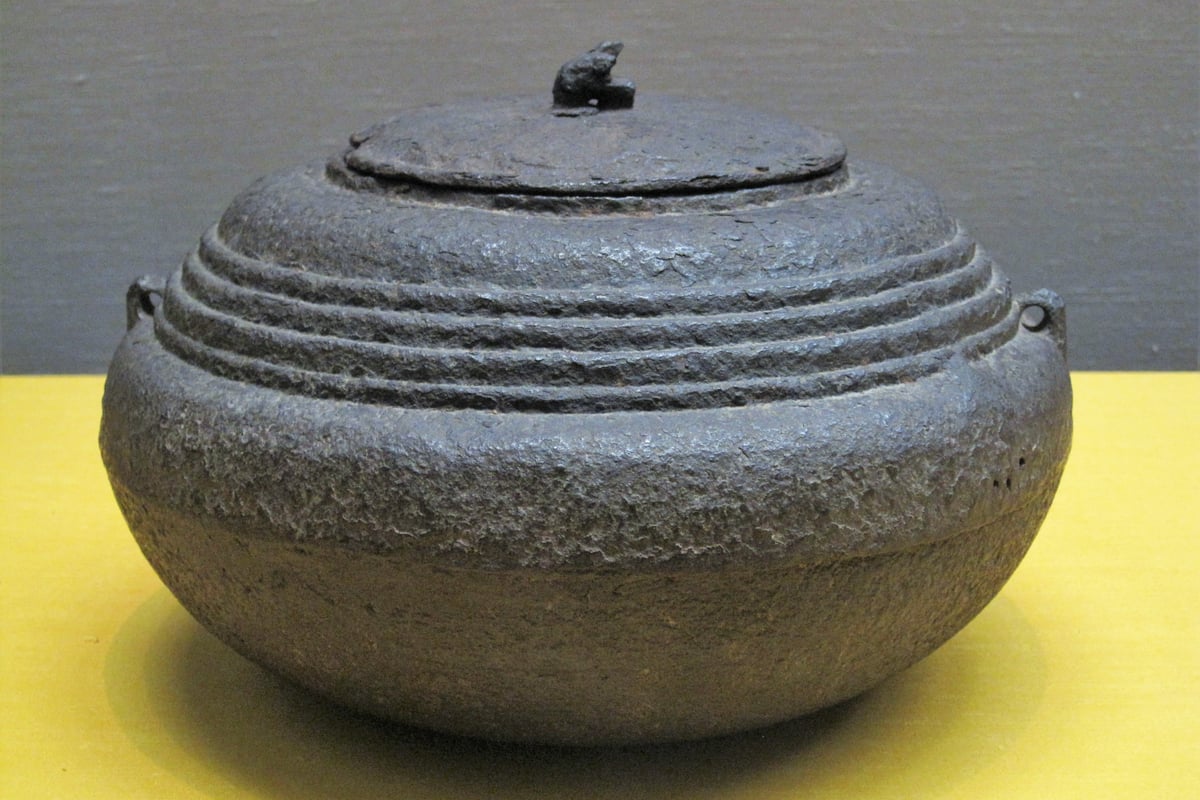
Temmyo Imono
Temmyo Imono
Temmyo Imono is a traditional cast-metal craft passed down in Sano City, Tochigi Prefecture. According to tradition, it began during the Tengyo era (938-947), when five casters who had relocated from Kawachi Province cast weapons on the order of Fujiwara no Hidesato, making it one of the oldest surviving casting centers in Japan with a history of over a thousand years. By the end of the Kamakura period, everyday cast-iron pots such as rice-porridge cauldrons and water-boiling kettles were being widely produced, and as the tea ceremony grew popular, tea kettles with a rustic, rough-textured surface became prized by tea masters, earning Temmyo the nickname 'Ashiya in the west, Temmyo in the east' alongside the Ashiya kettles of Fukuoka. Sen no Rikyu, Oda Nobunaga, and Toyotomi Hideyoshi are all said to have used Temmyo tea kettles. Today, casters in Sano still preserve the sand-mold casting technique much as it was in the Edo period, hand-finishing wind chimes, tea kettles, and temple bells one at a time. In March 2024, 'Tools and Products of Sano's Temmyo Casting' was designated an Important Tangible Folk Cultural Property, drawing renewed attention to its value.
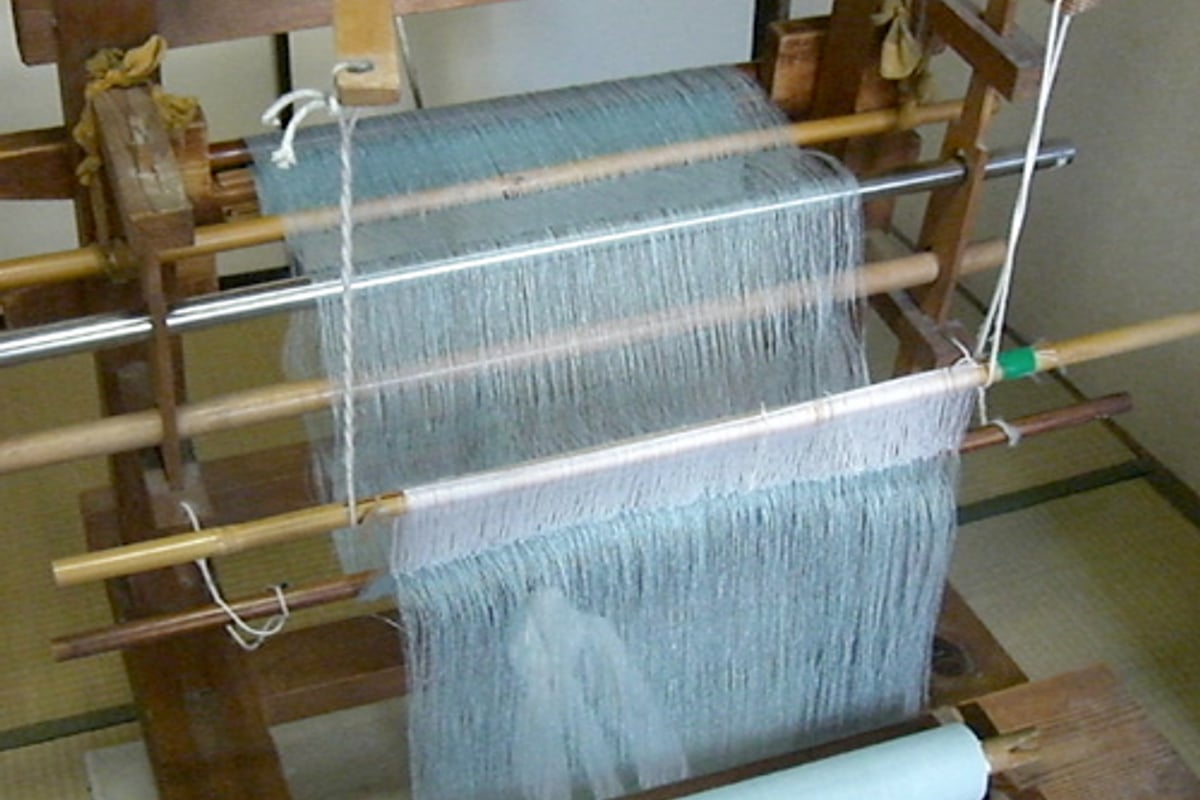
Yuki-tsumugi
Yuki-tsumugi
Yuki-tsumugi is a silk textile woven for centuries across present-day Yuki City in Ibaraki Prefecture and, across the Kinu River, the area around Oyama City in Tochigi Prefecture. Its prototype is said to be 'ashiginu,' a silk fabric presented to the imperial court by Hitachi Province in the Nara period; in the Kamakura period its plain, sturdy look made it popular with warriors of the Kanto region, and Yuki became the center of its production. By the Muromachi period it was known nationwide as a specialty product presented to the shogunate under the name 'Yuki-tsumugi.' During the Keicho era (1596-1615), techniques were established through improvements led by the magistrate Ina Tadatsugu, and the textile was designated a Traditional Craft by the Minister of Economy, Trade and Industry on March 30, 1977, followed by UNESCO Intangible Cultural Heritage listing in 2010. Its defining feature is the 'jibata' (ground loom) technique, in which the weaver ties the warp threads to their own waist and weaves with the whole body, using almost untwisted thread hand-spun from silk floss - producing fabric lighter than that woven with reeled silk, with a distinctively soft feel and finely detailed kasuri (ikat) patterns.
Tochigi's Local Food
Chitake Soba
Chitake Soba
Chitake Soba is a local dish from the flatlands of Tochigi Prefecture, in which cold soba noodles are dipped in a broth made from chitake (milk-cap) mushrooms. Chitake mushrooms are known for releasing a milky white liquid when torn open, and they appear in markets ahead of the autumn mushroom season, from early August around the Obon holiday. When stir-fried with eggplant and then simmered in water, they produce a broth with a richness and aroma rivaling matsutake, and dipping cold soba into this broth is the classic way to eat it. The dish is said to have already been enjoyed in the Edo period, centered on Kanuma City, known as a soba-producing area, and it remains a summer tradition served today at both specialty shops and home tables. In recent years, changes to the satoyama environment have reduced the harvest and distribution of chitake mushrooms themselves, making this dish an increasingly treasured, rare flavor that can only be enjoyed during its short season.
Komugi Manju
Komugi Manju
Komugi Manju is a traditional confectionery of Tochigi Prefecture consisting of a wheat-flour dough wrapped around sweet red bean paste and steamed. Because baking soda is added to the dough to make it rise light and fluffy, it is also called 'Tanzan Manju' (soda buns), and it is known for its simple, gentle sweetness. Tochigi Prefecture has long practiced double-cropping of wheat alongside rice, so wheat-based foods such as udon and manju have long been part of everyday life. It is considered an essential treat during the Obon season, when the wheat harvest is finished and freshly milled flour becomes available, and it has traditionally been offered at the family Buddhist altar and shared with relatives and neighbors. In the Nasu region of northern Tochigi, there is also a custom of offering this manju on August 1, known as 'Kamanofuta Tsuitachi' (the day the lid of the hell cauldron opens), and it remains a home-cooked flavor deeply tied to the region's annual observances.
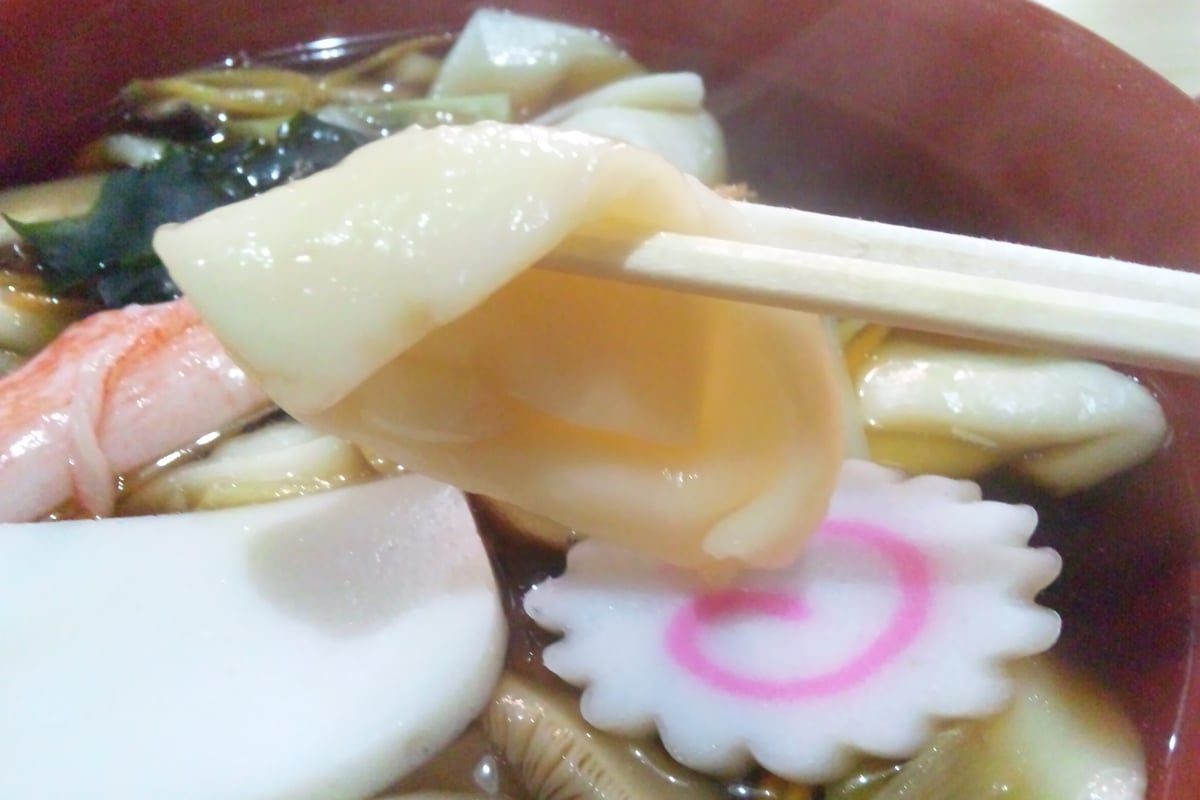
Mimi Udon
Mimi Udon
Mimi Udon is a local dish from the Kuzuu district of Sano City and the Shiroyama district of Utsunomiya City in Tochigi Prefecture, made by shaping kneaded wheat-flour dough into an ear shape and boiling it. It is said to have originated in the late Edo period, and by the Taisho era had spread as a dish believed to ward off evil. Modeled after the ears of a demon, the custom of eating it at New Year is rooted in the belief that eating the demon's ears wards off misfortune and prevents unwanted rumors or bad luck, praying for good health and harmonious neighborhood relations. In the Kuzuu district of Sano City, the custom continues today of making a large batch of Mimi Udon at year's end, keeping it soaked in cold water for preservation, and serving it to guests who visit over the New Year. Its distinctive shape comes from kneading wheat flour with lukewarm water and salt, rolling it flat, cutting it into matchbox-sized rectangles, then folding each piece in half and pinching the open edges closed; it is typically served in a soy-sauce-based broth.
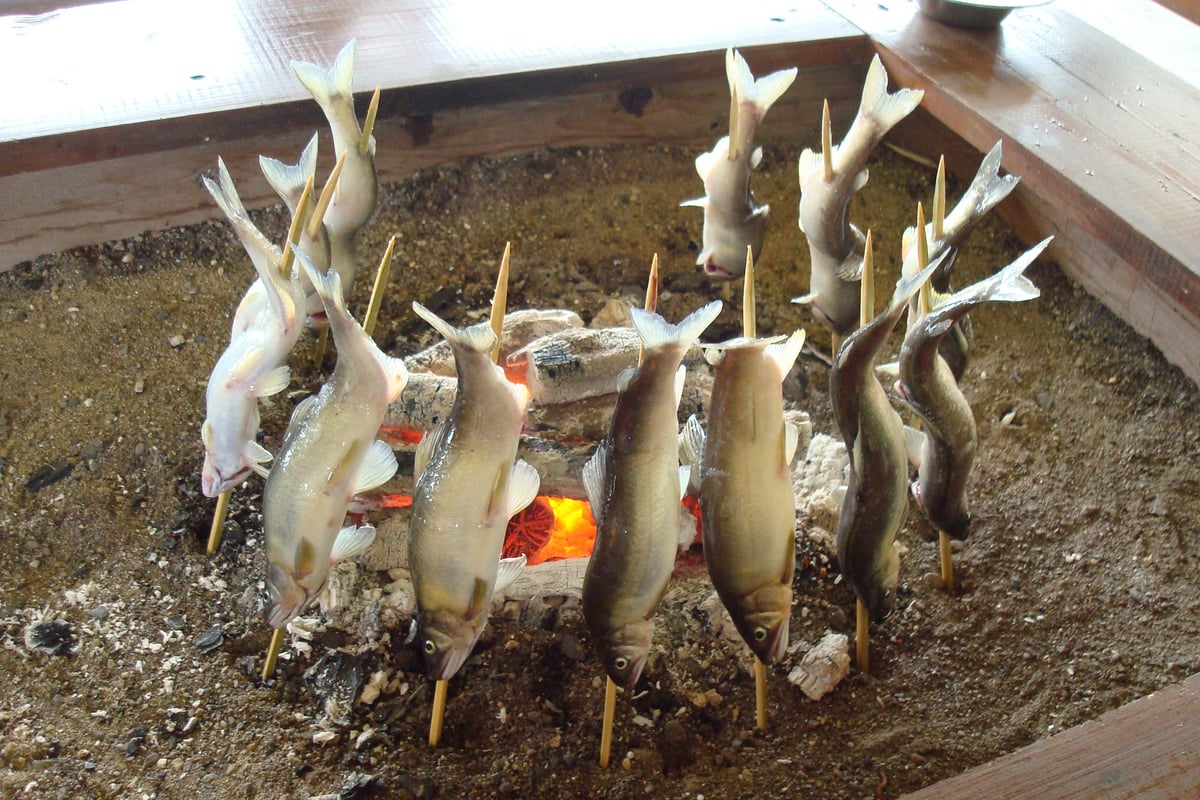
Nakagawa River Ayu Cuisine
Nakagawa River Ayu Cuisine
The Naka River, a Class A river flowing through eastern Tochigi Prefecture from its source in the Nasu Highlands, is a clear stream known as one of Japan's finest for ayu (sweetfish) catches. Along this river, a traditional fishing method called 'yana' has long been practiced, damming the current into a V-shape and letting ayu leap up onto bamboo lattices set in the flow. Every year from mid-July to around the end of October, tourist yana facilities are set up along the river for a limited season, offering visitors the chance to catch leaping ayu by hand as well as enjoy a variety of ayu dishes, including salt-grilled ayu slowly cooked over charcoal, kamameshi rice, and sashimi. Facilities such as Kurobane Kanko Yana in Otawara City and Ose Kanko Yana in Motegi Town dot the banks of the Naka River, and the area bustles with families and visitors from summer into autumn, offering a seasonal specialty that captures the blessings of Tochigi's clear waters.
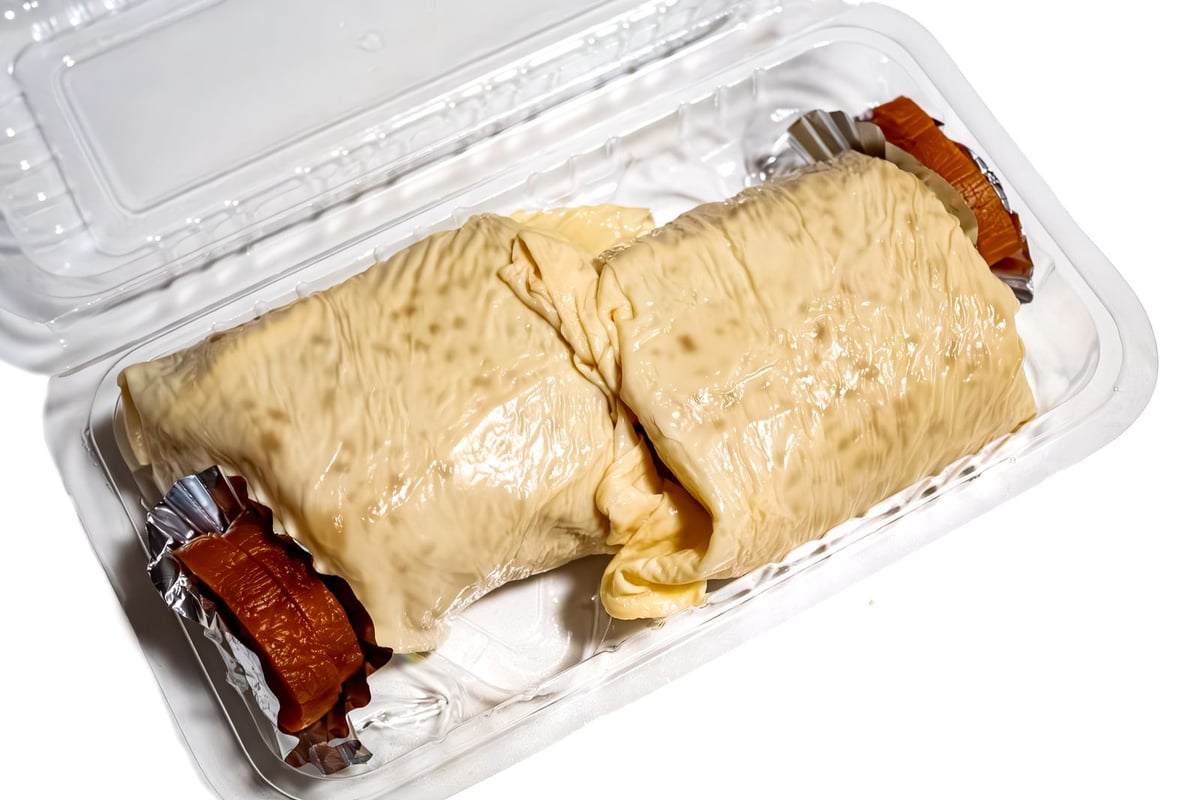
Nikko Yuba
Nikko Yuba
Nikko Yuba is a processed soy milk food that has been made in Nikko City, Tochigi Prefecture, since ancient times. It is characterized by its thick, hearty texture, created by layering the skin that forms when soy milk is simmered. It is said to have originated when yuba, brought back from Tang-dynasty China by a traveling monk, was introduced as shojin cuisine (Buddhist vegetarian cooking) to Nikko-san Rinno-ji Temple, founded by the priest Shodo Shonin in 766. When Tokugawa Ieyasu was enshrined at Nikko Toshogu in the early Edo period, the inns and shojin cuisine restaurants that served worshippers developed their own refinements, and the dish earned a reputation as 'Nikko Yuba.' The biggest difference from Kyoto's yuba (湯葉) — made by inserting a skewer at the edge of the skin and lifting it up flat — is that Nikko's yuba (湯波) is rolled up by inserting a skewer at the center and folding it in two, giving it a rounded shape with many layered folds. It has long been enjoyed raw, like sashimi, as well as cooked in deep-fried and simmered dishes.
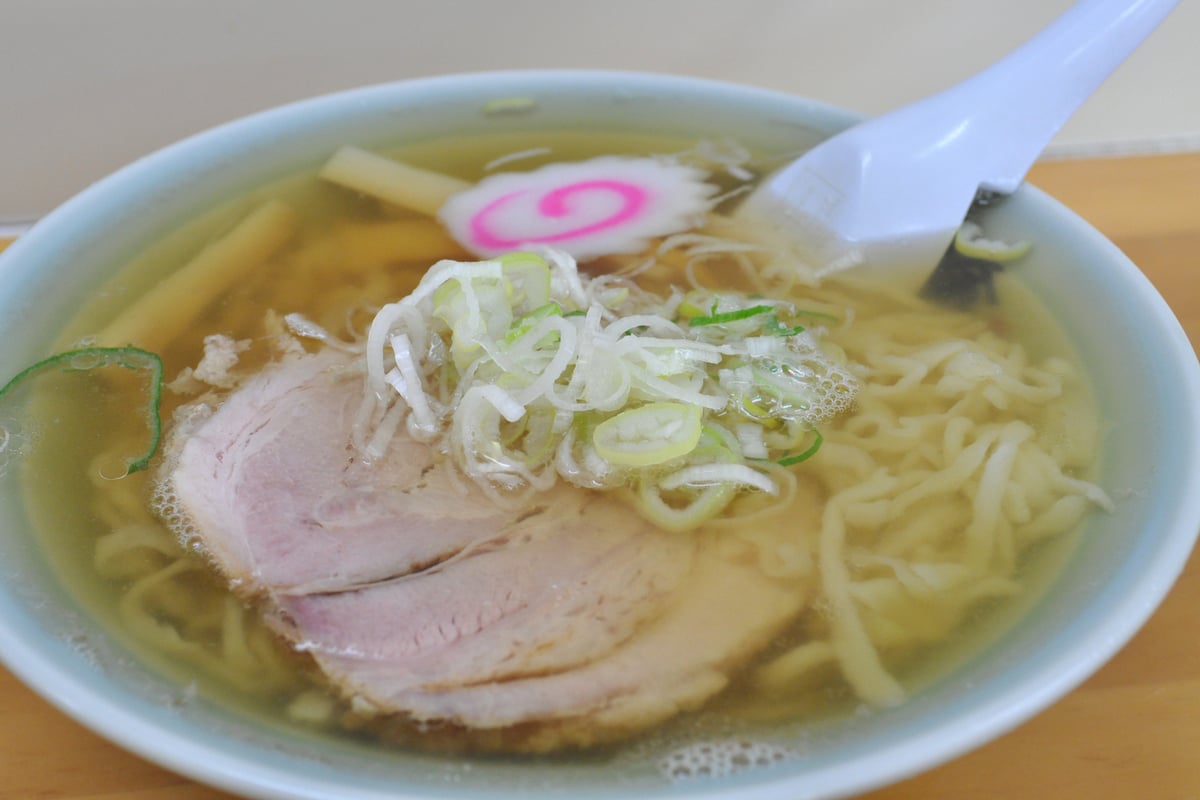
Sano Ramen
Sano Ramen
Sano Ramen is a local ramen loved in Sano City, Tochigi Prefecture, most distinguished by its flat, curly noodles made using the 'aodake-uchi' (green bamboo pole) method, in which a bamboo pole is used to stretch the dough with the maker's body weight. It is said to have begun in the Taisho era, when a Chinese cook working at a diner in the city taught the aodake-uchi technique to a local chef, and as the person who learned the technique went on to open his own shop, it spread throughout the city. The clear soy-sauce-based soup, made primarily from chicken and pork bones, has a firm body that pairs well with the irregular, curly noodles, and its light flavor never grows tiresome. Today, more than 200 ramen shops are packed into the city, many of which still carry on the traditional aodake-uchi technique. Sano City has also put effort into community revitalization as a 'ramen town,' drawing many tourists who enjoy shop-hopping.
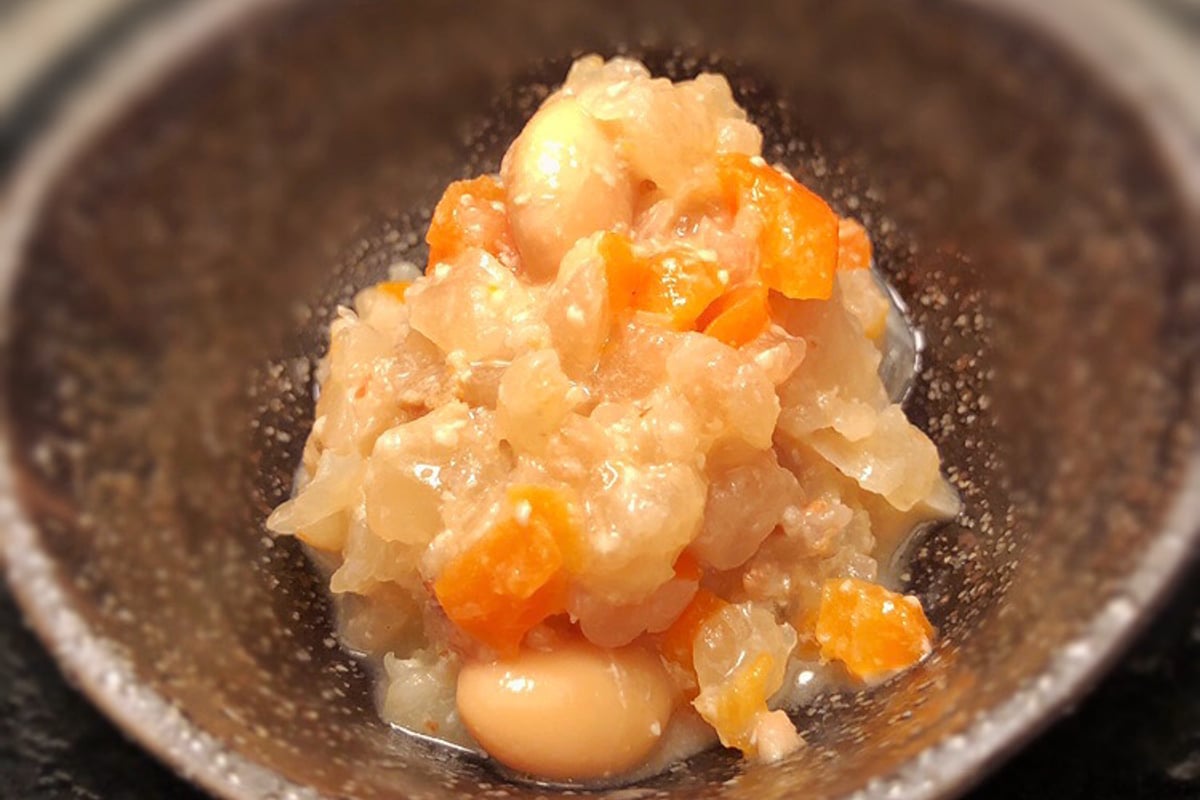
Shimotsukare
Shimotsukare
Shimotsukare is a local dish of northern Kanto centered on Tochigi Prefecture, made by simmering together leftover salted salmon heads from New Year's, leftover lucky soybeans from Setsubun, grated daikon radish and carrot, and sake lees. It is said to have been made in households since before the Edo period as a ceremonial dish offered together with red rice to Inari shrines on Hatsu-uma, the first Horse Day of the second lunar month. Its history is so old that a similar dish is said to appear in a Kamakura-era collection of tales, and there is a saying that eating shimotsukare from seven different households brings freedom from illness. Known also as a dish whose distinctive appearance and tangy, fermentation-derived flavor divide opinion, it embodies the wisdom of earlier generations who made full use of leftovers from Setsubun and New Year's without waste, and in 2023 it was designated in the traditional category of the Agency for Cultural Affairs' '100-Year Foods.' Still passed down today in homes and at direct-sales markets, it stands as a symbol of Tochigi Prefecture's food culture.
Tochigi Wagyu
Tochigi Wagyu
Tochigi Wagyu is a brand name given only to beef from Japanese Black cattle raised with great care by designated producers in Tochigi Prefecture that meet a strict standard: a carcass grade of A or B and rank 4 or higher. The name was established in 1988 (Showa 63), as part of an effort to build a brand around Tochigi-produced wagyu. About 200 designated producers raise calves of superior bloodlines over a long fattening period of roughly 30 months, adding Tochigi-grown rice to the feed in the later stages of fattening to enhance meat quality and flavor. While the prefecture raises around 10,000 wagyu cattle a year, only about 3,500 head annually are certified as Tochigi Wagyu, known for their finely marbled, tender meat. It has also earned high acclaim at nationwide competitions such as the National Wagyu Carcass Competition, and can be enjoyed at sukiyaki and yakiniku restaurants both within and outside the prefecture.
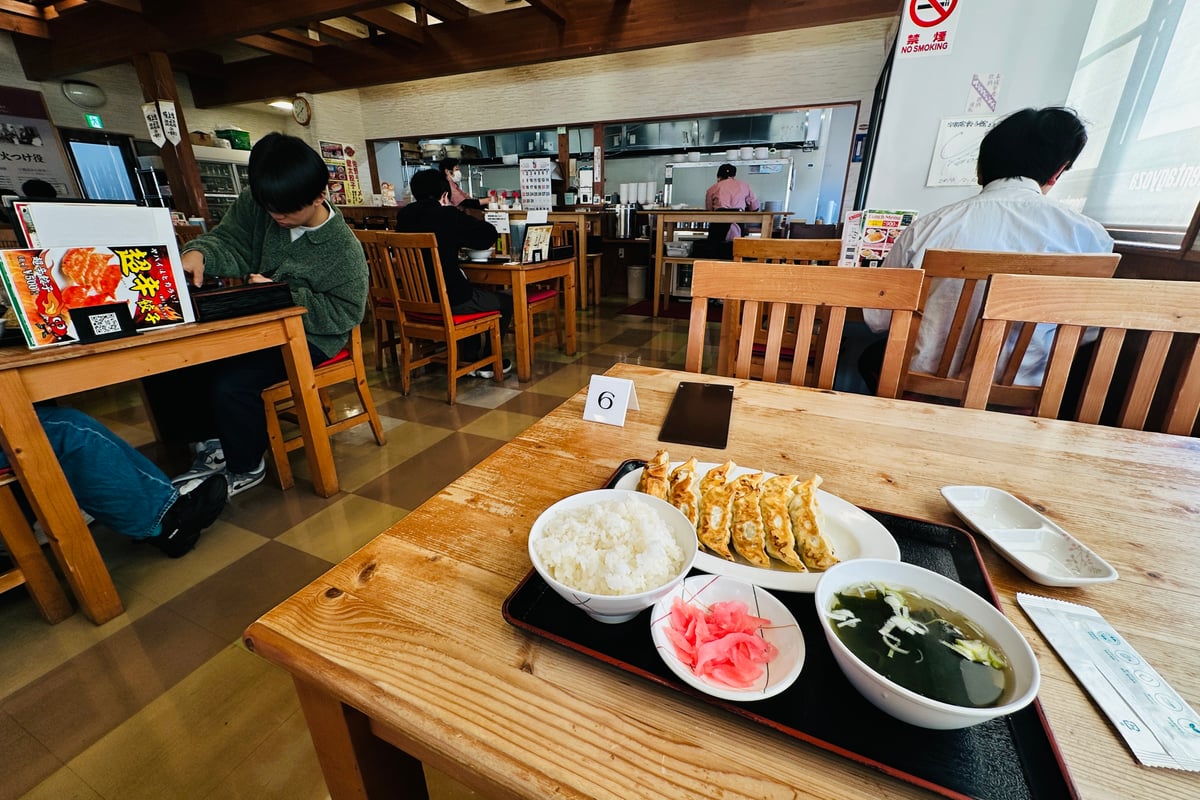
Utsunomiya Gyoza
Utsunomiya Gyoza
Utsunomiya Gyoza is a local specialty centered on Utsunomiya City in Tochigi Prefecture, known nationwide as one of Japan's leading 'gyoza towns.' During World War II, officers and soldiers of the Army's 14th Division, stationed in Utsunomiya, were dispatched to Manchuria (present-day northeastern China) and other areas, where they are said to have encountered authentic gyoza culture; after the war, returning soldiers brought the recipe back with them, and it spread throughout the city. In 1991, the trade association 'Utsunomiya Gyoza Kai' was formed, and through activities such as installing a gyoza statue, creating gyoza maps, and holding the annual 'Utsunomiya Gyoza Festival' each autumn, the city has pursued community revitalization on the strength of ranking first nationally in household gyoza spending. Featuring a sweet filling generously packed with vegetables such as cabbage, garlic chives, and green onion and only lightly seasoned with garlic, the city is home to more than 200 gyoza restaurants, where the dumplings are enjoyed pan-fried, boiled, or deep-fried in a variety of styles.
Model Course
A course exploring two pottery villages: Mashiko-yaki and Kosunago-yaki
Enjoy touring kilns and trying pottery-making in Mashiko, a town known as a base of the Mingei Movement, then head to Kosunago in Nakagawa Town to visit kilns producing Kosunago-yaki, known for its gold-crystal and cinnabar glazes - a course through two of Tochigi's pottery-producing areas.
A course visiting the shrines and temples of Nikko and enjoying shojin cuisine
After visiting the World Heritage shrines and temples of Nikko, stop by a Nikko-bori workshop carrying on techniques that originated with the carvers of Toshogu Shrine, then finish with Nikko Yuba, rooted in the shojin cuisine of Rinno-ji Temple - a course enjoying Nikko's distinctive craftsmanship and flavors in a single day.
A course savoring kumiko woodwork and Chitake Soba in Kanuma
In Kanuma, 'the town of woodworking,' visit a Kanuma Kumiko workshop where wooden pieces are assembled without a single nail, then savor Chitake Soba, its broth fragrant with chitake mushrooms and eggplant - a taste of Kanuma's craftsmanship and mountain-village flavor.
A course tracing the history of Temmyo Imono casting and savoring Sano Ramen and Mimi Udon
Visit materials and workshops related to Temmyo Imono, with over a thousand years of history, then have lunch at a Sano Ramen shop known for its bamboo-hand-pulled noodles, before finishing with Mimi Udon, eaten at New Year in the shape of a demon's ears to ward off evil - a course through Sano's craftsmanship and noodle culture.
A course exploring textiles, cord braiding, and wheat confectionery in Oyama
Watch weaving of Yuki-tsumugi, a UNESCO Intangible Cultural Heritage, try a kumihimo braiding experience at Mamada Himo, which has been passed down since the Kamakura period, then relax with Komugi Manju, a local specialty of this wheat-growing region in southern Tochigi - a course of handcraft touring in Oyama City.
A course enjoying indigo dyeing, washi paper, and ayu cuisine in the Nasu and Naka River area
Visit the workshop of Kurobane Aizome, carrying on indigo dyeing since a dye house founded in 1804 in Kurobane, Otawara City, tour the village of Karasuyama Washi, handmade paper of Nasukarasuyama City, then finish with salt-grilled ayu caught by the traditional 'yana' fishing method on the Naka River - a course following the blessings of a clear river.
A course savoring the food culture of the prefectural capital: Utsunomiya Gyoza, Shimotsukare, and Tochigi Wagyu
Sample vegetable-packed Utsunomiya Gyoza around 'the town of gyoza,' then enjoy Shimotsukare, a representative Tochigi dish for annual observances, and Tochigi Wagyu, a branded beef certified only at carcass grade A or B rank 4 or 5, served as yakiniku - a course savoring the food culture of the prefectural capital.
Events
Nikko Toshogu Shrine Spring Grand Festival (Procession of a Thousand Samurai)
Every year on May 17 and 18 (in 2026: Sunday, May 17 and Monday, May 18) / Nikko Toshogu Shrine (Sannai, Nikko City)
View details →Mashiko Pottery Market
Held twice a year: in spring (around Golden Week, late April to early May) and in autumn (around November 3) / Throughout Mashiko Town
View details →Utsunomiya Gyoza Festival
Every year on the first Saturday and Sunday of November / Utsunomiya Castle Ruins Park (Utsunomiya City)
View details →