Image: Wikimedia Commons
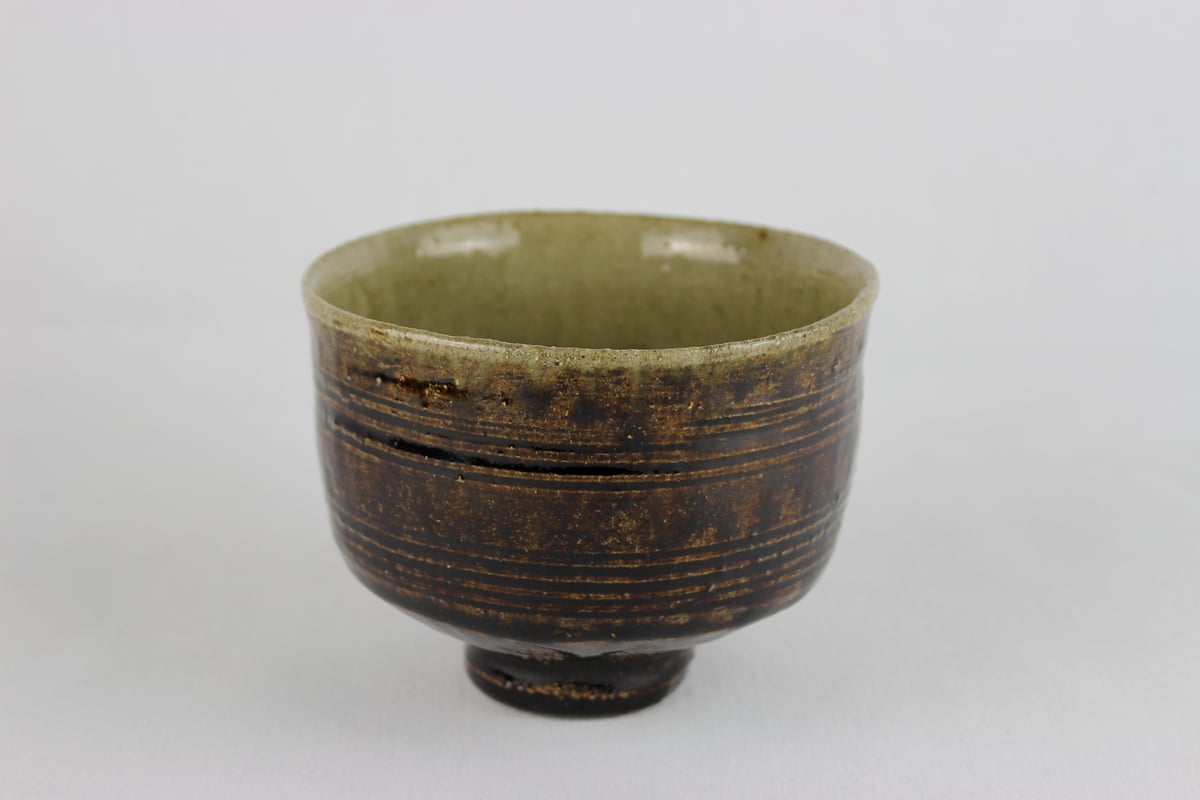
Mashiko-yaki is pottery produced in Mashiko, Haga District, Tochigi Prefecture, designated a Traditional Craft by the Minister of Economy, Trade and Industry on August 3, 1979. Its origins are said to trace back to around 1853, when Otsuka Keizaburo, who had trained in Kasama, opened a kiln in Mashiko; the area first developed as a production center for everyday earthenware such as jars, teapots, and mortars. In 1924, near the end of the Taisho era, the potter Hamada Shoji settled in Mashiko and made it a base for advancing the Mingei (Folk Craft) Movement together with Yanagi Muneyoshi and Kawai Kanjiro, while his deep friendship with the British potter Bernard Leach also helped spread the fame of Mashiko-yaki. Fired with thick applications of persimmon glaze and rice-husk-ash white glaze over coarse, iron-rich clay, the ware has a rustic, warm texture combined with a sense of weight. Another hallmark is its free style, unbound by any fixed convention and shaped by each maker's individuality, ranging from everyday tableware to works with strong artistic character. Today, many kilns are gathered in Mashiko, and the spring and autumn pottery markets together draw around 600,000 visitors.
Origin
Mashiko-yaki is said to have begun around 1853, when Otsuka Keizaburo, who had trained in Kasama, opened a kiln in what is now Mashiko. With the help of the Kasama potter Tanaka Shobei, Keizaburo introduced Kasama-yaki techniques, and production began after the Kurobane Domain, which then governed the area, granted permission to use the kiln site. The area first developed as a production center for everyday household ware such as jars, mortars, and teapots, and became known as a source of practical pottery shipped to Tokyo.
History
In 1924, near the end of the Taisho era, the potter Hamada Shoji settled in Mashiko and made it a base for advancing the Mingei (Folk Craft) Movement together with Yanagi Muneyoshi and Kawai Kanjiro. Hamada was also close friends with the British potter Bernard Leach, who set up a workshop at Hamada's kiln and worked alongside him. Through this movement, which brought recognition to the simple beauty found in everyday objects, Mashiko-yaki was designated a Traditional Craft by the Minister of Economy, Trade and Industry on August 3, 1979.
Features
Because Mashiko-yaki uses coarse, iron-rich clay, it has a rustic, warm texture combined with a sense of weight. Another characteristic is its bold, unadorned coloring, produced by thick applications of glazes blended locally, such as persimmon glaze, rice-husk-ash white glaze, and namishiro glaze. Rather than following any fixed style, the craft values work that reflects each maker's individuality, and pieces range from everyday tableware to works with strong artistic character.
Materials Used
Production Process
- 1
Kneading the clay
The clay's texture and consistency are made uniform, and air is removed from it.
- 2
Shaping
The vessel is shaped using a potter's wheel or a mold.
- 3
Bisque firing
Fired once at low temperature to stabilize the body.
- 4
Glazing
Glazes such as persimmon glaze and rice-husk-ash white glaze are applied, along with underglaze decoration.
- 5
Final firing
Fired at high temperature in a climbing kiln or gas kiln to complete the piece.
| Main Production Areas |
|
|---|
Artisans & Workshops
濱田窯
A kiln opened in 1924 by the Mingei Movement potter Hamada Shoji. The thatched-roof former residence, the climbing kiln, and the building Bernard Leach used as his workshop are all preserved, and the Hamada family's pottery techniques continue to be passed down.
Official site →益子焼窯元よこやま
A kiln in Mashiko that also runs a pottery studio offering experiences in electric-wheel throwing, hand-forming, and painting. Finished pieces can be shipped later, making it easy to take part without worrying about carrying luggage while traveling.
Official site →株式会社つかもと
One of Mashiko's largest kilns, founded in 1864 by its first-generation potter Tsukamoto Rihei. This complex, which houses a gallery, cafe, and direct sales shop, is also popular for its pottery experiences offering a choice of electric-wheel throwing, hand-forming, or painting.
Official site →How to Buy
- 益子焼窯元共販センター
- Mashiko's largest sales facility, carrying works from around 70% of the roughly 400 kilns in the town. Everything from affordable everyday items to works by well-known potters can be found here.Where to buy →PR
- 道の駅ましこ
- A roadside station in Nagatsutsumi, Mashiko, with a section displaying and selling Mashiko-yaki. It also houses a direct sales stand for local produce and a restaurant, so visitors can choose pottery along with shopping and dining.Where to buy →PR
- 益子陶器市
- A pottery market held in Mashiko every spring around Golden Week and every autumn around November 3. Roughly 50 shops and more than 800 tents line the streets, and the spring and autumn events together draw about 600,000 visitors, making it Mashiko's biggest event.Where to buy →PR
Hands-on Experiences
益子焼窯元よこやま
栃木県芳賀郡益子町大字益子3527-7
Reservation required. Electric-wheel throwing experiences start at around 2,750 yen (firing fee not included), and visitors can make everyday items such as teacups or coffee cups; staff support makes it approachable even for beginners.
View details →益子焼つかもと
栃木県芳賀郡益子町益子4264
Choose from three options: electric-wheel throwing, hand-forming, or painting. The fee includes wheel use, firing for one piece, and packaging, with an additional charge of around 1,800 yen or more per extra piece.
View details →濱田庄司記念益子参考館
栃木県芳賀郡益子町益子3388
Displays domestic and overseas crafts that Hamada Shoji collected as references for his own work, along with his thatched-roof former residence, workshop, climbing kiln, and the workshop building used by Bernard Leach, all preserved as they were.
View details →FAQ
Q. When was Mashiko-yaki designated a Traditional Craft?
A. It was officially designated a Traditional Craft by the Minister of Economy, Trade and Industry (then the Minister of International Trade and Industry) on August 3, 1979, under the Act on the Promotion of Traditional Craft Industries.
Q. What is the connection between Mashiko-yaki and the Mingei Movement?
A. In 1924, the potter Hamada Shoji settled in Mashiko and made it a base for advancing the Mingei Movement together with Yanagi Muneyoshi and Kawai Kanjiro. The movement's philosophy of finding beauty in everyday objects also influenced the style of Mashiko-yaki.