Image: Wikimedia Commons
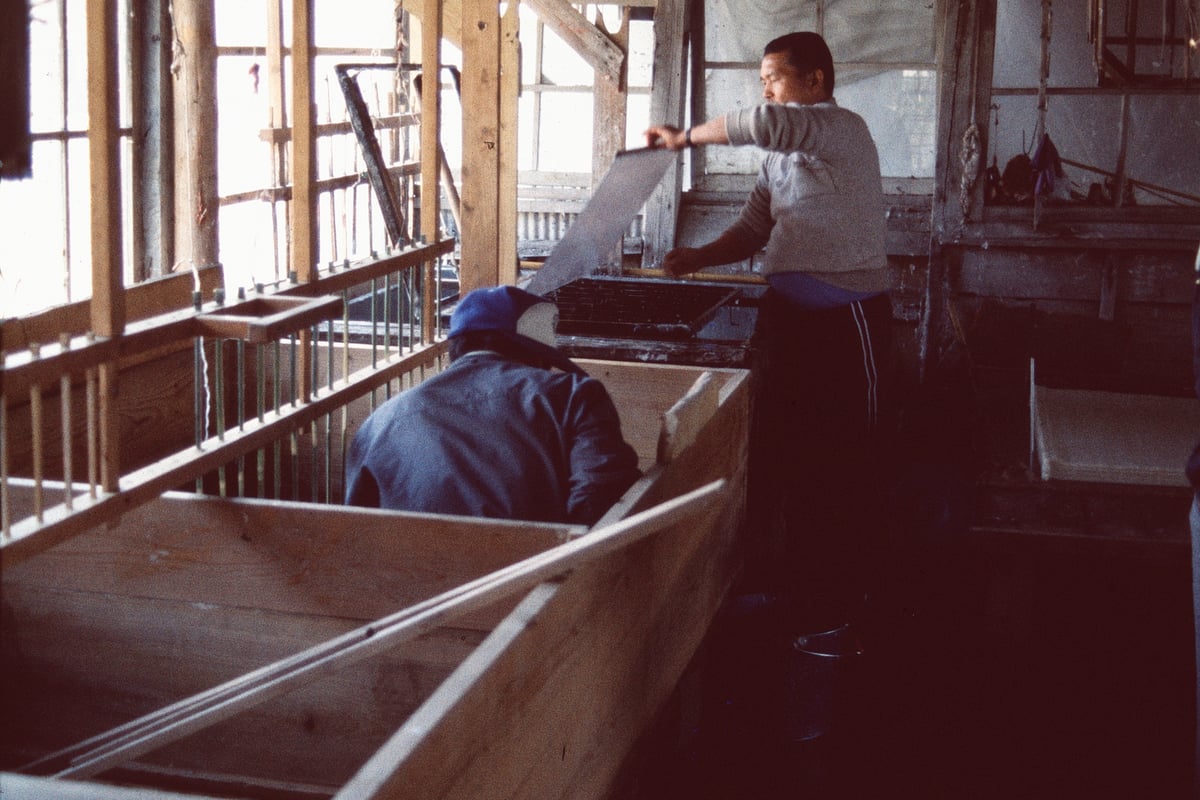
Karasuyama Washi is a handmade Japanese paper passed down in Nasukarasuyama City, Tochigi Prefecture. It is said to have originated in the Kenpo era (1213-1219) of the Kamakura period, when the Nasu clan, who ruled this region, invited paper-making artisans from Echizen (present-day Fukui Prefecture) to produce Nasu-hosho paper in Mukoda village (now Nasukarasuyama City). Made by hand from kozo (mulberry bark) fiber, it is characterized by a thick, dense texture, and by the mid-Edo period it was known as a fine paper on par with Echizen hosho, Mino-gami, and Nishinouchi paper. Among its varieties, the Hodomura-gami handed down in the Shimosakai area is a thick paper made from Nasu kozo, a high-quality mulberry bark unique to the Nasu region, using traditional techniques such as the distinctive hannagashi ('half-flow') papermaking method and sun-drying on ginkgo wood boards. Prized for combining strength with an elegant character, it was designated a National Selected Intangible Cultural Property in 1977. Today, Fukuda Washi Seishijo, the only remaining paper mill in Nasukarasuyama City, carries on this tradition, and the paper is used for a wide range of purposes, from diplomas and craftwork to decorations for the floats of the Yamaage Festival.
Origin
The origin of Karasuyama Washi is said to date back to the Kenpo era (1213-1219) of the Kamakura period, when the Nasu clan, who ruled this region, invited paper-making artisans from Echizen (present-day Fukui Prefecture) to produce Nasu-hosho paper in Mukoda village (now Nasukarasuyama City). From then on, papermaking developed in this area, blessed with abundant kozo and the clear waters of the Naka River system.
History
By the mid-Edo period, the paper made in Karasuyama, known as 'Nasu-gami,' had come to be widely recognized as a fine paper on par with Echizen hosho, Mino-gami, and Nishinouchi paper. Among these, the thick Hodomura-gami made in the Shimosakai area was produced from Nasu kozo, a high-quality mulberry bark unique to the Nasu region, using careful traditional techniques such as the distinctive hannagashi papermaking method and sun-drying on ginkgo wood boards, and it was designated a National Selected Intangible Cultural Property in 1977.
Features
The greatest characteristic of Karasuyama Washi lies in its thick, dense texture, handmade from kozo fiber. Hodomura-gami in particular combines strength with an elegant beauty and has been used for a wide range of purposes, including diplomas, craftwork, oshie (padded fabric pictures), and paper decorating the floats of Nasukarasuyama's summer Yamaage Festival. The production process consists of many hand-worked steps - steaming the kozo, removing the bark, boiling, ash-leaching, removing debris, beating, mixing, sheet-forming, pressing, and drying - and this careful handwork is what sustains the quality of the paper.
Materials Used
Production Process
- 1
Steaming the kozo
The harvested kozo branches are steamed to make the bark easier to peel.
- 2
Removing the bark
The black outer bark is removed from the steamed kozo, leaving the white inner bark.
- 3
Boiling and ash-leaching
The white bark is boiled until soft, then lye is leached out and debris is removed.
- 4
Beating
The fibers are beaten by hand to loosen them into pulp.
- 5
Sheet-forming and drying
Sheets are formed using the technique known as hannagashi, then dried in the sun on ginkgo wood boards.
| Main Production Areas |
|
|---|
Artisans & Workshops
福田製紙所
The only paper mill remaining in Nasukarasuyama City, carrying on the traditional techniques of Karasuyama Washi, including Hodomura-gami. Paper is made through a consistent hand process from steaming the kozo to sheet-forming and sun-drying, and the attached Washi no Sato facility also offers papermaking experiences.
Official site →How to Buy
- 烏山和紙会館
- A facility housed in the former Karasuyama Hospital building from the Taisho era, influenced by German Expressionist architecture, where handmade washi and torn-paper collage works and other crafts are displayed and sold. The exhibits introducing the history of Karasuyama Washi are also worth seeing.Where to buy →PR
- 福田製紙所(和紙の里)
- A direct-sales shop for Karasuyama Washi, including Hodomura-gami. Visitors can purchase stationery, postcards, and other crafts made from handmade washi, and can also watch demonstrations of papermaking.Where to buy →PR
Hands-on Experiences
福田製紙所(和紙の里)
栃木県那須烏山市小原沢599
Reservation required (2 or more people). Papermaking experiences start at around 540 yen for a course making 2 postcards, and around 1,620 yen for a course making 3 diploma-sized sheets, offering a hands-on introduction to authentic washi-making using Nasu kozo.
View details →FAQ
Q. What kind of washi is Hodomura-gami?
A. Hodomura-gami is a thick Karasuyama Washi handed down in the Shimosakai area of Nasukarasuyama City. It is made from high-quality Nasu kozo using the distinctive hannagashi papermaking method and sun-drying on ginkgo wood boards. It was designated a National Selected Intangible Cultural Property in 1977.
Q. Where is Karasuyama Washi made today?
A. Today, Fukuda Washi Seishijo, the only paper mill remaining in Nasukarasuyama City, carries on the traditional techniques and continues papermaking. At the attached 'Washi no Sato' facility, visitors can also tour the production process and try papermaking themselves.