Image: Wikimedia Commons
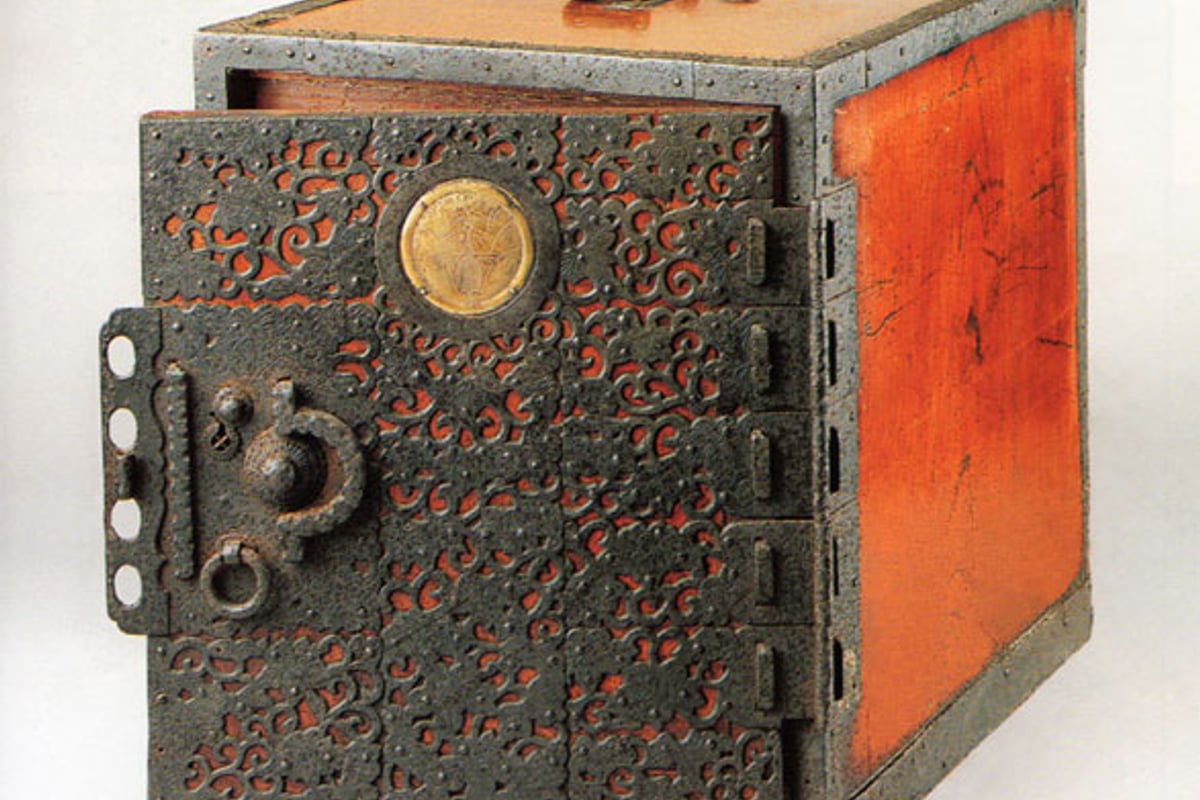
Sakata Funadansu are sturdy chests that sailors on Kitamae-bune (trading ships) had made to store valuables aboard ship, from the Edo period through the Taisho era. Sakata is counted as one of the three great production centers for funadansu (ship chests), alongside Ogi in Sado and Mikuni in Fukui Prefecture. Under a form of shipping business known as 'kaizumi,' in which ships bought and sold goods along the Sea of Japan coast, a distinctive style of funadansu-making developed in Sakata, one of the trade's port towns. The chests have a double-layer structure, using sturdy zelkova wood and highly decorative iron fittings on the outside, and paulownia wood on the inside, which swells in high humidity to keep water out. They were built small so they could be carried out quickly in the event of fire or shipwreck, and different styles were made for different uses, such as kakesuzuri (hanging writing boxes), chobako (ledger boxes), and hanbitsu (half-size chests). Master craftsmen such as Saito Josai appeared during the Edo period, but today there is a shortage of artisans skilled in decorative metal fittings and lacquering, making the transmission of the craft a challenge.
Origin
Sakata Funadansu are sturdy chests that sailors on Kitamae-bune (trading ships) had made to store valuables aboard ship, from the Edo period through the Taisho era. Under the 'kaizumi' form of shipping business, in which ships bought and sold goods at their ports of call, shipowners and captains earned substantial profits, and at their request, a distinctive style of funadansu-making developed in Sakata, one of the ports where the ships called.
History
Sakata is counted as one of the three great production centers for funadansu, alongside Ogi in Sado and Mikuni in Fukui Prefecture, and in the Edo period, master craftsmen such as Saito Josai became known throughout the country. From the Meiji era onward, production continued mainly on commission from local sailors, but today there is a shortage of artisans skilled in decorative metal fittings and lacquering, making the transmission of these techniques a challenge.
Features
The chests feature a double-layer structure, using sturdy zelkova wood and highly decorative iron fittings on the outside, and paulownia wood, which swells in high humidity to keep water out, on the inside. Despite being small enough to carry aboard ship, they were designed to be quickly carried out in the event of fire or shipwreck, and a variety of styles suited to different uses, such as kakesuzuri (hanging writing boxes), chobako (ledger boxes), and hanbitsu (half-size chests), survive to this day.
Techniques
Sashimono Joinery
A traditional woodworking technique that assembles boxes and drawers by fitting boards together with almost no nails. The sturdy construction of Sakata Funadansu is supported by this sashimono joinery technique.
Materials Used
| Main Production Areas |
|
|---|
Artisans & Workshops
加藤木工
A woodworking studio located in Sakata City. It has passed down sashimono joinery techniques across four generations, and its head, Wataru Kato, works on restoring and producing Sakata Funadansu. It has also exhibited at shows in Japan and abroad, working to promote the traditional craft.
How to Buy
- Meiboku no Yakata (Togashi Meiboku)
- A showroom in Niibori, Sakata City. It carries a wide range of woodwork made from fine woods such as zelkova and paulownia, including Sakata Funadansu.