Image: Wikimedia Commons
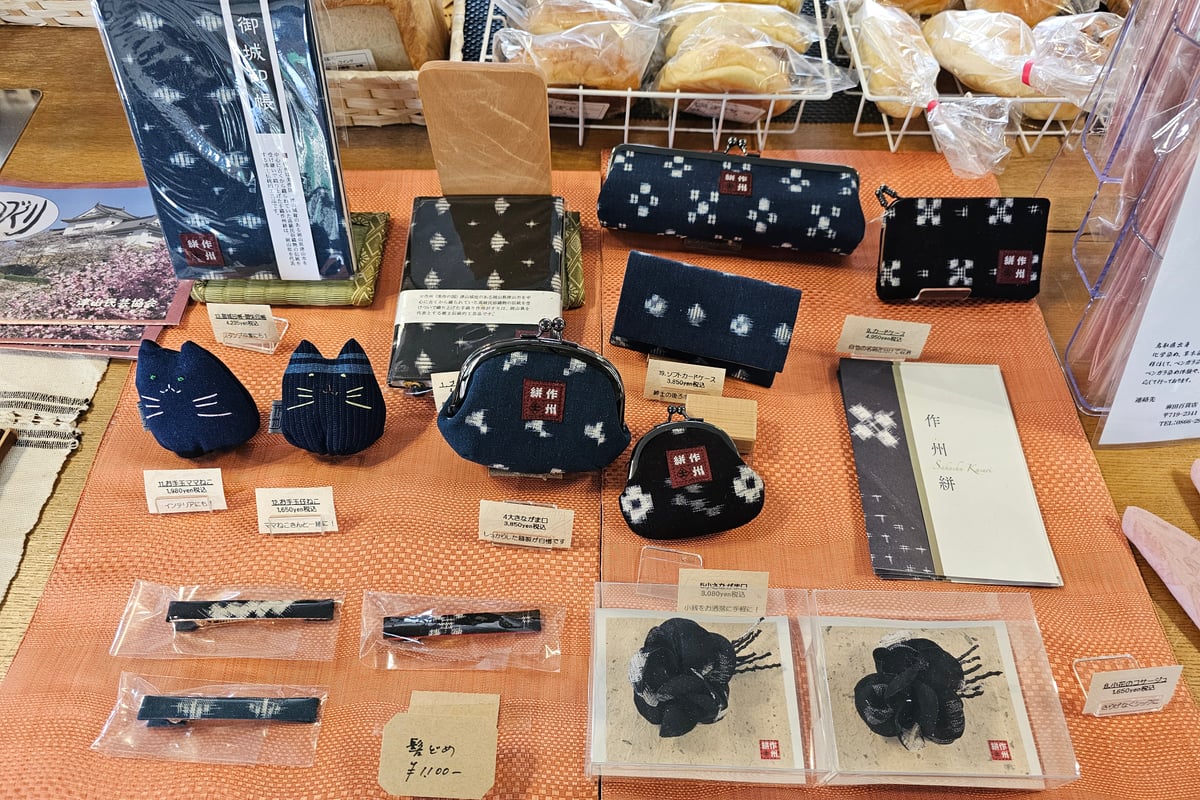
Sakushu Kasuri is a cotton ikat textile woven in the Mimasaka region centered on Tsuyama City, Okayama Prefecture. High-grade silk textiles had long been woven in the Tsuyama area, but from the early 17th century cotton cultivation spread, and hand-spun cotton thread dyed indigo by local dye houses began to be woven into solid indigo and striped cloth for commoners' clothing. In the early Meiji era, influenced by Kurayoshi Kasuri from Tottori Prefecture, indigo cotton ikat became widespread, but as mass-produced textiles from other regions gained ground, both production and technique nearly died out at one point. After the war, Sakushu Kasuri was revived as part of Tsuyama City's industrial promotion policy, gaining popularity in Tokyo around 1955, and at its peak annual production reached about 30,000 tan (bolts) combining power-loom and hand weaving. In 1981 it was designated an Okayama Prefecture Local Traditional Craft as 'Hand-woven Sakushu Kasuri', but weavers later disappeared for a time until Hinagawa Shigemi was officially certified as its successor in 2012, allowing the technique to be passed on again. The geometric patterns set against indigo blue are created through the 'kukuri' technique, in which threads are bound with cord to resist dyeing.
Origin
High-grade silk textiles had long been woven in the Tsuyama area of Mimasaka Province, but from the early 17th century cotton cultivation spread, and cotton weaving came to be produced alongside silk. Hand-spun cotton thread was dyed indigo by local dye houses and used for commoners' clothing as solid indigo and striped cloth — this is considered the origin of Sakushu Kasuri. In the early Meiji era, guided and influenced by Kurayoshi Kasuri from Tottori Prefecture, indigo cotton ikat using kasuri patterns spread through the region.
History
Woven mainly for household use, Sakushu Kasuri was pushed aside by mass-market textiles from other regions and its production and technique nearly died out after the Meiji era, but it was revived after the war as part of Tsuyama City's industrial promotion plan. It gained popularity in Tokyo from around 1955, and at its peak annual production reached about 30,000 tan (bolts) combining power-loom and hand weaving; in 1981 it was designated an Okayama Prefecture Local Traditional Craft as 'Hand-woven Sakushu Kasuri'. After a later period when weavers disappeared, Hinagawa Shigemi was officially certified as its successor in 2012, and the technique has been passed on again since.
Features
Sakushu Kasuri is characterized by a rustic texture using relatively thick cotton thread, and its indigo-and-white patterns have a simplified, old-fashioned decorative beauty. The patterns are dyed using the 'kukuri' technique, in which the areas that will form the pattern are tightly bound with cord so indigo cannot penetrate. By adjusting the spacing of the binding, weavers create gradations of tone, and by binding both warp and weft threads they can produce dynamic patterns — making it a textile where the weaver's skill and sensibility come through.
Techniques
Kukuri (binding)
A resist-dyeing technique in which bundled spun thread is tightly bound with cord in the areas that will form the pattern, preventing indigo from penetrating. Spacing the binding out creates gradations of tone, and applying it to both warp and weft threads produces dynamic patterns.
Materials Used
| Main Production Areas |
|
|---|
Artisans & Workshops
日名川茂美
Chair of the Sakushu Kasuri Preservation Society. In 2012 she was officially certified as the recognized successor of the Okayama Prefecture Local Traditional Craft 'Hand-woven Sakushu Kasuri'; she studied ikat weaving at Tottori Junior College and revived the nearly lost technique of Sakushu Kasuri.
Hands-on Experiences
作州絣工芸館
岡山県津山市西今町3
Opened in 2014. In addition to displaying tools and historical materials related to Sakushu Kasuri, the museum sells textiles and small items, holds weaving demonstrations, and offers experiences in cotton ginning and thread spinning. Open 10:00-16:00, closed Mondays.
View details →