Image: Wikimedia Commons
Kurashiki Hanpu is a thick cotton canvas fabric made in the Kojima district of Kurashiki City, Okayama Prefecture, with a history rooted in its development as sailcloth for ships. Kojima, land reclaimed in the Edo period, was suited to growing salt-resistant cotton, and its cotton industry flourished to the point that the area became known for 'Kojima's three whites'—cotton, together with the whiteness of the local sand-lance fish and salt. The transmission of a loom technique developed by Kuraku Matsuemon of Banshu Takasago, which used thick thread, is said to have laid the foundation for producing sturdy, thick canvas. The direct roots of modern Kurashiki Hanpu trace back to 1888, when the husband-and-wife weavers Ishigoro and Ume Butakiri founded a textile mill in Kurashiki, and business expanded after Ume's hand-woven cloth earned a reputation among local cotton wholesalers. Today it remains a rare production area capable of weaving extra-thick canvas from No. 1 to No. 3 weight using a thread-twisting technique that twines together several strands of pure cotton yarn and old-style shuttle looms. It is characterized by the beautiful selvedge unique to shuttle looms and a warm, textured feel, and its uses have expanded to everyday items such as bags and sundries.
Origin
In the Edo period, the land of Kojima, created by reclamation, was suited to growing salt-resistant cotton, and its cotton industry developed to the point of being known as one of 'Kojima's three whites,' alongside sand-lance fish and salt. The transmission of a technique for thick, wide-width looms using heavy thread, developed by Kuraku Matsuemon of Banshu Takasago, is said to have laid the foundation for weaving sturdy canvas. The roots of modern Kurashiki Hanpu trace back to 1888, when the husband-and-wife weavers Ishigoro and Ume Butakiri founded the 'Butakiri Textile Mill' in Kurashiki.
History
Ume, a skilled weaver, earned a reputation for her hand-woven cloth among local cotton wholesalers in Kojima, and it came to be exhibited at competitions in Tokyo and Osaka. At the 5th National Industrial Exhibition in 1903, it received a commendation from Prince Nashimoto. In 1927, her eldest son Takue Butakiri began canvas manufacturing, and the business continued to expand thereafter. The thread-twisting and weaving techniques handed down for more than 130 years are still carried on today by Kurashiki Canvas Co., Ltd.
Features
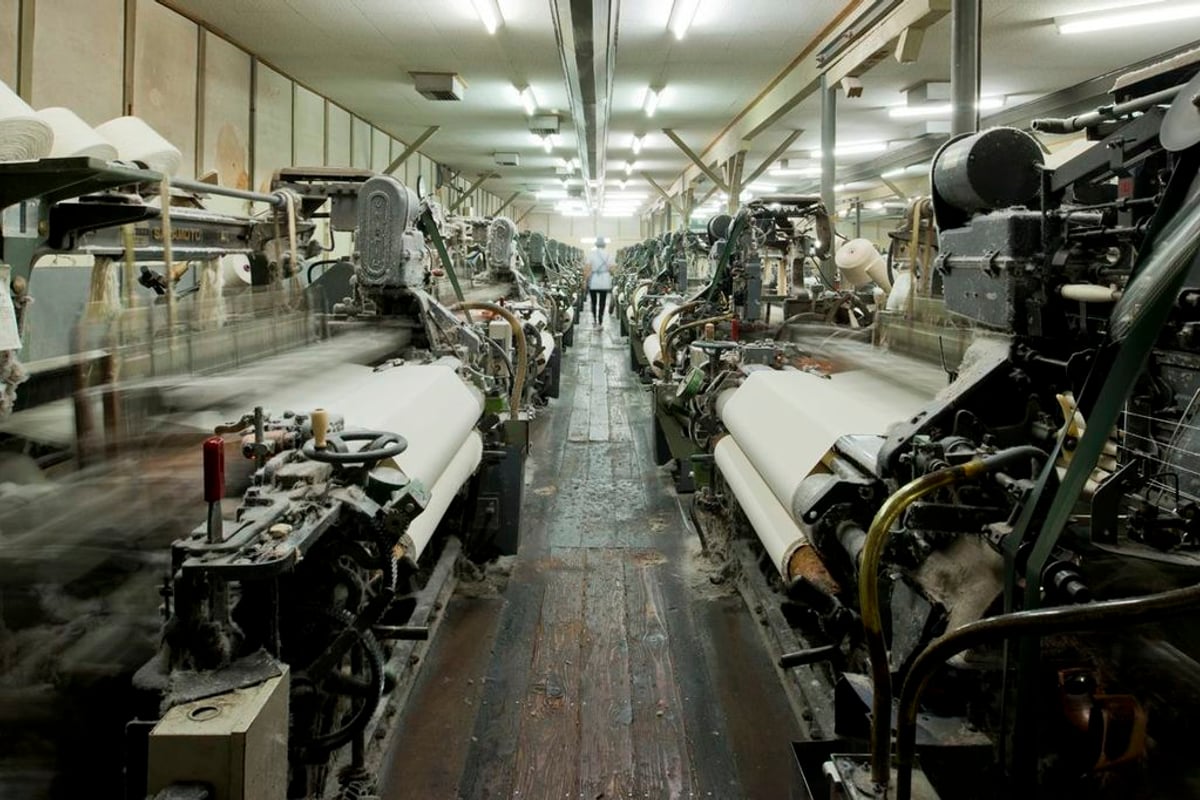
The defining feature of Kurashiki Hanpu lies in its supple yet strong thread, made by twisting together several strands of pure cotton yarn, and in weaving with old-style shuttle looms. A shuttle loom can weave only about 50 to 70 meters over eight hours a day, but in exchange it produces a warm, textured feel with surface unevenness and a beautifully finished selvedge. Because it is woven at high density, it offers excellent durability and water resistance, and Kurashiki is said to be the only production area capable of weaving extra-thick canvas of No. 1 to No. 3 weight.
Materials Used
Production Process
- 1
Thread twisting
Several strands of pure cotton raw thread are twisted together to make canvas thread that combines suppleness and strength. Using a technique passed down for more than 130 years, thread is made to suit the desired thickness of canvas.
- 2
Weaving
A beam is set on an old-style shuttle loom, and plain weave is done while passing the weft thread through. One loom can weave only about 50 to 70 meters in an eight-hour day, but can produce extra-thick canvas up to No. 1 to No. 3 weight.
- 3
Finishing
The woven fabric has the beautiful selvedge unique to shuttle looms, and is processed into bags, sundries, and other items.
| Main Production Areas |
|
|---|
Artisans & Workshops
倉敷帆布株式会社
A canvas maker tracing its origins to the Butakiri Textile Mill, founded in 1888. It continues to weave thick canvas using thread-twisting and shuttle-loom weaving techniques handed down for more than 130 years.
Official site →How to Buy
- 倉敷帆布 本店
- A directly run shop converted from a storehouse that once stood at the canvas mill. In addition to canvas products such as selvedge totes, it also takes orders for custom totes where you can choose the shape and color. Tote bags range from around 7,920 to 22,000 yen.Where to buy →PR
- 倉敷帆布 美観地区店
- A directly run shop in the Kurashiki Bikan Historical Quarter, offering bags and small items made from canvas woven on old-style shuttle looms.Where to buy →PR