Image: Wikimedia Commons
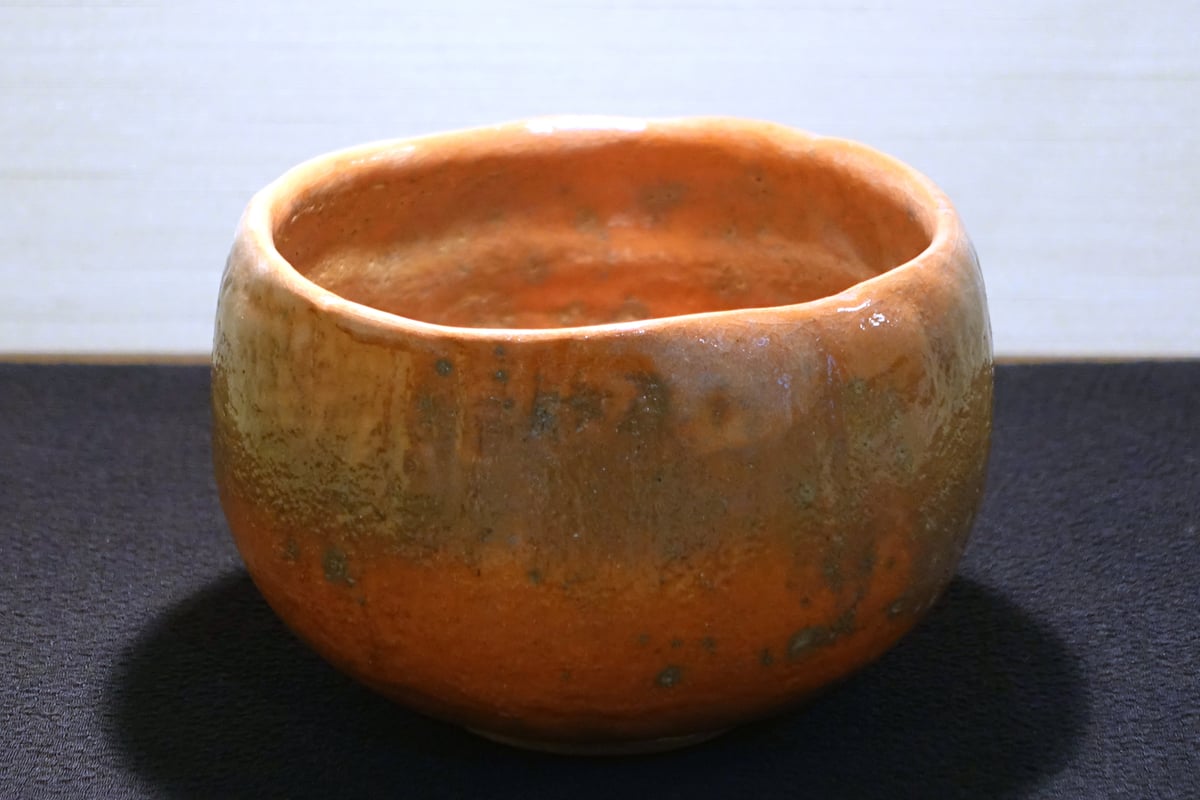
Ohi ware is a ceramic tradition that has continued in Kanazawa for over 350 years as a branch kiln of Kyoto's raku ware. It began in 1666 (Kanbun 6), when Maeda Tsunanori, fifth lord of the Kaga domain, invited Sensō Sōshitsu, fourth-generation head of the Urasenke school of tea, from Kyoto to serve as tea-implement magistrate; the potter Haji Chozaemon, a senior disciple of Ichinyū, fourth-generation head of the Raku family and Sensō's teacher, accompanied him. Even after Sensō returned to Kyoto, Chozaemon remained in Kanazawa, and, discovering fine clay in Kahoku District's Ohi village (present-day Ohi-machi, Kanazawa), began calling his ware Ohi-yaki after the place name. Since the Raku family held an exclusive monopoly on black and red raku glazes, the Ohi family developed its own amber glaze, giving rise to warm, amber-colored tea bowls suited to the snow country — its most distinctive feature. The hand-forming technique, shaping vessels by hand and spatula without a potter's wheel, also carries on the raku tradition, and having flourished as the official kiln of the Maeda family, it continues today as a tea ceramic representative of Kanazawa.
Origin
Ohi ware began in 1666 (Kanbun 6), when Maeda Tsunanori, fifth lord of the Kaga domain, invited Sensō Sōshitsu, fourth-generation head of the Urasenke school of tea, from Kyoto to serve as tea-implement magistrate. Accompanying him was the potter Haji Chozaemon, who had studied under Sensō and was also a senior disciple of Ichinyū, fourth-generation head of the Raku family. Even after Sensō returned to Kyoto in 1686, Chozaemon remained in Kanazawa.
History
Chozaemon discovered clay in Kahoku District's Ohi village (present-day Ohi-machi, Kanazawa) and, naming his ware Ohi-yaki after the place, flourished as the official kiln of the Maeda family. The Ohi Chozaemon family carried on the craft through successive generations; after the Meiji Restoration it temporarily declined with the loss of domain patronage, but was revived alongside the spread of tea culture. The tenth-generation Ohi Toya (Ohi Chozaemon) received the Order of Culture, and today the eleventh-generation Ohi Chozaemon (Ohi Toshio) is active based at the Ohi Museum and Ohi Gallery in Hashiba-cho, Kanazawa.
Features
The 'tebineri' hand-forming technique, shaping each piece by hand and spatula alone without a potter's wheel, carries on the raku tradition, while the amber glaze the Ohi family developed on its own — since it could not use the Raku family's black and red glazes — with its warm, amber-colored luster, is its most distinctive feature. Combined with simple, unpretentious forms, it has been cherished as tea ceramic with a character well suited to the snow country climate of Kanazawa.
Techniques
Tebineri (Hand-Shaping)
A forming technique in which each piece is shaped by hand and spatula alone, without using a potter's wheel. The expression carved into the surface with a spatula is a method inherited from raku ware.
Ame-yu (Amber Glaze)
A glaze technique developed independently by the Ohi family, who could not use the Raku family's black and red glazes. It produces a glossy amber luster, giving warmth to vessels suited to the snow country.
Materials Used
Production Process
- 1
Clay Preparation
Harvested clay is crushed with a wooden mallet, then sun-dried and shade-dried to remove impurities.
- 2
Kneading (Kikuneri)
After rough kneading, the clay is kneaded into a chrysanthemum-petal pattern (kikuneri) to carefully remove air bubbles.
- 3
Hand-Shaping
Each bowl is shaped by hand and spatula without a wheel, then dried in shade and sunlight.
- 4
Bisque Firing
The piece is bisque-fired at 800–900°C to stabilize the clay body.
- 5
Glazing and Main Firing
Amber glaze is applied and the piece is fired at 950–1000°C, then rapidly cooled after being removed from the kiln to finish.
| Main Production Areas |
|
|---|
Artisans & Workshops
十一代大樋長左衛門窯(大樋美術館・大樋ギャラリー)
The head kiln of the Ohi ware lineage, continuing from the first-generation Chozaemon. The museum director is the eleventh-generation Ohi Chozaemon (Ohi Toshio); the adjoining Ohi Museum displays works from past generations, while the gallery exhibits and sells works.
Official site →大樋焼本家窯元(九代目大樋勘兵衛窯)
A kiln of Ohi ware founded in the early Showa era. It exhibits and sells works by three generations — the eighth-generation Ohi Choraku, the ninth-generation Ohi Kanbei, and Ohi Sakuhо — producing tea implements such as amber-glazed matcha bowls as well as everyday tableware.
Official site →Hands-on Experiences
大樋美術館
石川県金沢市橋場町2-17
A guided tour of the museum led by the eleventh-generation Ohi Chozaemon is from around 700 yen; a course that includes matcha served in a historic tea bowl is from around 1,500 yen (reservation required).
View details →