Image: Wikimedia Commons
Kurashiki Dantsu is a hand-woven rug made in Kurashiki City, Okayama Prefecture, characterized by combining rush (igusa), Japanese paper (washi), and hemp or cotton thread. Kurashiki had been known since the Edo period as a production area for tatami facing and hanagoza (patterned rush mats), and it is said to have begun when Yabuki Kan'ichirō, an inventor from Hayashima Town, devised 'Kinpa-ori' in the early Shōwa era as a rug suited to Western-style architecture. In 1932, the folk-craft movement leader Yanagi Sōetsu discovered the rug, commissioned the designer Serizawa Keisuke to create striped patterns for it, and named it 'Kurashiki Dantsu'. After the war it reached its peak while remaining hand-woven, popular enough to be exported overseas, but rising raw-material costs and the aging of its artisans brought production to a halt in 1986. Takiyama Yūichi, who joined the Traditional Industry Revival Study Group founded in 1991, taught himself the technique and resumed production in 1993. Today he continues to be almost the sole maker, producing the rugs at his workshop in Hayataka, Kurashiki City.
Origin
The area around Kurashiki had been known since the Edo period as a production center for tatami facing and hanagoza made from rush. In the early Shōwa era, Yabuki Kan'ichirō, a hanagoza maker and inventor from Hayashima Town, devised 'Kinpa-ori', a rug combining rush with Japanese paper and hemp thread as a floor covering suited to Western-style architecture, which was commercialized by Nihon Mushiro-gyō Co., Ltd. This became the prototype of Kurashiki Dantsu.
History
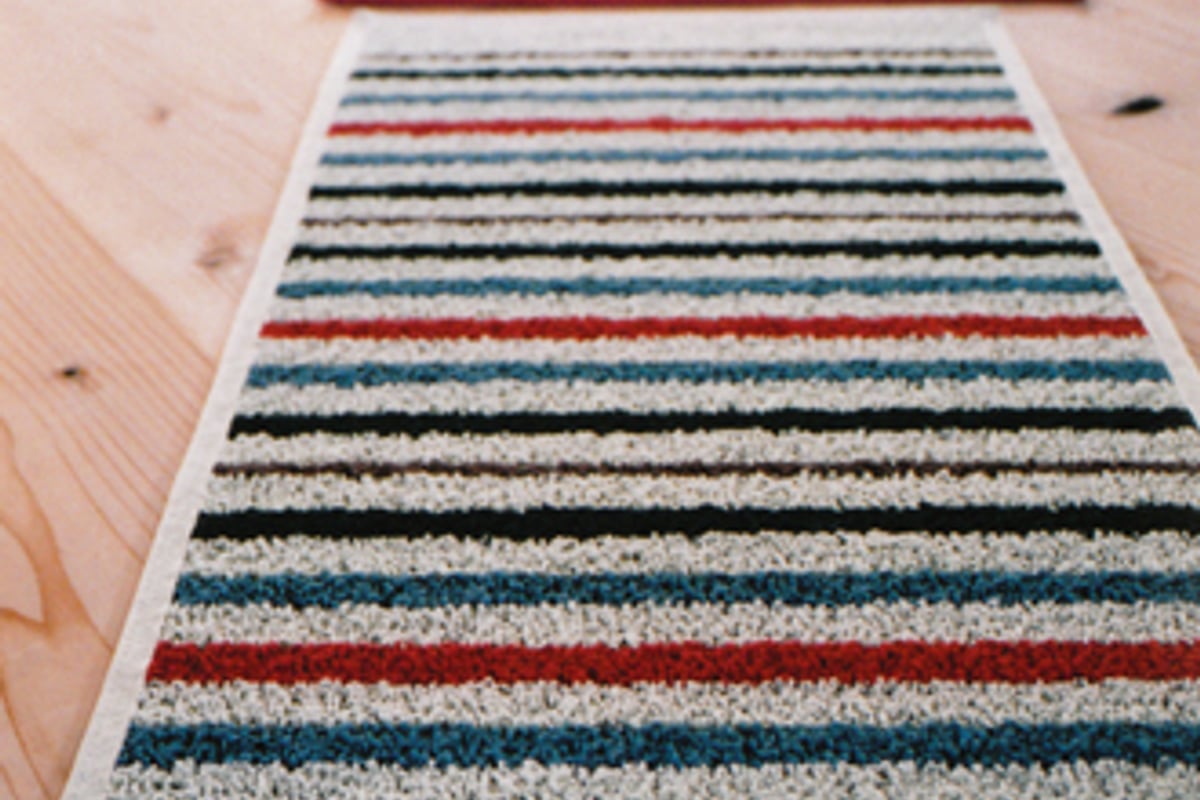
In 1932, the folk-craft movement leader Yanagi Sōetsu, visiting Kurashiki for an exhibition by the potter Hamada Shōji, took a liking to Kinpa-ori, commissioned the designer Serizawa Keisuke to create striped patterns for it, and named it 'Kurashiki Dantsu'. After the war it reached its peak while remaining hand-woven and was even exported overseas, but rising raw-material costs and the aging of artisans brought production to a halt in 1986. Takiyama Yūichi, who joined the Traditional Industry Revival Study Group founded in 1991, taught himself to reproduce the technique and resumed production in 1993.
Features
Its defining feature is warp thread made of rush wrapped in strips of Japanese paper, woven together with thread twisted from hemp and rayon, giving it the breathability and soft texture unique to rush. The striped designs are basically based on patterns by Serizawa Keisuke, strongly reflecting the aesthetics of the folk-craft (mingei) movement. Today Takiyama Yūichi is almost the sole maker, handling the entire process by himself, making it a highly rare craft.
Materials Used
| Main Production Areas |
|
|---|
Artisans & Workshops
倉敷緞通(瀧山雄一)
A weaver who, on his own, relearned the production method of Kurashiki Dantsu — which had lapsed in 1986 — in the early 1990s and resumed production in 1993. He remains today almost the sole maker, carrying out the entire process by hand.
Official site →高田商店(倉敷手織緞通織元)
A long-established shop in Kurashiki City handling Kurashiki hand-woven dantsu. It responds to inquiries in-store and by phone.
How to Buy
- 倉敷緞通(瀧山雄一氏工房)直販
- Available by mail order through the workshop's official website, and also sold at some shops within Kurashiki City.Where to buy →PR
FAQ
Q. Is Kurashiki Dantsu one of the 'Three Great Dantsu of Japan'?
A. No. The Three Great Dantsu of Japan generally refers to Nabeshima Dantsu, Akō Dantsu, and Sakai Dantsu, and Kurashiki Dantsu is not included among them. Kurashiki Dantsu is a distinct rug devised in the early Shōwa era that uses rush as a defining material.