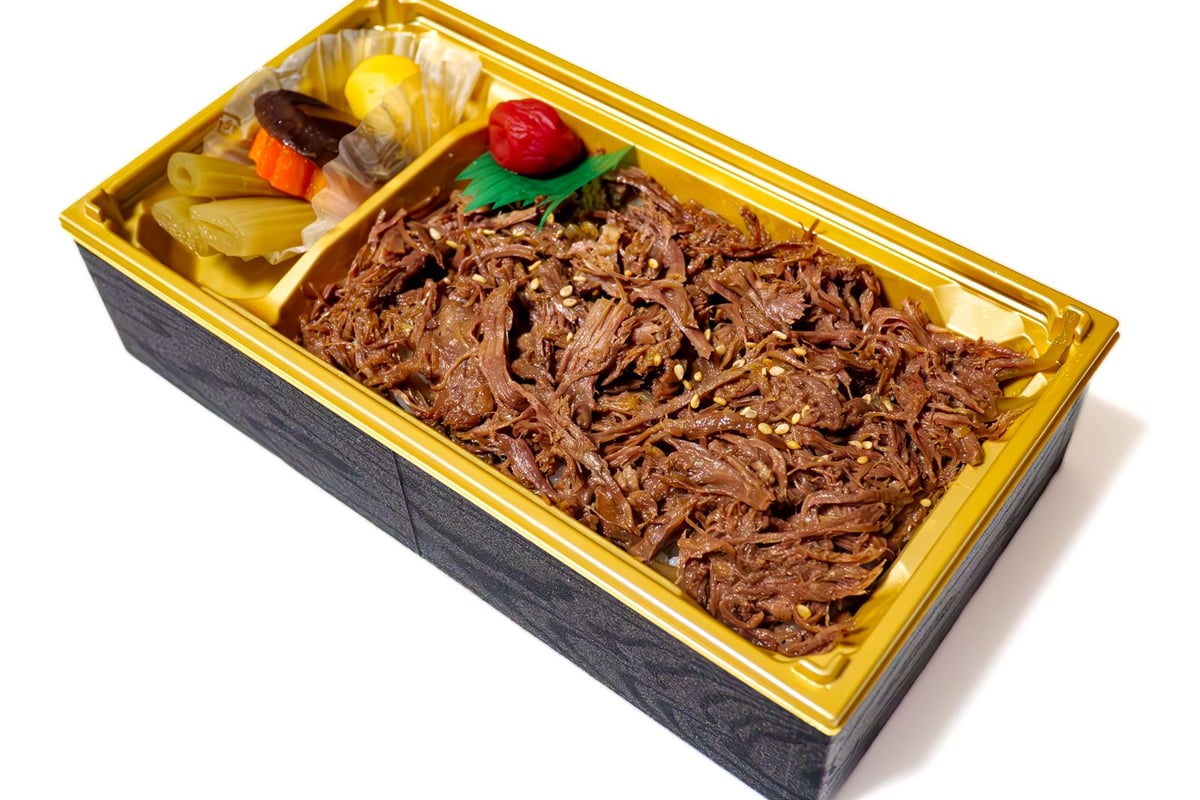
Image: Wikimedia Commons
Iwate Tankaku Beef is an Iwate-branded beef from 'Nihon Tankaku' (Japanese Shorthorn), a reddish-brown breed of beef cattle raised across northern Iwate Prefecture, from the plains to the mountainous areas. Its defining feature is a unique rearing method called 'natsuyama-fuyuzato' (summer mountain, winter village), which makes the most of the breed's cold hardiness and suitability for open-range grazing: from spring through autumn, mother cows and calves live together on vast highland pastures, then move to barns for the winter. Raised mainly on grass rather than grain feed, the cattle produce lean beef with less fat and a concentrated, savory flavor that deepens the more it is chewed. Nihon Tankaku accounts for only a small fraction of Japan's total wagyu supply, making it a notably rare type of beef. As interest in the appeal of lean meat has grown alongside rising health consciousness, Iwate Tankaku Beef has gained increasing recognition nationwide as one of Iwate Prefecture's representative branded beefs.
Origin
The Kamatsuda district in southwestern Iwaizumi Town, Iwate Prefecture, was known during the feudal era as a leading production area for fine Nanbu cattle, called 'Kamatsuda beef.' In 1871 (Meiji 4), Shorthorn cattle introduced to Iwate Prefecture were crossbred and improved together with the native Nanbu cattle, and in 1957 (Showa 32) the breed was officially recognized as a beef breed under the name 'Nihon Tankaku' (Japanese Shorthorn), laying the foundation for what is known today as Iwate Tankaku Beef.
History
After the war, Japanese Shorthorn cattle increased in number mainly in the mountainous areas of northern Iwate Prefecture, becoming established as a form of open-range livestock farming that made the most of the region's cold climate and vast wilderness. Even as fattier beef became the national mainstream from the era of high economic growth onward, Iwate Prefecture continued raising Japanese Shorthorn cattle, and as appreciation for the appeal of lean meat has grown, the prefecture has worked to build it into the branded beef known today as 'Iwate Tankaku Beef.'
Features
The defining feature is the 'natsuyama-fuyuzato' (summer mountain, winter village) method, in which mother cows and calves graze together on vast pastures from May through November. After natural mating and nursing on the open range, the cattle come down to the lowlands for winter, when calves are sent to market and mother cows return to the barn to prepare for calving. Because the cattle are raised mainly on grass-based roughage, the beef has less fat and a higher proportion of lean meat, prized for its savory, amino-acid-rich depth of flavor that grows richer with every bite.
Food Culture
In the highland areas of northern Iwate Prefecture, where rice cultivation was difficult, grazing cattle and horses has long been a common practice, and the natsuyama-fuyuzato method of raising cattle has been passed down as a livestock-farming culture rooted in the mountainous terrain.
Famous Shops
道の駅いわいずみ レストラン岩泉
岩手県下閉伊郡岩泉町乙茂字乙茂90-1
Serves dishes such as a roast steak set meal made with Iwaizumi Tankaku beef. Lunch runs around 4,000 yen.
焼肉・冷麺 ぴょんぴょん舎 盛岡駅前店
岩手県盛岡市盛岡駅前通9-3
Lets diners compare Maesawa Beef, Shizukuishi Beef, and Iwate Tankaku Beef side by side. Iwate Tankaku Beef is priced at 2,310 yen (tax included).
View details →