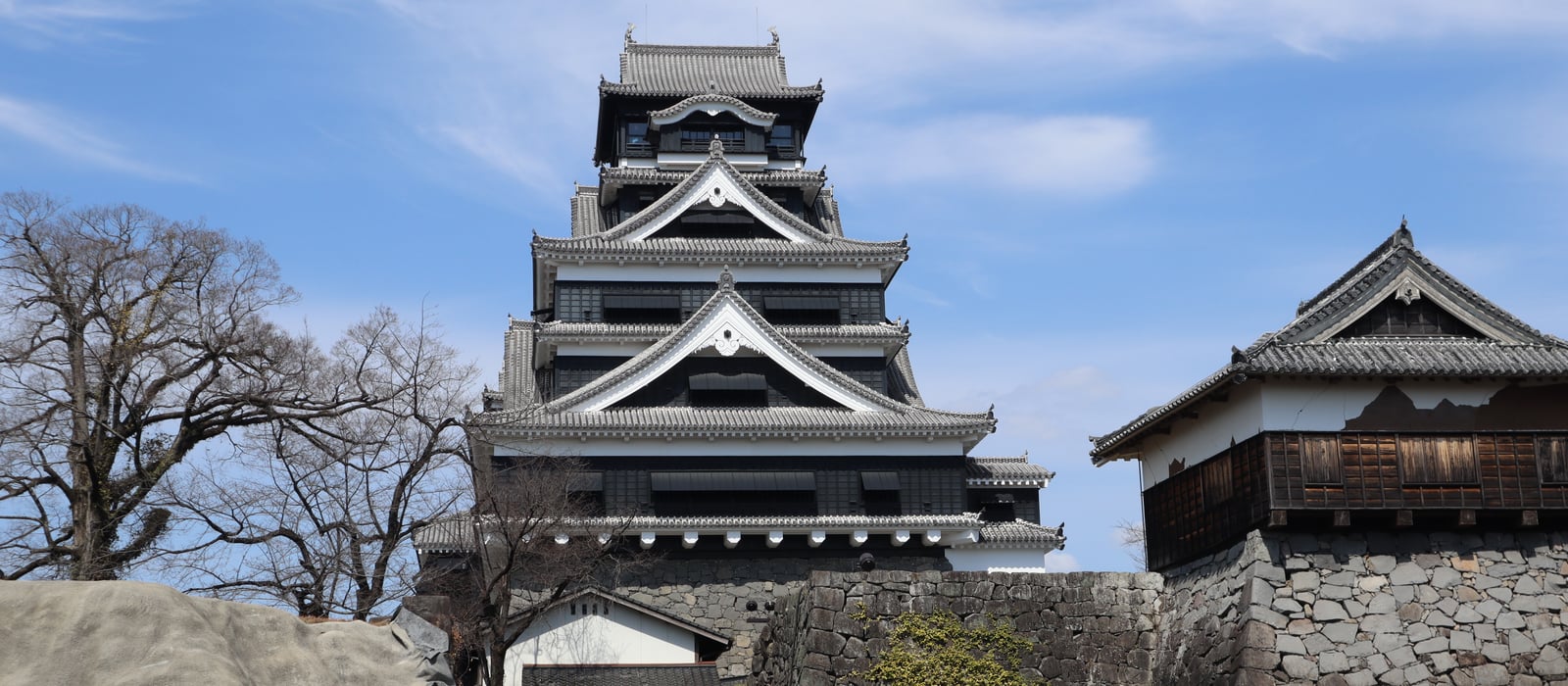
 Image: Wikimedia Commons
Kumamoto Prefecture
Kumamoto Prefecture lies in central Kyushu, a land of great variety that includes the volcanoes of Aso, the islands of Amakusa and the Yatsushiro Plain. In the Edo period, crafts and food culture developed under the Higo domain of the Hosokawa clan. Its Traditional Crafts Designated by the Minister of Economy, Trade and Industry are four items: Higo Zogan, in which gold and silver are inlaid into an iron base; Shodai Ware, known for its poured glazes (nagashigake); Amakusa Ceramics, made with Amakusa pottery stone; and Yamaga Toro, assembled from washi (Japanese paper) and glue. Kumamoto Prefecture Traditional Crafts include Koda Ware, an inlaid pottery from Yatsushiro, and Kawashiri Hamono. Kutami Shibu Uchiwa, Kiji-uma from Hitoyoshi, Konoha-zaru from Gyokuto Town and Higo Mari are also handed down in various areas. In food, Kumamoto is known for Karashi Renkon, which tradition says was presented to Hosokawa Tadatoshi, as well as Basashi and Taipien, a noodle dish made with harusame (glass noodles). Ikinari Dango, which wraps sweet potato and sweet bean paste, Takana-meshi and Dago-jiru from Aso, and Chosen-ame, a renowned confection of Higo, are also flavors of Kumamoto. In the Kumamoto earthquake of July 28, 2026, a maximum seismic intensity of 7 on the Japanese scale was recorded in Uki City and Hikawa Town, and kilns and facilities were also damaged. When visiting, please check the latest operating status in advance.
Kumamoto's Traditional Crafts

Higo Zogan (Gold and Silver Inlay on Iron)
Higo Zogan (Gold and Silver Inlay on Iron of Kumamoto)
Higo zogan is a metalwork craft of Kumamoto in which gold and silver are set into an iron base to create patterns. It is said to have begun about 400 years ago, in the early Edo period, when gunsmiths decorated gun barrels and sword guards (tsuba). Because Hosokawa Tadaoki employed master craftsmen and encouraged their skills, it became known throughout Japan as 'Higo kinko' (Higo metalwork). When the Sword Abolishment Edict reduced demand for sword fittings, the techniques were carried on in accessories and other items. In March 2003 (Heisei 15) it was designated a Traditional Craft by the Minister of Economy, Trade and Industry, and its officially designated name is written '肥後象がん.' Today most pieces are made with the nunome zogan (cloth-texture inlay) technique, centering on stationery and accessories in which gold and silver stand out against black iron. It is made in Kumamoto City, Nankan Town and Yamato Town, and at the long-established workshop 光助 in Shinmachi, Kumamoto City, you can also try inlay work.
Shodai Ware
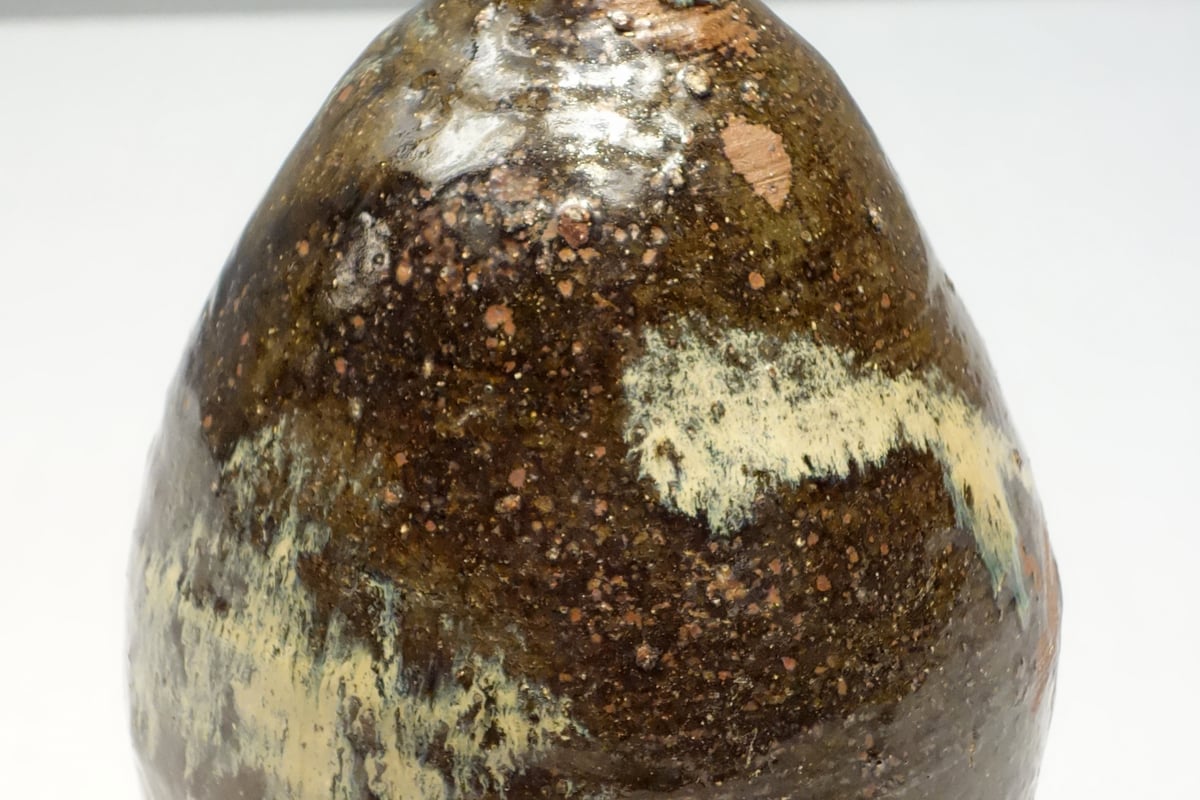
Shodai Yaki (Shodai Ware of Northern Kumamoto)
Shodai ware (Shodai-yaki) is pottery that has been fired in northern Kumamoto Prefecture for about 400 years. It is said to have begun when potters who moved from Buzen following the Hosokawa clan's transfer of domain in 1632 (Kan'ei 9) opened kilns at the foot of Mt. Shodai. In the Edo period it became an official domain kiln of the Higo domain. Shodai clay, which is rich in iron and small pebbles, is fired at high temperatures with glazes such as straw ash and wood ash. Its hallmark is the pattern created by pouring another glaze over the base glaze with a ladle, giving it a simple, powerful style. In Kumamoto it has also been called Gotoku-yaki. In 2003 (Heisei 15) it was designated a Traditional Craft by the Minister of Economy, Trade and Industry. It is made in Arao City, Nagasu Town, Nankan Town, Uki City and Kashima Town, and there are said to be 11 kilns, centered on Arao City and Nankan Town.
Amakusa Ceramics
Amakusa Toji (Porcelain and Pottery of Amakusa)
Amakusa ceramics (Amakusa toji) is the collective name for the porcelain and pottery made in the Amakusa area of Kumamoto Prefecture. There is porcelain made from high-quality Amakusa porcelain stone, said to be the best in Japan, and pottery made from local clay; porcelain is said to have first been fired about 340 years ago and pottery about 250 years ago. Amakusa was land under the direct control of the shogunate and had no official domain kiln, so village headmen (shoya) in each village built up the industry by selling porcelain stone and firing ceramics. For this reason each kiln has different characteristics, and well-known examples include the white porcelain of Takahama ware, the white porcelain and celadon of Uchida Sarayama ware, the namako glaze of Mizunodaira ware, and the red-clay vessels of Maruo ware. Amakusa porcelain stone, the raw material, is still mined today. In 2003 (Heisei 15) it was designated a Traditional Craft by the Minister of Economy, Trade and Industry. It is produced in Amakusa City, Kamiamakusa City and Reihoku Town, and events at individual kilns as well as joint sales exhibitions are held.
Koda Ware (Inlaid Pottery of Yatsushiro)
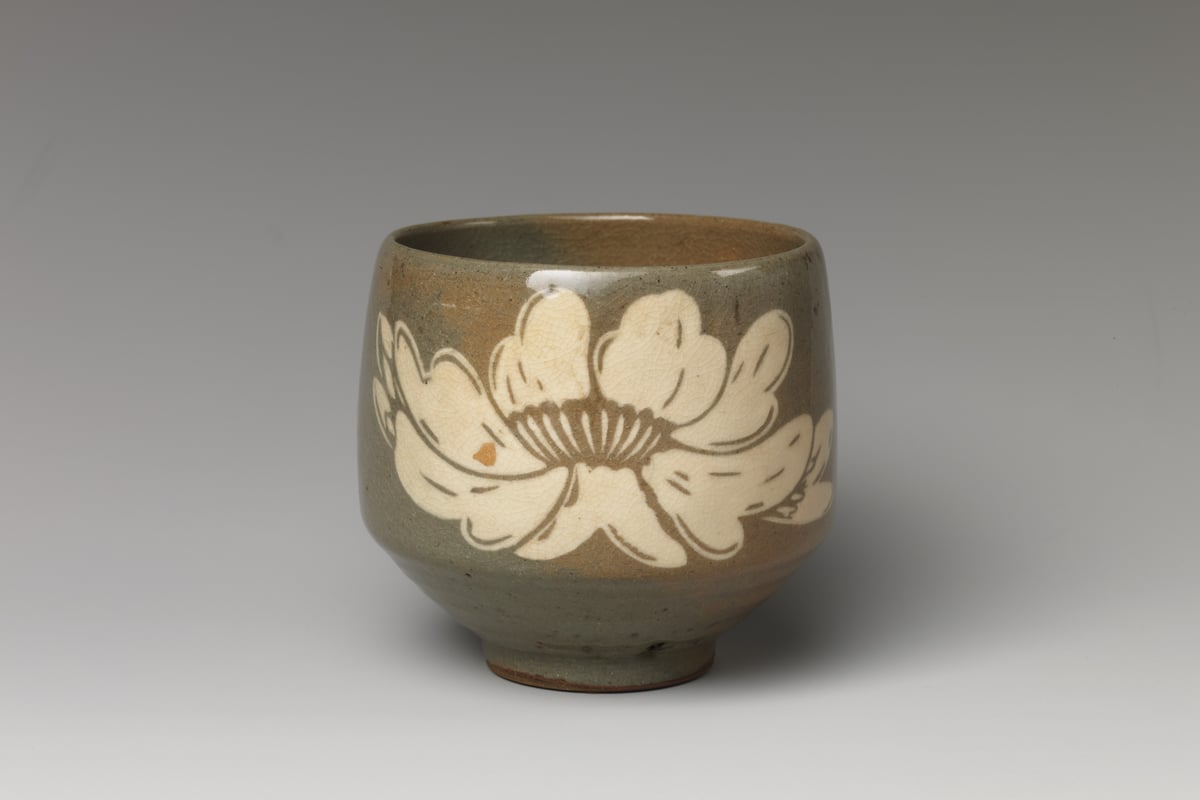
Koda Yaki (Inlaid Pottery of Yatsushiro)
Koda ware (Koda-yaki) is pottery made in Yatsushiro City and Hikawa Town, Kumamoto Prefecture, and is also called Yatsushiro ware (Yatsushiro-yaki). Its hallmark is the inlay (zogan) technique, in which patterns are carved into the half-dry clay body, filled with white clay, and the excess is shaved away. When it is fired with a clear glaze, the iron in the clay brings out a pale bluish-green color. It is said that Agano Kizo, who moved from Buzen following the Hosokawa clan's transfer of domain in 1632 (Kan'ei 9), built the kiln, and for generations it served as an official kiln of the Hosokawa clan. It is not a nationally designated Traditional Craft but a Kumamoto Prefecture Traditional Craft. Today it is carried on by kilns such as 宗家上野窯, 肥後高田焼伝七窯 and 高田焼竜元窯. The kilns suffered severe damage in the July 2026 Kumamoto earthquake, and moves toward reopening have been reported.
Yamaga Toro (Paper Lanterns of Yamaga)
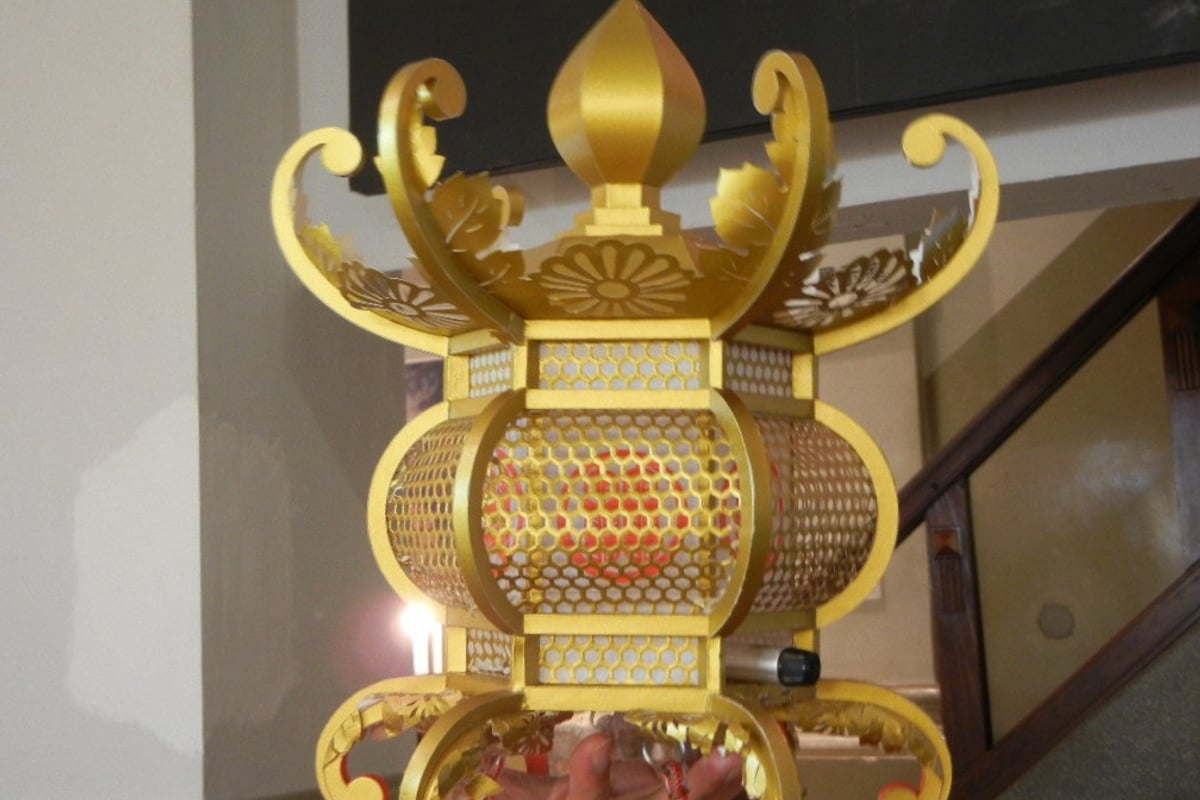
Yamaga Toro (Paper Lanterns of Yamaga)
Yamaga toro is a paper craft made in Yamaga City, Kumamoto Prefecture, assembled into three-dimensional forms from washi (Japanese paper) and paste alone, without using wood or metal fittings. It is made by hand by craftspeople called toro-shi (lantern makers), and even the finest parts are hollow inside. Besides the kin-doro (golden lanterns) that dancers wear on their heads, there are also works that reproduce famous buildings and shrine halls to scale. It is said to have begun about 600 years ago, in the Muromachi period, when paper craftwork imitating kin-doro was offered to Omiya Shrine. Every year on August 15 and 16, the lanterns are used for offerings and lantern dances at the Yamaga Toro Festival. In December 2013 (Heisei 25) it was designated a Traditional Craft by the Minister of Economy, Trade and Industry. Because of the Kumamoto earthquake, the Sennin Toro Odori (Lantern Dance of a Thousand Women) and the fireworks display were canceled at the 2026 festival, which was held on a reduced scale centered on Shinto rituals.
Kawashiri Hamono (Hand-forged Blades)
Kawashiri Hamono (Hand-forged Blades of Kawashiri)
Kawashiri Hamono are hand-forged blades made in Kawashiri, Minami Ward, Kumamoto City. They are made by warikomi forging (warikomi tanzo), in which steel is sandwiched in a base of soft iron and forged, and are said to excel in sharpness and durability. They are said to descend from the lineage of Satsuma swordsmiths. Kawashiri has been a blacksmiths' town since the late Muromachi period, and in the Edo period, when a shipyard of the Higo domain was established there, blacksmithing flourished. Centered on kitchen knives, farm tools such as hoes and sickles, as well as fishing tools, are also made. According to a 2011 article, they were designated a Kumamoto Prefecture Traditional Craft in 1979. The blacksmith shops, said to have numbered about 50 before the war, had decreased to two as of 2013. At the blade workshop of the Kumamoto Crafts Hall (くまもと工芸会館), visitors can watch craftspeople making and sharpening blades, and Kawashiri Hamono can be purchased at the shop inside the hall.
Kutami Shibu Uchiwa (Persimmon-tannin Paper Fans)
Kutami Shibu Uchiwa (Persimmon-tannin Paper Fans of Kutami)
Kutami Shibu Uchiwa are fans of washi (Japanese paper) coated with kakishibu (persimmon tannin), made in Kutami, Kamoto Town, Yamaga City, Kumamoto Prefecture. The ribs are made by splitting a single piece of bamboo, washi is pasted on, and kakishibu is applied over it to finish. Madake bamboo from the outer rim of Aso and handmade washi are used as materials. Kakishibu is said to increase strength and to repel insects. The method is said to have been passed down about 400 years ago by a traveling monk from Shikoku, and Kutami was said to be one of the three major fan-producing areas, along with Kyoto and Marugame in Shikoku. At its peak, 16 makers are said to have produced 5 million fans a year. Today, the only maker of fans in Kutami is 栗川商店 (Kurikawa Shoten), founded in 1889 (Meiji 22). You can also enjoy the way the color deepens year by year as the kakishibu oxidizes, and the fans are also used as gifts and commemorative items.
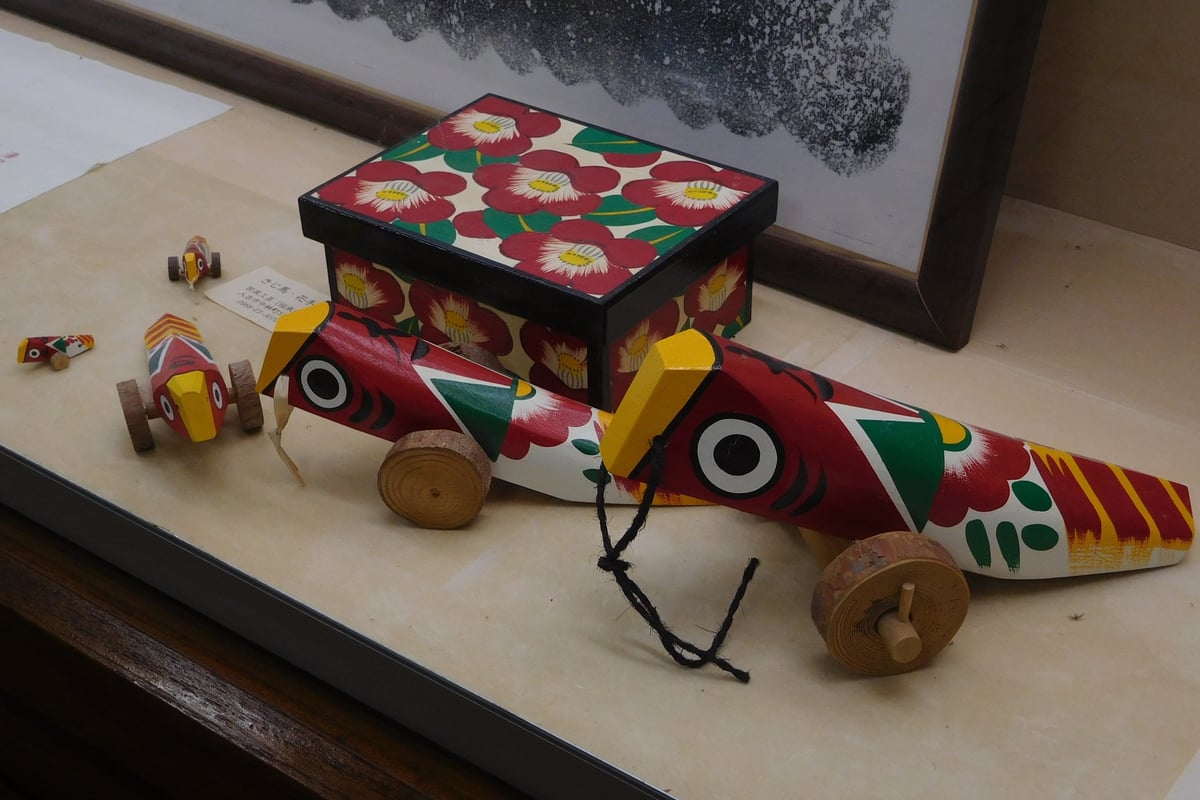
Kiji-uma (Wooden Pheasant Horse Toy)
Kiji-uma (Wooden Pheasant-shaped Toys of Hitoyoshi)
Kiji-uma is a wooden folk toy handed down in the Hitoyoshi-Kuma region of Kumamoto Prefecture. It is a wheeled toy with a body shaped like a kiji (pheasant), a wild bird, and children play with it by pulling it on a string or riding on top of it. It has been cherished as a good-luck charm wishing for the healthy growth of children. It is said to have first been made more than 800 years ago by fugitives of the Heike clan who missed life in the capital. It is painted mainly in red with yellow and green, and the character 大 ('great') and eyes are drawn on the head in sumi ink. Together with hanatebako (flower hand boxes), which share the same legend, it is a representative toy of Hitoyoshi, and at the spring fair, kiji-uma were bought as souvenirs for boys. In 2025, 'Kiji-uma and Kiji-guruma Making Techniques of the Kyushu Region' was selected as an Intangible Folk Cultural Property for which documentation and other measures should be taken. The number of makers has declined, and a 2025 news report stated that only two businesses, both in Hitoyoshi City, remain in the prefecture.
Konoha-zaru (Unglazed Clay Monkey Toys)
Konoha-zaru (Unglazed Clay Monkey Toys of Konoha)
Konoha-zaru are clay folk toys handed down in Konoha, Gyokuto Town, Tamana District, Kumamoto Prefecture. Local clay is shaped by pinching with the fingertips alone, without molds, and then bisque-fired without glaze. Originally they were unpainted, but today some are painted. According to legend they began in 723 (Yoro 7), and they are also used as amulets to ward off disease and misfortune and to bring prosperity to one's descendants. In the Edo period they were widely known as souvenirs and were even depicted on the cover of the novel 'Nanso Satomi Hakkenden.' Representative forms include kodaki-zaru (monkey holding its young), meshikui-zaru (rice-eating monkey), sanbiki-zaru (three monkeys) and umanori-zaru (monkey on horseback). The kiln also makes zodiac animal figurines and new items. Of the four kilns that existed until around the Meiji period, an article from around 2010 says that only 木の葉猿窯元 (the Konoha-zaru kiln) remains.
Higo Mari (Thread Balls)
Higo Mari (Rice-husk Thread Balls of Kumamoto)
Higo Mari are temari (thread balls) made in Kumamoto City. Base thread is wound around a core of rice husks wrapped in paper, and patterns are stitched with plant-dyed cotton thread. The patterns are limited to 13 types, such as 'asanoha' (hemp leaf), 'tsubaki' (camellia) and 'sankaku-zukushi' (all triangles), but the impression changes greatly with the color combination. They began to be made around 1965 (Showa 40), drawing on temari handed down in various regions since the Edo period. They are described as having been perfected by Tonomura Kichinosuke, the first director of the Kumamoto International Folk Craft Museum (熊本国際民藝館). Unlike nanban mari, which use glossy thread, Higo Mari are characterized by the simple texture of cotton thread. Besides being made for display, they are also made into straps and earrings. Today they are made mainly by the Higo Mari Society (肥後まりの会). It is a different craft from Higo Temari, which uses a loofah as its core.
Kumamoto's Local Food
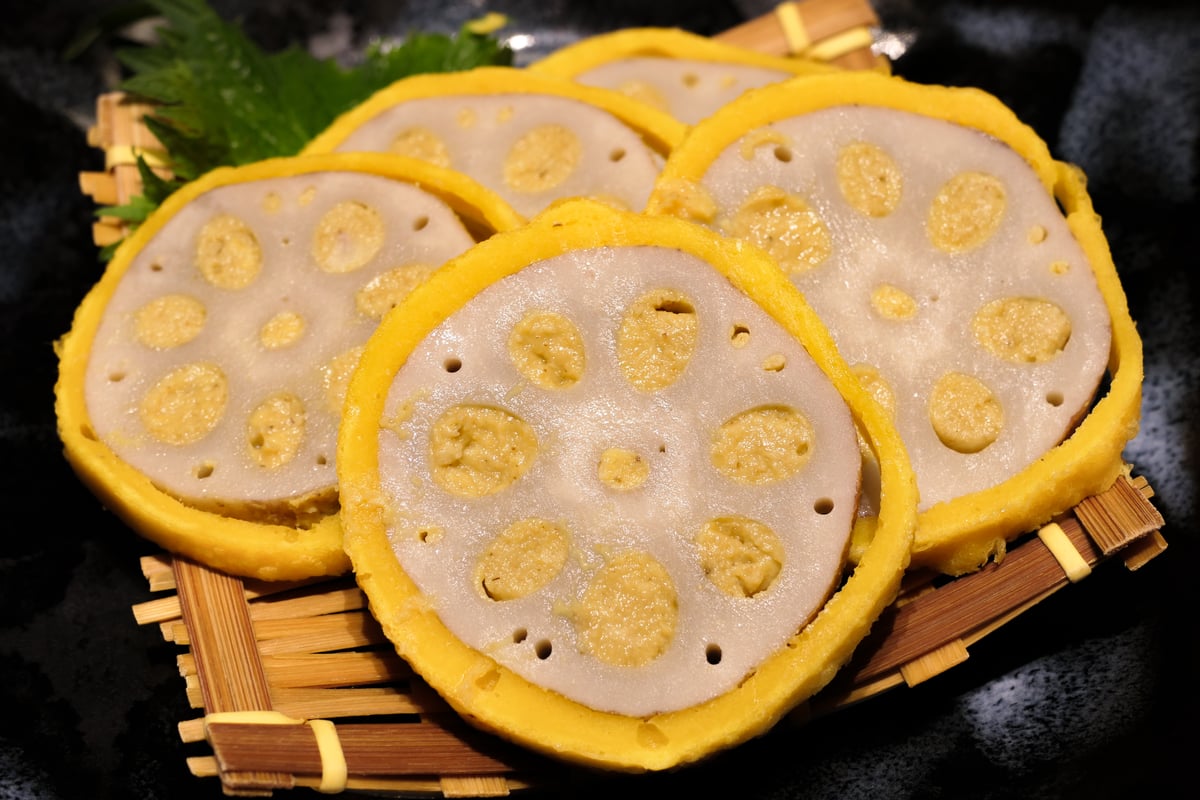
Karashi Renkon (Mustard-Stuffed Lotus Root)
Karashi Renkon (Mustard-Stuffed Fried Lotus Root)
Karashi renkon is a local dish of Kumamoto Prefecture in which the holes of boiled lotus root are filled with karashi miso, a mixture of barley miso and Japanese mustard, and the root is then coated in a yellow batter and deep-fried. It is said to have begun around 1632 (Kan'ei 9), when it was presented to Hosokawa Tadatoshi, the sickly first lord of the Higo domain from the Hosokawa clan. There is also a story that, because its sliced cross-section resembled the Hosokawa family crest, the 'kuyo-mon' (nine-star crest), the recipe was kept a closely guarded secret until the Meiji Restoration. It is sliced about 5 to 10 mm thick and arranged so that the pattern of the cross-section can be seen. It is eaten as an everyday side dish or as a snack with drinks, and at New Year it also appears as one of the dishes of osechi ryori (New Year's cuisine). In fiscal 2024 (Reiwa 6), it was certified as a '100-Year Food' by the Agency for Cultural Affairs. Besides specialty shops, it is also sold at local supermarkets and local product centers.
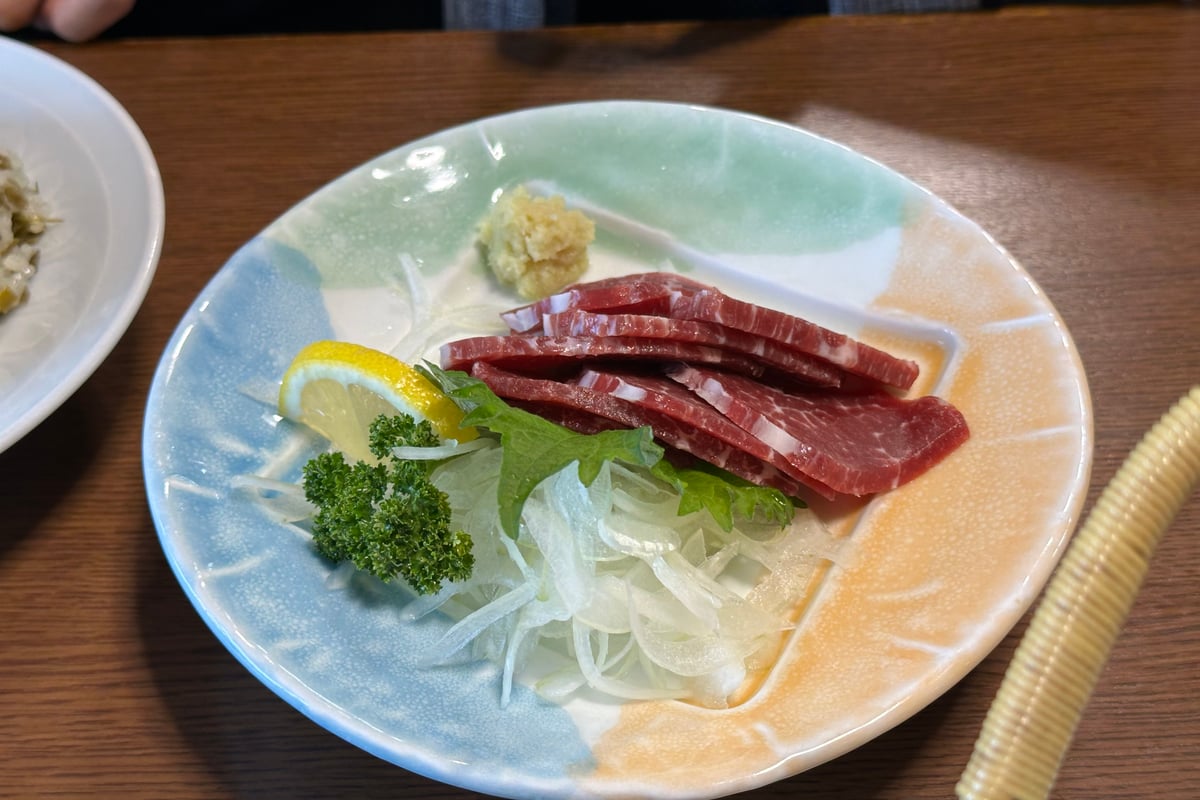
Basashi (Horse Meat Sashimi)
Basashi (Kumamoto Horse Meat Sashimi)
Basashi is a dish of raw horse meat sliced thinly and eaten with condiments and sweet soy sauce. Kumamoto Prefecture is a production area that the Ministry of Agriculture, Forestry and Fisheries describes as Japan's top producer of horse meat, and basashi is one of the prefecture's representative local dishes. As for its origin, a common theory holds that it began when Kato Kiyomasa ate army horses during the invasions of Korea and continued to enjoy horse meat after returning home, but there are various theories about its origins. In the Aso region, people began eating horse meat in the wake of the postwar food shortages, and it is said that by the Showa 30s (1955-1964) restaurants had also begun serving it. In addition to marbled and lean cuts, there are parts with names unique to horse meat, such as 'futaego' and 'kone.' It is also called 'sakura niku' (cherry blossom meat) because its cut surface is cherry-blossom pink. Today, horses are slaughtered at hygienically controlled meat processing plants, and the meat is always frozen before distribution as a measure against parasites.
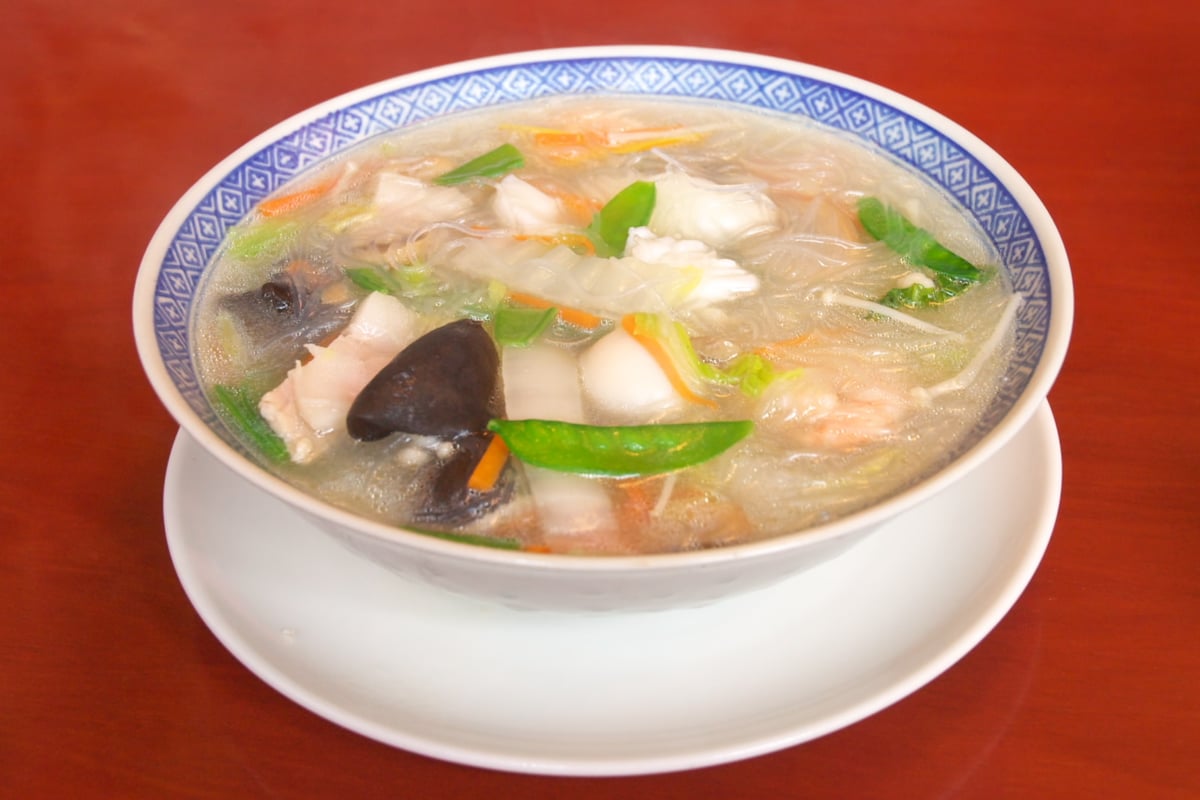
Taipien (Kumamoto Glass Noodle Soup)
Taipien (Kumamoto Glass Noodle Soup)
Taipien is a noodle dish of Kumamoto Prefecture in which glass noodles (harusame) are used like noodles and finished in soup together with vegetables, seafood, and pork. According to the Ministry of Agriculture, Forestry and Fisheries, it originated from a soup dish eaten on special days in households in Fuzhou, Fujian Province, China, and is said to have been brought to Nagasaki and Kumamoto by overseas Chinese in the late Meiji era. The Fuzhou dish is described as a soup containing duck eggs and wontons whose wrappers are made from pork and sweet potato starch. According to the ministry, in Kumamoto these were replaced by fried hen's eggs and glass noodles, and it became a noodle dish. Theories name Chukaen, Kairakuen, and Kourantei as the restaurant of origin, and the question has not been settled. As a light dish packed with ingredients, it is eaten for lunch, for dinner, and to finish off a night of drinking. It also appears in school lunches in Kumamoto City and the surrounding areas.
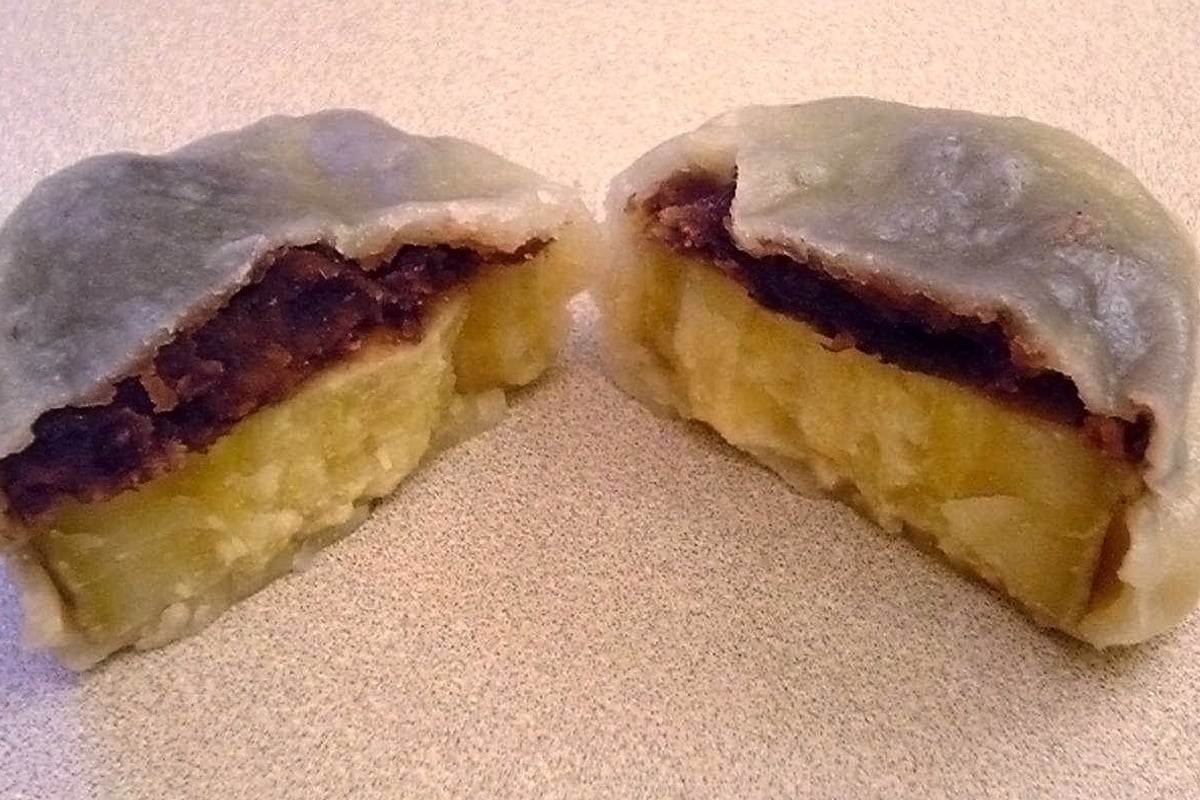
Ikinari Dango (Sweet Potato and Red Bean Bun)
Ikinari Dango (Steamed Sweet Potato and Red Bean Bun)
Ikinari dango is a local confection of Kumamoto Prefecture made by wrapping a round slice of sweet potato and red bean paste in dough and steaming it. According to the Ministry of Agriculture, Forestry and Fisheries, against the backdrop of the thriving sweet potato cultivation around the foot of Mt. Aso, farmers on the Kikuchi Plain and the Kumamoto Plain made it as a snack to eat during breaks in the autumn harvest. Red bean paste began to be added several decades ago, and this is now the mainstream version. There are various theories about the origin of the name, but it is said that because 'ikinari' in the Kumamoto dialect means easy or quick, it was named as a confection that could be served right away even to unexpected guests. The multilingual commentary of the Ministry of Land, Infrastructure, Transport and Tourism describes it as one of Kumamoto's three great specialties, along with karashi renkon and basashi. It is basically eaten freshly made while still warm, and is sold every day at specialty shops, Japanese confectionery shops, street stalls, and elsewhere.
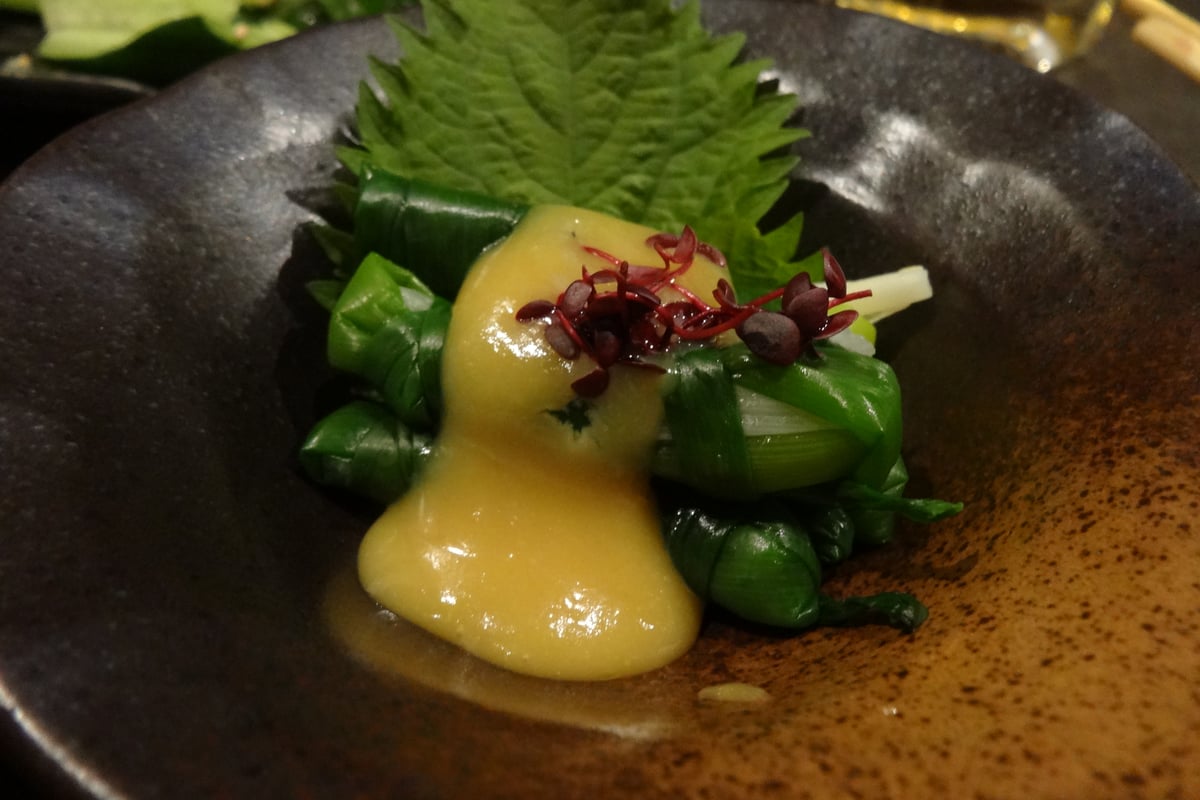
Hitomoji no Guruguru (Rolled Scallions with Vinegar Miso)
Hitomoji no Guruguru (Rolled Wakegi Scallions with Vinegar Miso)
Hitomoji no guruguru is a local dish of Kumamoto Prefecture in which hitomoji, another name for wakegi scallions, is briefly boiled, the green leaves are wrapped around the white base as a core, and it is eaten with vinegar miso. It is called 'guruguru' (round and round) because of its wrapped appearance. According to the Ministry of Agriculture, Forestry and Fisheries, during the time of the sixth lord, Hosokawa Shigekata, the finances of the Higo domain became strained and a frugality edict was issued. It is said that at that time it was devised as an inexpensive and tasty snack to go with sake. Its appeal lies in its crunchy texture and the distinctive aroma and sweetness of hitomoji. Today it is available year-round, but its peak season is said to be early spring, when the scallions have grown sweeter after enduring the winter. In the past it was an indispensable dish for Hinamatsuri (the Doll Festival). Today it is still made at home and is also served as an appetizer or a snack with drinks at Japanese restaurants and izakaya.
Dago-jiru (Flour Dumpling Soup)
Dago-jiru (Kumamoto Flour Dumpling Soup)
Dago-jiru is a local dish of Kumamoto Prefecture in which 'dago,' made by kneading wheat flour with water and letting the dough rest, is simmered with vegetables such as taro and burdock root. 'Dago' means 'dango' (dumpling) in the Kumamoto dialect, and the dish is also called 'dango-jiru.' According to the Ministry of Agriculture, Forestry and Fisheries (MAFF), it has been handed down throughout the prefecture. Because it is easy to make, nutritious, and filling, it has long been eaten during breaks in farm work. The broth is made from dried shiitake mushrooms or niboshi (dried sardines), and the soup is seasoned with barley miso, white miso, or soy sauce. It is eaten all year round, but is especially popular in autumn and winter, the harvest season for taro and burdock root. The shape of the dago and the ingredients vary by region and household, and in Aso the flat, long 'nobe-dago' is the mainstream. It is also served at restaurants, and the ministry notes that National Route 57, lined with restaurants serving it, is called the 'Dago-jiru Kaido' (Dago-jiru Road).
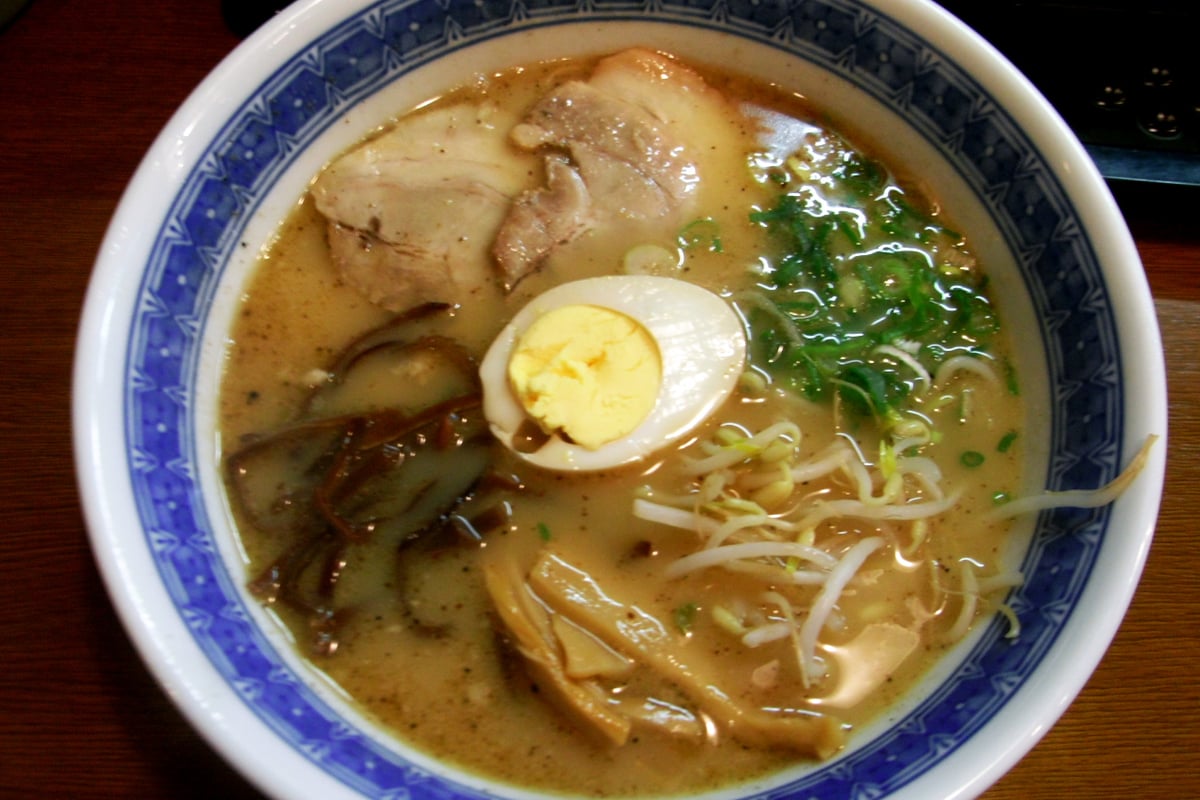
Kumamoto Ramen
Kumamoto Ramen (Pork-Bone Noodle Soup with Garlic Oil)
Kumamoto ramen is the local ramen of Kumamoto Prefecture, where many shops combine a pork-bone soup with added chicken bones and straight, low-hydration noodles. According to the Shin-Yokohama Ramen Museum, its roots lie in 'Sanku' of Kurume, and a shop that inherited that flavor and opened in Tamana City in 1952 (Showa 27) is regarded as the pioneer. Later, Matsubaken (松葉軒), Komurasaki (こむらさき), Keika (桂花), and others opened in Kumamoto City, and Ajisen Ramen (味千拉麺) spread it through chain expansion. Its greatest feature is the use of cooked garlic. The flavor comes from 'mayu,' an aromatic oil made from fried garlic, and from garlic chips. The noodles are thicker than those of Hakata ramen, and there is no kaedama (extra noodle serving); the basic way to adjust the amount is to order a large portion. Keika expanded to Tokyo and Ajisen overseas, making it a flavor known throughout Japan.
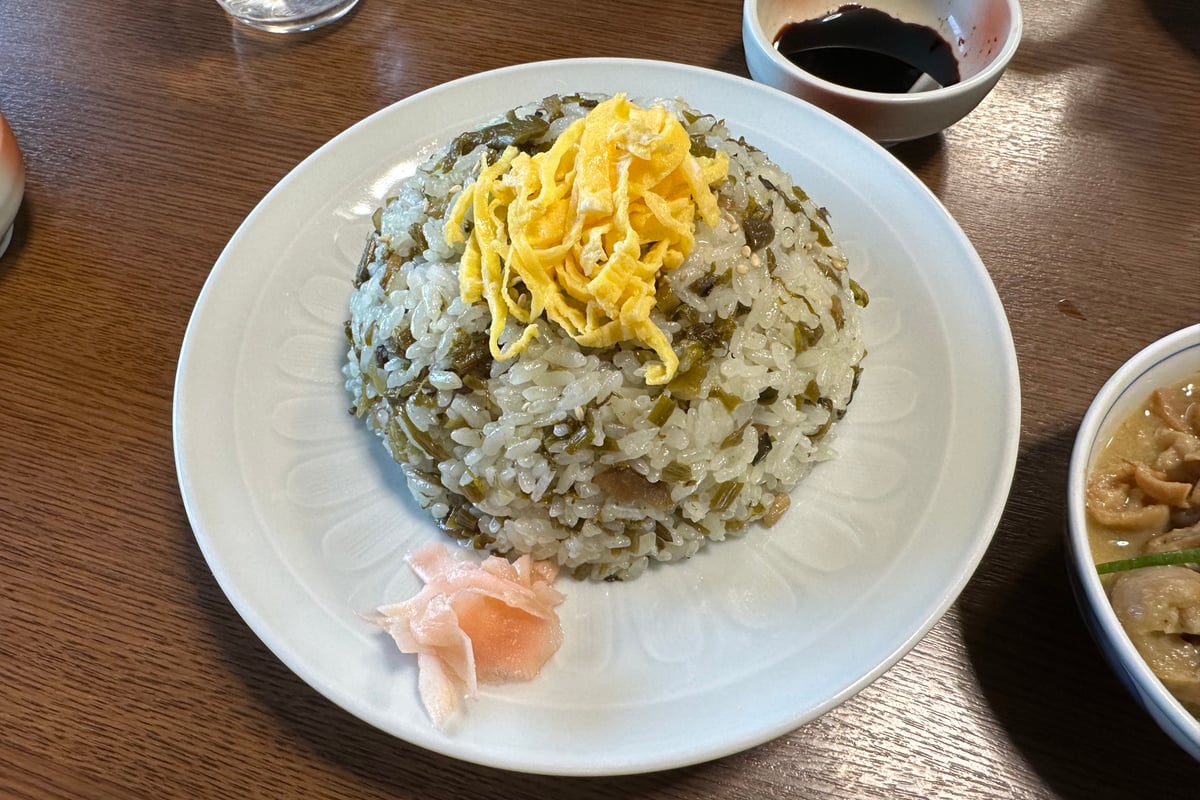
Takana-meshi (Rice with Pickled Mustard Greens)
Takana-meshi (Rice Mixed with Aso Pickled Mustard Greens)
Takana-meshi is a local dish of the Aso region of Kumamoto Prefecture in which pickled Aso takana (mustard greens) is mixed into rice. Aso takana is a type of leaf mustard (karashina), and according to the Ministry of Agriculture, Forestry and Fisheries (MAFF), it is currently cultivated only in the Aso area. The harvest takes place over a short period from mid- to late March, when the thin, tender bolting stalks are snapped off by hand one at a time. This work is called 'takana-ori.' The pickles come in two types: shin-zuke, lightly pickled during the harvest season, and furu-zuke, made with more salt and lactic-acid fermented; takana-meshi mainly uses furu-zuke. The sourness and umami deepened by fermentation are the key to its flavor. According to the official website of Asoji (あそ路), it was originally a home-cooked dish in Aso, and in the Showa 40s (1965–1974) the Aso City eatery 'Asoji' began selling it as a specialty. Today it also appears widely in school lunches across Kumamoto Prefecture.
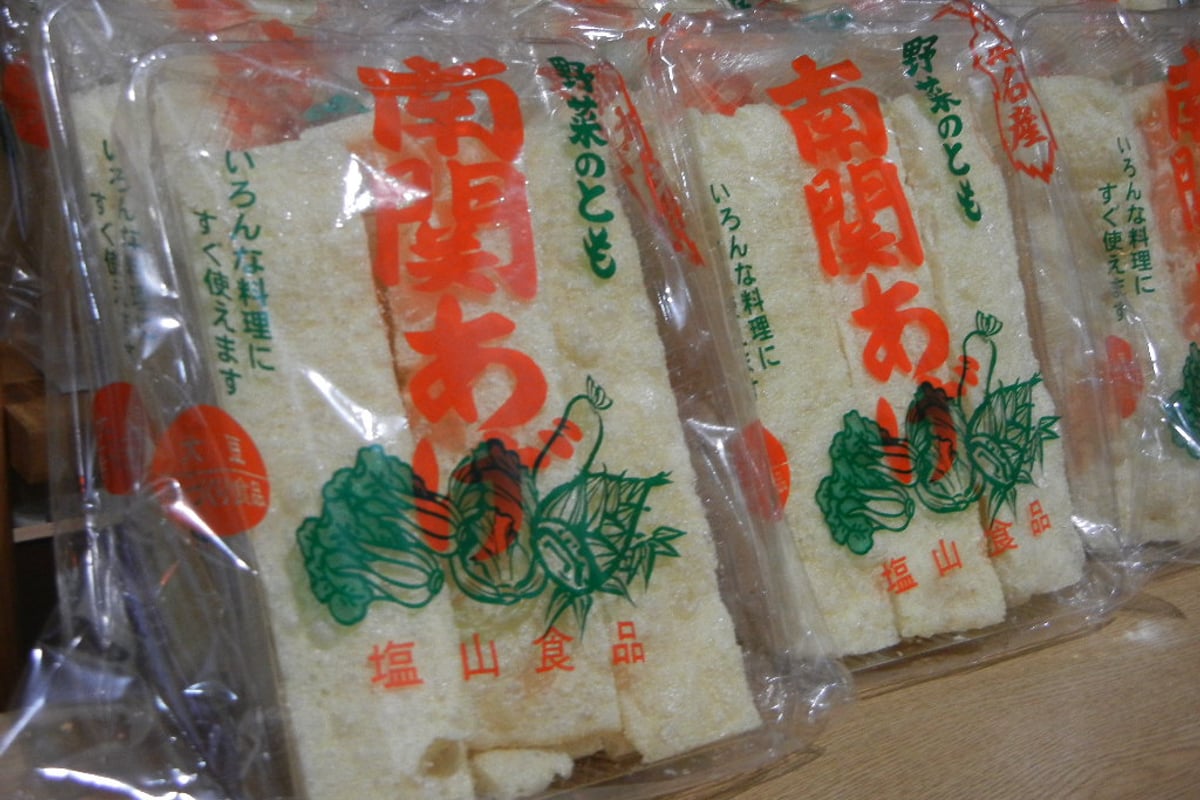
Nankan-age (Long-Keeping Fried Tofu)
Nankan-age (Long-Keeping Fried Tofu of Nankan)
Nankan-age is a type of aburaage (deep-fried tofu) that has been handed down since the Edo period in Nankan Town (Nankan-machi), Tamana District, in northern Kumamoto Prefecture. According to the Ministry of Agriculture, Forestry and Fisheries (MAFF), it is about 25 cm on each side, larger than ordinary aburaage, and has a crisp texture. Because it contains little moisture, it can be kept at room temperature for about two to three months. It is made by strongly pressing thinly sliced tofu and frying it twice at different temperatures to remove the moisture. The method is said to have been brought by people who migrated from the Iyo-Matsuyama area of Shikoku after the Shimabara Rebellion. Besides everyday miso soup, it is used in Nankan nishime (a simmered dish) for celebrations and memorial services, and in Nankan-age makizushi, where it is used in place of nori. Today the main manufacturer is Shioyama Foods (塩山食品) in the town, and the Kumamoto Nichinichi Shimbun reported in 2025 that it holds a 90% share. The company also produces a Gokujo (premium) series made only with domestic soybeans.
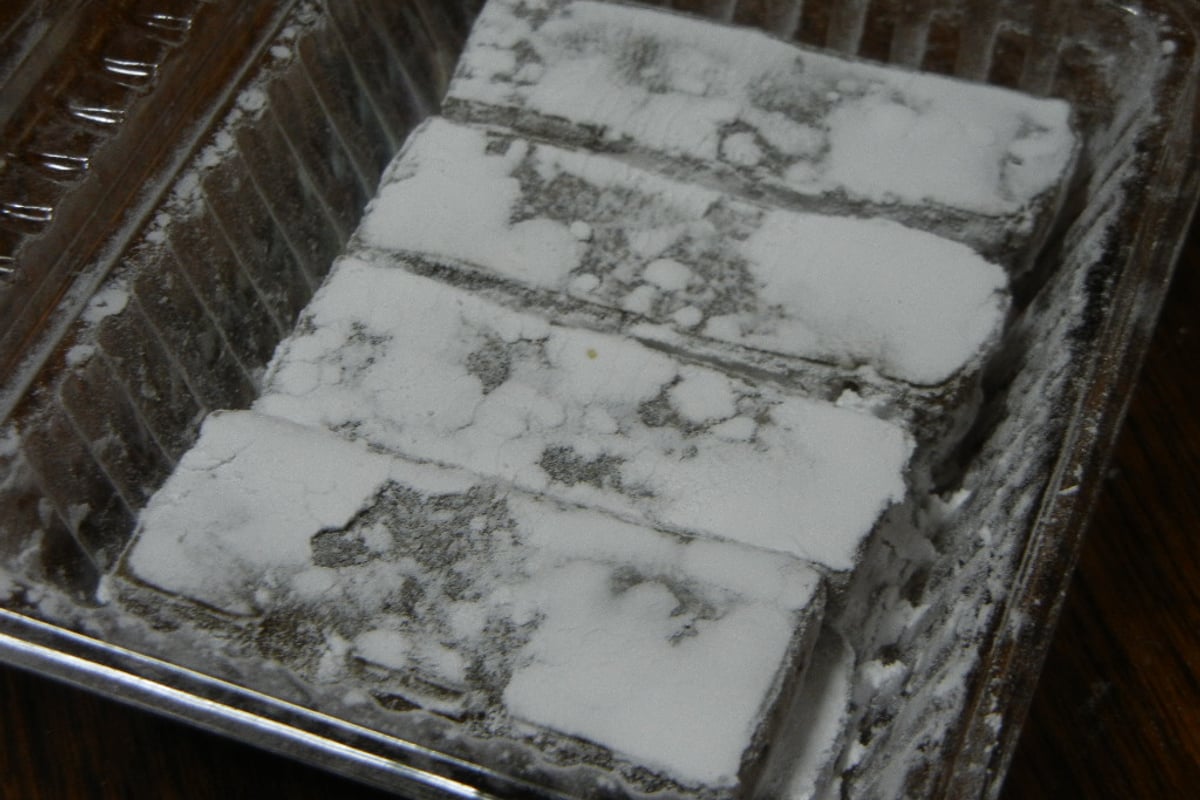
Chosen-ame (Glutinous Rice Confection)
Chosen-ame (Kumamoto Glutinous Rice Confection)
Chosen-ame is a traditional Kumamoto confection made by kneading together glutinous rice, mizuame (starch syrup), and sugar, letting it rest, and dusting it with katakuriko (potato starch). Although its name contains 'ame' (candy), its appeal lies in its mochi-like texture and gentle sweetness. According to the Ministry of Agriculture, Forestry and Fisheries (MAFF), it is also said to be the oldest confection in Kumamoto, and it is characterized by its simple flavor. Because it keeps for a long time and its flavor changes little, Kato Kiyomasa is said to have brought it as field rations during the Bunroku-Keicho campaigns (the invasions of Korea). It was originally called Chosei-ame (長生飴) or Higo-ame (肥後飴), and the name 'Chosen-ame' is said to derive from this expedition, though there are various theories about the origin of the name. The manufacturer, Shinise Sonodaya (老舗園田屋), is a shop in Kumamoto City that traces its creation to the Tensho era. Due to redevelopment, the shop closed its current store in January 2025 and now continues to sell through mail order and other channels.
Model Course
Try Higo Zogan and visit a long-established Karashi Renkon shop in Shinmachi, then savor Taipien at 会楽園 and Basashi in Hanabatacho
Shinmachi, part of the old castle town, is home to long-established craft and food shops. At 肥後象嵌 光助, you can try hammering in gold and silver under an artisan's guidance; according to published information, it costs 4,000 yen per person and requires a reservation by the previous day. For lunch, have Taipien at 会楽園. Its hours are listed as 11:30 a.m. to 3:00 p.m. After your meal, choose Karashi Renkon at 元祖 森からし蓮根 本店. A one-root box (medium) from its official online store costs 1,620 yen including tax. In the evening, you can enjoy Basashi and Dago-jiru at 郷土料理 五郎八 in Hanabatacho. We have not been able to confirm whether 光助 has been operating since the earthquake, so please check when making a reservation.
Watch blades being made at Kumamoto Crafts Hall in Kawashiri, then enjoy Kumamoto Ramen at 桂花 and Ikinari Dango
At Kumamoto Crafts Hall (くまもと工芸会館) in Kawashiri, Minami Ward, you can watch artisans make and sharpen Kawashiri knives. It closed due to the earthquake but returned to regular opening on August 5, 2026. It is closed on Mondays (or the following weekday if Monday is a public holiday) and during the year-end and New Year holidays. You can buy Kawashiri Hamono at the shop '蔵' on the first floor. For lunch, head to 桂花ラーメン 本店 in Hanabatacho. Travel sites list Keika Ramen (桂花拉麺) at 900 yen and Taro-men (太肉麺) at 1,200 yen. For a snack, you can buy Ikinari Dango at 長寿庵 in 肥後よかモン市場 at Kumamoto Station. Prices may change.
Eat Takana-meshi and Dago-jiru at あそ路 in Aso, and buy Aso takana-zuke in the shrine town of Monzenmachi
At あそ路 in Matoishi, Aso City, along National Route 57, enjoy Takana-meshi and Dago-jiru. According to the menu on its official website, Ganso Takana-meshi (original takana rice, regular size) costs 680 yen, Dago-jiru on its own costs 440 yen, and the Takana-meshi set meal costs 1,650 yen. Please check the notices on its official website for regular closing days. After your meal, head to the Monzenmachi shopping street, which continues from the approach to Aso Shrine. At つけもの処 健蔵, you can choose from many kinds of Aso takana-zuke (pickled mustard greens), including pickles taken straight from the barrel. Prices may change.
A northern Kumamoto course from 小代焼ふもと窯 in Arao, via the home of Nankan-age, to 山鹿灯籠民芸館 and 栗川商店 in Kutami
At 小代焼ふもと窯 in Fumoto, Arao City, you can choose tableware at the gallery attached to the kiln. It is listed as closed on Mondays. The specialty products center なんかんいきいき村 in Nankan Town sells Nankan-age, and according to a 2025 notice it is closed on the first Wednesday of the month. At 山鹿灯籠民芸館 in Yamaga City (300 yen for general admission), you can see up close lanterns made entirely of paper. Finally, visit 栗川商店 in Kutami, Kamoto Town. It is the only shop that makes shibu uchiwa in Kutami, and it is closed on Sundays, public holidays, and Saturdays from January to March. The post-earthquake opening status of some facilities has not been confirmed, so please check in advance.
A kiln tour in Amakusa: visit 丸尾焼 and 水の平焼, then try porcelain painting at 高浜焼寿芳窯
丸尾焼 in Kitaharamachi, Amakusa City, is a kiln that began by making large jars (kame) in the late Edo period, and it offers rustic tableware made with red clay. Next, head to 水の平焼 in Hondomachi. Said to have been founded in 1765, this kiln is known for its pieces with namako (sea-cucumber) glaze, in which white flecks flow over blue and navy. In Takahama, Amakusa Town, on the west coast, you can try a painting experience at the shop of 高浜焼寿芳窯 and learn about the history of Takahama ware at the adjoining 上田資料館. We have not been able to confirm the price of the painting experience, so please inquire in advance. Opening hours also vary from kiln to kiln.
Events
Yamaga Toro Festival
Every year, August 15–16 (in 2026, the Sennin Toro Odori and the fireworks display were canceled due to the earthquake) / Omiya Shrine and other sites throughout Yamaga City
Amakusa Grand Ceramics Exhibition
October 31–November 4 in 2026 (dates for the next edition to be confirmed) / Amakusa Civic Center
Amakusa West Coast and Hondo-Itsuwa Kiln Tour
May 2–6 in 2024 (dates vary by year) / Kilns in Amakusa City and Reihoku Town
Aratama Kiln Tour
October 17–19 in 2025 (whether it will be held in 2026 is to be confirmed) / Kilns in the Arao and Tamana area