Image: Wikimedia Commons
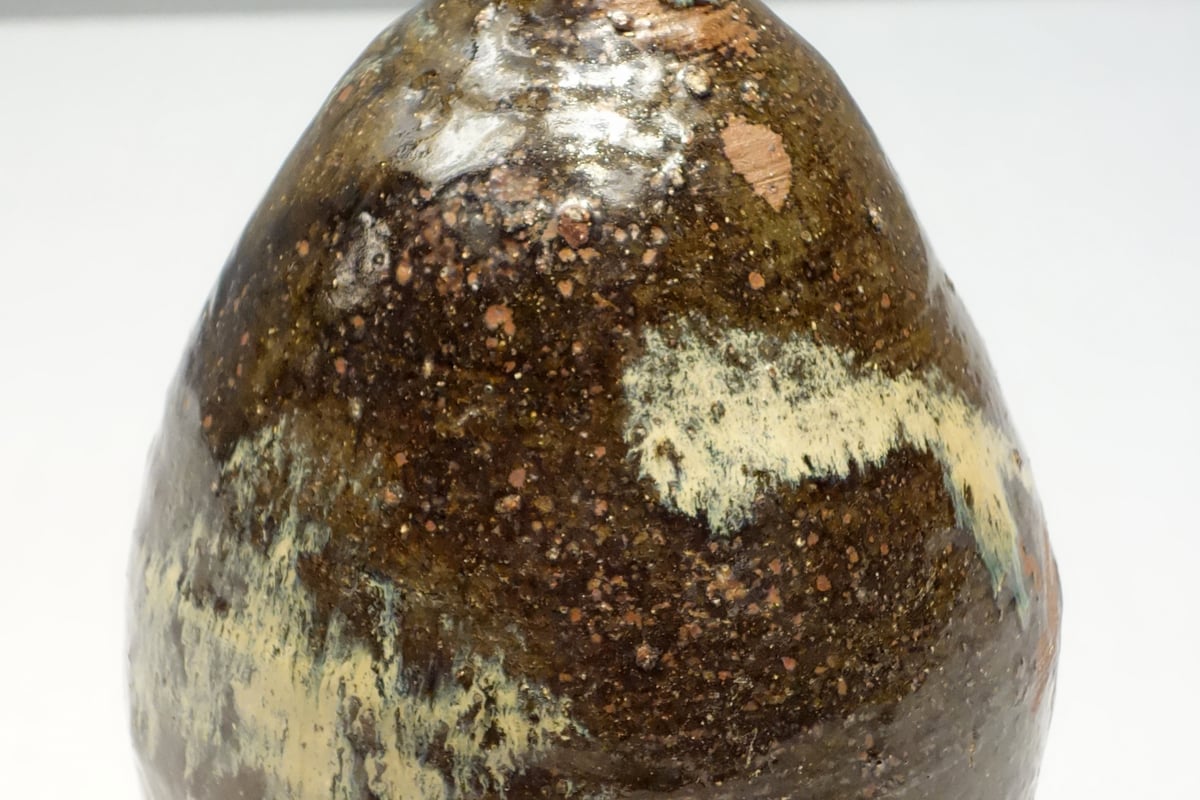
Shodai ware (Shodai-yaki) is pottery that has been fired in northern Kumamoto Prefecture for about 400 years. It is said to have begun when potters who moved from Buzen following the Hosokawa clan's transfer of domain in 1632 (Kan'ei 9) opened kilns at the foot of Mt. Shodai. In the Edo period it became an official domain kiln of the Higo domain. Shodai clay, which is rich in iron and small pebbles, is fired at high temperatures with glazes such as straw ash and wood ash. Its hallmark is the pattern created by pouring another glaze over the base glaze with a ladle, giving it a simple, powerful style. In Kumamoto it has also been called Gotoku-yaki. In 2003 (Heisei 15) it was designated a Traditional Craft by the Minister of Economy, Trade and Industry. It is made in Arao City, Nagasu Town, Nankan Town, Uki City and Kashima Town, and there are said to be 11 kilns, centered on Arao City and Nankan Town.
Origin
According to the Kumamoto Prefectural Traditional Crafts Center, it is said to have begun when 牝小路源七 and 葛城八左衛門, who moved from Buzen following the Hosokawa clan's transfer in 1632, opened a climbing kiln at the foot of Mt. Shodai. Materials from the Kyushu Bureau of Economy, Trade and Industry say the same. On the other hand, the commentary of the Japan Folk Crafts Museum, Osaka states that it was founded by Korean potters who came to Japan with Kato Kiyomasa at the time of the Bunroku campaign, so there are several theories about its origin.
History
In the Edo period, as an official domain kiln of the Higo domain, it fired tea utensils and also made many everyday wares. Some materials state that in 1836 瀬上林右衛門 built a kiln on the domain's orders. It declined after losing the domain's patronage with the Meiji Restoration, but is said to have been revived by 近重治太郎. The '小代焼窯元の会' (Shodai-yaki Kilns Association), founded in 2002 (Heisei 14), brought together 12 kilns, which led to the national designation in 2003.
Features
Shodai clay contains a lot of iron and small pebbles and is fired at 1,250–1,300°C, a high temperature for pottery. Straw ash, wood ash, feldspar and other materials are used for glazes, and the ware is described as being divided by color into ao-shodai (blue), ki-shodai (yellow) and shiro-shodai (white). Glaze poured from above creates abstract patterns, which are described as looking like birds or fish depending on the angle from which you view them.
Techniques
Nagashigake (poured glaze)
A technique in which, after glaze has been applied to the whole piece, a glaze of another color is poured over it from above with a ladle. The flowing glaze becomes the pattern as it is. The Kumamoto Prefectural Traditional Crafts Center cites a style in which a poured top glaze runs over the base glaze as a characteristic of Shodai ware.
Straw-ash glaze
A glaze whose main ingredient is straw burned until it turns to charcoal. たけみや窯 (Takemiya Kiln) in Kashima Town is described as making this glaze itself. ふもと窯 (Fumoto Kiln) mainly works in two colors, straw-ash glaze and wood-ash glaze.
Materials Used
Production Process
- 1
Preparing the clay
Raw clays are blended, made into slurry with a mixer, and put through suihi (elutriation: removing impurities with water). The slurry is dewatered or dried in the sun until it becomes clay, then kneaded with a pug mill and by hand.
- 2
Forming and finishing
Pieces are formed on a kick wheel (a wheel turned by foot), an electric wheel, with plaster molds and so on. When half-dry, they are trimmed with tools such as a flat metal plane (hiragane kanna) and then dried completely.
- 3
Bisque firing and glazing
After bisque firing at 700–900°C, glaze is applied. Glaze is applied to the bisqued body, and for nagashigake, a glaze of another color is poured on with a ladle at this stage.
- 4
Main firing
Pieces are fired at 1,250–1,300°C. Fumoto Kiln uses a six-chamber climbing kiln fueled with pine firewood. Firing methods differ from kiln to kiln.
| Main Production Areas |
|
|---|
Artisans & Workshops
小代焼ふもと窯
A kiln in Fumoto, Arao City. Inoue Taishu relocated and opened the kiln in 1968 (Showa 43). He is described as firing with pine firewood in a six-chamber climbing kiln together with the second generation, 井上尚之, and others. Inoue Taishu became president of the Japan Folk Crafts Association in 2023.
Official site →小代焼たけみや窯
A kiln in Kashima Town, where 近重眞二, the third generation and a grandson of 近重治太郎, who revived Shodai ware, makes pottery. He is described as handling everything from preparing materials to firing on his own, and as making his own straw-ash glaze.
Official site →小代焼中平窯
A kiln in Arao City. The Kumamoto Nichinichi Shimbun reported that 西川智成 and others who make pottery there succeeded in making glaze from the ash of rice husks that would otherwise be discarded. It is also reported that the kiln has begun selling vessels finished with this glaze.
Official site →小代焼岱平窯
A kiln in Nankan Town, with 坂井政治 and others registered as artisans of Nankan Town at the Kumamoto Prefectural Traditional Crafts Center. It is listed as a participating kiln in materials for the October 2025 'あらたま窯元めぐり' (Aratama Kiln Tour).
Official site →How to Buy
- 小代焼ふもと窯 (Arao City)
- You can buy pieces at the gallery attached to the kiln. According to a travel website listing, the address is 1728-1 Fumoto Furuhata, Arao City, and it is closed on Mondays. Business days may change, so please check before visiting.Where to buy →PR
- あらたま窯元めぐり (Aratama Kiln Tour)
- An event touring kilns in the Arao and Tamana area, held from October 17 to 19 in 2025. Shodai ware kilns took part, and there was also a stamp rally. Whether it will be held in 2026 has not been confirmed.
- Kumamoto Prefectural Traditional Crafts Center '工芸ショップ匠' (Kogei Shop Takumi)
- A museum shop on the first floor of the center at 3-35 Chibajo-machi, Chuo Ward, Kumamoto City, carrying crafts from across the prefecture. The center reopened in March 2026 after renovation work. Please check the stock of Shodai ware in advance.Where to buy →PR
Hands-on Experiences
小代本谷 ちひろ窯
熊本県荒尾市川登
It is listed on Jalan as a Shodai ware kiln and offers pottery classes and pottery experiences. The street number and fees could not be confirmed. Please check with the kiln in advance, including whether it is accepting participants.
FAQ
Q. Why is it also called 'Gotoku-yaki'?
A. According to the Kumamoto Prefectural Traditional Crafts Center, it is because it was believed to have five benefits: food kept in it does not spoil, it does not pass on fishy smells, it does not attract moisture, it neutralizes poison, and it brings a long life. It is a name that has long been used in Kumamoto.
Q. Where is Shodai ware made?
A. The Kumamoto Prefectural Traditional Crafts Center lists Arao City, Nagasu Town, Nankan Town, Uki City and Kashima Town as production areas. According to materials from the Kyushu Bureau of Economy, Trade and Industry, there are 11 kilns, centered on Arao City and Nankan Town.