Chosen-ame (Glutinous Rice Confection)
Chosen-ame (Kumamoto Glutinous Rice Confection)
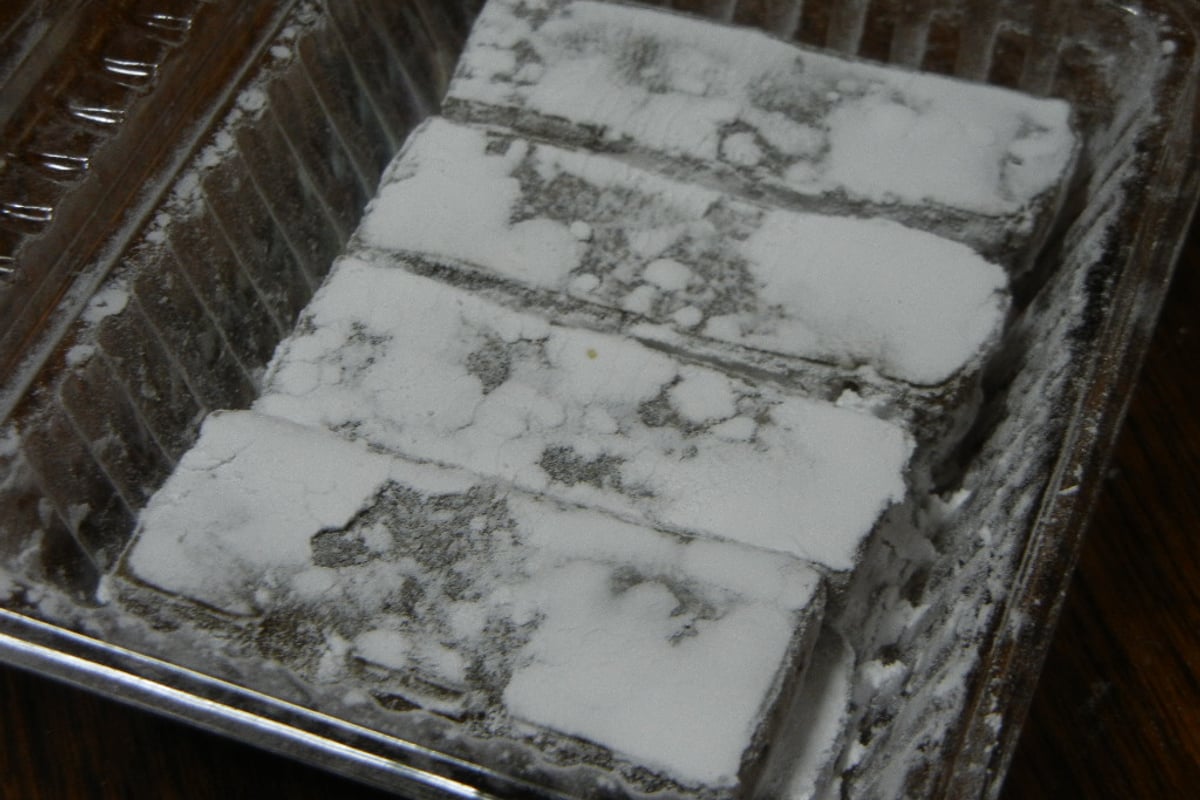
Image: Wikimedia Commons
Chosen-ame is a traditional Kumamoto confection made by kneading together glutinous rice, mizuame (starch syrup), and sugar, letting it rest, and dusting it with katakuriko (potato starch). Although its name contains 'ame' (candy), its appeal lies in its mochi-like texture and gentle sweetness. According to the Ministry of Agriculture, Forestry and Fisheries (MAFF), it is also said to be the oldest confection in Kumamoto, and it is characterized by its simple flavor. Because it keeps for a long time and its flavor changes little, Kato Kiyomasa is said to have brought it as field rations during the Bunroku-Keicho campaigns (the invasions of Korea). It was originally called Chosei-ame (長生飴) or Higo-ame (肥後飴), and the name 'Chosen-ame' is said to derive from this expedition, though there are various theories about the origin of the name. The manufacturer, Shinise Sonodaya (老舗園田屋), is a shop in Kumamoto City that traces its creation to the Tensho era. Due to redevelopment, the shop closed its current store in January 2025 and now continues to sell through mail order and other channels.
Origin
According to MAFF, Chosen-ame is said to have originated when Sonoda (園田武衛門) learned a method for making preserved food from a monk of Ming China and began making it. An introductory article relates that the first-generation owner of Shinise Sonodaya created it during the Tensho era (1573–1592). The Kumamoto Nichinichi Shimbun dates the shop's founding to around 1582. The Nihon Daihyakka Zensho (Encyclopedia Nipponica) also explains that it was made in Kumamoto as Chosei-ame even before Kumamoto Castle was built.
History
According to MAFF, it is said that after Kumamoto Castle was built, an arrangement under which the castle purchased the entire output continued until the Meiji Restoration. The recipe was passed down within a single family, and for a long time it was not distributed to the general public. General sales began after the Meiji Restoration, and at the National Industrial Exhibition in 1877 (Meiji 10), the Chosen-ame of Sonoda (園田政治郎) received a certificate of commendation from Okubo Toshimichi. According to the Kumamoto Nichinichi Shimbun, Sonodaya plans to reopen around the end of 2027.
Features
The ingredients are glutinous rice, mizuame, sugar, and katakuriko. According to an introductory article, at Sonodaya the heated candy mixture is poured into wooden frames, cooled, and matured for several days. According to MAFF, the rested dough is dusted with katakuriko and cut into rectangles. There are also round ones. Dictionaries describe it as a type of gyuhi (a soft rice confection). Sonodaya is described as not using synthetic preservatives or synthetic colorings.
Main Ingredients
Food Culture
MAFF lists the areas where it has been handed down as Kumamoto City and all of Kumamoto Prefecture. According to an introductory article, during the Edo period the Kumamoto domain bought up the entire output and used it as gifts presented to the shogunate and as souvenirs for sankin-kotai (alternate attendance in Edo). At Sonodaya, 'Kaki Gyuhi' (柿球肥), containing dried persimmon, was created in Meiji 36, and 'Lemon Ame' in Heisei 30.
Famous Shops
老舗園田屋
熊本県熊本市中央区南坪井町6-1
The manufacturer of Chosen-ame, said to be one of the oldest companies in the prefecture, with a history of more than 400 years since its founding. According to the Kumamoto Nichinichi Shimbun, the Namikizaka store closed on January 18, 2025, due to redevelopment, and is scheduled to reopen around the end of 2027. Since products cannot be purchased at the current store, please check the latest information.
View details →| Shinise Sonodaya Online Shop | Its official store on Yahoo! Shopping carries Ganso Chosen-ame (original Chosen-ame), Kaki Gyuhi, and Lemon Ame. As an example of sales at a local products fair, one article mentions Chosen-ame at 155 yen excluding tax. Mail-order sales have continued even after the store closed. Prices are subject to change.Where to buy →PR |
|---|---|
| Kumamoto Prefectural Products Center (熊本県物産館) | A local products center in Sakuramachi, Chuo Ward, Kumamoto City, that handles the prefecture's specialty products. A tourism information site lists Chosen-ame from 200 yen. Which manufacturer's product it is cannot be confirmed on the listing page, so please check at the store. Prices are subject to change.Where to buy →PR |
FAQ
Q. Is it a confection that came from the Korean Peninsula?
A. The Nihon Daihyakka Zensho explains that although it has generally been said that Kato Kiyomasa brought the method from Korea, it was in fact made as Chosei-ame before Kumamoto Castle was built. MAFF also states that it originated when the method was learned from a Ming monk. There are various theories about its origin.
Q. Where does the name 'Chosen-ame' come from?
A. It is said to derive from Kato Kiyomasa's expedition to Korea, but the details differ by source. MAFF says that it spread because Kiyomasa praised it, while the Digital Daijisen dictionary states that it was later called Chosen-ame because it staved off hunger during a siege.
Q. Although it is called 'ame' (candy), is it not hard?
A. Unlike hard candy, it has a soft, mochi-like texture. It is a confection close to gyuhi, made by kneading glutinous rice, mizuame, and sugar, and dictionaries also describe it as a type of gyuhi-ame or gyuhi-mochi. MAFF also cites its mochi-like texture and gentle sweetness as its appeal.