 Image: Wikimedia Commons
Oita Prefecture
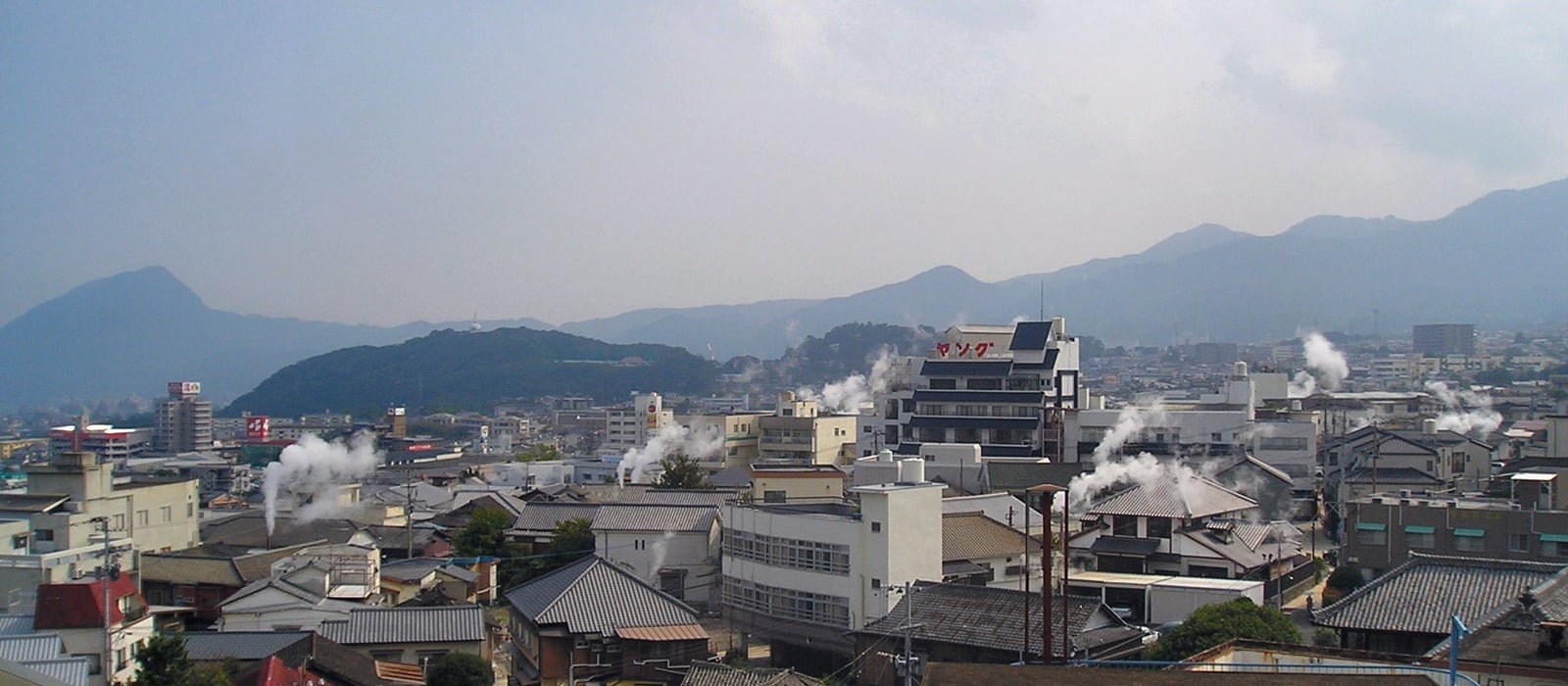
Oita Prefecture lies in northeastern Kyushu and is home to hot-spring areas such as Beppu and Yufuin, as well as a coastline facing the Bungo Channel and the Suo-nada Sea. Among its traditional crafts, Beppu Takezaiku (bamboo craft) is known as the prefecture's only Traditional Craft Designated by the Minister of Economy, Trade and Industry. In the mountains of Hita City, Onta ware, a National Important Intangible Cultural Property, is fired using the age-old method of crushing clay with karausu (water-powered clay mortars). Hita Geta and Hita Lacquerware, associated with Hita cedar, Taketa Hime Daruma, Kusu Kiji-guruma, Kunisaki Shichitoi crafts made with shichitoi grown on the Kunisaki Peninsula, and Usuki ware, revived in 2015, are also handed down in various areas. In food, Oita is famous for Toriten, with the restaurant 東洋軒 (Toyoken) in Beppu known as its birthplace, and for Nakatsu Karaage, with its rows of karaage specialty shops. Seki-aji and Seki-saba, known for pole-and-line fishing in the Hoyo Strait, Shiroshita Karei from Hiji Town, and Ryukyu, in which sashimi is marinated in a sauce, are dishes made from the bounty of the sea. Dango-jiru and Yaseuma, which use wheat-flour noodles, Gomadashi Udon from Saiki, Hita Yakisoba and Usuki Senbei are also flavors of Oita.
Oita's Traditional Crafts

Beppu Takezaiku (Bamboo Craft)
Beppu Takezaiku (Beppu Bamboo Craft)
Beppu Takezaiku (Beppu bamboo craft) is bamboo craftwork made mainly in Beppu City, Oita Prefecture. The main material is madake bamboo, which is split into thin, evenly shaped bamboo strips (takehigo) and woven into baskets, flower vessels and other items. In 1979 (Showa 54) it was designated a national Traditional Craft, and it is described as the only Traditional Craft Designated by the Minister of Economy, Trade and Industry in Oita Prefecture. It is said to have begun with baskets made for peddlers in the Muromachi period, and in the Edo period it spread as kitchenware and souvenirs for visitors staying at the hot springs for therapeutic bathing. In 1967, Shono Shounsai (生野祥雲斎), born in Beppu, became the first bamboo craft artist to be certified as a Living National Treasure. Oita Prefecture is said to be the top producer of madake bamboo in Japan. Beppu City is home to the Beppu City Traditional Bamboo Crafts Center (別府市竹細工伝統産業会館), which introduces the history of bamboo craft and offers hands-on experiences, and to a prefectural training school that trains bamboo craft artisans.
Onta Ware
Onta Yaki (Onta Folk Pottery of Hita)
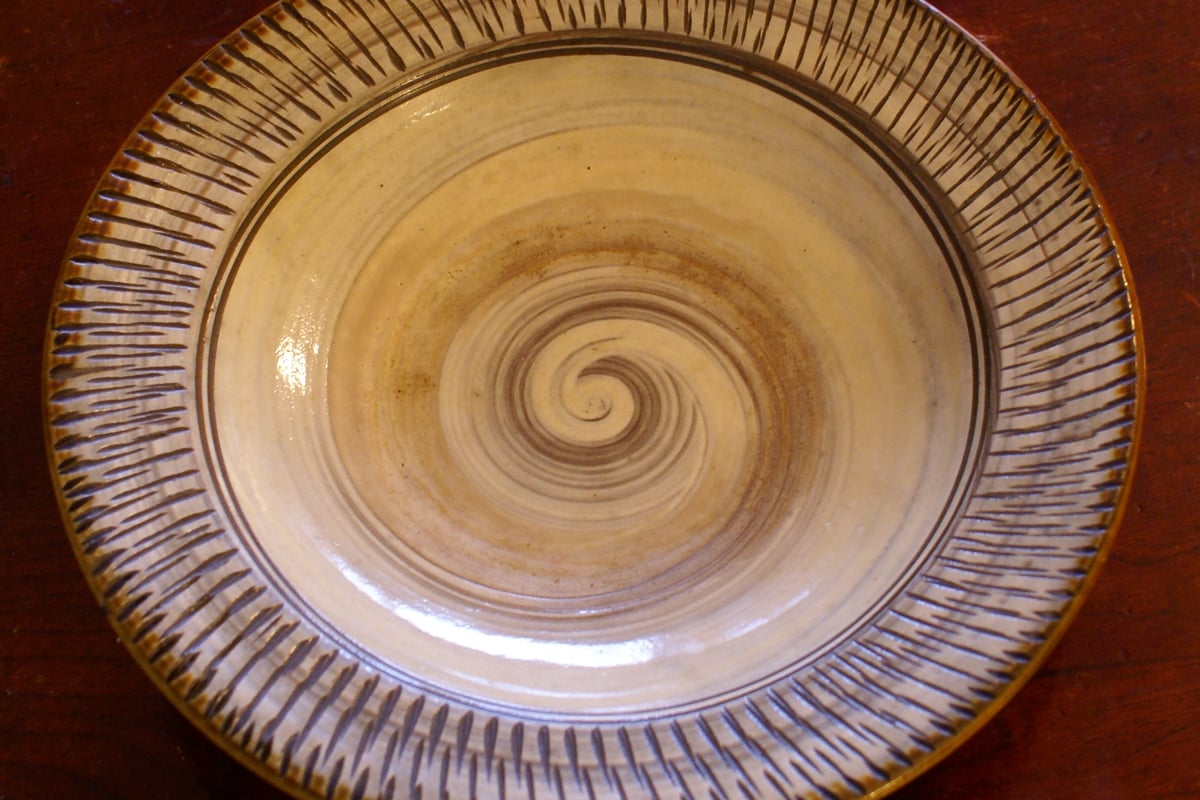
Onta ware (Onta-yaki) is pottery fired in the Sarayama district of Motoe-machi, Hita City, Oita Prefecture. It is said to have begun in 1705 (Hoei 2), when a kiln was opened after inviting Yanase San'emon (柳瀬三右衛門), a potter of Koishiwara ware. Clay dug in the village is crushed with a karausu (water-powered clay mortar) driven by river water, formed on a kick wheel and fired in a climbing kiln. Its hallmarks are patterns such as tobikanna (chatter-mark carving) and hakeme (brush marks). The techniques are handed down from parent to child, and the kilns are run as family businesses. In 1995 (Heisei 7) it was designated a National Important Intangible Cultural Property, and in 2008 the 'Onta Ware Village' (小鹿田焼の里) was selected as an Important Cultural Landscape. According to Oita Prefecture's introduction, there are currently nine kilns. Every October, the Onta Ware Mintosai (Folk Pottery Festival) is held, at which the kilns set out and sell their wares.
Hita Geta (Cedar Wooden Clogs)
Hita Geta (Hita Cedar Wooden Sandals)
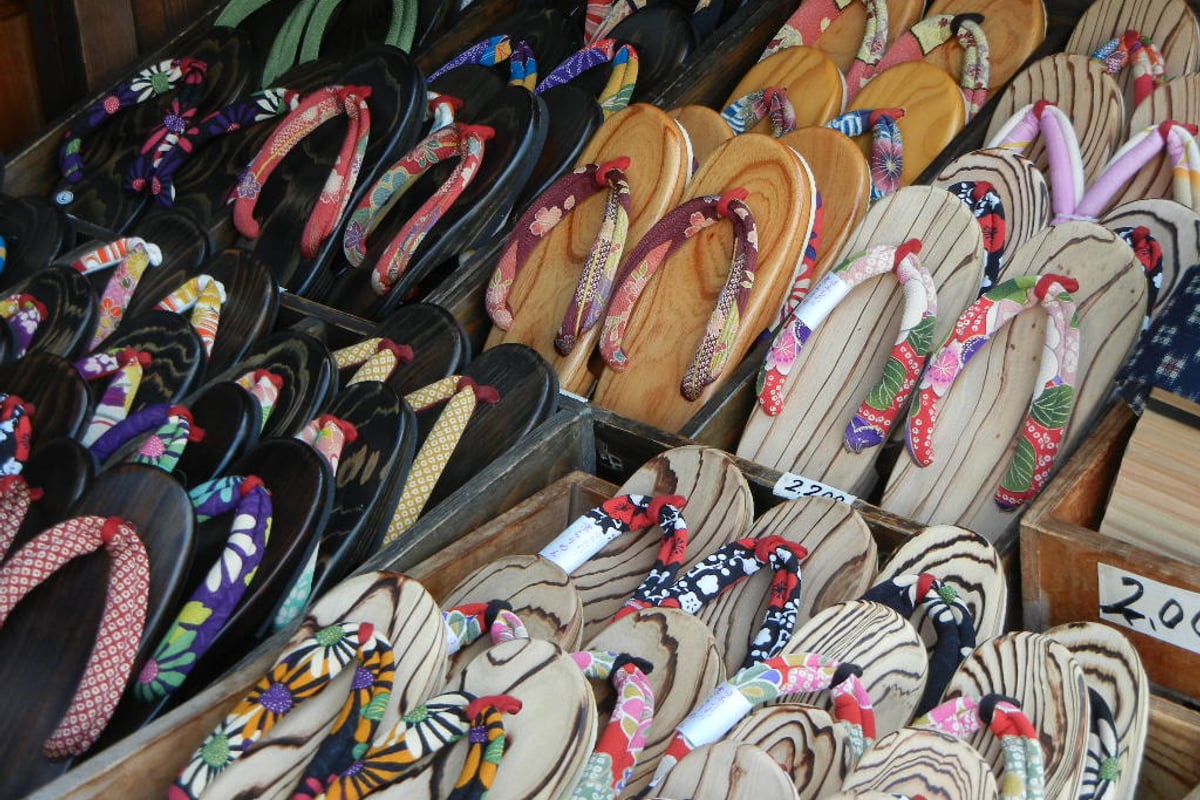
Hita geta are wooden clogs made from Hita cedar in Hita City, Oita Prefecture. Hita has been a thriving forestry area since the Edo period, and geta-making in the area is said to have begun in the Tenpo era (1830–1844), giving it a history of more than 180 years. Hita has been regarded as one of Japan's three major geta-producing areas, along with Shizuoka and Hiroshima. Cedar is light and soft to the touch. Finishes include the 'jindai finish', in which the surface is scorched to bring out the grain, and 'uzukuri', which brings out the texture of the grain. At its peak there were many geta shops in the city, but today their number has fallen to just over ten. You can buy them at shops in Mamedamachi and at manufacturers' own shops, and geta that are easy to wear every day, with creative hanao (thong straps) and fabrics, are also being made.
Taketa Hime Daruma (Princess Daruma Dolls)
Taketa Hime Daruma (Princess Daruma Dolls of Taketa)
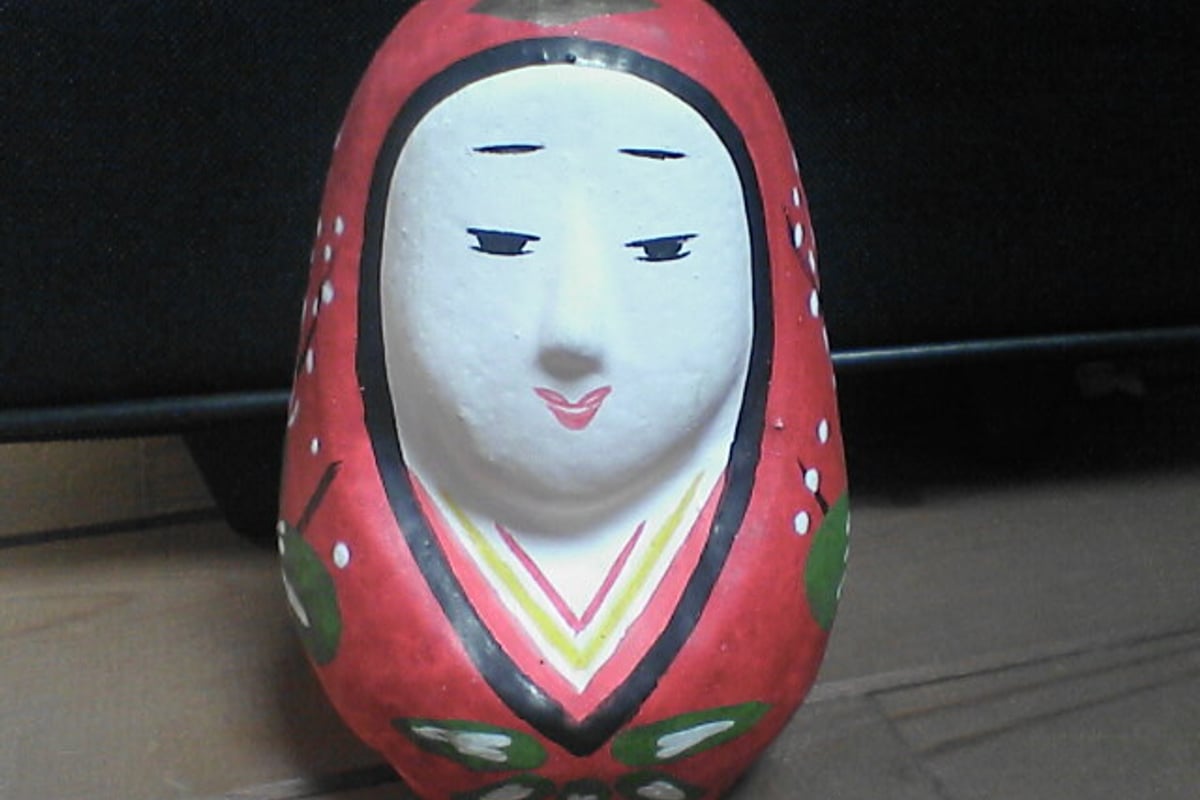
Taketa Hime Daruma are daruma dolls in the form of a woman, handed down in Taketa City, Oita Prefecture. They have a white face, wear a vermilion kimono, and are painted with pine, bamboo and plum (shochikubai) and a hoju (sacred jewel). According to the Japan Tourism Agency's multilingual commentary, their origins go back to the Edo period, when they were good-luck charms thrown into people's homes at New Year. Because the bottom is round and heavy, they right themselves when knocked over. They are said to be modeled on Ayajo, the wife of a low-ranking samurai of the former Oka domain. The craft once died out, but in 1952 (Showa 27) 後藤恒人 resolved to revive it, and in 1956 he named the dolls 'Hime Daruma'. Today they are handmade only at ごとう姫だるま工房 (Goto Hime Daruma Kobo) in Yoshida, Taketa City. They are hariko (papier-mâché), made by layering newspaper and washi paper over a wooden mold, and each one takes from one week to 10 days. It is reported that, depending on the size, it can take several years from order to delivery.
Kunisaki Shichitoi Crafts (Shichito Rush Weaving)
Kunisaki Shichitoi Crafts (Woven Crafts of Shichito Rush)
Shichitoi (shichito rush) is a plant of the sedge family (Cyperaceae) that is used as a raw material for tatami facing and floor mats. It is a different species from the igusa (soft rush) used for ordinary tatami facing, and its stem has a triangular cross-section. It came to be called by this name because it was said to originate in the seven islands of the Tokara Islands. It was introduced to Bungo (Oita Prefecture) in the Edo period, and domains such as the Funai and Kitsuki domains encouraged its cultivation. Tatami facing made from shichitoi is called Bungo-omote, Ao-omote, Ryukyu-omote and other names, and even after the war its production was for a time the largest in Japan. Today, the only farmers growing it in Japan are on the Kunisaki Peninsula, and a 2025 news report put the number at nine households in Kunisaki City. 'Kunisaki Shichitoi-omote' from Kunisaki City and Kitsuki City was registered as a Geographical Indication (GI) in 2016. In recent years, crafts such as enza (round cushions), rugs, bags and brooms have also been made.
Kusu Kiji-guruma (Wooden Pheasant Pull Toy)
Kusu Kiji Guruma (Unpainted Wooden Pull Toy of Kusu)
Kusu Kiji-guruma is a wooden folk toy handed down in the Kitayamada district of Kusu Town, Oita Prefecture. It is also called 'Kitayamada no Kiji-guruma' (the Kiji-guruma of Kitayamada). Although its name refers to the kiji (pheasant), its shape resembles a horse, and children play with it by riding on it or pulling it with a string. It is finished in plain, unpainted wood, and its distinctive feature is that bark is left on the head and back. Locally, it is also regarded as a toy that expresses wishes for children's health. According to Kusu Town, it has been made for about 200 years. It once died out when there were no longer any makers, but in 1990 local residents formed the preservation society 大野原きじ車保存会 and resumed production. In March 2025, 'Kiji-uma and Kiji-guruma Making Techniques of the Kyushu Region' was selected by the national government as an Intangible Folk Cultural Property for which documentation and other measures should be taken.
Usuki Ware
Usuki Yaki (Revived White Porcelain of Usuki)
Usuki ware is ceramic ware that began in the late Edo period in Usuki City, Oita Prefecture, as an official kiln of the Usuki domain. Because the kiln site was in the Suehiro district, it was also called Suehiro ware (Suehiro-yaki) and Sarayama ware (Sarayama-yaki). It is said that craftsmen were invited from Shimabara (Nagasaki), Koishiwara (Fukuoka) and Komine (Miyazaki) to fire porcelain and pottery. However, the kiln did not last long and died out after a short period. Because only a few vessels and records survive, it is also called a 'phantom' ware. In 2015, the potter Usami Hiroyuki (宇佐美裕之) launched the Usuki Ware Revival Project with fellow potters. Taking as their clue rinka (flower-rimmed) white porcelain, whose rims are carved like flower petals, they make vessels suited to modern life using the katauchi (press-molding) technique. In 2023, うすき皿山 (Usuki Sarayama), with an atelier and a gallery, opened near the National Treasure Usuki Stone Buddhas.
Hita Lacquerware
Hita Shikki (Hita Lacquerware)
Hita lacquerware (Hita shikki) is lacquerware that has been made in Hita City, Oita Prefecture. It is said to have begun in the Meiji era, when lacquer technicians were trained to create a new industry in Hita, an area where forestry thrived. In the early Showa era there was a company called 日田漆器株式会社 (Hita Shikki Co., Ltd.), and the painter Ujiyama Teppei (宇治山哲平) also studied maki-e and was in charge of design. After the war the number of artisans declined, and today 相澤秀一 of 相澤漆芸工房 in Mamedamachi is described as its only successor. He took over from his father, who was a maki-e artist at the Hita Shikki company, and handles everything from lacquering to maki-e on his own. He sells 'mame-bina', small hina dolls decorated with gold maki-e, as well as lacquered chopsticks, bowls and other items at a shop that makes use of an Edo-period building. The workshop also holds reservation-only kintsugi classes.
Oita's Local Food
Toriten (Chicken Tempura)
Toriten (Oita Chicken Tempura)
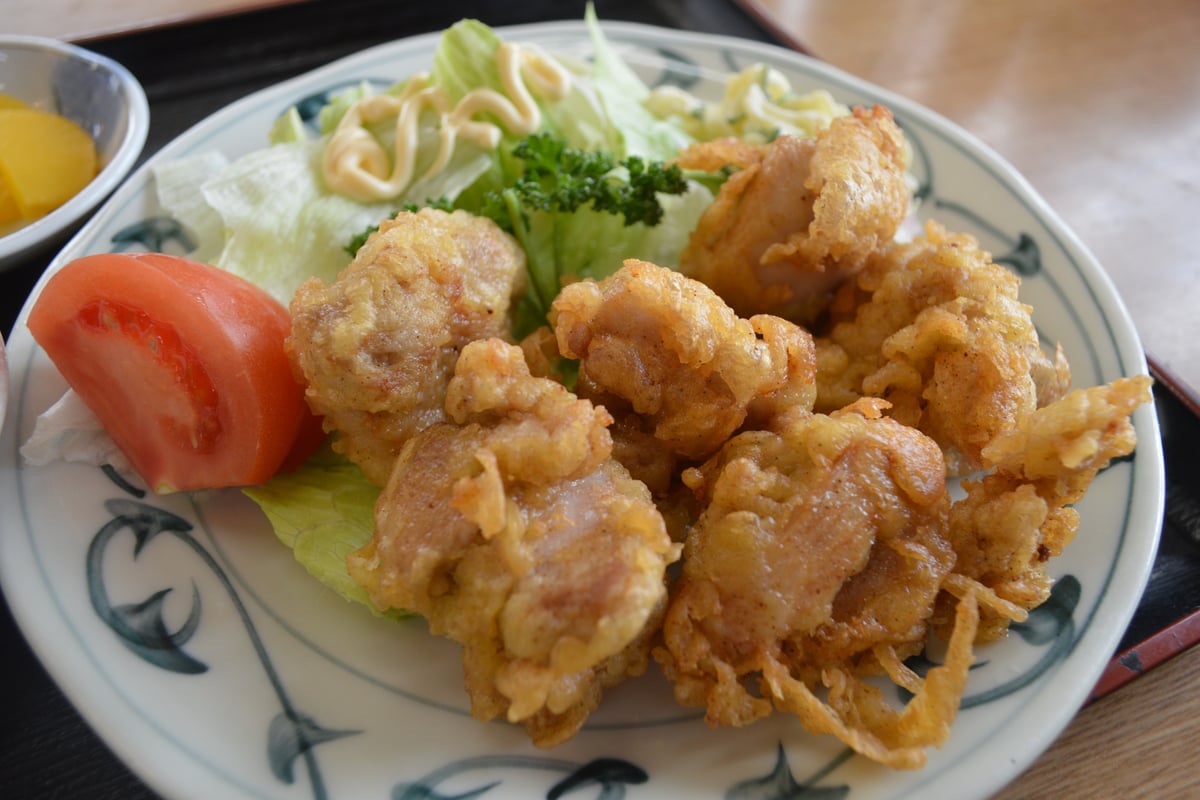
Toriten is a local specialty dish of Oita Prefecture in which seasoned chicken is coated in tempura batter, deep-fried, and eaten with vinegar-soy sauce served with hot mustard paste. The Ministry of Agriculture, Forestry and Fisheries' 'Uchi no Kyodo Ryori' lists the entire prefecture as the main area where it has been handed down. It is as common as karaage (Japanese fried chicken) and is eaten regularly both at home and at restaurants. There are several theories about its origin. The ministry introduces the theory that it was devised in the early Showa era by the restaurant 東洋軒 (Toyoken) in Beppu City. Oita City, on the other hand, explains that it is said to have been born at an eatery in the city in 1962. Ponzu and kabosu are also often used, and the marinade and dipping sauce differ from household to household and from shop to shop. Oita City promotes toriten as a soul food, distributing a map of restaurants that serve it and producing a PR song.
Nakatsu Karaage (Fried Chicken)
Nakatsu Karaage (Nakatsu-Style Fried Chicken)
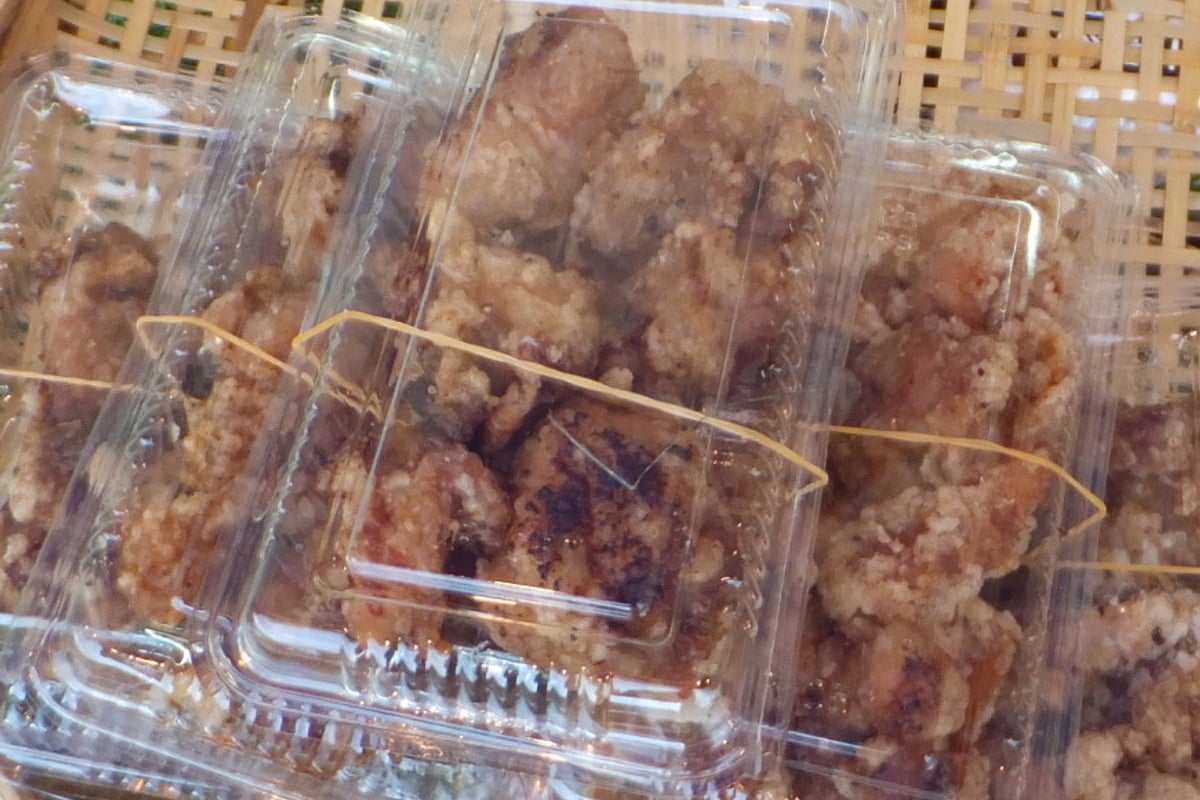
Nakatsu karaage is the fried chicken (karaage) beloved in Nakatsu City in northern Oita Prefecture. Chicken is marinated in each shop's own sauce of soy sauce with garlic and ginger, and fried after the order is placed. The city has many karaage specialty shops that sell by weight for takeout, and it is reported to have been certified as the 'Holy Land of Karaage' by the Japan Karaage Association. The background is said to include the many poultry farms built in the surrounding area to counter postwar food shortages, and repatriates from former Manchuria passing on deep-frying techniques. Nakatsu City's first specialty shop is said to be 森山からあげ店 (Moriyama Karaage-ten), which opened in 1970 (Showa 45). Neighboring Usa City is regarded as the 'Birthplace of Karaage Specialty Shops,' and specialty shops spread from Usa to Nakatsu. Another feature is that many shops let you choose by cut, such as thigh, breast, wing tips, and gizzard (sunazuri).
Ryukyu (Marinated Sashimi)
Ryukyu (Oita Marinated Sashimi)
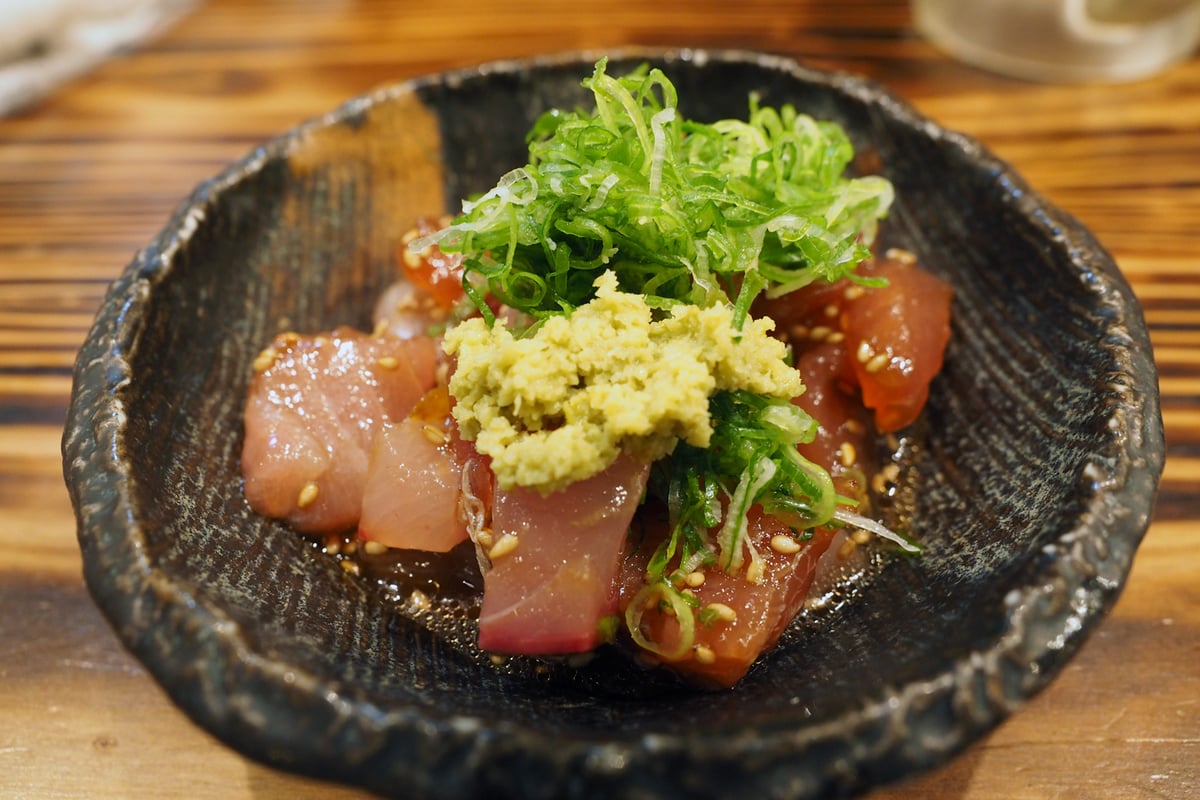
Ryukyu is a local specialty dish of Oita Prefecture in which fresh sashimi of fish such as horse mackerel (aji), mackerel (saba), and yellowtail (buri) is marinated in a sauce made with soy sauce, sake, mirin, sesame, and ginger. It is not a dish from Okinawa. According to the Ministry of Agriculture, Forestry and Fisheries, it spread from the coastal areas in the south of the prefecture to the whole prefecture as fishermen's staff meals (makanai) and as a preserved food. The origin of the name has not been settled; theories include that it was learned from fishermen of Okinawa (Ryukyu), and that it derives from 'rikyu-ae,' a term for dishes dressed with sesame. Besides being eaten as it is with sake, it is also eaten on rice as 'ryukyu-don' or as ochazuke (with tea poured over rice). Supermarkets in the prefecture also sell sashimi and sauces for ryukyu. It was certified as an Agency for Cultural Affairs '100-Year Food' in fiscal year Reiwa 7, following an application by Kitsuki City.
Seki-aji and Seki-saba (Line-Caught Horse Mackerel and Mackerel)
Seki-aji & Seki-saba (Saganoseki Line-Caught Horse Mackerel and Mackerel)
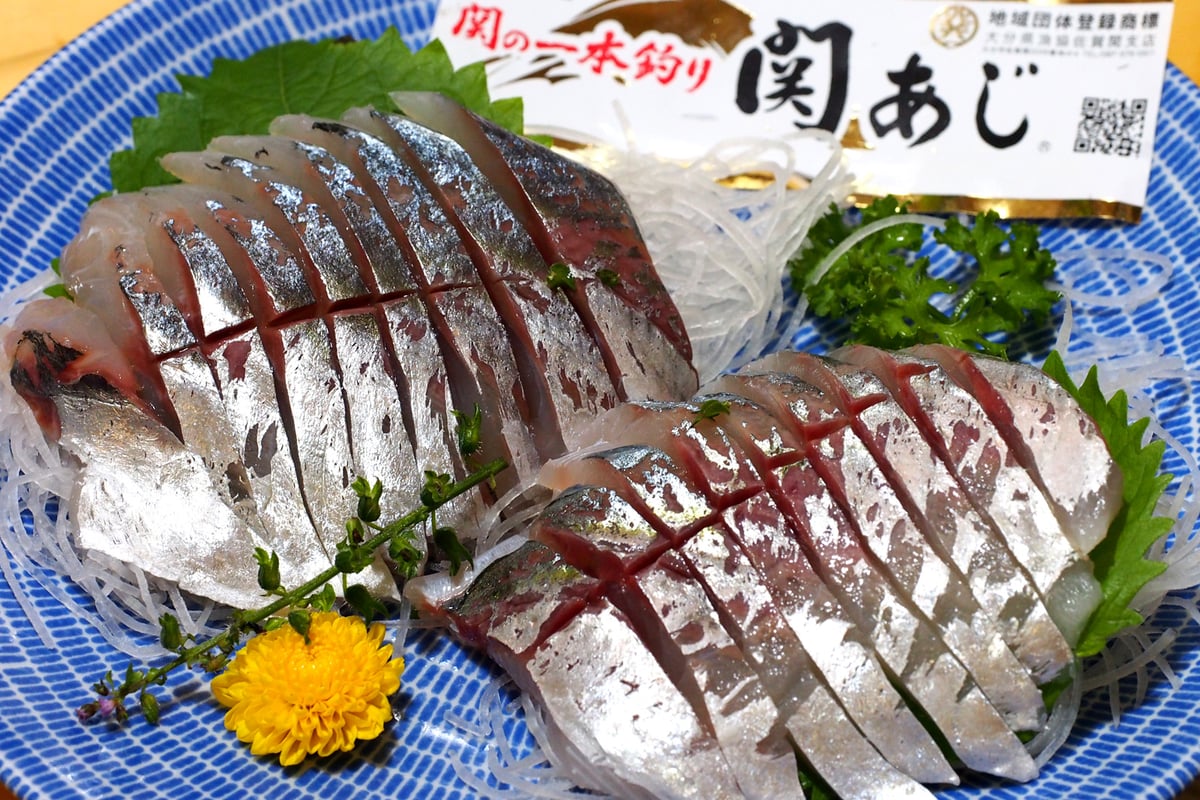
Seki-aji and Seki-saba are the brand names for Japanese horse mackerel (maaji) and chub mackerel (masaba) caught by pole-and-line fishing off Saganoseki in Oita City. The fishing ground is the Hoyo Strait, also known as Hayasui-no-Seto. The Saganoseki Branch of the Oita Prefectural Fisheries Cooperative handles everything from landing to shipping, and genuine fish carry a dedicated tag sticker. Because they grow in fast currents where the waters of the Seto Inland Sea and the Pacific Ocean collide, their flesh is said to be firm. The cooperative maintains freshness through 'tsura-gai,' in which fish are purchased by visual estimate without being weighed, and through ikejime, performed on each fish one by one. In 1996 they became the first marine products to be registered as trademarks, and in 2006 they were registered as regional collective trademarks. They can be enjoyed as sashimi, sugatazukuri (sashimi arranged in the shape of the whole fish), sushi, rice bowls, and more, and can be eaten at the roadside station (Michi-no-Eki) in Saganoseki and at restaurants in Oita City.
Shiroshita Karei (Marbled Flounder of Hiji)
Shiroshita Karei (Hiji Castle-Town Marbled Flounder)
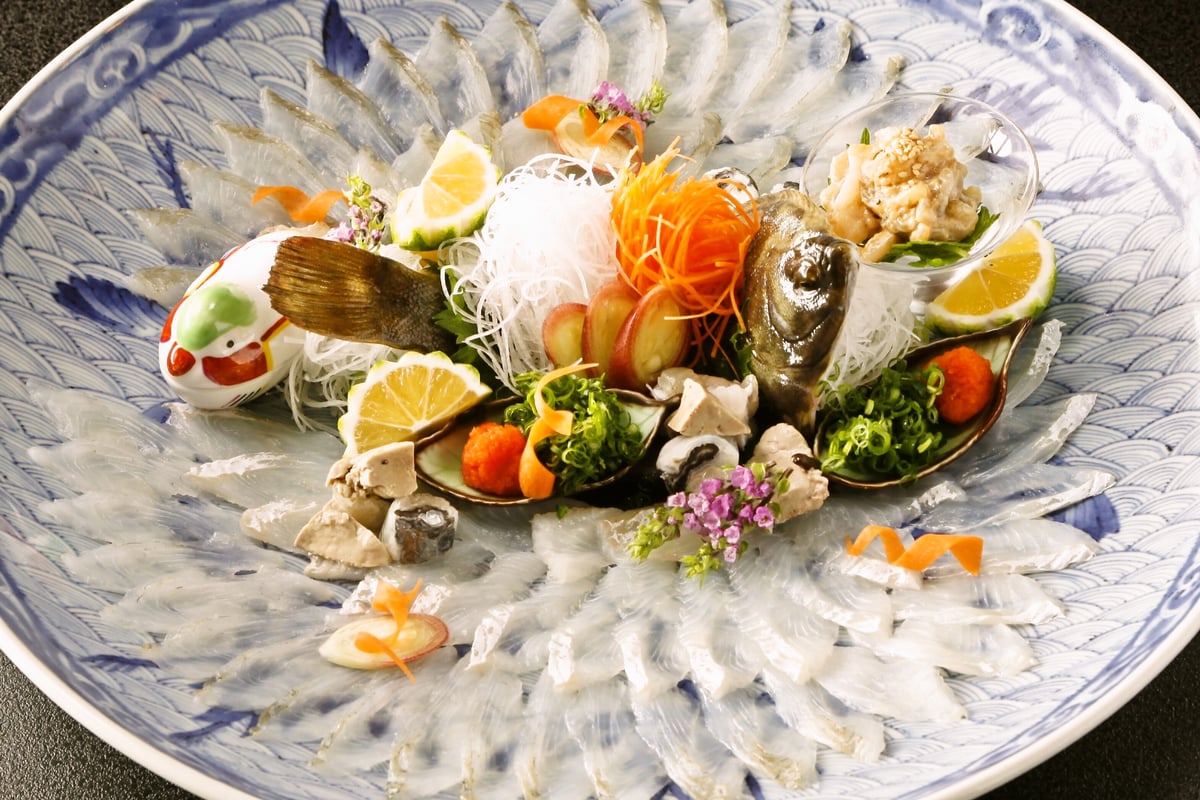
Shiroshita Karei (しろしたかれい) is marbled flounder caught in the sea below the ruins of Hiji Castle (also called Yokoku Castle, 暘谷城) in Hiji Town, Oita Prefecture. Because it grows in an area of Beppu Bay where fresh water springs up from the seabed, it is said to have no muddy smell and an elegant sweetness. In the Edo period, commoners were forbidden to eat it and only the lord could taste it, so it was also called 'Tonosama-uo' (the lord's fish). It is said that dried fish was presented to the shogun's family during sankin-kotai (alternate attendance in Edo). The fish is caught using the traditional tateami (set-net) method, and the fishing season begins around April. The period from May to early July in particular is said to be when it tastes best. Besides sashimi, especially thinly sliced usuzukuri, it is also eaten deep-fried as karaage or simmered as nitsuke. It can be enjoyed at ryotei and kappo restaurants in the town, but the town explains that catches have declined in recent years, making a stable supply difficult to secure.
Dango-jiru (Hand-Stretched Flour Noodle Soup)
Dango-jiru (Oita Hand-Stretched Flour Noodle Soup)
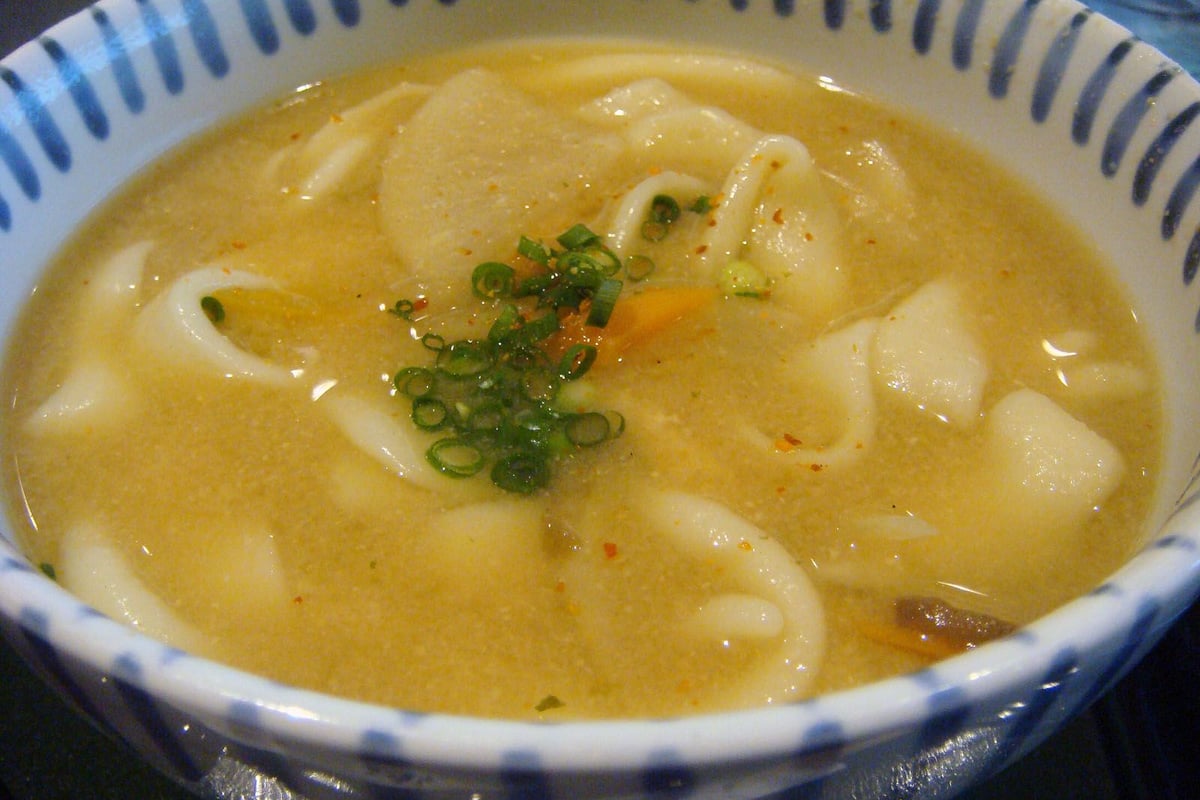
Dango-jiru is a local specialty dish of Oita Prefecture in which 'dango,' made by kneading wheat flour and stretching it thinly by hand into strips, is simmered with vegetables in a miso-based soup. The Ministry of Agriculture, Forestry and Fisheries (MAFF) describes it as a representative local dish of Oita Prefecture that has long been an everyday food throughout the prefecture. The word 'dango' usually brings to mind something round, but Oita's dango are flat and look similar to kishimen (flat udon noodles). Much of the land in Oita Prefecture is unsuited to rice growing, so a funshoku culture of eating wheat and other grains ground into flour took root. Dango-jiru is a prime example, and in times when rice was scarce it was eaten in place of rice. The broth is often made with the local specialty of dried shiitake mushrooms or with iriko (dried sardines), and taro, burdock root, carrot, and other vegetables are added. Coating the same dough with kinako (roasted soybean flour) and sugar turns it into the snack 'Yaseuma.' Besides being eaten at home and in school lunches, it can also be enjoyed at local cuisine restaurants in Beppu City and Oita City.
Yaseuma (Flat Noodles with Sweet Kinako)
Yaseuma (Oita Flat Noodles with Sweet Kinako)
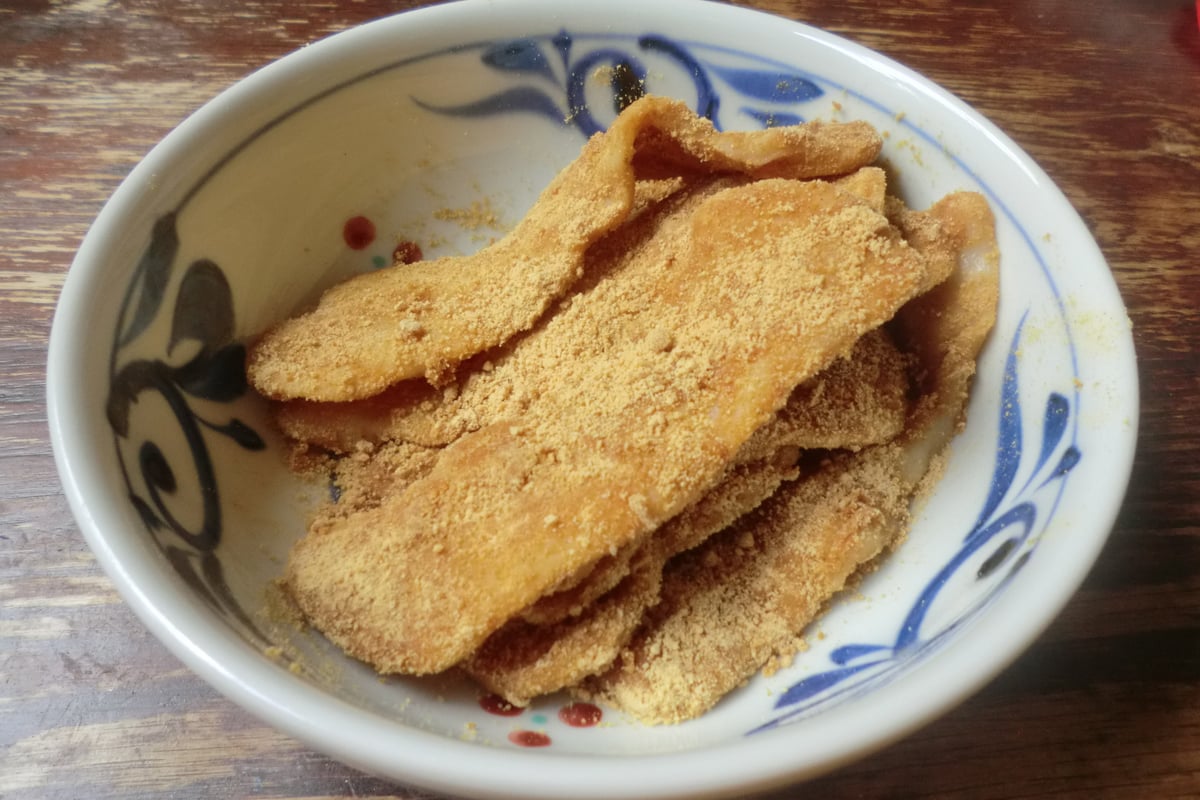
Yaseuma is a traditional snack of Oita Prefecture made by kneading wheat flour, stretching it flat, boiling it, and coating it with kinako (roasted soybean flour) and sugar. The dough is the same as the 'dango' in Dango-jiru, and the Ministry of Agriculture, Forestry and Fisheries (MAFF) lists the entire prefecture as the area where it has been handed down. The name is said to come from a young lord in the Heian period who begged his wet nurse, Yase (八瀬), saying 'Yase, uma,' but there are other theories as well. Its birthplace is said to be the Furuno (古野) district of Hasama-machi (挾間町) in Yufu City. MAFF notes that Yaseuma is still made during Obon at Myorenji Temple (妙蓮寺) in that district. It is so rooted in everyday life that it is served in school lunches and at restaurants, while it is also used as an offering at Tanabata and Obon. Supermarkets and souvenir shops sell fresh and dried noodles for making Yaseuma. 'Bungo Meika Yaseuma,' a bite-sized wagashi version of the local dish made by a confectioner in Oita City, is also known as a souvenir.
Gomadashi Udon (Udon with Fish and Sesame Paste)
Gomadashi Udon (Saiki Udon with Grilled Fish and Sesame Paste)
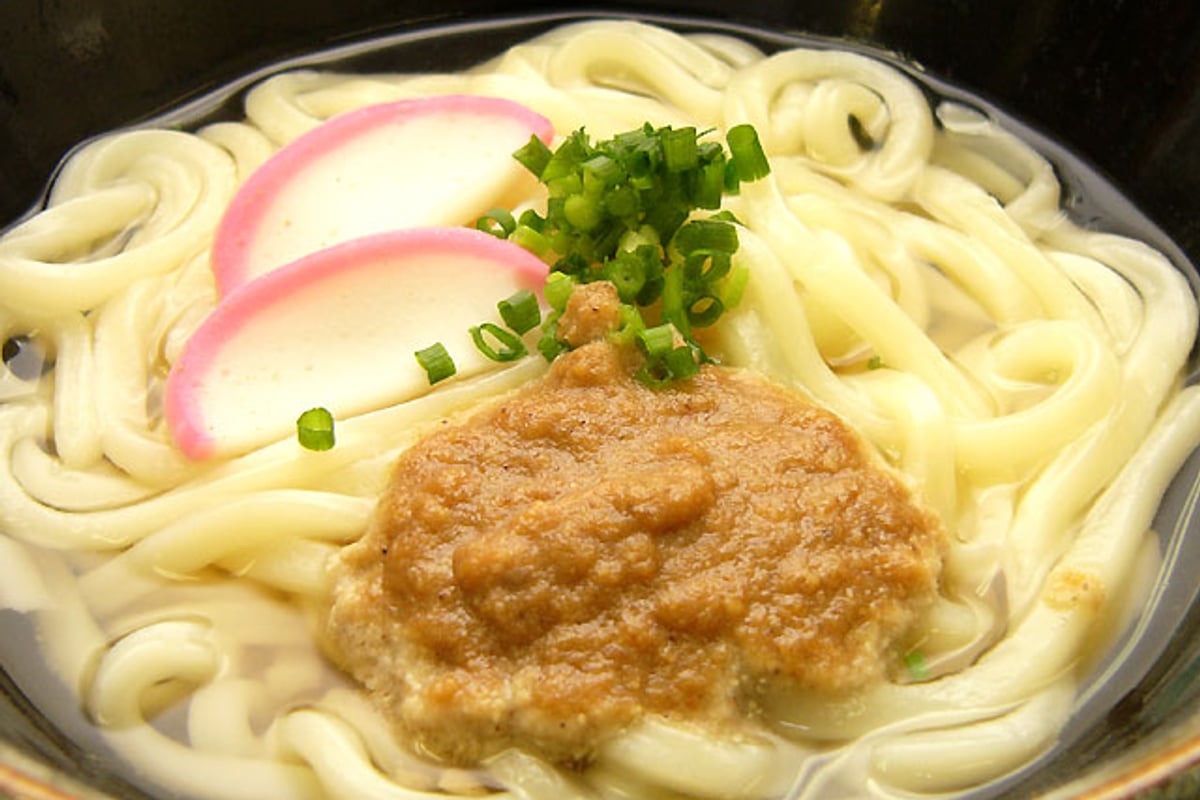
Gomadashi udon is a local specialty dish of Saiki City, Oita Prefecture. A seasoning called 'gomadashi,' made by combining the grilled and flaked flesh of white fish with ground sesame, soy sauce, and other ingredients, is placed on boiled udon, and hot water is poured over it before eating. The fish traditionally used is eso (lizardfish), which is landed in Saiki City throughout the year, but in recent years gomadashi has also been made with horse mackerel, mackerel, barracuda, and other fish. Gomadashi was born as a preserved food in fishermen's households, and it is said to have been created to use up large catches of fish, or to save the trouble of making soup stock. In fiscal 2021 (Reiwa 3), it was certified as 'Saiki Gomadashi' under the Agency for Cultural Affairs' '100-Year Food' program. In 2007, it was selected as one of the Ministry of Agriculture, Forestry and Fisheries' (MAFF) '100 Local Dishes of Rural, Mountain, and Fishing Villages.' It can be eaten at eateries and izakaya in the city, and bottled gomadashi is sold at roadside stations (michi-no-eki), fish shops, and elsewhere.
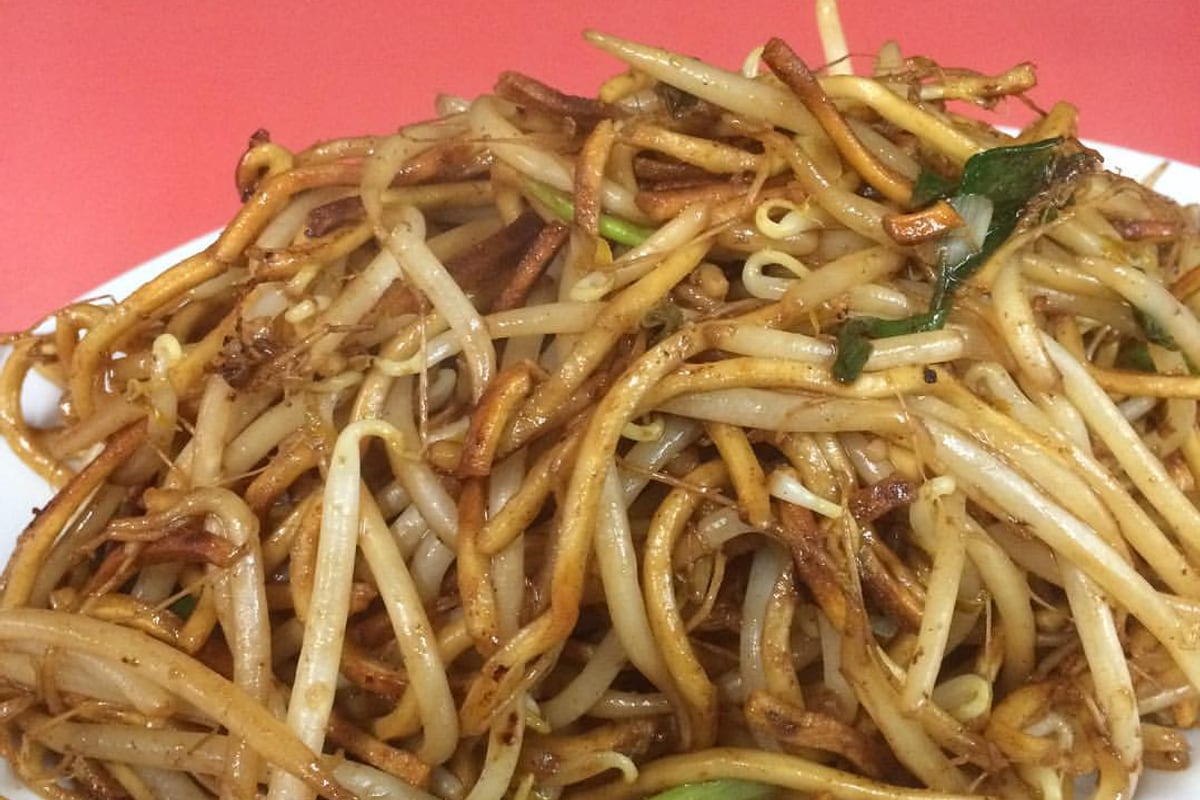
Hita Yakisoba (Crispy Pan-Fried Noodles)
Hita Yakisoba (Crispy Pan-Fried Noodles of Hita)
Hita Yakisoba is a local style of yakisoba eaten in Hita City, Oita Prefecture. Boiled noodles are pressed onto an iron griddle until both sides are crisp, then combined with bean sprouts, green onion and pork and finished with sauce. Unlike ordinary stir-fried yakisoba, it is characterized by noodles grilled so firmly that parts of them become charred. It is said to have been devised by Sumi Yasuchika (角安親), the founder of Sofuren (想夫恋), which opened in Hita City in 1957 (Showa 32). Sofuren explains that, at a time when yakisoba was not yet a common dish, it named the dish 'yakisoba' because the noodles are grilled (yaku). The grilling method that Sofuren has preserved eventually became a town specialty known as 'Hita Yakisoba.' According to Wikipedia, it is now served at more than ten shops, mainly ramen shops in Hita City. Sofuren has shops in Kanto and other regions as well as in Kyushu, and also sells frozen take-home products.
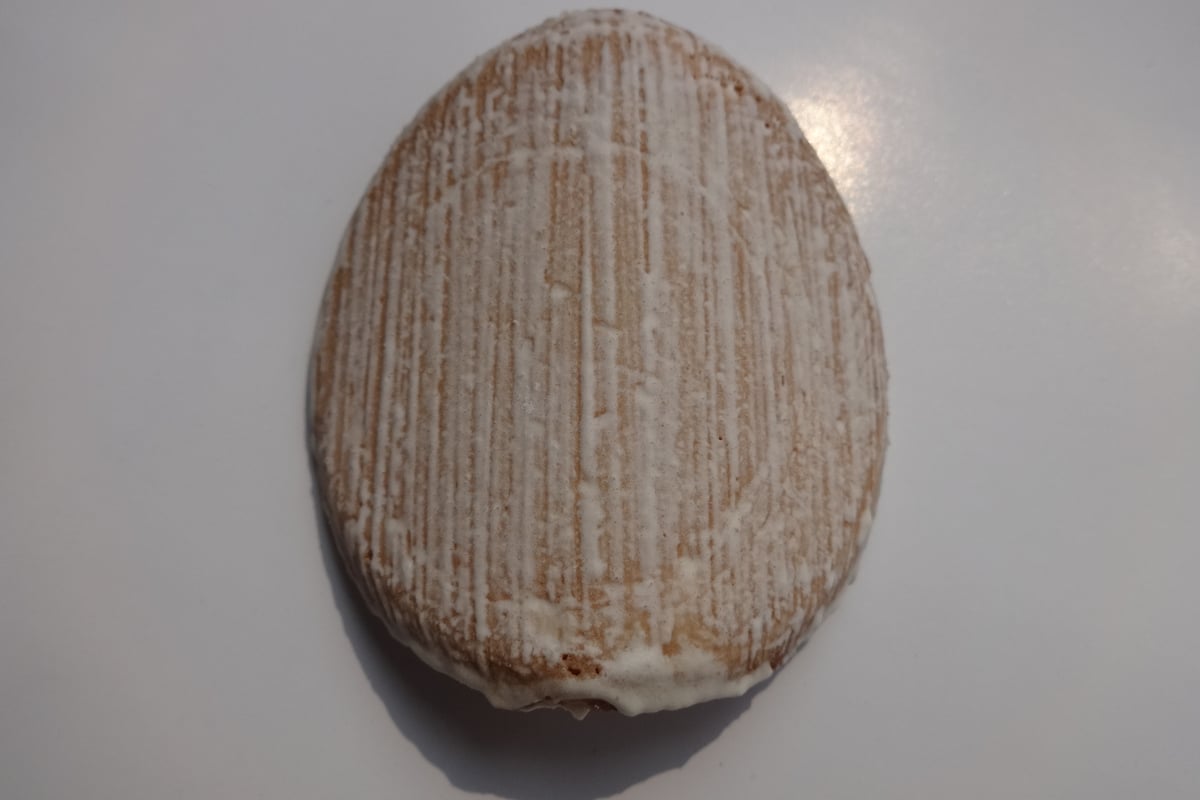
Usuki Senbei (Ginger-Glazed Crackers)
Usuki Senbei (Ginger-Glazed Wheat Crackers of Usuki)
Usuki Senbei (臼杵煎餅) is a renowned confection of Usuki City, Oita Prefecture. A dough made from ingredients such as wheat flour and sugar is baked, and then a syrup of boiled-down ginger juice and sugar is brushed onto each cracker by hand. The brush marks of the white syrup form a wood-grain-like pattern, and the crackers are characterized by the aroma of ginger and their sweetness. Their origin is said to date back about 400 years, to a portable food that the Inaba clan, lords of the Usuki domain, carried on their sankin-kotai (alternate attendance) journeys in the Edo period, though this is told as a tradition. At first they were made from rice, barley, foxtail millet (awa) and barnyard millet (hie), and later wheat flour became the main ingredient. A maker explains that ginger was added because Usuki was once a major ginger-producing area. There are two shapes: the curved 'magari,' bent in reference to a mortar (usu), and the flat 'hira.' Today about seven companies, including Goto Seika (後藤製菓), make them.
Model Course
Learn about bamboo craft at the Beppu City Traditional Bamboo Crafts Center, then savor Toriten at 東洋軒 and Dango-jiru and Yaseuma at 甘味茶屋
The Beppu City Traditional Bamboo Crafts Center (別府市竹細工伝統産業会館) introduces the history and techniques of Beppu Takezaiku along with works. Admission is listed as 390 yen for high school students and older, and hands-on experiences making bamboo bells or flower baskets require advance reservations. For lunch, head to the restaurant 東洋軒, founded in 1926. Its Toriten is eaten with vinegar-soy sauce and hot mustard, and according to published information, the 本家とり天定食 (Honke Toriten set meal) is 1,750 yen. In the afternoon, you can enjoy Dango-jiru and Yaseuma at 甘味茶屋 in Jissoji. Prices and closing days may change, so please check in advance.
Tour the Onta ware kilns of Sarayama in Hita, see Hita Geta and Hita Lacquerware in Mamedamachi, and eat Hita Yakisoba at 想夫恋
In Sarayama, Motoe-machi, Hita City, kilns line a village echoing with the sound of karausu, and you can buy pottery at their storefronts. The Hita City Onta Ware Pottery Museum (日田市立小鹿田焼陶芸館) offers free admission and is closed on Wednesdays. It has been announced that the Onta line of the local route bus has been discontinued and is scheduled to be replaced by a shared on-demand taxi service, so please check your means of transportation. In the afternoon, head to Mamedamachi. At こもれび工房 you can choose geta made of Hita cedar, and at 相澤漆芸工房 you can choose lacquered chopsticks and mame-bina (miniature hina dolls). For dinner, have Hita Yakisoba at 想夫恋 総本店. According to published information, a regular portion is 1,150 yen.
Enjoy Usuki ware tableware and a hand-brushing experience for Usuki Senbei at the gateway to the Usuki Stone Buddhas
The Sekibutsu Tourist Center (石仏観光センター) at the entrance to the National Treasure Usuki Stone Buddhas sells Usuki ware and also houses 郷膳うさ味, where you can have a meal served on that tableware. At 後藤製菓 本店「石仏会館」, adjacent to the Stone Buddhas parking lot, you can watch the factory through a window on weekdays. The hand-brushing experience for Usuki Senbei is listed at 4,400 yen per group of up to four people. If you have time, you can also try Usuki ware mold-pressing (kata-uchi) or kintsugi at うすき皿山 in Fukata. In all cases, please check reservations and opening days in advance.
Savor local specialty dishes at こつこつ庵 in Oita City, then eat sugata-zukuri sashimi at 関あじ関さば館 in Saganoseki
At 郷土料理処 こつこつ庵, about a 10-minute walk from JR Oita Station, you can have Seki-aji and Seki-saba sashimi as well as Ryukyu and Dango-jiru. According to published information, Dango-jiru is 750 yen. Extend your trip to the Saganoseki Peninsula and visit あまべの郷 関あじ関さば館 along National Route 217. At the second-floor restaurant, you can enjoy Seki-saba served as sugata-zukuri (sashimi arranged in the shape of the whole fish) while looking out over the Bungo Channel. Because of the large fire in Saganoseki in November 2025, please check the operating status before visiting.
Savor Shiroshita Karei in Hiji Town, then experience Kunisaki Shichitoi crafts in Kitsuki and on the Kunisaki Peninsula
At 割烹 能良玄家 near Yokoku Station in Hiji Town, you can enjoy Shiroshita Karei. According to published information, the Shiroshita Karei mini set is 4,180 yen, and dinner requires a reservation by the previous day. According to the Hiji Town Tourism Association, the season runs from about April to September, and the fish is said to be at its best from May to early July. In the afternoon, visit きつき城下町資料館 (Kitsuki Castle Town Museum), located on the former samurai residence grounds of Kitsuki. It displays tools related to shichitoi. Further on, 七島藺工房ななつむぎ in Aki Town, Kunisaki City, produces crafts such as enza (round cushions) and rugs. It operates by reservation, so please contact it before visiting.
Visit ごとう姫だるま工房 in Taketa
ごとう姫だるま工房 in Yoshida, Taketa City, is described as the only workshop that makes Taketa Hime Daruma. You can visit the place where Hime Daruma, made by layering newspaper and washi (Japanese paper), are produced, and you can also buy goods such as tenugui (hand towels) and kinchaku (drawstring pouches). Goods are listed at about 1,400 to 1,800 yen. One source states that a reservation by phone is required in advance for a visit. It is about a 20-minute walk from JR Tamarai Station.
Compare karaage sold by weight at Nakatsu's karaage specialty shops
Nakatsu City has a cluster of specialty shops that sell take-out karaage by weight. 中津からあげ もり山 万田本店 is the shop that won the first Grand Champion title at the Karaage Grand Prix. According to published information, boneless thigh meat is 240 yen per 100 g. からあげの鳥しん seasons young chickens from Kyushu with a garlic-soy sauce marinade. Because the specialty shops sell by the price per 100 g, you can buy small amounts and compare flavors. Closing days vary by shop.
Events
Onta Ware Mintosai (Folk Pottery Festival)
Every year on the weekend of the second week of October (the 59th edition in 2026: October 10–11) / Kilns in Sarayama, Motoe-machi, Hita City
Shiroshita Karei Festival
Every year around May (the 41st edition in 2026: May 9–10) / Around the Hiji Castle ruins and other sites in Hiji Town