Image: Wikimedia Commons
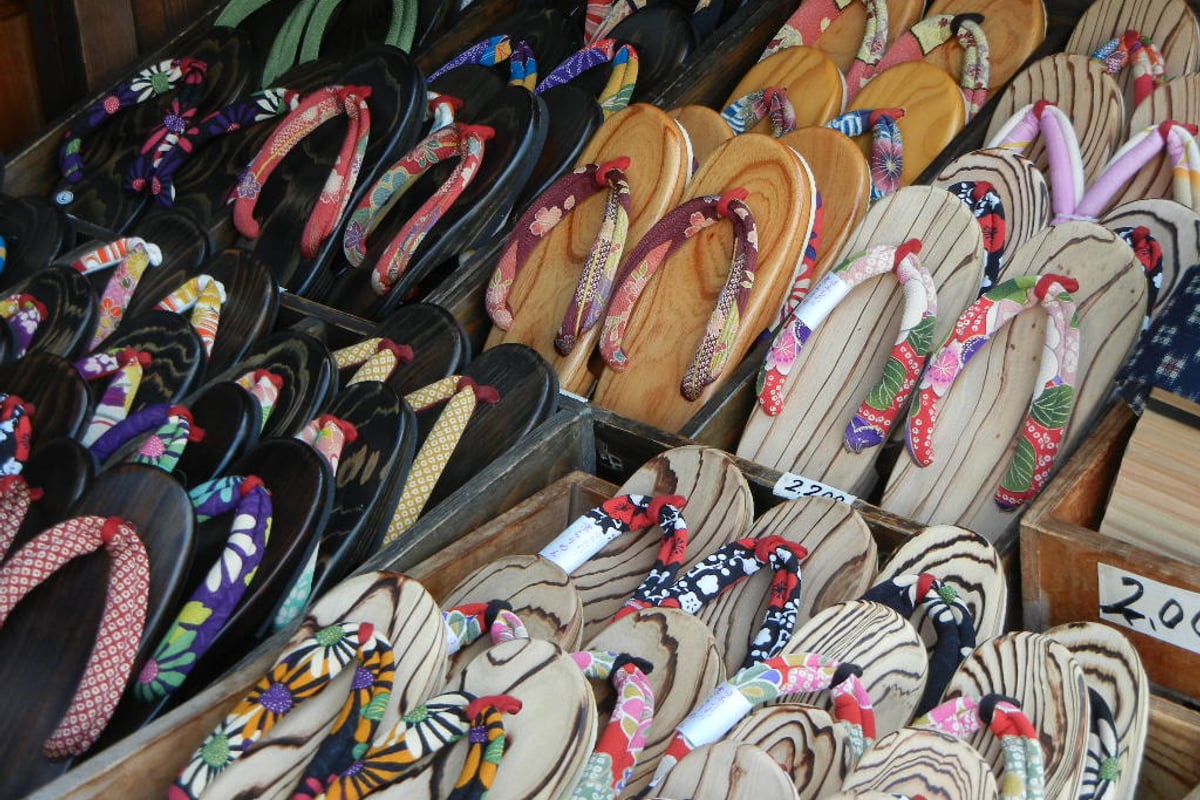
Hita geta are wooden clogs made from Hita cedar in Hita City, Oita Prefecture. Hita has been a thriving forestry area since the Edo period, and geta-making in the area is said to have begun in the Tenpo era (1830–1844), giving it a history of more than 180 years. Hita has been regarded as one of Japan's three major geta-producing areas, along with Shizuoka and Hiroshima. Cedar is light and soft to the touch. Finishes include the 'jindai finish', in which the surface is scorched to bring out the grain, and 'uzukuri', which brings out the texture of the grain. At its peak there were many geta shops in the city, but today their number has fallen to just over ten. You can buy them at shops in Mamedamachi and at manufacturers' own shops, and geta that are easy to wear every day, with creative hanao (thong straps) and fabrics, are also being made.
Origin
According to an article in the magazine Serai (サライ), Hita cedar was known as a fine timber by the late Edo period. River transport on the Mikuma River, part of the Chikugo River system that flows through the city, also supported the distribution of timber. Geta-making is said to have begun in the Tenpo era, and artisans say it started with using the part near the base of the trunk that was cut off during sawing. This part is said to have few knots and to be easy to work. A website introducing Hita's craftsmanship also states that it began as a side job for farmers after 1830.
History
Hita is regarded as one of the three major geta-producing areas, along with Shizuoka and Hiroshima. In a 2016 Serai article, an artisan said that from after the war until before the period of rapid economic growth there were about 150 geta shops in the city, and that now there are only 12. Demand fell as shoes became widespread, but many people have taken over the family business, and members of the 日田げた組合 (Hita geta association) are described as working together to hold events.
Features
Hita cedar is described as light and soft to the touch. At Tsukikuma Mokuri (月隈木履), the cut-out wooden blanks are stacked in rings to dry. A 2025 broadcast introduced its geta, with flat soles and a shape that makes little noise when walking, as popular. Finishes include shiroyaki, which makes the most of the bare wood, the jindai finish, in which the surface is scorched, and uzukuri, which brings out the texture of the grain. New products are also being made, such as women's geta paired with hanao of Kurume kasuri.
Techniques
Jindai finish
A finish in which the surface of the geta is scorched over a flame to bring out the texture and pattern of the grain. The jindai finish of Tsukikuma Mokuri is described as one of the characteristics of Hita geta. Some articles explain that because the scorched surface would soil the soles of the feet, a coating is applied as the final step.
Uzukuri
A process in which the softer parts are scraped away to raise the hard growth rings and bring out the texture of the grain. 本野はきもの工業 (Motono Hakimono Kogyo) makes geta that combine uzukuri with scorching. Some products claim to stimulate the soles of the feet.
Shiroyaki
An uncoated finish that makes the most of the bare cedar wood. It is said to absorb sweat and not feel sticky. Motono Hakimono Kogyo featured square men's shiroyaki geta at 3,900 yen (excluding tax) (JETRO listing). Prices may change.
Materials Used
| Main Production Areas |
|
|---|
Artisans & Workshops
月隈木履(つきくまもくり)
A geta factory founded in 1944 (Showa 19) and run by the third generation, 伊藤平八郎, and his family. It is known for the jindai finish, in which the surface is scorched to bring out the grain. Custom-made geta are described as being accepted only from customers met in person. It is located at 2-208-1 Maruyama, Hita City.
Official site →本野はきもの工業
A family-run manufacturer founded in Hita City in 1948 that handles everything from production to sales itself. It is also working on new styles, such as geta made by laminating cedar with acrylic resin and high-heeled geta. It is located at 三芳小渕町1080-3, Hita City.
Official site →うらつか工房
The workshop of geta artisan 浦塚重行. According to a 2025 broadcast, it mainly handles the work from processing the wood to drilling the holes for the hanao. Geta-making in Hita is described as relying on a division of labor, with different manufacturers handling each stage of the process.
How to Buy
- こもれび工房 (Komorebi Kobo, Mamedamachi, Hita City)
- A shop at 10-1 Mamedamachi that makes and sells geta of Hita cedar. It has everything from adults' to children's sizes. According to a travel information website, it is open from 10:00 to 17:00 every day. Another listing gives geta prices from 1,500 yen. Prices may change.Where to buy →PR
- 本野はきもの工業 directly managed shop
- The manufacturer's own shop in 三芳小渕町, Hita City, carrying traditional Hita geta and arranged geta for which you can choose the hanao. According to a travel information website listing, it is open from 9:00 to 18:00 and closes irregularly. Please check that it is open before visiting.Where to buy →PR
- 月隈木履 (Maruyama, Hita City)
- You can buy geta at the factory. In a 2025 article, cedar geta were 4,500 yen for women and 5,500 yen for men. It is listed as open from 8:00 to 17:00 and closing irregularly. Prices may change.Where to buy →PR
FAQ
Q. Why did geta-making flourish in Hita?
A. Hita has been a thriving forestry area since the Edo period, and a 2025 broadcast stated that more than 80% of its logs are cedar. Geta-making is said to have begun with using the knot-free part near the base of the trunk left over from sawing, and river transport on the Mikuma River also supported the distribution of timber.
Q. Are Hita geta a national Traditional Craft?
A. They have not been designated a national Traditional Craft. In Oita Prefecture, only Beppu Takezaiku has received national designation. Hita geta are introduced as a local specialty that has continued since the Tenpo era.