Shiroshita Karei (Marbled Flounder of Hiji)
Shiroshita Karei (Hiji Castle-Town Marbled Flounder)
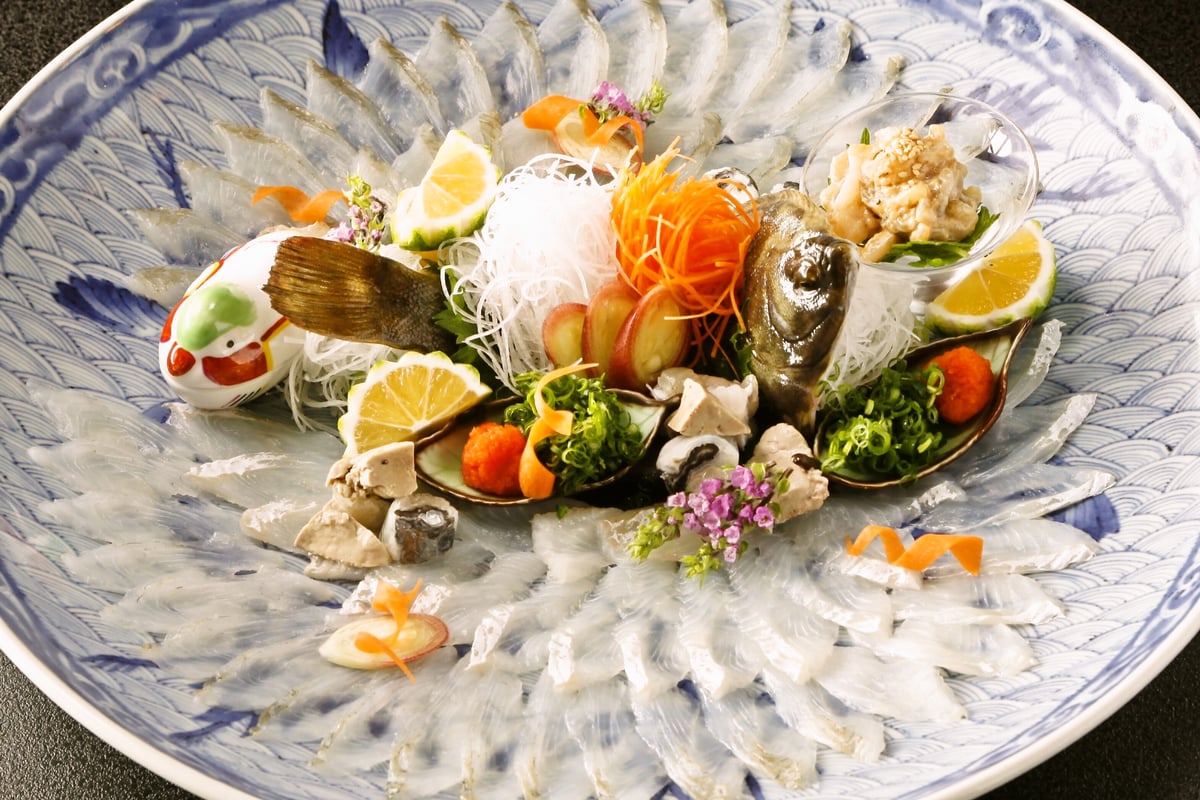
Image: Wikimedia Commons
Shiroshita Karei (しろしたかれい) is marbled flounder caught in the sea below the ruins of Hiji Castle (also called Yokoku Castle, 暘谷城) in Hiji Town, Oita Prefecture. Because it grows in an area of Beppu Bay where fresh water springs up from the seabed, it is said to have no muddy smell and an elegant sweetness. In the Edo period, commoners were forbidden to eat it and only the lord could taste it, so it was also called 'Tonosama-uo' (the lord's fish). It is said that dried fish was presented to the shogun's family during sankin-kotai (alternate attendance in Edo). The fish is caught using the traditional tateami (set-net) method, and the fishing season begins around April. The period from May to early July in particular is said to be when it tastes best. Besides sashimi, especially thinly sliced usuzukuri, it is also eaten deep-fried as karaage or simmered as nitsuke. It can be enjoyed at ryotei and kappo restaurants in the town, but the town explains that catches have declined in recent years, making a stable supply difficult to secure.
Origin
According to the Hiji Town Tourism Association, rain that falls on the Kanagoe (鹿鳴越) mountain range north of the town is filtered over many years and springs up in various places around the town. In Beppu Bay below Hiji Castle, there are also spots where clear water wells up under the sea. Because the marbled flounder raised there was delicious, marbled flounder from Hiji came to be called 'Shiroshita Karei' (the flounder below the castle). Oita Prefecture also explains that the name comes from the fish growing in the fresh water that springs up below Hiji Castle.
History
According to the Hiji Town Tourism Association and Oita Prefecture, in the Edo period it was a 'Tonosama-uo' (lord's fish): commoners were punished for eating it, and only the lord could eat it. During sankin-kotai, dried fish was presented to the shogun's family. In leap years, which come once every four years, the fish is said to have been carried alive to Edo in time for Tango no Sekku (the Boys' Festival). In Hiji Town, the 'Shiroshita Karei Festival' is held every year around May, and in 2017 it was held for the 32nd time.
Features
According to Oita Prefecture, the fish is caught by the traditional tateami (set-net) method, in which three nets are sunk into the sea. Small fish are released, and the teaching of valuing quality over quantity is upheld. The Hiji Town Tourism Association cites as its characteristics that, compared with marbled flounder from other areas, it has thicker flesh and a smaller head, and its tail fin is broad and not angular. It has no muddy smell and an elegant sweetness, and the association recommends sashimi, especially thinly sliced usuzukuri, as the dish that best brings out the sweetness of the flesh.
Main Ingredients
Food Culture
Hiji Town announced that the 41st Shiroshita Karei Festival would be held on May 9 and 10, 2026, around the Hiji Castle ruins and other locations. That year, because of declining catches, the usual 'Shiroshita Karei Tasting Event' was skipped, and the '2026 Shiroshita Karei Fair' was held until June 30, in which diners who tried the fish at participating restaurants could win prizes.
Famous Shops
日出町 的山荘
大分県速見郡日出町2663
A villa built in 1915 (Taisho 4) by 成清博愛, who made his fortune operating the Bajo gold mine; it became a ryotei (traditional Japanese restaurant) in 1964 (Showa 39). According to a travel information site, Hiji Town acquired it in 2010 and has entrusted its operation to an outside operator. Shiroshita Karei is one of its signature dishes. A reservation site lists the budget per person at around 8,000 to 14,999 yen.
View details →割烹 能良玄家(のらくろや)
大分県速見郡日出町2573
A kappo restaurant about a 2-minute walk from Yokoku Station, and a participating restaurant in the 2026 Shiroshita Karei Fair. As listed on Oita Prefecture's tourism website, the Shiroshita Karei mini set is 4,180 yen including tax, and the Yokoku course is 12,100 yen including tax. Dinner requires a reservation by the previous day, and it is listed as closed on Tuesdays. Prices are subject to change.
View details →割烹・寿司 幸喜屋(こうきや)
大分県速見郡日出町2543-1
A kappo and sushi restaurant about a 2-minute walk from Yokoku Station, and a participating restaurant in the 2026 Shiroshita Karei Fair introduced on Oita Prefecture's tourism website. We could not confirm the prices of its Shiroshita Karei dishes. It is listed as closed on Wednesdays. Please check with the restaurant before visiting whether the dish is being served.
View details →FAQ
Q. When can I eat Shiroshita Karei?
A. According to the Hiji Town Tourism Association, the season runs from around April to September, and the period from May to early July in particular is said to be the best. Oita Prefecture explains that the fish is most in season when the water temperature drops during the rainy season, and that catches decrease after mid-July. Its season ends earlier than in other areas.
Q. Why are catches declining?
A. Oita Prefecture explains that catches had been on a downward trend due to the effects of seawall construction and global warming. Since 2000, Hiji Town has raised juvenile fish at an intermediate rearing facility and released them, and since 2011 it has also carried out eelgrass conservation activities. The fisheries plan for the Hiji district also notes a declining trend in the volume handled.