Image: Wikimedia Commons
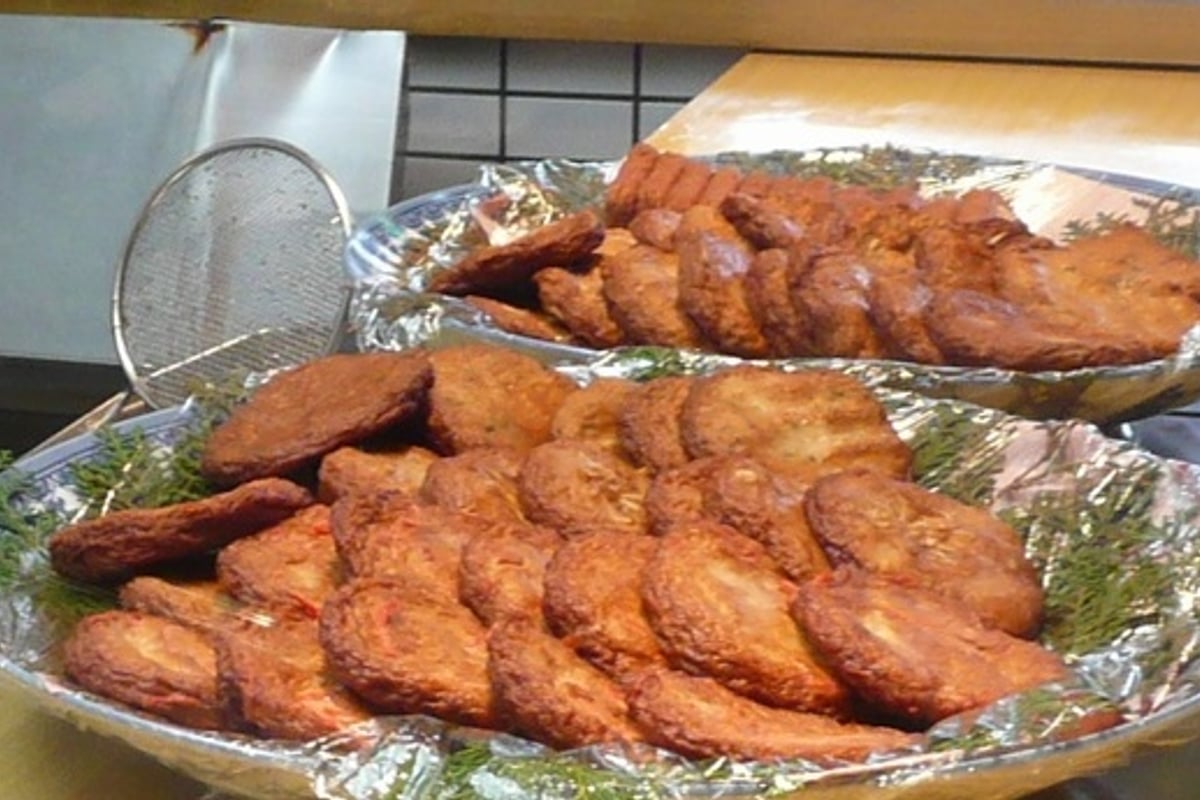
Obiten (also written 飫肥天) is a local dish of the Obi district of Nichinan City, Miyazaki Prefecture, made by combining fish paste (surimi) with tofu, brown sugar, and miso and deep-frying it. The Ministry of Agriculture, Forestry and Fisheries (MAFF) introduces Obiten as part of the food culture of southern Miyazaki Prefecture. In Obi, which flourished as the castle town of the Obi Domain in the Edo period, everyday fish such as sardines, horse mackerel, and flying fish landed at Aburatsu were eaten. Obiten is said to have been born as a way to make these fish delicious. It resembles satsuma-age from Kagoshima Prefecture, but because it uses brown sugar it is sweeter, brown in color, and fluffy in texture. In the castle town of Obi there are shops that combine live demonstration sales with dining, and Obiten can also be enjoyed using vouchers from a food-strolling map.
Origin
According to MAFF, Obi is a district that flourished in the Edo period as the castle town of the Obi Domain, ruled by the Ito clan. In the castle town, everyday fish such as sardines, horse mackerel, mahi-mahi (shiira), and flying fish landed at Aburatsu were eaten. Obiten is said to have been born as a way to make these fish delicious. No sources could be confirmed showing when or by whom it was first made.
History
The Obi Domain was ruled by the Ito clan from 1588 (Tensho 16) until the abolition of the han system in the early Meiji era. Shop descriptions and travelers' reviews describe Obiten as a fried food handed down since the days of the domain. Today, the townscape of the castle town remains in Obi, and Obiten has become a specialty known to tourists as well. Specialty shops in the castle town continue to make Obiten using traditional methods.
Features
The traditional form is made by kneading fish paste with tofu, seasoning it with miso, brown sugar, and other ingredients, shaping it into a leaf shape, and deep-frying it. Because it uses brown sugar, it is brown in color and notably sweet. MAFF notes that the southern part of the prefecture is said to be an area where soy sauce is especially sweet even within Miyazaki. Thanks to the tofu, it has a fluffy, soft texture. There are also versions with different fillings, such as burdock root or boiled egg.
Main Ingredients
Food Culture
In the castle town of Obi, a food-strolling map called 'あゆみちゃんマップ' (Ayumi-chan Map) is sold. According to a 2024 article on a travel information site, it costs 800 yen and comes with five vouchers that can be used at restaurants and souvenir shops. Obiten shops are among the places that accept the vouchers, so you can enjoy freshly fried Obiten while strolling around town.
How It Differs from Home Cooking
In a school lunch recipe from Nerima Ward, Tokyo, flying fish paste is mixed with firm tofu, bamboo shoots, and ginger, seasoned with miso and brown sugar, and deep-fried. Because it uses no egg, it is said that children with egg allergies can also eat it. Specialty shops shape it into leaves before frying, and also offer versions such as one with burdock root.
Famous Shops
元祖おび天本舗
宮崎県日南市飫肥4丁目1-20
A shop about a 10-minute walk from Obi Station on the JR Nichinan Line, offering Obiten made by traditional methods. It is also written as 'おび天本舗'. According to a travel information site's listing, prices start at 100 yen per piece, and an assortment of eight varieties is 3,845 yen. In addition to the leaf shape, there are versions with burdock root and with boiled egg. Business hours are listed as 9:00 to 17:00.
View details →おび天蔵
宮崎県日南市飫肥9-1-8
An eatery that sells Obiten with live demonstrations. According to a travel information site's listing, the Obiten set meal starts at 1,500 yen and Obiten udon is 1,250 yen. Hours are given as 9:30 to 16:00 (shop until 17:00), with irregular holidays. Prices are subject to change.
View details →FAQ
Q. How is it different from satsuma-age?
A. Both are deep-fried fish paste, but Obiten differs in that it combines tofu, brown sugar, and miso. MAFF notes that although Obiten closely resembles satsuma-age from Kagoshima Prefecture, it is even sweeter.