 1 / 2
Image: Wikimedia Commons
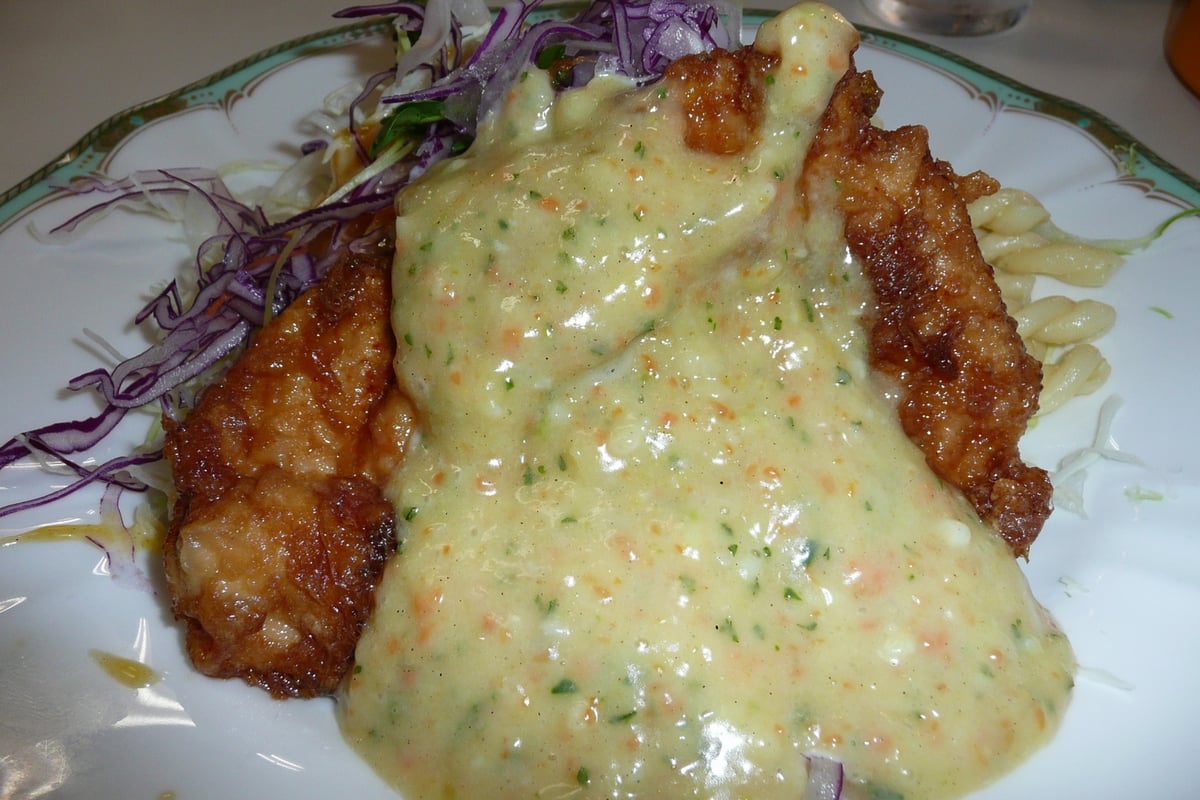
Chicken Nanban is a local dish of Miyazaki Prefecture made by coating chicken in flour and beaten egg, deep-frying it, and soaking it in sweet vinegar sauce (amazu). The Ministry of Agriculture, Forestry and Fisheries' 'Uchi no Kyodo Ryori' lists the entire prefecture as the main area where it has been handed down. It is said to have originated in Nobeoka City, and is said to have been born in the Showa 30s (1955–1964) as a staff meal (makanai) at a Western-style (yoshoku) restaurant in the city. At first it was simply fried chicken soaked in sweet vinegar sauce. Later, a style served with tartar sauce and salad appeared, and its popularity spread. Today there are two lineages: one eaten with sweet vinegar sauce only, and one topped with tartar sauce. It is eaten every day at home, in school lunches, and at restaurants in the prefecture, and has become widely known outside the prefecture as well. In Nobeoka City, a citizens' group has designated July 8 as 'Chicken Nanban Day' and continues to promote the city as the dish's birthplace.
Origin
According to the Ministry of Agriculture, Forestry and Fisheries (MAFF), Chicken Nanban is said to have originated in Nobeoka City, beginning in the Showa 30s (1955–1964) as a staff meal at a Western-style restaurant in the city. Travel information sites and others identify that restaurant as 'ロンドン' (London), a Western-style restaurant that was located in Gion-machi, Nobeoka City. It is also said to have been inspired by nanban-zuke. At the time it was fried chicken soaked in sweet vinegar sauce, without tartar sauce. Some sources date its birth to the 1950s.
History
Cooks who trained at London are said to have spread Chicken Nanban at their own restaurants. According to Shukan Josei PRIME, Naoshi Goto (後藤直), the previous owner of '直ちゃん' (Naochan) in Nobeoka City, founded in 1964 (Showa 39), started the sweet-vinegar-sauce lineage. In 1965 (Showa 40), Yoshimitsu Kai (甲斐義光), the founder of 'おぐら' (Ogura), began selling the tartar-sauce lineage. MAFF explains that in the Showa 40s (1965–1974) it spread as a special dish for eating out and also became established in school lunches and home cooking.
Features
According to MAFF, chicken is dusted with cake flour, coated in beaten egg, deep-fried, and then soaked in sweet vinegar sauce. Applying the egg after the flour is said to help the coating absorb the sweet vinegar sauce and give it a pleasant texture. The original version used low-fat breast meat, and is said to have been a dish for making hard-to-eat breast meat tasty. Today some restaurants also use thigh meat. The name 'nanban' is said to come from nanban-zuke, in which ingredients are marinated in sweet vinegar containing chili pepper.
Main Ingredients
Food Culture
The Nobeoka citizens' group 'Nobeoka Hassho Chicken Nanban To' (延岡発祥チキン南蛮党, the Nobeoka-Born Chicken Nanban Party) promotes July 8 as 'Chicken Nanban Day' based on a wordplay on the numbers. MAFF gives 2009 as the year the group was formed, while some sources say it was launched in 2011. Around this time, it has been reported that Chicken Nanban is served in school lunches at elementary and junior high schools in the city.
How It Differs from Home Cooking
In the home recipe introduced by MAFF, soy sauce, mirin, vinegar, sugar, and shichimi togarashi are brought to a boil once to make nanban vinegar. Tartar sauce is made by mixing boiled egg, onion, and other ingredients into mayonnaise. Restaurants serve their own original tartar sauces, and some finish the dish with sweet vinegar sauce only.
Famous Shops
直ちゃん
宮崎県延岡市栄町9-3
Said to have been founded in 1964 (Showa 39), it is said to be the shop that first brought Chicken Nanban to the public. Its style is without tartar sauce: fried chicken breast is dipped in sweet vinegar sauce and finished with a squeeze of lemon. According to a travel information site's listing, the Chicken Nanban set meal is 900 yen. It is said to close once sold out, and its regular closing days differ by listing.
View details →おぐら本店
宮崎県宮崎市橘通東3丁目4-24
It is introduced as the main shop of 'おぐら' (Ogura), which created Chicken Nanban topped with tartar sauce. It is located in an alley behind the Yamakataya (山形屋) department store and is said to still use chicken breast. According to a travel information site's listing, Chicken Nanban is 1,100 to 1,300 yen, with the price differing even within the same article. It is closed on Tuesdays and some Wednesdays.
View details →GRILL 爛漫
宮崎県宮崎市中央通6-3 ウエストビル1 1階
A Western-style restaurant founded in 1978 (Showa 53). The owner is introduced as one of the early members of 'おぐら' (Ogura), which devised its Chicken Nanban. According to a travel information site's listing, the special Chicken Nanban is 1,250 to 1,400 yen. It is closed on Tuesdays and is said to have occasional irregular closures.
View details →FAQ
Q. What does 'nanban' mean?
A. According to MAFF, 'nanban' is a word referring to the Portuguese who came to Japan in the Sengoku (Warring States) period and their culture. Dishes in which ingredients are marinated in sweet vinegar containing chili pepper are called nanban-zuke, and because this was made with chicken, it is said to have come to be called 'Chicken Nanban.'
Q. Is it always topped with tartar sauce?
A. Not always. There are two lineages: the common one topped with tartar sauce, and one eaten with sweet vinegar sauce only. Naochan in Nobeoka City serves the sweet-vinegar-only style, and the tartar sauce style is said to have been started by 'おぐら' (Ogura).