Image: Wikimedia Commons
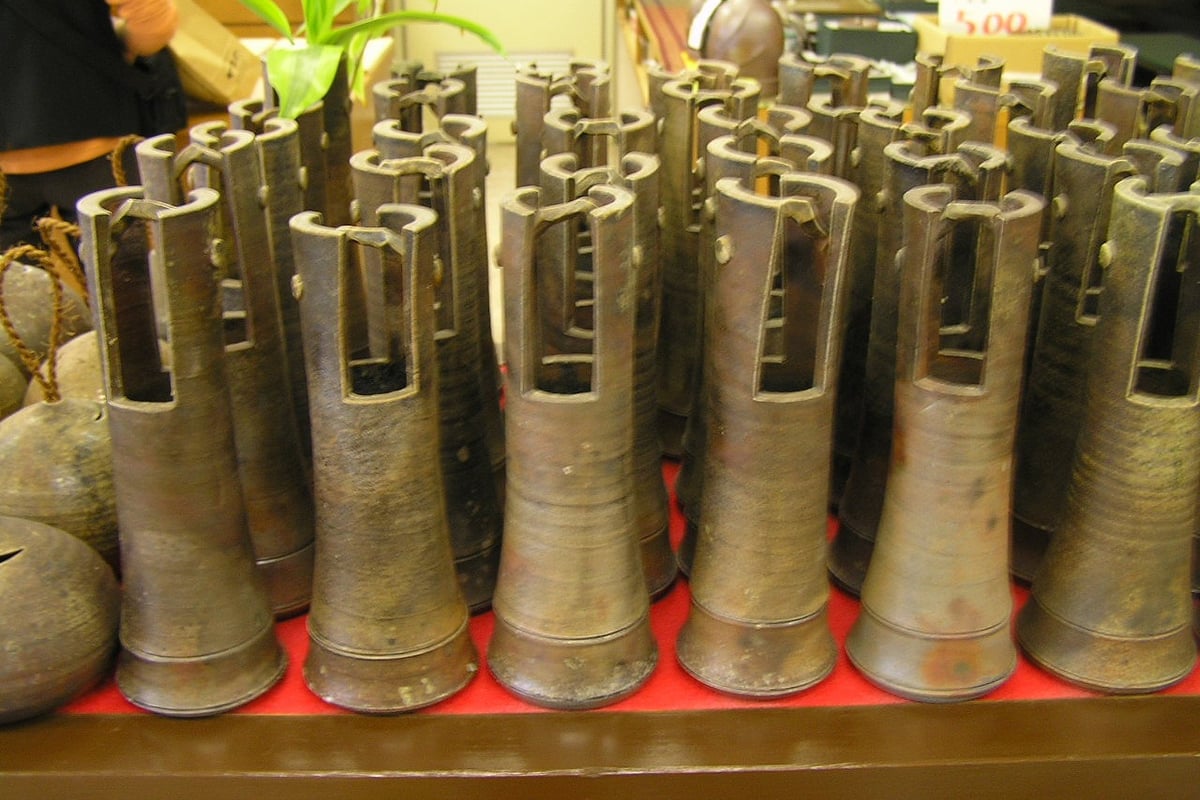
Tamba Tachikui-yaki is pottery fired mainly in the Tachikui district of 今田町, Tamba-Sasayama City, Hyogo Prefecture, and is also commonly called 'Tamba-yaki' (Tamba ware). Its origins are said to date to the end of the Heian period or the beginning of the Kamakura period, and it is counted among Japan's Six Ancient Kilns, alongside Seto, Tokoname, Shigaraki, Echizen and Bizen. In the medieval period, jars and storage vessels were fired unglazed in anagama (tunnel kilns), but around 1611 (Keicho 16), at the beginning of the Edo period, the noborigama (climbing kiln) was introduced, and around the same time a kick wheel that turns counterclockwise was also adopted. When pieces are fired in a noborigama, ash from the pine firewood falls on them and melts together with the glaze, producing colors and patterns that differ from piece to piece. Because of the great variety of this yohen (kiln transformation: changes in color and texture that occur inside the kiln), it is also called 'Tamba no nanabake' (the seven transformations of Tamba). Around 50 kilns are still gathered in the village of Tachikui today, producing a wide range of wares from everyday tableware to flower vases and tea utensils. In 1978 (Showa 53) it was designated a Traditional Craft by the Minister of Economy, Trade and Industry under the name 'Tamba Tachikui-yaki'.
Origin
Tamba-yaki is said to have originated between the end of the Heian period and the beginning of the Kamakura period. Hyogo Prefecture introduces it as one of Japan's Six Ancient Kilns, with a history of more than 800 years. At first it was fired in anagama dug into mountain slopes, and potters mainly made unglazed jars, storage vessels and grinding bowls (suribachi) using the 'himotsuchi makiage' technique, in which coils of clay are stacked up to build the form. It is said to have once been called '小野原焼', and the name 'Tamba-yaki' spread after the noborigama made mass production possible.
History
The anagama era lasted about 400 years, until the end of the Momoyama period. Around 1611 (Keicho 16), a Korean-style, semi-underground climbing kiln was introduced, and kick wheels and glazes also came into use. From around the Kan'ei era (1624–1644), 'akadobe', a coating of iron-rich slip, was used for about 100 years. In the Edo period, tea ceramics such as tea caddies (chaire) and water jars (mizusashi) were also fired for the Kamigata market (Kyoto and Osaka), and in the late Edo period 'Shiro-Tamba' (white Tamba), coated with white slip, also emerged. In 1978 it was designated a national Traditional Craft.
Features
The appeal of Tamba Tachikui-yaki lies in the rustic, powerful texture created by the flames and ash of the noborigama. During long firings, ash from the pine firewood falls on the pieces and melts together with the glaze, creating natural 'landscapes' of green and brown. This is called 'haikaburi' (ash deposits from the firewood: patterns formed when firewood ash falls on the pieces inside the kiln). A kick wheel that turns counterclockwise, which is rare in Japan, has been handed down here. Decorative techniques are also diverse, including nail carving (kugibori), stamped patterns (inka) and slip trailing (tsutsugaki), and even pieces fired in the same kiln each have a different look.
Techniques
Noborigama (jagama) firing
Pieces are fired in a noborigama built on a mountain slope, with 8 to 9 firing chambers linked in a row. Because of its long, narrow shape, it is locally called 'jagama' (snake kiln). The heat passes through it well, and firing takes only about one-third of the time needed in an anagama, which makes it suited to mass production. In recent years, mini climbing kilns with around four firing chambers have become the mainstream.
Kick wheel
A potter's wheel turned by kicking with the foot, adopted around the same time the noborigama was introduced. It turns counterclockwise, which is rare in Japan, and is considered a technique unique to Tachikui. With it, the method of making shifted from coil building (himotsuchi makiage) to throwing vessel forms on the wheel.
Decorative techniques
From the Edo period onward, glazes such as ash glaze and akadobe glaze came into use. Patterns are applied to the surface using techniques such as nail carving (kugibori), leaf patterns made by pressing tree leaves onto the clay, stamped patterns (inka), poured glaze, slip trailing (tsutsugaki) and marbling (suminagashi). The combination of glazes and kiln transformations produces a wide variety of looks.
Materials Used
| Main Production Areas |
|
|---|
Artisans & Workshops
市野伝市窯
A kiln in 上立杭, 今田町, Tamba-Sasayama City. Prompted by the previous head, 市野伝市, making pots for wild mountain plants, it began producing flowerpots in earnest about 60 years ago. It is known for its '伝市鉢' pots, whose clay-and-sand mix and thickness are devised to improve drainage and breathability, and it also drew attention through a collaboration with an apparel brand.
昇陽窯
A kiln in 下立杭, 今田町, Tamba-Sasayama City. Run by 大上裕樹, it has opened a combined gallery and workshop in a renovated vacant workshop next door. It also pursues exchanges with other fields, such as live music events, and offers stay plans in which guests stay at the workshop and experience pottery making starting from clay preparation.
Official site →How to Buy
- 丹波伝統工芸公園 立杭陶の郷 (Tamba Traditional Craft Park, with its 'Kamamoto Yokocho' kiln alley)
- The central facility for Tamba-yaki, located at 上立杭3, 今田町, Tamba-Sasayama City. At 'Kamamoto Yokocho' (kiln alley), you can compare and buy works from about 50 kilns all in one place. Open from 10:00 to 17:00; closed on Tuesdays (open if a national holiday) and over the New Year holidays. The official website announces that admission will be free from April 2026.Where to buy →PR
- Tamba-yaki Pottery Festival 'Aki no Sato Meguri' (Autumn Village Tour)
- A Tamba-yaki festival held every autumn throughout the Tachikui area. Venues include 立杭陶の郷, the individual kilns and 兵庫陶芸美術館 (the Museum of Ceramic Art, Hyogo); a 'Yakimono Utsuwa Ichi' (pottery tableware market) is held at 陶の郷, and the kilns also hold their own events. In 2026 it runs from October 9 to 18, and about 30,800 people visited the previous year.
Hands-on Experiences
立杭陶の郷 陶芸教室
兵庫県丹波篠山市今田町上立杭3
You can choose between 'clay work', in which you make plates or teacups by kneading clay by hand, and 'painting', in which you paint designs on vessels. Fees start from about 2,420 yen for clay work (500 g) and from about 1,320 yen for painting. Firing is done by a kiln, and finished pieces are shipped at a later date (shipping extra). Reception is from 10:00 to 15:30, and groups of 20 or more require a reservation.
View details →FAQ
Q. Are 'Tamba-yaki' and 'Tamba Tachikui-yaki' different things?
A. They refer to the same pottery. It is generally called 'Tamba-yaki', and it is designated a national Traditional Craft under the name 'Tamba Tachikui-yaki'. Tachikui is the name of the place in 今田町, Tamba-Sasayama City, where the kilns are concentrated.
Q. Can I see an old climbing kiln?
A. Near 立杭陶の郷 stands the 'Tamba-yaki Tachikui Noborigama', a climbing kiln about 47 m long built in 1895 (Meiji 28). It is the oldest surviving climbing kiln in Tachikui and is designated a Tangible Folk Cultural Property of Hyogo Prefecture.