Shinjiko Shijimi (Yamato Freshwater Clams of Lake Shinji)
Shinjiko Shijimi (Yamato Freshwater Clams of Lake Shinji)
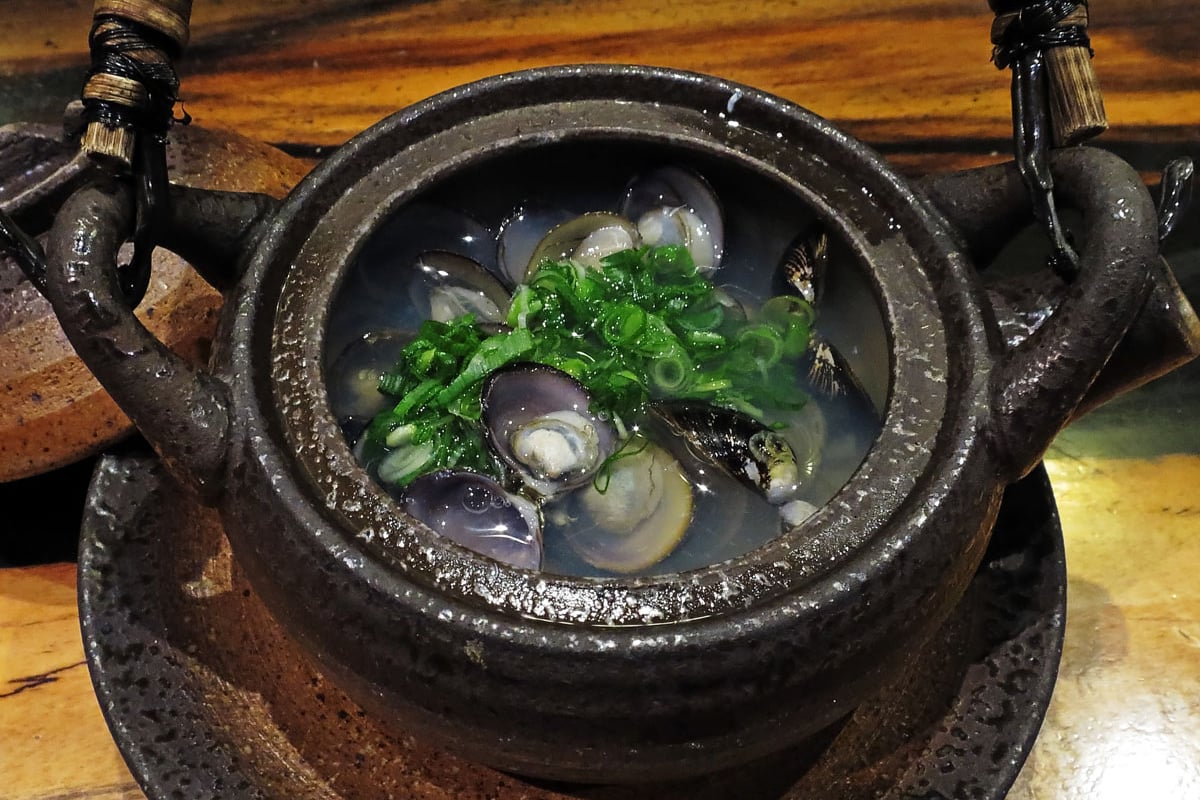
Image: Wikimedia Commons
Lake Shinji shijimi are Yamato shijimi clams harvested in Lake Shinji, which straddles Matsue City and Izumo City in Shimane Prefecture. Lake Shinji is a brackish lake with a salinity of about one-tenth that of seawater; nutrients flow in from the surrounding rivers, and the phytoplankton the clams feed on grows abundantly. The shijimi caught here are large and plump, and they are an indispensable ingredient for shijimi-jiru (freshwater clam miso soup) and sumashi-jiru (clear soup). From home dining tables to school lunches and restaurant staples, they have supported everyday eating in Shimane. Shijimi account for more than 90 percent of the seafood caught in Lake Shinji, and they are counted among the Shinjiko Shichichin (seven delicacies of Lake Shinji) that represent the lake. In Showa 56 (1981), Lake Shinji's shijimi catch ranked first in Japan. Since then, despite declines in the stock, resource management such as catch limits set by the fisheries cooperative has continued. In November 2025, they were registered under the national Geographical Indication (GI) system as '宍道湖産ヤマトシジミ' (Yamato shijimi from Lake Shinji) and '宍道湖しじみ' (Lake Shinji shijimi).
Origin
Shijimi have been eaten around Lake Shinji since the distant past. According to Matsue City materials, large quantities of shijimi shells have been found at the Sada-Kobu Shell Mound, which dates back about 7,000 years. Many shijimi have also been excavated from later sites, including Yayoi-period and medieval ruins and the remains of the Matsue castle town. In the Edo period they were treated as goyo shijimi (shijimi for the official use of the Matsue domain), and they were also cherished as a taste of ordinary people.
History
Lake Shinji's shijimi catch exceeded 10,000 tons a year from the late Showa 40s through the Showa 60s. However, the stock declined after a mass die-off caused by heavy rain in Heisei 18 (2006). In Heisei 23 (2011), the catch fell to 2,200 tons and lost its top position in Japan, and the following year it dropped to a record low of 1,700 tons. Shimane Prefecture set up a council of experts to work on restoring the stock, and according to prefectural materials for fiscal Reiwa 1, Lake Shinji's shijimi once again ranked first in the nation in catch volume.
Features
Yamato shijimi are clams that live in low-salinity waters such as river mouths and Lake Shinji. Those from Lake Shinji are large and plump and are said to be rich in minerals and amino acids. Fishing takes place every morning, with fishers scooping up the lakebed from their boats using a tool called a joren (a rake-like dredge). The shallow areas where shijimi can live make up only about one-third of the whole lake. Besides shijimi-jiru, they are eaten in clear soup, as tsukudani (simmered in soy sauce and sugar), and in rice cooked with shijimi.
Main Ingredients
Food Culture
Matsue City is said to have ranked first in Japan in shijimi purchases per household for 14 consecutive years as of Reiwa 6. The seven representative fish and shellfish of Lake Shinji are called the Shinjiko Shichichin and have been enjoyed since the Edo period. They are remembered by the mnemonic 'su-mo-u-a-shi-ko-shi,' formed from the first sounds of suzuki (Japanese sea bass), moroge-ebi (yoshi-ebi, a shrimp), unagi (eel), amasagi (wakasagi, pond smelt), shirauo (icefish), koi (carp), and shijimi.
How It Differs from Home Cooking
At home, the standard is to make shijimi-jiru and serve it at the everyday table. The tsukudani sold as souvenirs is made by shelling large shijimi one by one by hand and simmering them down with soy sauce, ginger, sugar, and mizuame. Because fresh or frozen shijimi are hard to carry and store, many tourists are said to buy tsukudani instead.
Famous Shops
川京(かわきょう)
島根県松江市末次本町65
A small restaurant with counter seating only, serving local dishes made with the Shinjiko Shichichin along with local sake. Besides suzuki no hoshoyaki (sea bass baked wrapped in hosho washi paper) and unagi no tataki (seared eel), shijimi-jiru is also available. Tourism information sites introduce a Shinjiko Shichichin course from about 5,000 yen and recommend reservations.
松江の台所 こ根っこや
島根県松江市千鳥町36 宍道湖しじみ館2F
A dining spot on the second floor of 宍道湖しじみ館 (Lake Shinji Shijimi Hall), about a 3-minute walk from Matsue Shinjiko Onsen Station on the 一畑電車 railway. Gourmet sites introduce the shijimi miso soup served with set meals and sakamushi (sake-steamed) shijimi. It is open for lunch and dinner.
| 宍道湖漁業協同組合の宍道湖しじみ | Yamato shijimi sold by 宍道湖漁協 (Lake Shinji Fisheries Cooperative), the registered producer group for the GI-registered Lake Shinji shijimi. Plump shijimi hand-sorted by fishers are offered for home use and as gifts through its online store and other channels, and the cooperative also offers shipping of frozen shijimi.Where to buy →PR |
|---|
FAQ
Q. Are they different from the shijimi used in Shiga Prefecture's shijimi-jiru?
A. They are a different species. Shiga's shijimi-jiru uses Seta shijimi, an endemic species found only in the Lake Biwa water system. Lake Shinji shijimi are Yamato shijimi, which live in river mouths and brackish waters. Most of the shijimi distributed as domestic products are this Yamato shijimi.
Q. What is being done to prevent overfishing?
A. 宍道湖漁業協同組合 (Lake Shinji Fisheries Cooperative) sets fishing holidays and an upper limit on the catch per fisher per day. There are also no-fishing zones and penalties for violators. According to a Shimane Prefecture report, since August 2024 the mesh of the joren has been widened from 11 mm to 12 mm so that small clams are not taken.