Image: Wikimedia Commons
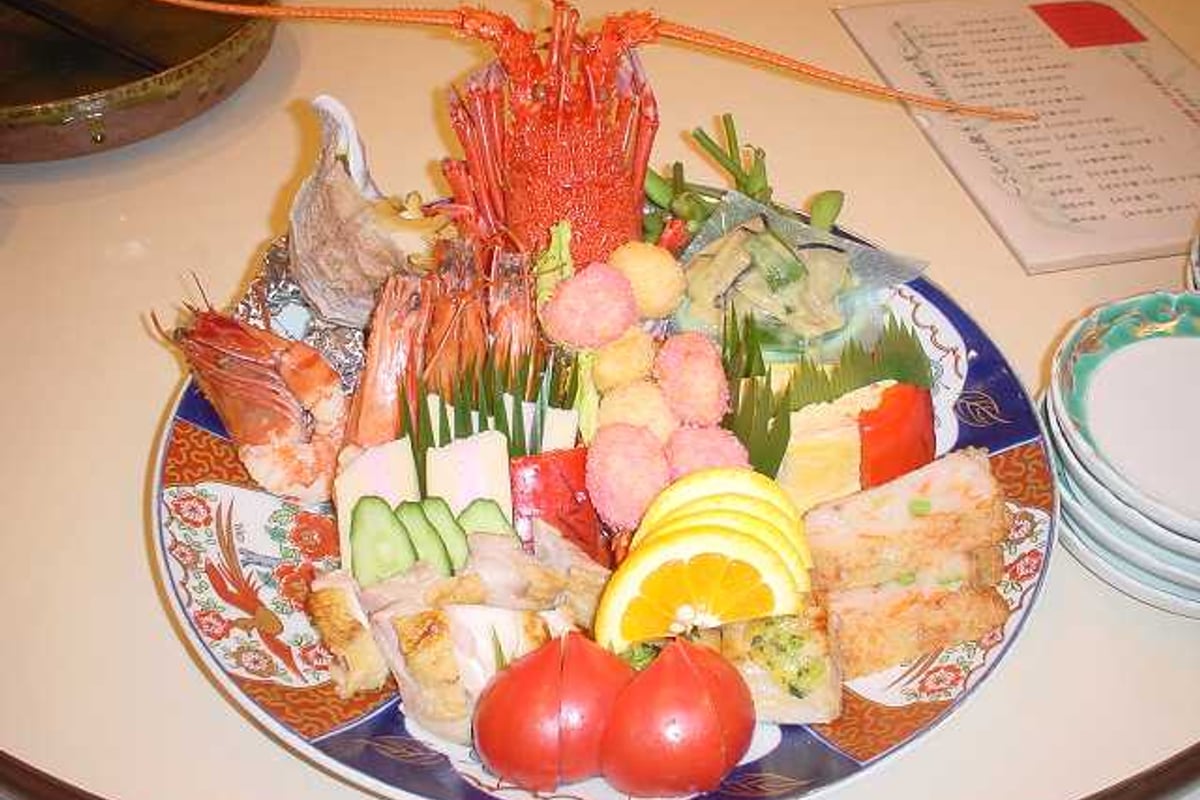
Sawachi Ryori is a large-platter cuisine served at banquets in Kochi Prefecture. Rather than the name of a specific dish, it refers to a style of arranging delicacies from the mountains, rivers and sea on a large platter about 36 to 39 cm in diameter. The basic set consists of nama, a platter of sashimi and Katsuo no Tataki; sushi, a platter lined with sushi; and kumimono, an assortment of simmered dishes, fried foods, sweets, fruit and more. In Kochi, a banquet to which guests are invited is called okyaku, and Sawachi Ryori is its centerpiece. It is a relaxed cuisine without strict rules, in which many people gather around the large platters and take whatever they like, as much as they like, onto small plates. In the Edo period it was served at samurai banquets, and from the Meiji period onward it spread among the people of the prefecture. In fiscal 2021 it was certified as a '100-Year Food' by the Agency for Cultural Affairs. At restaurants in Kochi City, you can also order sawachi platters for small groups.
Origin
A sawachi is a vessel shaped somewhere between a plate (sara) and a bowl (hachi), and the word is also read 'sahachi.' According to materials from the Ministry of Agriculture, Forestry and Fisheries, the origins of Sawachi Ryori go back to the period of domain rule, when it is said to have been served at the end of samurai banquets. On the other hand, there is also a view that it developed from naorai, in which food offered to the gods at rural Shinto rituals, such as prayers for a good harvest and harvest festivals, was shared among the participants after the ritual.
History
The Tosa domain, which valued frugality, banned the buying, selling and use of sawachi in 1674 (Enpo 2), 1748, 1768 and 1857, because sawachi were regarded as luxury items. When their sale became free in the Meiji period, Sawachi Ryori spread throughout the prefecture as the food for okyaku banquets. Specialist catering shops are said to have appeared in the mid-Meiji period and to have spread to various parts of the prefecture by the Showa 30s (1955–1964). In recent years, Western-style dishes such as roast beef and fried shrimp are sometimes arranged on the platters as well.
Features
The basic set is three platters, nama, kumimono and sushi, and at celebrations ikezukuri (sashimi prepared from live fish) may be added. For kumimono, simmered dishes, vinegared dishes, sweets and more are packed tightly together, divided by haran (aspidistra) leaves. The vessels may be round or oval, with a standard size of about 39 cm (1 shaku 3 sun). Wealthy households once collected expensive platters of Imari, Kutani and Arita ware. One platter is said to serve about three people, and the number of platters indicated the scale of the banquet.
Main Ingredients
Food Culture
Sawachi Ryori is not everyday fare but is prepared for occasions when people gather, such as weddings, funerals, birthday celebrations, 60th-birthday (kanreki) celebrations, seasonal festivals (sekku) and housewarming celebrations. In the past, men filleted the fish and women did the cooking, and preparations reportedly sometimes took two days. Every March, the food festival 食の祭典南国土佐皿鉢祭 (Nangoku Tosa Sawachi Festival) is held in Kochi City.
How It Differs from Home Cooking
In farming villages of the past, groups of mutual helpers called yui gathered and shared the work of preparing the sawachi, from cooking to serving and cleaning up. From around the Showa 30s (1955–1964), more households came to order from catering shops, and the food also became more lavish. Restaurants also offer smaller sawachi platters for two to four people.
Famous Shops
土佐料理 司 高知本店
高知県高知市はりまや町1-2-15
A long-established local cuisine restaurant founded in 1917 (Taisho 6), serving Sawachi Ryori and kaiseki courses centered on bonito dishes. In 2020 it launched 'おとどけ皿鉢' (Otodoke Sawachi, for 3 to 6 people), a Sawachi Ryori set of more than 20 kinds of dishes to be enjoyed arranged on a large platter, priced at 16,000 yen (including tax and shipping) at launch. Prices may change.
View details →得月楼
高知県高知市南はりまや町1-17-3
A ryotei (traditional Japanese restaurant) founded in 1870 (Meiji 3), also known as the setting of Miyao Tomiko's novel Yokiro (陽暉楼). One of its signature dishes is the 'Tosa specialty Sawachi Ryori' piled with delicacies from the mountains and sea, listed from 16,200 yen at lunch. Prices vary depending on the contents, so please contact the restaurant in advance.
View details →土佐ノ國 二十四万石
高知県高知市帯屋町1-2-2
A restaurant known for its Sawachi Ryori and Katsuo no Tataki seared over straw. Travel guides list the Tosa delicacies sawachi (for 2 to 4 people) at 8,100 yen and the traditional sawachi (for 3 to 5 people) at 13,500 yen. Prices may change.
とさ市場
高知県高知市はりまや町1-3-11
A restaurant offering about 250 dishes, including Sawachi Ryori and kaizoku ryori (pirate cuisine). Travel guides list the 'Omoide Sawachi' for small groups at 3,180 yen and the straw-seared tataki set meal at 1,680 yen. Prices may change.
とさごはん 酔鯨亭
高知県高知市南はりまや町1-17-25
A restaurant serving Kochi local cuisine in Minami-Harimayacho, near Harimaya Bridge. Travel guides list a mini sawachi for 2 to 4 people (reservation required) at 8,800 yen. Even small groups can enjoy Sawachi Ryori here. Prices may change.
FAQ
Q. How is 皿鉢 read?
A. In Kochi it is generally read 'sawachi.' Materials from the Ministry of Agriculture, Forestry and Fisheries give both 'sawachi' and 'sahachi,' and it is sometimes also called 'saachi' or 'sarachi.' Documents of the Tosa domain are said to include examples written as 砂鉢.
Q. What is nama in Sawachi Ryori?
A. In Kochi, sashimi is called nama (raw), and a sawachi platter of sashimi is called nama. Traditionally, one kind of fish is said to be arranged on each platter, and Katsuo no Tataki is sometimes served on it as well. At funerals and other mourning occasions, there was reportedly a custom of arranging a different dish instead of nama.