Banshu Miki Uchihamono (Banshu Miki Forged Blades)
Banshu Miki Uchihamono (Banshu Miki Forged Blades)
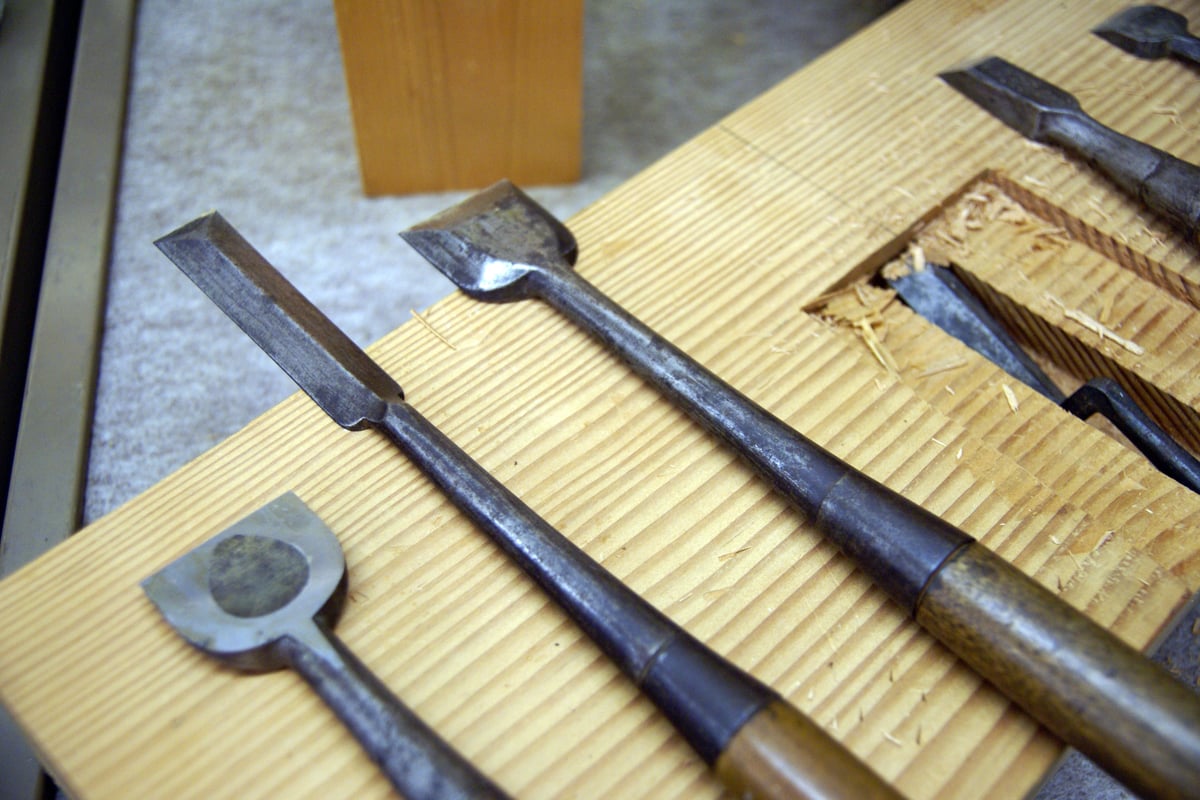
Image: Wikimedia Commons
Banshu Miki Uchihamono are forged blades (uchihamono) made in Miki City, Hyogo Prefecture, in five items: saws (nokogiri), chisels (nomi), planes (kanna), trowels (kote) and knives (kogatana). The origins of blacksmithing in Miki are said to go back about 1,500 years, to an exchange of techniques between the local 'Yamato smiths' (大和鍛冶) and the 'Korean smiths' (韓鍛冶) who came from Baekje. A major turning point was Hashiba Hideyoshi's attack on Miki Castle, which began in 1578 (Tensho 6). To rebuild the town, which had been reduced to burnt ruins, Hideyoshi exempted it from taxes to bring people back, and the carpenters who gathered there, along with the blacksmiths who made their tools, brought the town back to life. Later, when the carpenters went to work in other regions, the quality of the tools they brought with them gained a reputation, and the name 'Miki, the town of hardware' spread. Their hallmark is a keen sharpness developed through forging Japanese iron and steel, and about 30 hand-forging smithies are said to remain today. In 1996 (Heisei 8) they were designated a Traditional Craft by the Minister of Economy, Trade and Industry.
Origin
Blacksmithing in Miki has a long history; it is said to have begun when Korean smiths (韓鍛冶) from Baekje, who settled in the area around the mid-5th century, exchanged techniques with the native Yamato smiths (大和鍛冶). Miki City describes this as the foundation of the town of hardware. In the Azuchi-Momoyama period, blacksmithing grew under the protection of the Bessho clan, the lords based at Miki Castle. However, the town would later suffer heavy damage in the Siege of Miki.
History
In 1578 (Tensho 6), Hashiba Hideyoshi attacked Miki Castle, and the castle lord, Bessho Nagaharu, defeated by a siege that starved out the castle, died by suicide in 1580 (Tensho 8). Hideyoshi sought to rebuild the town through a tax exemption policy, and carpenters and blacksmiths gathered there. After the reconstruction, the carpenters went to work in Kyoto and Osaka, and their tools gained a reputation. In the late 18th century, the forging of saws and other tools flourished, and around 1897 (Meiji 30) the smiths also succeeded in introducing Western iron and steel. In 1996 they were designated a national Traditional Craft.
Features
Banshu Miki Uchihamono are blades centered on hand tools used by carpenters and plasterers. Their hallmark is a keen sharpness achieved by the traditional forging of Japanese iron and steel, and five items—saws, chisels, planes, trowels and knives—are designated as Traditional Crafts. Each item has its own specialized smiths, who have responded to the detailed requests of professional craftspeople. In Miki today, besides carpentry tools, shovels, gardening tools and blades for agricultural machinery are also made.
Techniques
Traditional forging (koshiki tanren)
A technique of lighting a fire with bellows and hammering heated iron by time-honored methods. The 三木金物古式鍛錬技術保存会 (a preservation society for the traditional forging techniques of Miki hardware) has five sections—saws, chisels, planes, trowels and knives—and gives public demonstrations once a month on a Sunday at the traditional forging hall next to the Miki City Hardware Museum.
From Japanese iron and steel to Western steel
Miki blades made their name with the sharpness achieved by forging Japanese iron and steel. Around 1897 (Meiji 30), the smiths succeeded in introducing Western iron and steel, laying the foundation for expanding sales nationwide. Some plane smiths, such as 常三郎, use both the traditional and the modern methods, choosing between them.
Specialized smiths for each item
Saws, chisels, planes, trowels and knives are each made by specialized smiths. Plane smiths, for example, take plane blades forged with blade steel (hagane) and make them into large planes, miniature planes (mame-ganna) and other types according to the carpenter's purpose. This division of labor and specialization has supported the area as a producer of a wide variety of carpentry tools.
Materials Used
| Main Production Areas |
|
|---|
Artisans & Workshops
常三郎
A plane maker at 福井字八幡谷2151, Miki City. The first generation, 魚住常三, studied plane making for 28 years under the founder's grandfather and established the business in 1947 (Showa 22). It makes everything from large and small planes to miniature planes and special-purpose planes, and accepts factory tours by reservation.
Official site →山本鉋製作所
A Miki workshop that has been making planes for 100 years. It is run by a parent and child, the third generation 山本芳博 and the fourth generation 健介, both of whom are certified traditional craftspeople of Banshu Miki Uchihamono. It also hosts plane-forging experience programs.
Official site →How to Buy
- 道の駅みき 金物展示即売館 (hardware showroom and shop at the Michi-no-Eki Miki roadside station)
- A hardware exhibition and sales space on the second floor of the roadside station at 福井2426番地先, Miki City. It handles about 20,000 items from more than 70 companies, so you can pick up Miki hardware and choose it in person. Open from 9:00 to 17:00; closed over the New Year holidays.Where to buy →PR
- 三木市立金物資料館 (Miki City Hardware Museum)
- A city-run museum at 上の丸町5-43, Miki City, with free admission. It displays the history and products of Miki hardware, starting with carpentry tools. At the traditional forging hall next door, forging demonstrations can be seen once a month on a Sunday (10:00–13:00; 9:00–12:00 from June to September).
Hands-on Experiences
三木の刃物体験(包丁研ぎ・鉋鍛冶)
兵庫県三木市芝町2(湯の山街道)
Visit workshops such as 長原包丁製作所 and 山本鉋製作所 to try knife sharpening and plane forging under the guidance of craftspeople. The fee is about 35,000 yen without the forging experience and about 40,000 yen with it. Reservations are required, for groups of three or fewer; bookings are handled by 三木刃物製作所.
View details →FAQ
Q. Which items are designated as Banshu Miki Uchihamono?
A. Five items: saws, chisels, planes, trowels and knives. In 1996 (Heisei 8), these five items were designated a national Traditional Craft as 'Banshu Miki Uchihamono'.
Q. Why did Miki become a production area for carpentry tools?
A. Carpenters and blacksmiths gathered for the reconstruction after the Siege of Miki, and once the reconstruction had settled down, the carpenters went to work in Kyoto and Osaka. It is said that the quality of the tools they brought with them gained a reputation, and Miki came to be known as a production area for carpentry tools.
Q. What does the name 'Miki Kanamono' refer to?
A. It is a name for all the hardware made in Miki City. It was registered as a Regional Collective Trademark in 2008 (Heisei 20). Besides the five Traditional Craft items, it also includes gardening tools and blades for agricultural machinery.