Food Genre
Konamon (Flour-Based Dishes)
A cross-regional look at Konamon (Flour-Based Dishes) from across Japan.
Region(multiple selection allowed)
3 items
Takoyaki
Takoyaki
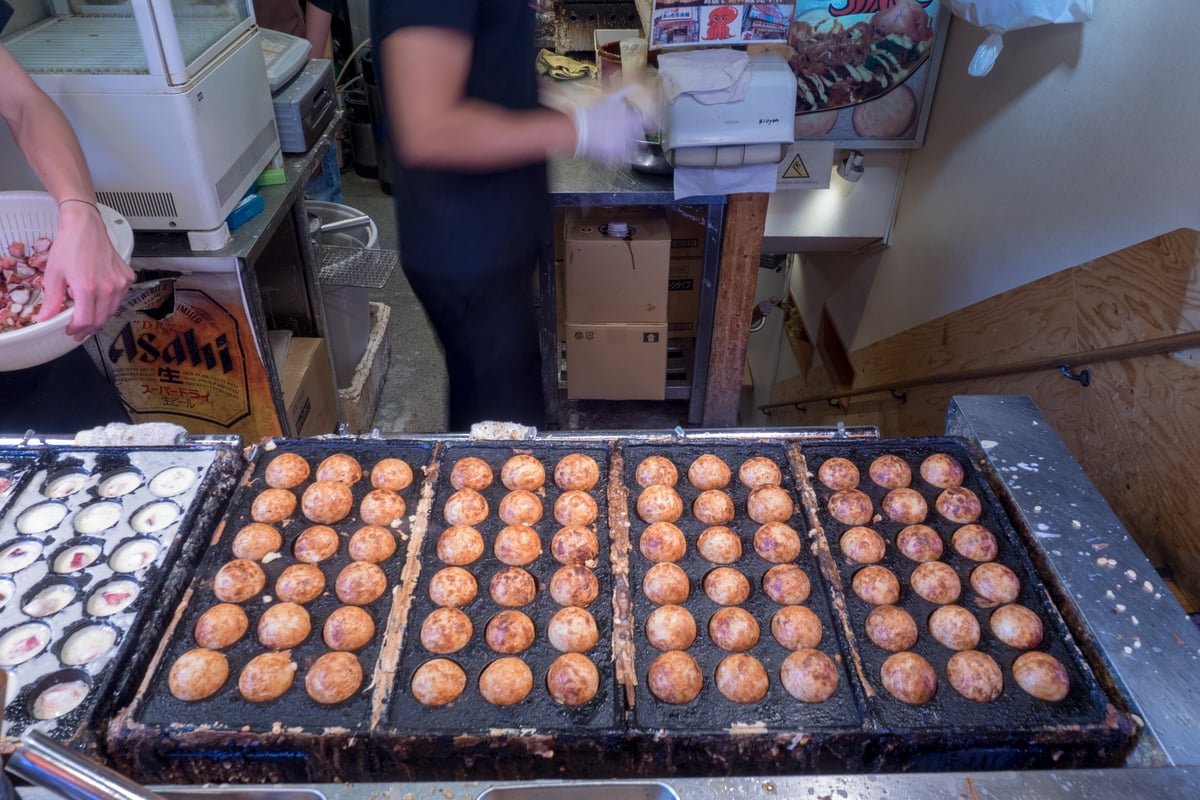
Takoyaki is an Osaka konamon (flour-based dish) made by adding chopped octopus and tenkasu (tempura bits) to a batter of wheat flour mixed with dashi and egg, then grilling it into balls. It is cooked on a special iron plate lined with round hollows and finished so that it is fragrant on the outside and soft and runny inside. The classic way to eat it is topped with sauce, aonori (green laver flakes), and dried fish flakes (kezuribushi). Its roots are said to lie in chobo-yaki, which was popular with children at dagashiya (cheap candy shops) and festival fairs (ennichi) from the late Meiji era through the Taisho era, and in the later rajio-yaki. In the early Showa era, rajio-yaki made with octopus as the filling began to be sold in Osaka City. Aizuya (会津屋) in Nishinari Ward, Osaka City, is known as the originator that created octopus-filled takoyaki in 1935 (Showa 10). At first it was eaten with nothing on it, but thick sauce appeared after the war, and the current style is said to have taken hold then. Many households in the prefecture own a takoyaki maker, and it is loved as the soul food of the people of Osaka Prefecture.
Okonomiyaki (Osaka Style)
Osaka-style Okonomiyaki
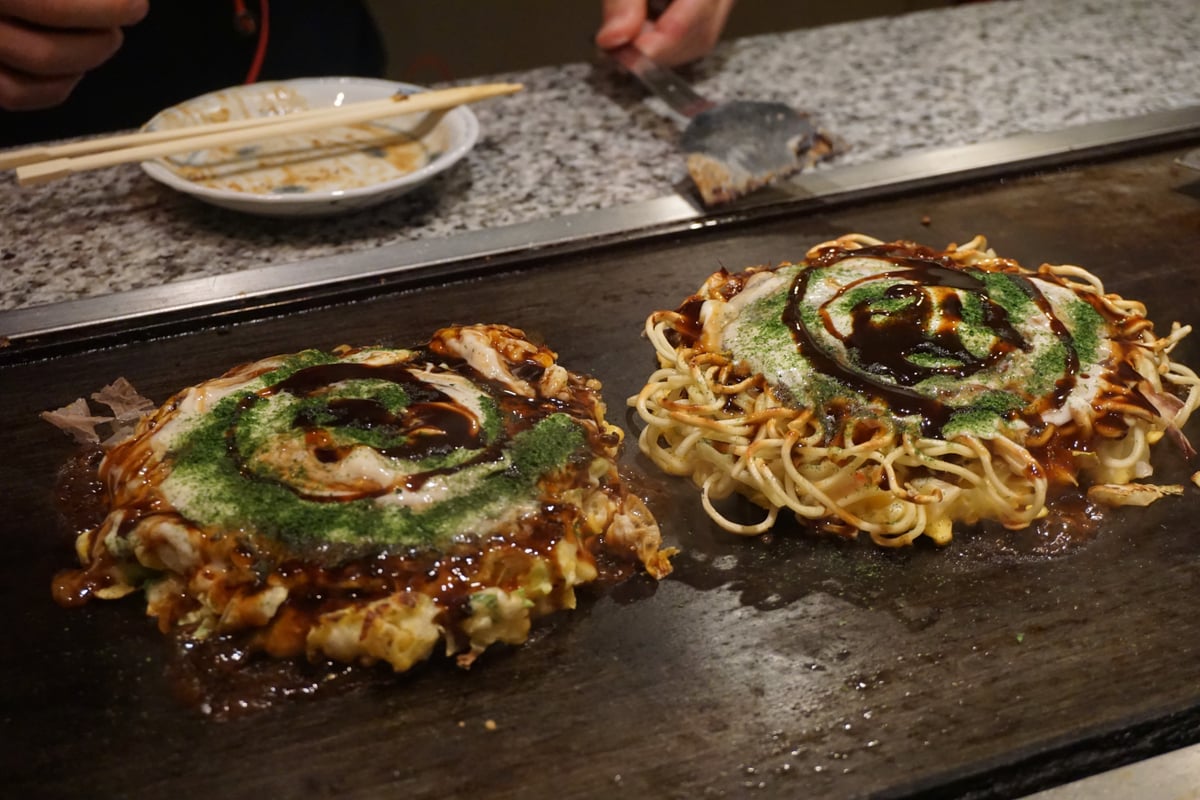
Osaka-style okonomiyaki is a dish in which ingredients such as chopped cabbage, tenkasu (tempura bits), pork, and squid are mixed into a batter of wheat flour mixed with dashi, then cooked flat on both sides on an iron griddle. When it is done, it is brushed with sauce and eaten topped with dried fish flakes (kezuribushi), aonori (green laver flakes), and mayonnaise if desired. Along with takoyaki, it represents Osaka's konamon (flour-based dishes) culture. In the late Meiji era, 'yoshoku-yaki' made with wheat flour, cabbage, and sauce appeared. The snack sold at dagashiya (cheap candy shops) and elsewhere as 'issen yoshoku' is said to have developed after the war into a meal using plenty of pork and vegetables. At first it was made in the kasaneyaki (layered) style, with the ingredients placed on top of the batter, but in Osaka the mazeyaki (mixed) style, in which the ingredients are mixed into the batter before cooking, became widespread. From the end of the Showa 30s into the Showa 40s, chain restaurants promoted it as an Osaka specialty, and it became known nationwide. Modan-yaki, which adds noodles to the batter, is also a way of eating it that was born in Osaka.
Hinase Kaki Okonomiyaki (Oyster Okonomiyaki)
Hinase Kaki Okonomiyaki
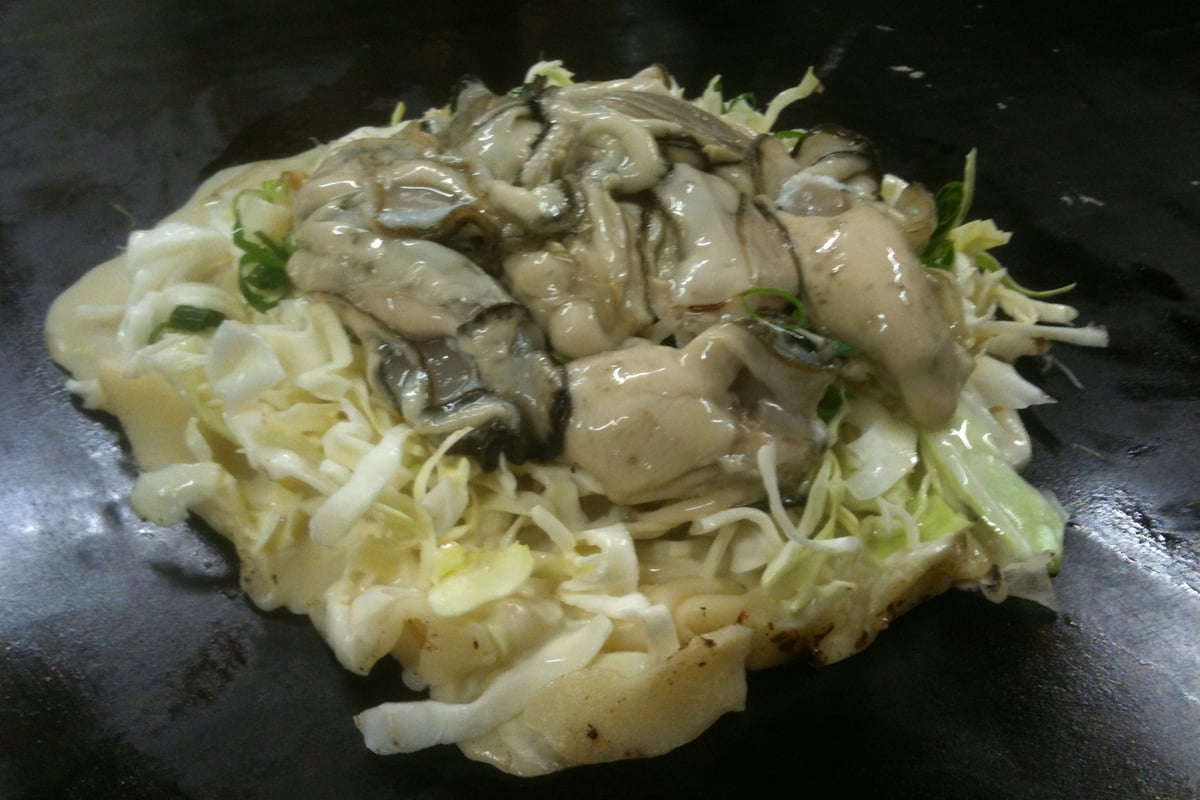
Hinase Kaki Okonomiyaki is a local specialty born in Hinase, Bizen City, Okayama Prefecture: an okonomiyaki savory pancake made generously with raw oysters. Hinase is a fishing town facing the Seto Inland Sea, known as a major production area accounting for more than half of Okayama Prefecture's oyster harvest. Its defining feature is a runny batter combined with a mountain of finely shredded cabbage and fresh raw oysters, grilled together on a griddle; because freshly landed oysters are used, they release little excess moisture and retain a plump, springy texture even after cooking without shrinking. It is said to have originated with fishermen bringing in small or damaged oysters unfit for sale to eat at local okonomiyaki shops, and it became known nationwide after the local 'Hinase Kaki Okonomiyaki Study Group' coined the name 'Kaki-oko' in 2002 and began promotional activities.