Image: Wikimedia Commons
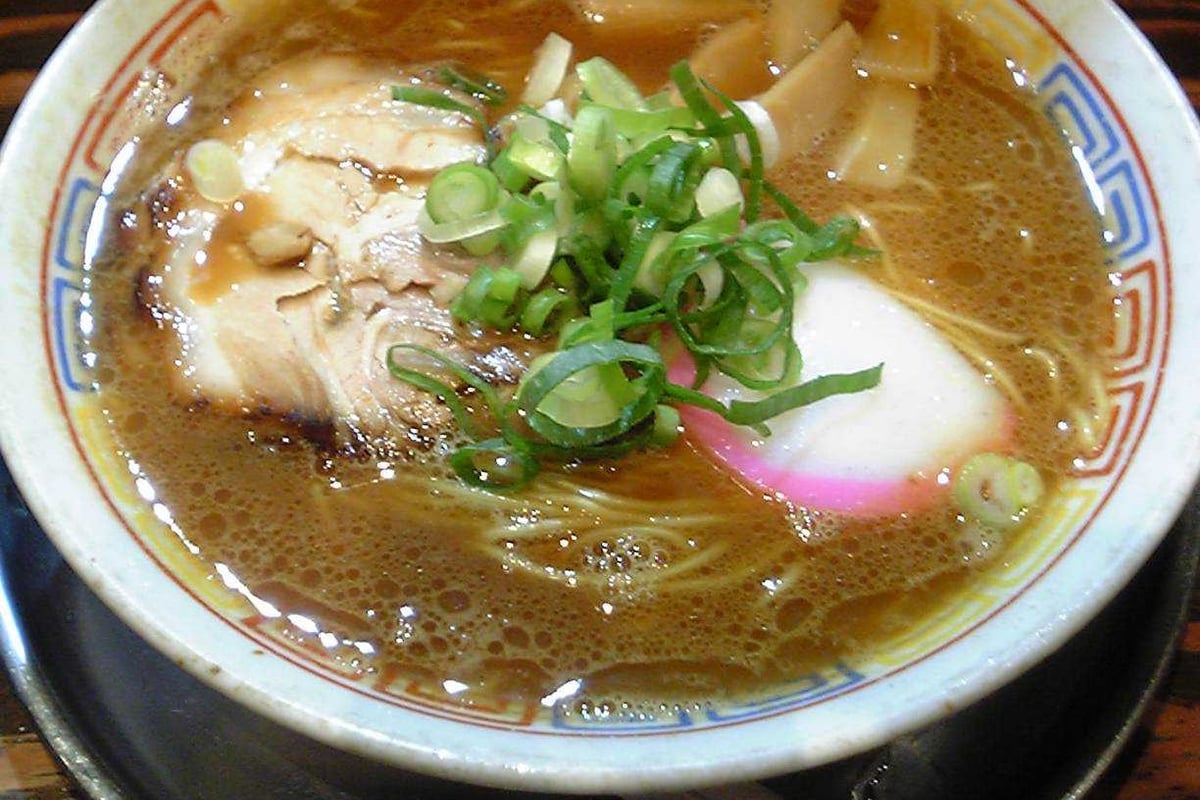
Wakayama ramen is a local ramen eaten mainly in Wakayama City. Locally, it is more commonly called 'chuka soba' than 'ramen.' The standard bowl consists of thin, straight noodles in a broth combining pork bone and soy sauce, topped with chashu (braised pork), menma (seasoned bamboo shoots), green onion, and kamaboko (fish cake) with a swirl pattern. The broth falls broadly into two styles: the Shako-mae style, a clear broth in which the soy sauce flavor comes to the fore, and the Ide style, a rich broth made by simmering pork bones for many hours. Its beginnings are traced to '〇髙' (Marutaka), a yatai (street stall) that operated shortly after the war near the Shako-mae (in front of the depot) stop of the streetcar line. The custom of freely taking hayazushi (pressed mackerel sushi) and boiled eggs from the table and declaring how many you ate when paying is also well known. In 1998, 井出商店 was named the best in Japan on a television program, and the name spread nationwide.
Origin
The yatai '〇髙,' which operated shortly after the war near the 'Shako-mae' stop of the streetcar line that ran through Wakayama City, is regarded as the beginning of Wakayama's chuka soba. It is said that the stall made its dashi by simmering katsuobushi (dried bonito) and jako (small dried fish) in soy sauce, and that its noodles were also homemade. When this flavor became popular, other stalls are said to have imitated it and added '〇' to their shop names. There are also accounts that yatai were already operating at Shako-mae before the war, and there are several theories about when it all began.
History
In 1953 (Showa 28), 井出商店, which began as a yatai, was founded. At first it served the clear broth of the Shako-mae style, but as the shop prospered the broth came to be boiled down, and the shop is said to have made use of that rich flavor by changing its method to simmering the broth for many hours from the start. This was the beginning of the Ide style. In January 1998 (Heisei 10), 井出商店 was named the best in Japan on the television program 'TV Champion.' When it opened a branch at the 新横浜ラーメン博物館 (Shin-Yokohama Ramen Museum) from October of the same year, the line of customers did not break for 238 days, and the name Wakayama ramen spread nationwide.
Features
The Shako-mae style has a relatively light, clear broth in which the soy sauce flavor comes to the fore. The Ide style has a rich, cloudy, brown broth with a strong pork bone umami. Both combine pork bone and soy sauce, and the noodles are basically thin and straight. The toppings are chashu, menma, and green onion, along with a swirl-patterned kamaboko called '千代巻.' One view holds that the presence of a large ham factory nearby, which made pork bones cheap to obtain, is part of the background to how pork bone broth took root.
Main Ingredients
Food Culture
At Wakayama's chuka soba shops, hayazushi (pressed sushi of salt-cured mackerel on vinegared rice), boiled eggs, and maki-zushi (rolled sushi) are set out on the tables. Customers take them freely while waiting for their order or after eating, and when paying they declare how many they ate. It is a way of eating unique to Wakayama and rare anywhere else in Japan.
Famous Shops
井出商店
和歌山県和歌山市田中町4-84
A shop that began as a yatai in 1953 (Showa 28) and is regarded as the originator of the Ide style. It is known for a rich, mellow pork bone and soy sauce broth made by simmering pork bones and chicken bones for many hours. The menu consists only of chuka soba and special chuka soba, which differ in the amount of chashu. Chuka soba is about 800 yen.
元車庫前丸宮中華そば 本店
和歌山県和歌山市毛見1130-3
Founded as a yatai in 1949 (Showa 24), this is one of the shops representing the Shako-mae style. It began business in front of the streetcar depot after the war and later moved to 毛見. You can enjoy a light pork bone and soy sauce broth with a fairly strong soy sauce flavor.
| 柏木製麺所 'Wakayama Arochi Honke Marutaka Chuka Soba' | Packaged noodles that let you make at home the taste of Marutaka chuka soba, regarded as the source of postwar Wakayama ramen. They are made by 柏木製麺所, founded in 1887 (Meiji 20) and said to be the oldest noodle maker in the prefecture, and each box contains noodles and soup for three servings. The pork bone and soy sauce flavor is rich yet refreshing. |
|---|---|
| 中華そば 丸田屋 'Souvenir Chuka Soba' | Chuka soba for take-home gifts from 丸田屋, a popular Wakayama ramen shop, which packs the homemade noodles and pork bone and soy sauce broth it prepares at the shop every day just as they are. Toppings such as chashu, menma, and kamaboko are included, so you can recreate the shop's flavor simply by heating it at home. It is delivered refrigerated. |
FAQ
Q. Are Wakayama ramen and 'chuka soba' different things?
A. They are the same thing. Locally it has long been called 'chuka soba,' and this name is widely used in shop names and on menus. 'Wakayama ramen' is a name that spread after the dish became known nationwide during the boom of 1998.
Q. Are the hayazushi and boiled eggs on the table free?
A. No, they are not free. You may freely take and eat the hayazushi and boiled eggs on the table, but you declare what you ate and pay for it when settling the bill. Hayazushi is pressed mackerel sushi, and many people eat it while waiting for their ramen to be ready.