Tottori Matsuba Gani (Snow Crab of Tottori)
Tottori Matsuba Gani (Snow Crab of Tottori)
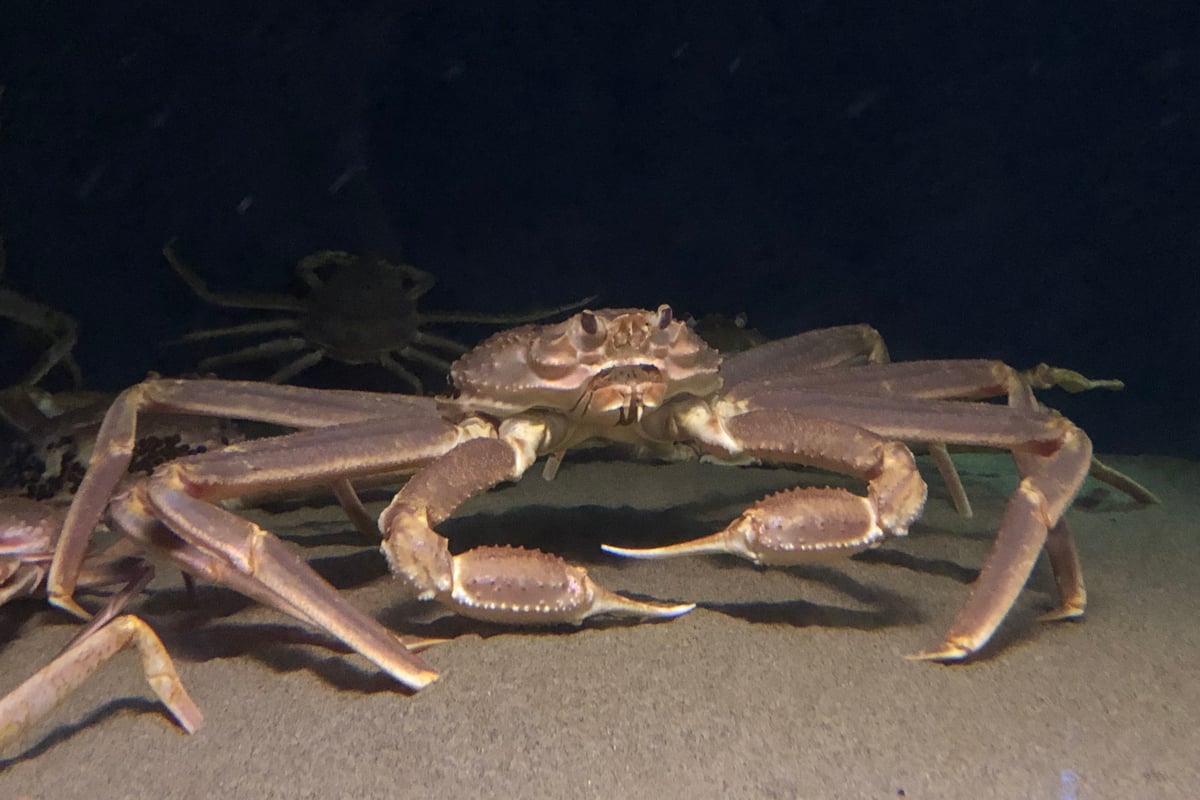
Image: Wikimedia Commons
Matsuba gani (Matsuba crab) is the name used in the San'in region for male snow crabs, and it is the taste that represents winter in Tottori Prefecture. Within the prefecture, it is landed at ports such as Sakai Fishing Port (Sakaiminato City), Tottori Port (Tottori City), and Ajiro Fishing Port (Iwami Town). The fishery opens every year on November 6, and the Matsuba crab season runs until March 20 of the following year. Matsuba crabs with a shell width of 11 centimeters or more landed by the prefecture's offshore bottom trawlers are shipped with tags indicating that they come from Tottori Prefecture. From the 2015 fishing season, sales began of the top-grade brand 'Tokusen Tottori Matsuba Gani Itsukiboshi' (specially selected Tottori Matsuba crab, Itsukiboshi). It has been reported that a single Itsukiboshi crab once fetched 5 million yen at the first auction of the season. Female snow crabs, on the other hand, are locally called oyagani (female snow crab). Egg-bearing oyagani have long been enjoyed at home as 'oyagani miso soup,' simmered with daikon radish.
Origin
There are several theories about the origin of the name 'Matsuba gani.' According to one, the legs or the meat look like pine needles (matsuba); according to another, the name comes from fishers burning pine needles on the beach to roast and eat crabs. According to Tottori Prefecture, one old document in which the name appears is the Tottori Domain's 町目付日記 (diaries of the town inspectors) from Koka 2 (1845). The name is recorded in the menu of a banquet celebrating the raising of the ridgepole of an official residence (御用座敷) in Wakasa Town. In addition, an entry that appears to be a list of gifts to the Tsuyama Domain has also been found in the Tottori Domain's copies of official documents from Tenmei 2 (1782).
History
In 2000 (Heisei 12), the Tottori Prefecture Matsuba Crab PR Promotion Council (鳥取県松葉がにPR推進協議会; now the Tottori Prefecture Fish PR Promotion Council, 鳥取県産魚PR推進協議会) designated the fourth Saturday of November as 'Matsuba Crab Day.' On this day, events are held at fishing ports in Tottori City and Iwami Town. From the 2015 (Heisei 27) fishing season, the highest-grade Matsuba crabs have been sold as 'Itsukiboshi.' At the first auctions, prices of 1.3 million yen in 2016, 2 million yen in 2018 and 5 million yen in 2019 were set, and these record-breaking prices have drawn attention.
Features
Matsuba crab is in season from November to March. Black grains attached to the shell are considered a sign that the crab is fully grown. 'Wakamatsuba gani,' crabs that have only recently molted, have less meat, but their shells are soft and they are relatively affordable. Itsukiboshi crabs are those that meet all five criteria: a shell width of 13.5 centimeters or more, a weight of 1.2 kilograms or more, all legs intact, vivid coloring, and well-packed meat. They are selected by ten expert appraisers and are said to be rare crabs accounting for less than 0.1% of the total.
Main Ingredients
Food Culture
In the eastern part of the prefecture, centered on Tottori City, female oyagani are loved as a taste of home cooking in winter. 'Oyagani miso soup,' in which oyagani are split in half, simmered with daikon radish, and seasoned with miso, is a dish that lets you enjoy the richness of the uchiko and sotoko (internal and external roe) and the kani-miso (crab innards). It is a winter-only taste with a short fishing season, and it is also served in school lunches and at local events.
How It Differs from Home Cooking
At home, the standard is to make miso soup with the relatively affordable oyagani. Crab restaurants, on the other hand, often serve Matsuba crab as a course meal in which it is prepared as sashimi, grilled crab, boiled crab, hot pot, and more, enjoyed in succession through to the closing zosui (rice porridge).
Famous Shops
かに吉
鳥取県鳥取市末広温泉町271
A crab restaurant about a five-minute walk from JR Tottori Station; reservations are required. In winter, it serves courses in which Matsuba crab selected by the owner's discerning eye can be enjoyed as kani-miso, sashimi, grilled, boiled, in hot pot, and in other ways. The closing zosui is named 'tamasui' (魂炊). A 2020 feature article stated that courses start from about 25,000 yen (tax and service charge not included).
鳥取港海鮮市場かろいち
鳥取県鳥取市賀露町西3丁目27-1
A market next to Tottori Port (formerly Karo Port) lined with fresh fish shops that each handle different seafood. In winter, Matsuba crab and oyagani are said to be the main attractions, and you can compare shops before buying. It also offers mail order, and it is reported to accept advance orders for Matsuba crab even before the season opens.
鳥取県立とっとり賀露かにっこ館
鳥取県鳥取市賀露町西3-27-2
A crab aquarium with free admission located near かろいち. It has a 'Matsuba Crab Ranch' (松葉がに牧場) where you can learn about Matsuba crab, and it also exhibits red snow crabs, Japanese spider crabs, and other species. Opening hours are said to be 9:00 to 17:00 (last admission 16:45).
FAQ
Q. Are Tottori Matsuba crab, Echizen crab, and Tajima Matsuba crab different crabs?
A. They are all the same male snow crab; the names and brands differ depending on the region where they are landed. In the San'in region it is called Matsuba crab, and in Fukui Prefecture, Echizen crab. Tottori Prefecture ships its crabs with tags indicating that they come from the prefecture, and in the Tajima region of Hyogo Prefecture, brand tags for each fishing port are also used.
Q. Are oyagani and seko-gani the same thing?
A. Both refer to female snow crabs. They are smaller than the males and are called oyagani in the San'in region, including Tottori Prefecture. In other regions they are called seko-gani, seiko-gani, kobako-gani, and other names. The name oyagani ('parent crab') is said to come from the fact that they carry eggs.