Bouze no Sugatazushi (Whole Butterfish Sushi)
Bouze no Sugatazushi (Whole Japanese Butterfish Pressed Sushi)
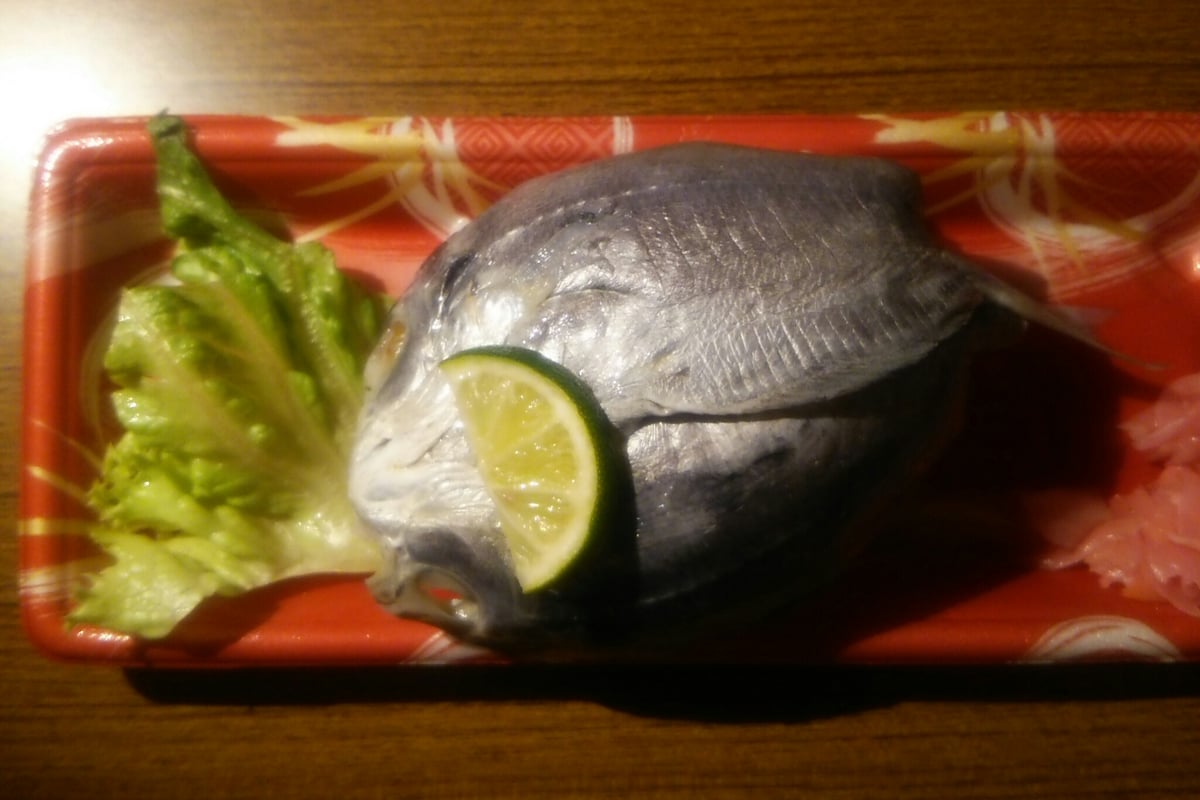
Image: Wikimedia Commons
Bouze no Sugatazushi is a pressed sushi that has been made in Tokushima Prefecture as a feast for autumn festivals. 'Bouze' is the Tokushima name for the white-fleshed fish whose standard Japanese name is ibodai (Japanese butterfish). The bouze is split open along the back, its bones and innards are removed, and it is cured with salt and vinegar before being wrapped around sushi rice shaped to match the size of the fish. Its defining feature is that it is finished in the fish's whole form, from head to tail. Citrus aromas typical of Tokushima are also put to use, for example by adding yuzu vinegar to the vinegar mixture or garnishing with slices of sudachi (citrus). Bouze comes to the coasts of Tokushima Prefecture from summer to autumn and is caught in abundance around the time of the autumn festivals. On festival days it was served alongside sekihan (red bean rice), kakimaze-zushi (mixed sushi) and clear soup. Each household is said to have its own way of making it, but in recent years there have been fewer occasions to make it at home. In autumn, sugatazushi (whole-fish sushi) and nigiri made with bouze are sold at supermarkets, sushi shops and farmers' markets.
Origin
According to materials from Tokushima Prefecture, bouze is a fish that comes to the coasts of Tokushima Prefecture every year, as if on schedule, from summer until around the time of the autumn festivals. The main fishing areas are said to be the coasts of Naruto City, facing the Harima-nada Sea, and of Tokushima City, Komatsushima City and Anan City, facing the Kii Channel. In the past it was cured in vinegar as a preserved food and made into pressed sushi. Because the season when bouze is plentiful coincides with the autumn festivals, it has been handed down as a festival food.
History
According to MAFF 'Uchi no Kyodo Ryori' (Our Local Cuisine), in Tokushima sugatazushi, in which sushi rice is wrapped in fish split open along the back, has commonly been eaten in the autumn festival season. Horse mackerel (aji) and gizzard shad (konoshiro) are also used, but the star is bouze, which was once a high-end fish. In recent years, as bouze catches have declined, it is increasingly made with mackerel or Pacific saury instead. The Tokushima Shimbun reports that even inland areas such as Katsuura Town have a food culture that favors sushi made with vinegar-cured fish.
Features
The gills, eyes and dark, blood-rich flesh (chiai) of the bouze are removed, and the fish is split open along the back, sprinkled with salt and left for a while. It is then soaked in vinegar to firm up the flesh, wrapped around sushi rice shaped to the size of the fish, and weighted so that everything settles together. To keep its shape, the dorsal fin and tail fin are left on. It is also said that soaking it in vinegar for a long time softens the flesh so that even the head can be eaten. Using fragrant vinegars such as sudachi or yuzu gives it a refreshing flavor.
Main Ingredients
Food Culture
At autumn festivals, Bouze no Sugatazushi has been served together with sekihan, kakimaze-zushi, clear soup and amazake (a sweet rice drink). It is also eaten as 'bouze no nigiri,' in which fillets cured with salt and vinegar are pressed together with sushi rice. In autumn, bouze also appears at restaurants and farmers' markets in the prefecture.
How It Differs from Home Cooking
At home, every step from opening the bouze to soaking it in vinegar and weighting it has been done to each family's own taste. With the increase in nuclear families and elderly people living alone, there are fewer occasions to make it at home. Today many people buy it at sushi shops or supermarkets in the form of sugatazushi, nigiri or pressed sushi.
Famous Shops
田舎寿し なか山
徳島県勝浦郡勝浦町三渓下川原
A takeout-only sushi shop on the banks of the Katsuura River. According to a feature in the Tokushima Shimbun, the bouze is salted for about half a day and then cured in vinegar, and finished as sugatazushi that can be eaten from head to tail. Besides bouze in autumn, the shop also makes sushi with seasonal fish, such as amego (red-spotted masu trout) in spring and ayu (sweetfish) in summer.
道の駅くるくるなると おさかな海鮮市場 とと丸
徳島県鳴門市大津町備前島字蟹田の越338-1
A fresh fish shop at a michi-no-eki (roadside station) in Naruto City. In autumn, nigiri sushi made with vinegar-cured bouze is sometimes available, and a visit report from November 2024 says that 'Bouze-zushi' was sold for 390 yen (excluding tax). It comes as nigiri rather than sugatazushi, but it is an easy way to taste bouze in season.
FAQ
Q. What kind of fish is 'bouze'?
A. 'Bouze' is the Tokushima name for the fish whose standard Japanese name is ibodai (Japanese butterfish). It is a white-fleshed fish caught in abundance from summer to autumn, with a light, delicate flavor. Its name varies by region, and some places are reported to call it uboze or shizu. The fresher it is, the firmer the flesh, and the better suited it is said to be for sugatazushi.