Anmochi Zoni (Zoni with Bean-Paste Mochi)
Anmochi Zoni (White Miso New Year Soup with Bean-Paste Rice Cakes)
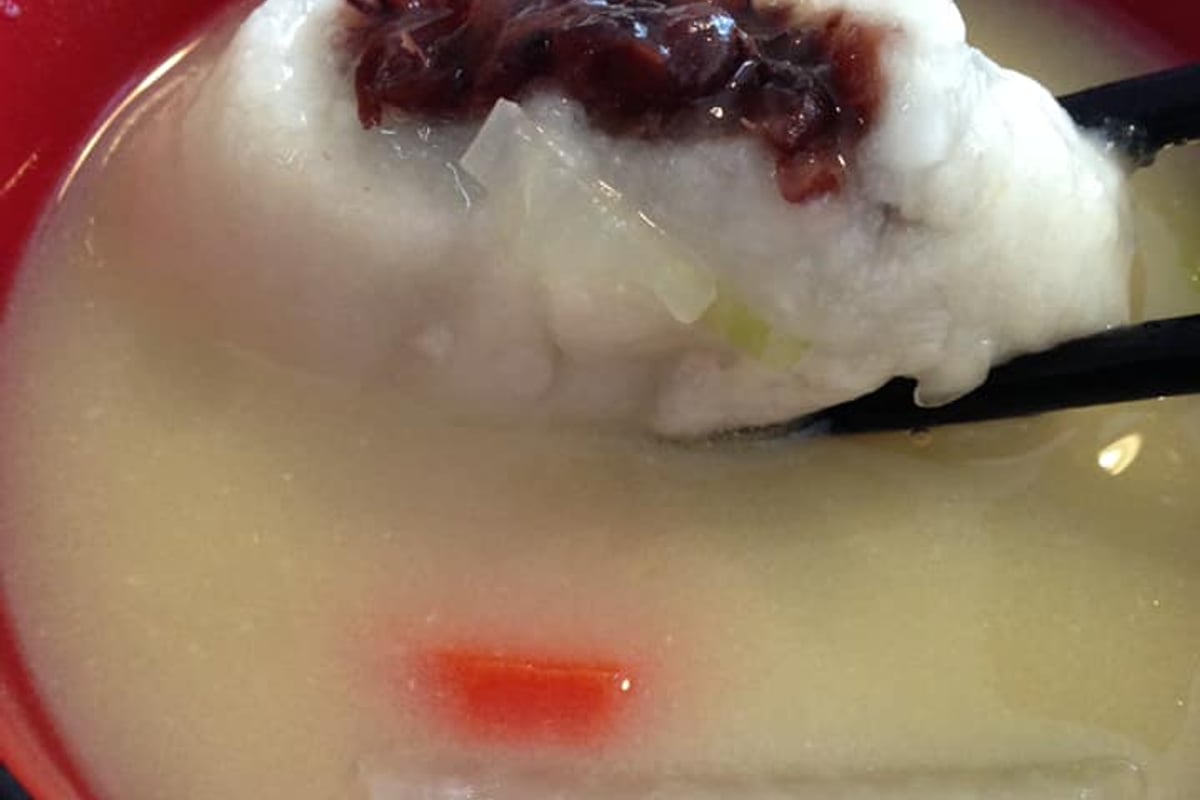
Image: Wikimedia Commons
Anmochi Zoni is a zoni (New Year soup with mochi rice cakes) that has been eaten at New Year in Kagawa Prefecture. Its most distinctive feature is that round mochi filled with anko (sweet red bean paste) are placed in a broth made with white miso. Ingredients include daikon radish and kintoki carrots (a deep red carrot variety) cut into rounds, and depending on the household, taro, burdock root or aburaage (fried tofu) may also be added. With its 'sweet and salty' flavor, combining the sweet bean paste with the saltiness of the white miso, it is known as an unusual zoni even by nationwide standards. It is said to have been born from the wish to enjoy something sweet at least at New Year, in an era when sugar was precious. There are said to be about six kinds of zoni in Kagawa Prefecture, and the combination of white miso and bean-paste mochi is reported to be the most common among them. In a 2025 questionnaire survey, it was ranked second among the Kagawa local dishes people want to eat at New Year. As opportunities to make it at home decrease, it is also served in school lunches in Takamatsu City and elsewhere, passing it on to children.
Origin
In the Edo period, the Takamatsu domain put effort into producing the 'Sanuki Sanpaku' (Three Whites of Sanuki): sugar, salt and cotton. A method for making white sugar was established in Kagawa during the Edo period, but sugar was a luxury item that was even presented to the shogunate, and not something common people could eat in daily life. It is said that, out of a desire to taste sugar at least at New Year, people began putting mochi filled with bean paste into their zoni. As for when it began, there is a theory that it was the Edo period and another view that it was the early Meiji era.
History
Anmochi Zoni has been handed down in Kagawa households as the taste of New Year. The 'Kagawa Prefecture Folklore Map,' compiled by the Kagawa Prefectural Board of Education in 1976, also includes a distribution map of zoni in the prefecture. According to an article based on an interview with a Kagawa Prefecture official, it is mainly eaten in the plains, excluding areas such as Manno Town, Higashikagawa City and Shodoshima Island, and the combination of white miso and bean-paste mochi is said to be common in places such as Takamatsu City. It has also been included in school lunches at elementary and junior high schools in Takamatsu City, and a public relations magazine of the Ministry of Agriculture, Forestry and Fisheries reports that it ranks first in the soup category every year in a questionnaire of third-year junior high school students.
Features
The dashi (broth) is often made from niboshi (dried sardines, called iriko), and 'Ibuki iriko' from Ibukijima Island in Kagawa Prefecture is sometimes used. The daikon and kintoki carrots are said to be cut into rounds as a wish for family harmony. It is common to simmer the mochi in the broth to soften it rather than grilling it, and tsubu-an (chunky bean paste) is said to be the most common filling. Kagawa's white miso, 'Sanuki Shiro Miso,' is a sweet type with a salt content of 6% or less, and it goes well with the sweetness of the bean paste. Aonori (green laver) is sometimes sprinkled on as a finishing touch.
Main Ingredients
Food Culture
In Kagawa, it has been cherished as a dish the whole family eats together at New Year. It is said that people from outside the prefecture are often surprised by the combination of white miso and bean paste. Kagawa University has also run an initiative serving Anmochi Zoni so that students from outside the prefecture can learn about Kagawa's food culture.
How It Differs from Home Cooking
At home, round mochi are simmered in the broth, and the daikon and kintoki carrots are cut into rounds. In school lunches, because round mochi melt easily and are unsuited to cooking in large quantities, small shiratama (rice-flour dumplings) filled with bean paste are used instead. The vegetables are also cut into quarter-rounds (ichogiri) so they are easy to serve, and only the thin part of the kintoki carrots is cut into rounds to convey the meaning.
Famous Shops
甘味茶屋 ぶどうの木
香川県高松市百間町2-1
A sweets café (kanmidokoro) in a shopping arcade in Takamatsu City, introduced as a place where you can eat Anmochi Zoni, a New Year dish, all year round. It puts homemade round mochi filled with sweet bean paste into a broth made with katsuo (bonito) dashi and white miso. Business days and hours may change, so checking in advance is recommended.
FAQ
Q. Is the mochi in Anmochi Zoni grilled before it is added?
A. According to an article based on an interview with a Kagawa Prefecture official, it is common not to grill the mochi but to simmer it directly in the broth until soft. The mochi is added once the vegetables are cooked, and the white miso is dissolved into the broth after the mochi has softened. Methods differ by area and household.
Q. Why is it made with white miso?
A. One explanation is that as the culture of Kamigata (the Kyoto and Osaka region) came into Kagawa, zoni also came to be made in the Kyoto style with white miso. About 80% of the miso made in Kagawa is said to be white miso, and 'Sanuki Shiro Miso' was registered under the national Geographical Indication (GI) system in 2023.