Image: Wikimedia Commons
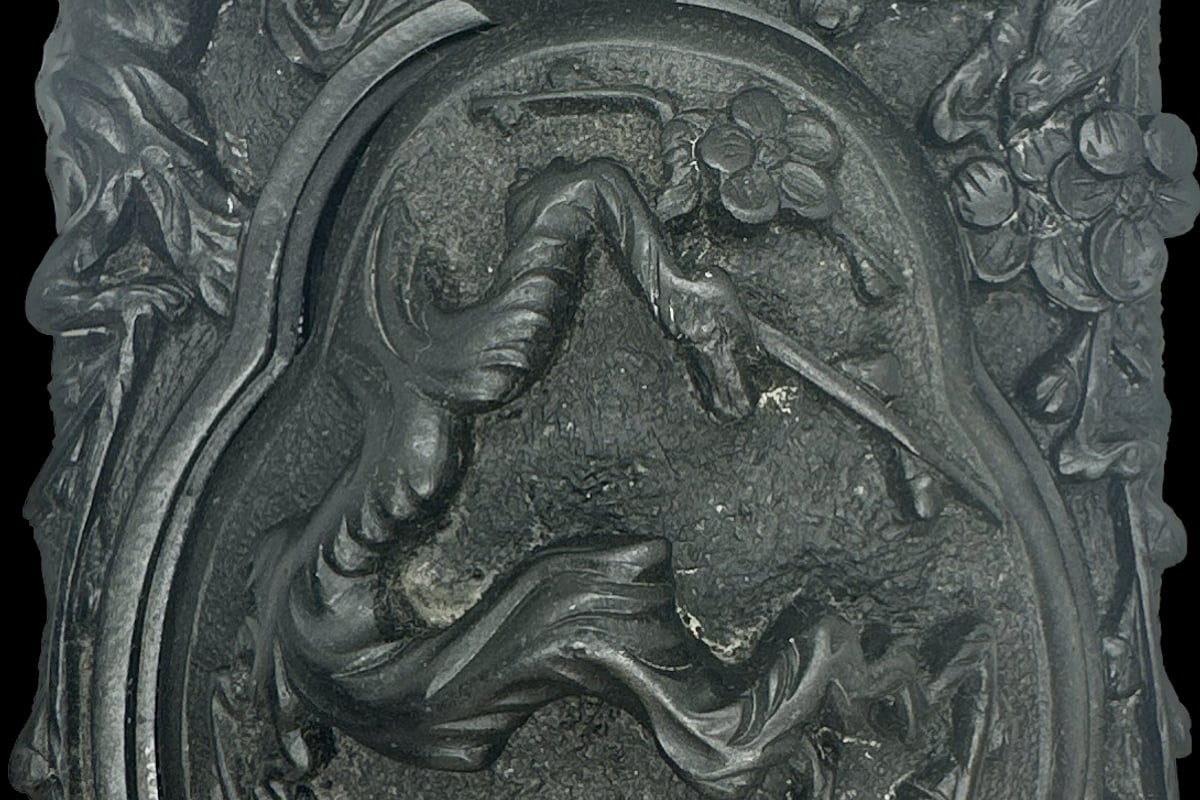
Nachiguro Suzuri are inkstones made in Nachikatsuura, Wakayama Prefecture. Their material, Nachiguro stone, is a black, dense stone that takes on a wet-looking luster when polished. Travelers on the Kumano pilgrimage (Kumano-mode) are said to have taken this stone home as proof of their visit. With the addition of human skill, the stone was reborn as an inkstone. Its moderate hardness and fine-grained texture are said to make the ink blend well, and it has been highly valued by calligraphers since the Edo period. In the early Meiji period, shops selling inkstones are said to have lined the approach leading to Kumano Nachi Taisha and Nachisan Seiganto-ji. Today, 山口光峯堂, located midway along the approach, is the only one carrying on the techniques of hand-carved Nachiguro Suzuri. Production begins with selecting the stone and proceeds through rough carving with chisels, polishing with whetstones, and finishing to a sheen. In 1990 (Heisei 2) Nachiguro Suzuri became a Wakayama Prefecture Governor-Designated Local Traditional Craft.
Origin
Nachiguro stone is a type of hard, black slate. Although its name contains 'Nachi', its main source today is 神川町 in Kumano City, Mie Prefecture. It came to be called by this name because it spread throughout Japan as a souvenir of people who visited Kumano Nachi Taisha, one of the three grand shrines of Kumano (Kumano Sanzan). Travelers of old are said to have taken this glossy black stone home as proof of their Kumano pilgrimage. With the addition of human skill, the stone gave rise to Nachiguro Suzuri.
History
Tracing it back to the days when the stone was a souvenir of the Kumano pilgrimage, its history is sometimes said to reach back to the Heian period. The name 'Nachiguro' is said to appear for the first time in the 'Kii Zoku Fudoki', a topographical record completed by the Kishu Domain in 1839 (Tenpo 10). Inkstones of Nachiguro stone have been prized by calligraphers since the Edo period, and in the early Meiji period inkstone shops lined the stone-stepped approach on Mount Nachi. In 1990 (Heisei 2) they became a Wakayama Prefecture Governor-Designated Local Traditional Craft.
Features
The appeal of Nachiguro Suzuri lies in the jet-black surface of the stone and in how well the ink blends, thanks to the dense texture and moderate hardness of the stone. Making use of the natural shape of the raw stone, the highlights are said to be the balance between the 'oka' (hill), where the ink is ground, and the 'umi' (sea), where the ink collects, as well as the beauty of the curve of the 'tamari' (pool). 'Tamaishi', which form as spheres around a core of a fossil or grain of sand, are harder than the surrounding rock and are only rarely found. 山口光峯堂 uses a precious part of the stone that it calls 'gyoku', and also makes inkstones presented to the Imperial Family.
Techniques
Hand carving
A technique in which many kinds of chisels are used selectively to carve out the sea and hill of the inkstone while making use of the shape of the raw stone. The second generation of 山口光峯堂 is said to have decided, around 1980 (Showa 55) while in their thirties, to switch from machine carving to hand carving. Today this shop is said to be the only one carrying on the techniques of hand-carved Nachiguro Suzuri.
Polishing
The process of polishing the stone over and over, switching between coarse and fine whetstones. This work alone takes about two days, and most of the labor of making an inkstone goes into it. The more the stone is polished, the more the deep black and luster unique to Nachiguro stone are brought out.
Materials Used
Production Process
- 1
Selecting the stone
Inkstone making begins with selecting the raw stone. Among the stones, tamaishi, which form as spheres around a core of a fossil or grain of sand and are harder than the surrounding host rock, are precious stones that are only rarely found.
- 2
Rough carving
Using many kinds of chisels with wooden handles selectively, the craftsperson roughly carves the hill where the ink is ground and the sea where the ink collects, while making use of the shape of the raw stone.
- 3
Polishing
The stone is polished over and over with coarse and fine whetstones. About two days are spent on this work, which takes up most of the time in the whole process.
- 4
Finishing to a sheen
Hand-carved works made from tamaishi are coated with ibota, which is also used as a raw material for candles, to form a protective film. Once the stone is brought to a sheen and finished, the inkstone is complete.
| Main Production Areas |
|
|---|
Artisans & Workshops
山口光峯堂
A shop specializing in inkstones, located midway along the approach leading to Kumano Nachi Taisha in Nachisan, Nachikatsuura. The first generation set up a workshop in Kumano in the early Showa period, and today the shop is run by the second-generation 山口光峯, recognized as a Wakayama Prefecture Meisho (Master Craftsperson), and the third generation. It is said to be the only shop carrying on the techniques of hand-carved Nachiguro Suzuri, and it also makes inkstones presented to the Imperial Family.
How to Buy
- 山口光峯堂 (shop on Mount Nachi)
- Located at 那智山167-2, Nachikatsuura, Wakayama Prefecture, open 8:00 to 17:00 and closed irregularly. Standard inkstones are said to cost from about 6,600 yen, and handmade inkstones from about 11,000 yen. The shop recommends a trial grinding before purchase, and will engrave a name or any characters you like on the item you buy.
FAQ
Q. Where is Nachiguro stone quarried?
A. Although its name contains 'Nachi', its main source today is 神川町 in Kumano City, Mie Prefecture. It is said that it was once also found in the Okumotori mountains, which connect to Mount Nachi, and in the basin of the Kitayama River. Because it spread as a souvenir of visits to Kumano Nachi Taisha, it came to be known by the name Nachiguro.
Q. Can I check how it feels to use before buying?
A. 山口光峯堂 recommends a 'trial grinding' (tameshi-zuri), in which you try grinding ink before buying. The second generation says, 'Places that make the genuine article will always let you do a trial grinding.' You can also watch the production work at the shop.
Q. How do I get to 山口光峯堂?
A. From JR Kii-Katsuura Station, take a Kumano Kotsu bus bound for Nachisan to the last stop (about 28 minutes), then walk about 5 minutes. As it is located on the approach to Kumano Nachi Taisha, you can stop by when visiting the shrine.