Image: Wikimedia Commons
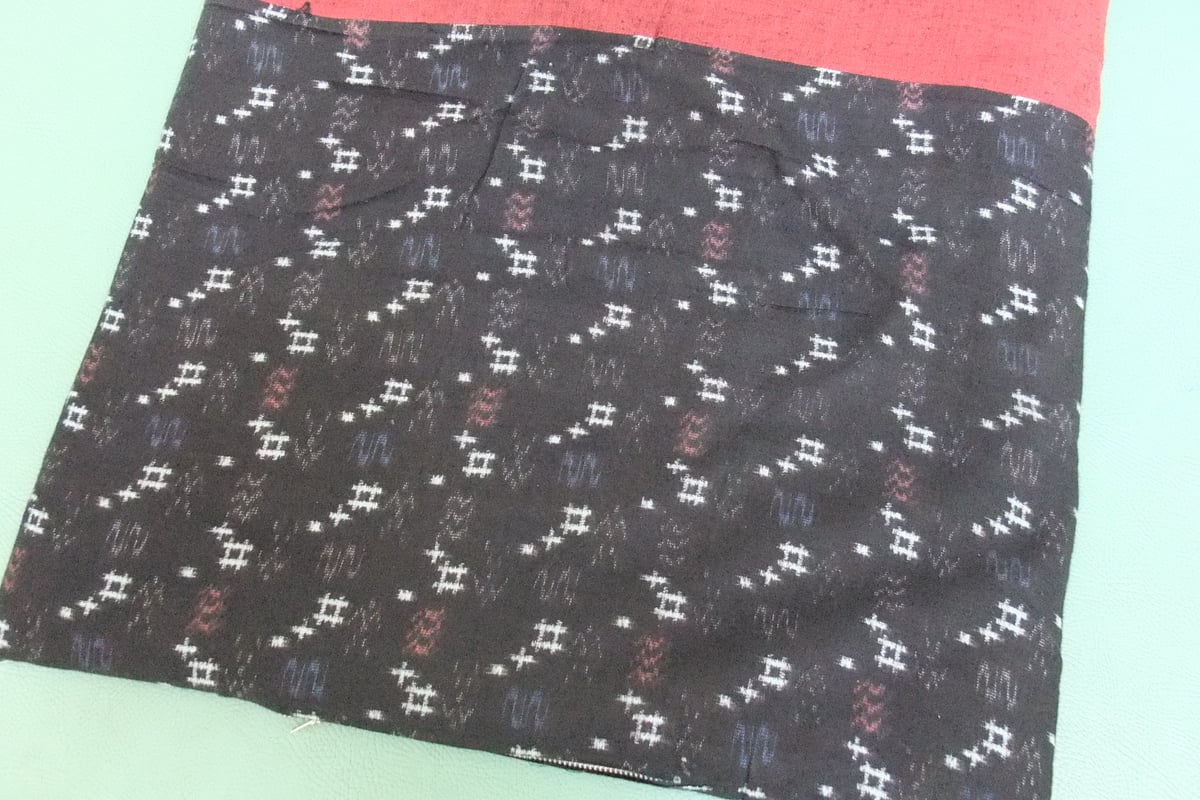
Bingo Gasuri is a cotton kasuri (ikat) fabric that has been woven mainly in Shin'ichi Town and Ashida Town in Fukuyama City, Hiroshima Prefecture. Kasuri refers to a yarn-dyed fabric in which parts of the yarn are bound so that they resist the dye, and the patterns appear when that yarn is woven. Along with Kurume Kasuri of Fukuoka Prefecture and Iyo Kasuri of Ehime Prefecture, it is counted among Japan's 'three great kasuri.' Its appeal lies in simple patterns such as the indigo-dyed igeta (parallel-cross) motif, and because it was durable and comfortable to wear, it was popular throughout Japan for everyday clothing and farm work clothes. In the Showa 30s it became the largest kasuri production area in Japan, and it later also became the foundation of the textile industry that represents Fukuyama. Demand fell sharply with the shift to Western clothing, but a few weavers still continue to weave the fabric on traditional looms. Recently it has been used not only for kimono but also for Western clothing, bags, noren curtains and more. In 1992 (Heisei 4), it was designated a Hiroshima Prefecture-designated Traditional Craft.
Origin
In the Bingo region, Mizuno Katsunari, the first lord of the Fukuyama Domain, encouraged cotton cultivation, and cotton weaving flourished throughout the Edo period. Bingo Gasuri is said to have been devised by 富田久三郎 (Tomita Kyuzaburo), who lived in what is now Ashida Town, Fukuyama City. Inspired by a kasuri fabric shown to him by a wholesaler he did business with, he wrapped the parts of the warp and weft that were to remain undyed with bamboo sheaths, dyed the yarn with indigo, and wove igeta kasuri. Some materials date its invention to Kaei 6 (1853) and others to the Bunkyu era (1861–1864). At first it was also called 'Bunkyu Gasuri.'
History
In the Meiji era, its quality was improved, and under the name 'Bingo Gasuri' it expanded its sales to Osaka and throughout Japan. Production was temporarily halted during the Pacific War but resumed after the war. It reached its peak in the Showa 30s, when more than 200 hataya (weaving workshops) are said to have woven over three million tan (bolts) a year, accounting for about 70 percent of Japan's kasuri. Afterward, demand plummeted with the shift to Western clothing, and the production area's dyeing and sewing skills were passed on to textile industries such as denim and work clothing. In March 2024, the Bingo Gasuri cooperative (備後絣協同組合), which had existed for more than 70 years, was dissolved, and today two weavers are said to continue production.
Features
Bingo Gasuri is a yarn-dyed fabric in which cotton yarn is dyed with indigo and other dyes before weaving. The parts left undyed and white form simple patterns such as igeta. Besides kasuri patterns, there are also striped and checked patterns. The thick cotton fabric is durable and is said to be cool in summer and warm in winter, so it was valued as work clothing for people working in the fields. Today's fabric is made by dyeing slubbed cotton yarn with natural dyes such as indigo, kakishibu (persimmon tannin) and sumi ink. Because it is then woven slowly on old-style Showa-era shuttle looms, it has a simple, warm texture.
Techniques
Kasuri binding
A technique in which the yarn in the parts meant to form the pattern is tightly bound so that the dye cannot penetrate, then untied after dyeing to leave those parts white. 富田久三郎 wrapped the yarn in bamboo sheaths to resist the dye and created igeta kasuri. There are warp kasuri, in which only the warp is bound; weft kasuri, in which only the weft is bound; and warp-and-weft kasuri, in which both are bound.
Weaving on shuttle looms
The fabric is woven on traditional looms that pass the weft by sending a shuttle, called hi, back and forth. Compared with high-speed looms, this takes time and is not suited to mass production. In return, the fabric is said to have a warm texture.
Materials Used
Production Process
- 1
Yarn winding
Cotton yarn is prepared and wound into a form that can be used for binding and dyeing.
- 2
Kasuri binding
Parts of the yarn are bound according to the pattern to create areas that will not take the dye.
- 3
Dyeing
The yarn is dyed with indigo, kakishibu, sumi ink and other dyes.
- 4
Untying and pattern alignment
The bindings are untied, and the yarn is aligned so that the pattern does not shift, then set on the loom.
- 5
Weaving
The fabric is woven on a shuttle loom. From preparing the yarn to finishing the weaving, there are said to be more than 20 steps.
| Main Production Areas |
|
|---|
Artisans & Workshops
森田織物
One of the two weavers that preserve the traditional production methods of Bingo Gasuri and still continue to weave the fabric. It makes fabric using yarn dyed with indigo or kakishibu. On the official website of 備後節織 (Bingo Fushiori), a fabric brand born from Bingo Gasuri, it is introduced as one of the weavers that weave the brand's fabric.
合資会社 橘髙兄弟商会
A weaver that continues to weave Bingo Gasuri together with 森田織物, and it also weaves fabric for 備後節織. It is listed as one of the exhibiting companies in the permanent exhibition hall of the 備後地域地場産業振興センター (Bingo Regional Local Industry Promotion Center) in 東深津町, Fukuyama City.
Official site →How to Buy
- 備後節織 (Bingo Fushiori) by 有限会社番匠
- A fabric brand born from Bingo Gasuri, run by the Bingo Fushiori planning office of 有限会社番匠. It is characterized by slubbed cotton fabric woven by 森田織物 and 橘髙兄弟商会 on old-style shuttle looms. The official website guides visitors to its mail-order page.Where to buy →PR
- 工房 徳元 online shop
- An online shop selling clothing tailored from Bingo Gasuri fabric. Its Bingo Gasuri category includes tops, bottoms, dresses, outerwear and more. It offers items in fabrics suited to the season: yoryu crepe and linen blends for spring and summer, and thick cotton for autumn and winter.Where to buy →PR
Hands-on Experiences
福山市しんいち歴史民俗博物館
広島県福山市新市町大字新市916
A city-run museum that puts effort into preserving and making use of Bingo Gasuri. Articles in travel media introduce its displays of the kasuri production process, tools and looms. Admission is free (special exhibitions may charge a fee), and it is open from 9:00 to 17:00. It is closed on Mondays (or the following day if Monday is a public holiday).
View details →FAQ
Q. Which are Japan's 'three great kasuri'?
A. They are Kurume Kasuri (Fukuoka Prefecture), Iyo Kasuri (Ehime Prefecture) and Bingo Gasuri (Hiroshima Prefecture). There are kasuri production areas in many other places as well; in the Chugoku region, Yumihama Gasuri, Hirose Gasuri and Kurayoshi Gasuri of San'in and Sakushu Kasuri of Okayama are well known.
Q. Is there a connection between Bingo Gasuri and Fukuyama's denim?
A. Fukuyama City's materials describe the city's textile industry as having flourished from Bingo Gasuri. They explain that the dyeing and sewing skills developed through kasuri making were passed on to the region's apparel industry, including denim and work clothing.