Yamaguchi Uiro (Bracken Starch and Sweet Bean Cake)
Yamaguchi Uiro (Bracken Starch and Sweet Bean Cake)
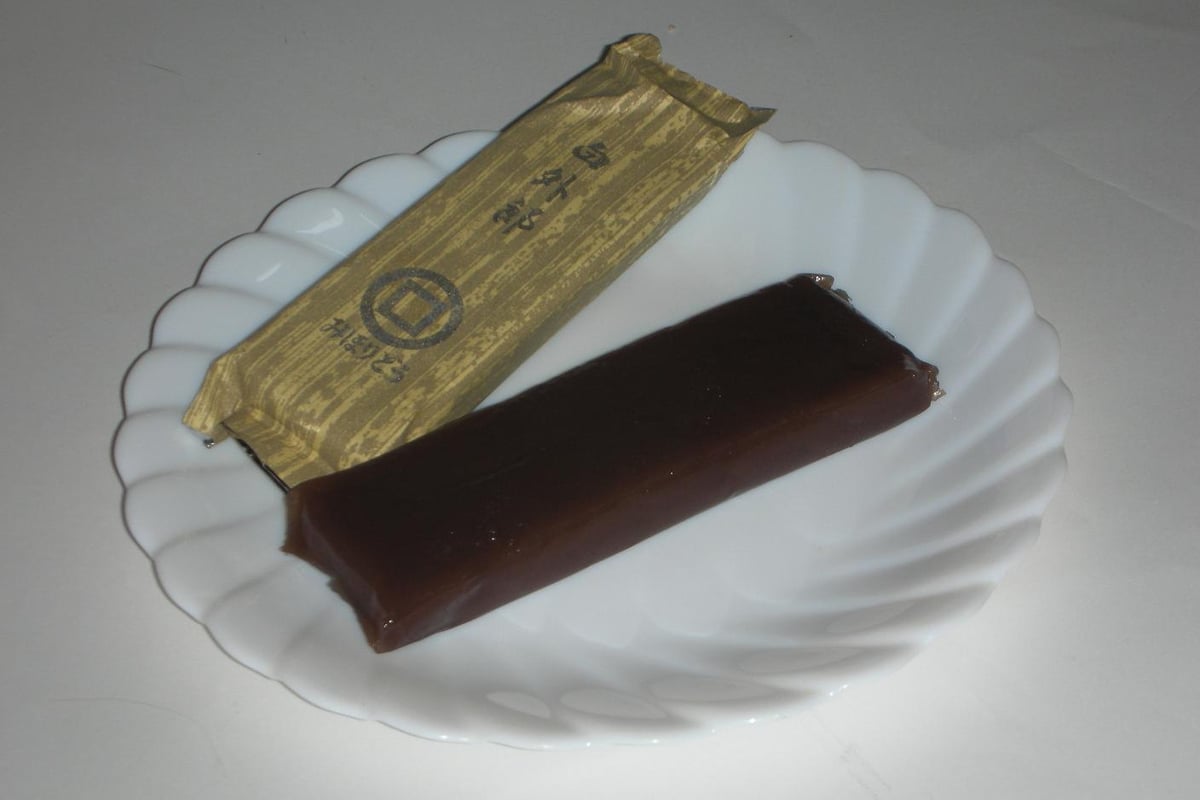
Image: Wikimedia Commons
Yamaguchi Uiro is a steamed confection made mainly in Yamaguchi City. 'Warabi-ko' (warabi, or bracken, starch), extracted from the roots of bracken, is kneaded together with sweet azuki bean paste, wheat flour and sugar, then steamed. Compared with the uiro of Nagoya and other places, which is made with rice flour, it has a bouncy, jiggly springiness and melts smoothly in the mouth, with a texture close to warabi-mochi. The Ministry of Agriculture, Forestry and Fisheries' 'Uchi no Kyodo Ryori' (Our Local Cuisine) introduces its smoothness, which locals describe as 'ottori' (gentle and mellow). Its origins are said to date back to the Muromachi period, and it has been handed down in the town of Yamaguchi, which was called the 'Kyoto of the West' under the Ouchi clan. The taste of the uiro shop 福田屋 (Fukudaya), which operated in Ouchi Mihori from the Edo period, is said to have been passed on to present-day shops such as 御堀堂 (Mihorido) and 豆子郎 (Toshiro). Besides being served with tea, it is popular as a souvenir, a gift and a return gift for guests (hikidemono), and it can also be bought at shops in the prefecture's shinkansen stations.
Origin
The name 'uiro' is said to derive from Chen Shunzu (陳順祖), who had held the Yuan dynasty official post of 'yuanwailang' (員外郎), coming to Japan, and his descendants taking the name Chin Uiro (陳外郎). A medicine compounded by the Uiro family came to be called 'uiro,' and the name was later given to the confection as well. 御堀堂 (Mihorido) states that 'shiro uiro' (white uiro) was made at Fukudaya in Ouchi Mihori during the formative period of Ouchi culture. There are various theories about why warabi starch is used, such as that it served as a substitute in Yamaguchi, where much high-quality warabi starch was produced, at a time when rice was precious.
History
The oldest confirmed record is the banquet menu with which the Hagi Domain entertained the shogunate's kunimetsuke (provincial inspectors) in 1654 (Joo 3), at which uiro was served as 'ai no okashi' (a sweet served between courses). This record also lists 'warabi no sen' (bracken starch) as an ingredient. In the Edo period, uiro was made by Fukudaya in Ouchi Mihori and was highly valued by the Hagi Domain. Even in the early Showa era, 'Yamaguchi uiro' meant Fukudaya's, but the shop later closed, and its method is said to have been passed on to shops such as 御堀堂 (Mihorido), founded in 1927 (Showa 2).
Features
Warabi starch is kneaded with sweet azuki bean paste, wheat flour, sugar and other ingredients, poured into molds and steamed in a seiro (bamboo steamer). The dough is glossy and translucent, and it is characterized by a bouncy springiness and a soft, melting texture. Because it hardens if chilled suddenly in the refrigerator, it is said to be best to let it cool at room temperature. 'Nama uiro' (fresh uiro), simply wrapped in paper straight from the steamer, keeps for only two to three days, and some shops do not sell it by mail order, so it is considered something to enjoy in Yamaguchi itself.
Main Ingredients
Food Culture
Besides being eaten with tea in everyday life, it has also been used as a souvenir, a gift and a wedding return gift (hikidemono). The Yamaguchi-born poet Nakahara Chuya is said to have taken uiro back to Tokyo as a gift every time he returned home. It is sometimes served in school lunches as a taste of the hometown, and some shops offer seasonal uiro, such as cherry blossom in spring and chestnut in autumn.
Famous Shops
御堀堂 本店
山口県山口市駅通り1-5-10
An uiro shop founded in 1927 (Showa 2), regarded as a long-established maker that inherited Fukudaya's method. It makes three kinds with warabi starch and house-made bean paste, shiro (white) uiro, kuro (black) uiro and matcha uiro, and also sells nama uiro wrapped in tora-gami paper straight from the steamer. On the official online shop, prices start from about 750 yen (tax included) for a pack of five small pieces.
View details →豆子郎 総本店 茶藏唵(さくらあん)
山口県山口市大内御堀一丁目1番3号
Toshiro (豆子郎) is a confection devised after World War II by 田原美介, based on Yamaguchi Uiro. Its name is said to come from the fact that it was made by a 'shiroto' (amateur) who was not a confectioner, and that it is a 'ko' (child) born from uiro. The main store has a tearoom overlooking the Japanese garden '大内四季庭' (Ouchi Four Seasons Garden), and freshly steamed suzushi (生絹) Toshiro is available only for pickup at the store.
View details →本多屋 本店「懐古庵」
山口県山口市駅通り1丁目4番5号
Started in 1917 (Taisho 6) as a grocery and general goods store in front of Yamaguchi Station, it later took up making and selling uiro. Its year-round products come in three kinds, mame (bean) uiro, koshian and matcha, and there are also seasonal items such as cherry blossom in spring and chestnut in autumn. An uiro-making experience (for three or more people, reservation required) starts from about 1,500 yen per person.
View details →| Uiro, Vacuum-Packed (御堀堂) | Uiro from 御堀堂 (Mihorido), vacuum-packed so that it keeps longer. It comes in three kinds, white, black and matcha, and the official online shop lists a pack of five small pieces at about 750 yen (tax included) and a pack of three bars at about 890 yen. Its best-before period is about one week, and it can also be bought at the company's own shops at Shin-Yamaguchi Station and Yamaguchi Ube Airport.Where to buy →PR |
|---|---|
| Renji Toshiro (簾子豆子郎) | Toshiro steamed with beans scattered through it, made to keep longer by a sealed package that can be heat-sterilized, devised by the founder. It comes in two kinds, azuki and matcha, and warming it in a microwave or in hot water is said to give it a texture close to freshly steamed. On the official online shop, 8 bags containing 16 pieces cost about 3,320 yen (tax included).Where to buy →PR |
FAQ
Q. What is the difference from Nagoya's uiro?
A. Nagoya's uiro is made by adding sugar and other ingredients to rice flour and steaming it, whereas Yamaguchi Uiro uses warabi starch as its main ingredient and has azuki bean paste kneaded in. As a result, Nagoya's has a chewy, rather heavy texture, while Yamaguchi's has a bouncy springiness and melts smoothly in the mouth. Both names are said to derive from the Uiro family.