Shodoshima Shoyu (Soy Sauce)
Shodoshima Shoyu (Wooden-Barrel Soy Sauce of Shodo Island)
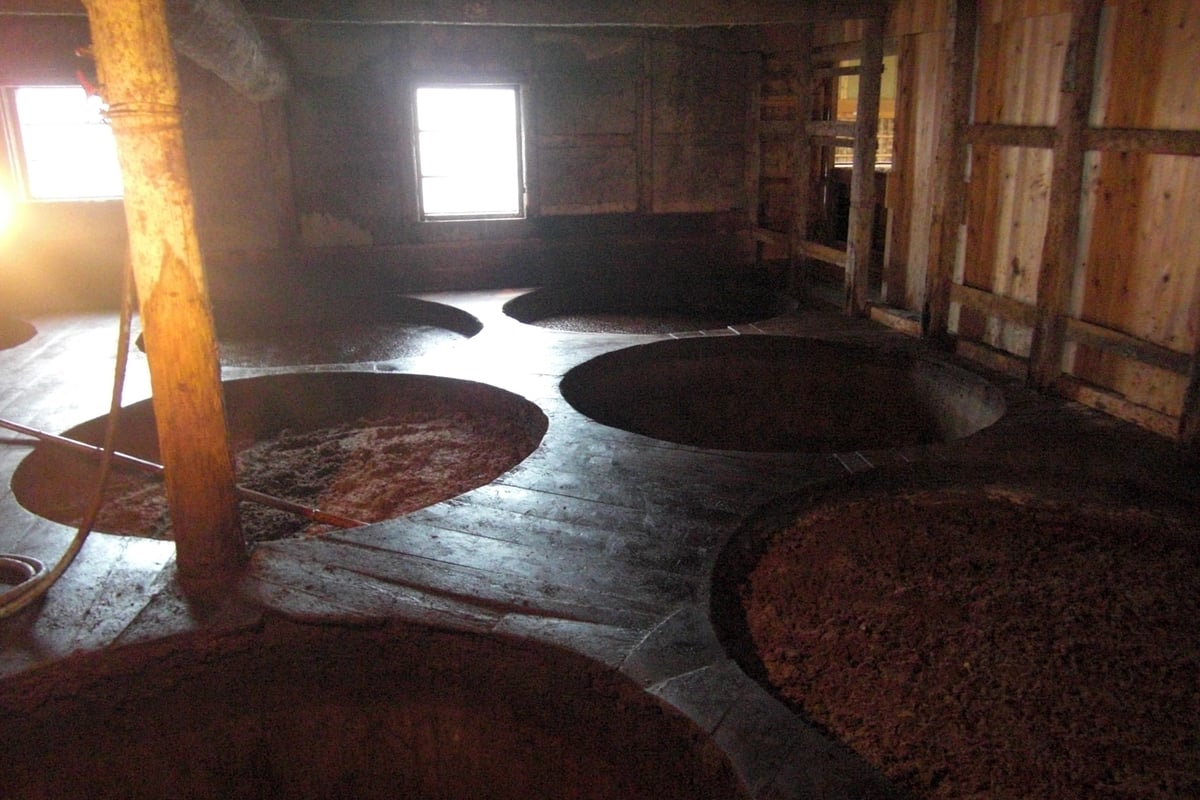
Image: Wikimedia Commons
Shodoshima Shoyu is soy sauce brewed on Shodoshima Island in Kagawa Prefecture. Shodoshima has long been a producer of good salt, and the method of making soy sauce is said to have been introduced from Yuasa in Kishu (present-day Yuasa Town, Wakayama Prefecture) in the Bunroku era (1592–1596) of the Azuchi-Momoyama period. At its peak in the Meiji era, the island is said to have had about 400 soy sauce breweries. About 20 breweries still continue to make soy sauce today. A distinctive feature is that, even now when most soy sauce is made in tanks of stainless steel and other materials, many breweries still preserve the traditional method of slowly maturing moromi (fermenting mash) in large cedar wooden barrels (kioke). In the eastern part of the island, from Umaki to Noma in Shodoshima Town, soy sauce breweries and tsukudani factories are concentrated in an area called 'Hishio no Sato.' Many buildings registered as national Registered Tangible Cultural Properties remain in its streets, where the aroma of soy sauce drifts through the air.
Origin
Shodoshima has long been an island where high-quality salt could be obtained. According to explanations such as those at マルキン醤油記念館 (Marukin Soy Sauce Museum), the method of making soy sauce was introduced from Yuasa in Kishu during the Bunroku era, after which soy sauce brewing flourished. It is said that soy sauce presented to Toyotomi Hideyoshi was also made here. It is also explained that in the Edo period salt came to be in surplus nationwide, and the island's industry shifted from salt making to soy sauce brewing. However, no reliable record indicating when the method was introduced has been confirmed, and it is told as a traditional account.
History
Soy sauce brewing developed greatly from the Edo period through the Meiji era, and at its peak there are said to have been about 400 breweries. At the 3rd National Industrial Exhibition in 1890 (Meiji 23), the island's soy sauce and somen makers placed advertisements for their exhibits. In 1907 (Meiji 40), several breweries joined together to found マルキン醤油 (Marukin Shoyu). During the food shortages after World War II, people began making tsukudani (foods simmered in soy sauce), which became another of the island's specialties.
Features
What makes Shodoshima distinctive is that soy sauce brewed in wooden barrels (kioke) is still made here. In cedar barrels about 2 m in both height and diameter, the moromi is matured over one to two years. Each brewery's own yeasts and lactic acid bacteria are said to live in the tiny pores of the barrel staves. Of the 4,500 to 4,700 wooden barrels remaining in Japan, about 1,100 are said to be on Shodoshima. Some breweries also make 'saishikomi shoyu' (double-brewed soy sauce), in which finished soy sauce is brewed again with additional raw ingredients.
Main Ingredients
Food Culture
In Hishio no Sato, the aroma of moromi drifts through the air as you walk among the soy sauce breweries. Tsukudani making also thrives alongside soy sauce, and tsukudani is popular as a specialty of the island. Hishio no Sato is said to have about 90 national Registered Tangible Cultural Properties, and there are brewery tours as well as shops where you can enjoy soft-serve ice cream and pudding made with soy sauce.
Famous Shops
マルキン醤油記念館
香川県小豆郡小豆島町苗羽甲1850
A museum that opened in 1987 in a renovated soy sauce factory built in the early Taisho era. The building is a national Registered Tangible Cultural Property. It displays soy sauce making tools and history, and in the neighboring brewery you can see wooden-barrel brewing through a window. Admission is said to be about 500 yen for adults.
ヤマロク醤油
香川県小豆郡小豆島町安田甲1607
A soy sauce brewery founded about 150 years ago, whose moromi storehouse built in the early Meiji era is a national Registered Tangible Cultural Property. It is said that you can tour the moromi storehouse for free without a reservation. Because the soy sauce microbes are vulnerable to natto bacteria, visitors are asked not to eat natto on the morning of their visit.
| Tsurubishio (鶴醤, ヤマロク醤油) | The flagship product of ヤマロク醤油 (Yamaroku Shoyu), a soy sauce made with domestic whole soybeans and wheat and brewed in wooden barrels. It is made over about four years using the 'saishikomi' (double-brewing) method, in which soy sauce that has already been matured once is brewed again with additional soybeans and wheat. A tourist guide lists it at about 810 yen for 145 ml. |
|---|---|
| Okejikomi Koikuchi Jun (桶仕込濃口 純, 正金醤油) | A koikuchi (dark) soy sauce brewed in wooden barrels by 正金醤油 (Shokin Shoyu) in the Umaki district of Hishio no Sato. It is sold in a 360 ml size. The company's moromi storehouse (moromigura) has been certified as a Heritage of Industrial Modernization and is also a national Registered Tangible Cultural Property. |
FAQ
Q. How does soy sauce made in wooden barrels differ from ordinary soy sauce?
A. About 99% of soy sauce today is made in tanks of stainless steel, FRP (fiber-reinforced plastic), concrete and so on. In wooden barrels, yeasts and lactic acid bacteria live in the tiny pores of the staves, and this is said to give each brewery a different flavor. Because the number of craftspeople who can make wooden barrels has declined, an effort to make new barrels has continued since 2012 at the call of ヤマロク醤油 (Yamaroku Shoyu).
Q. Where is 'Hishio no Sato'?
A. It is the name for the area from Umaki to Noma in Shodoshima Town, in the eastern part of Shodoshima Island. There is a 'Shoyu-gura Dori' (Soy Sauce Brewery Street) lined with soy sauce breweries and tsukudani factories, and walking paths have been laid out. The 'Umaki' and 'Marukin-mae' stops of the local bus line are nearby.