Shippoku Cuisine (Nagasaki Banquet Cuisine)
Shippoku Ryori (Nagasaki Banquet Cuisine)
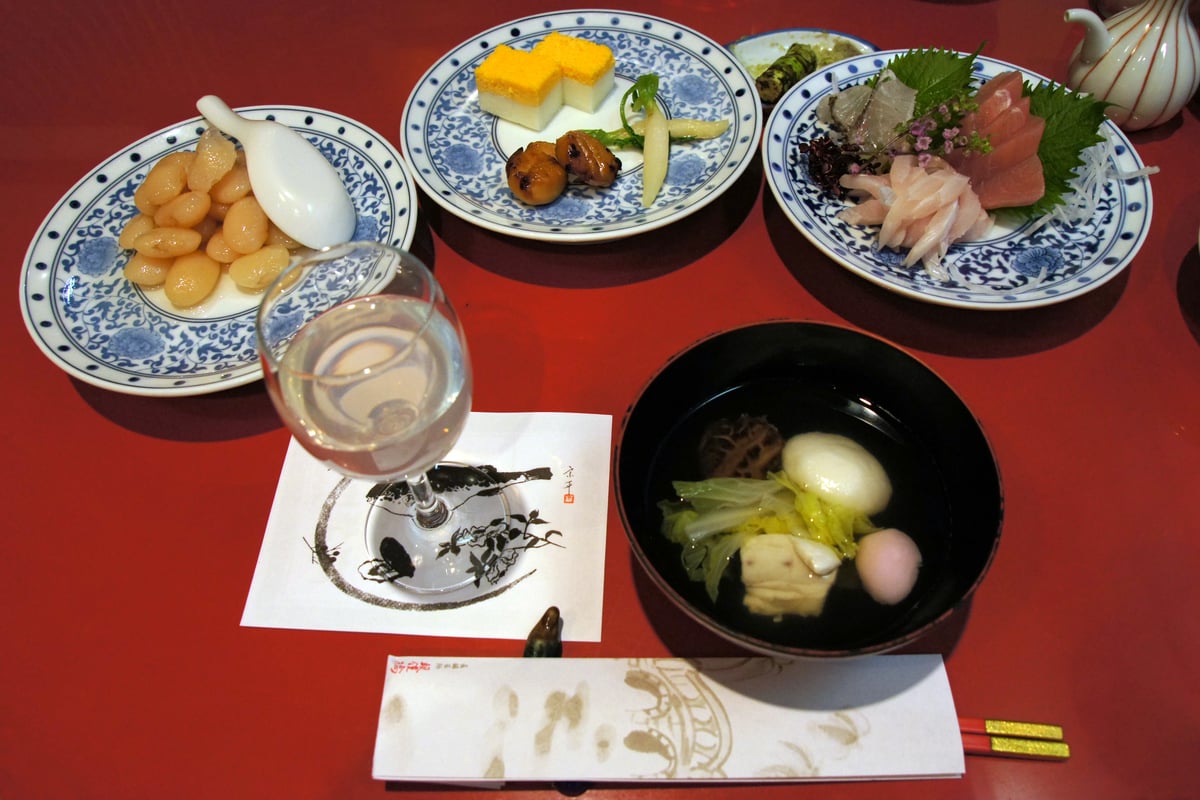
Image: Wikimedia Commons
Shippoku cuisine (shippoku ryori) is a banquet cuisine born in Nagasaki. Because it blends the food cultures of Japan, China and the West, including the Netherlands, it is also called 'wakaran' cuisine (from the characters for Japan, China and Holland). Diners sit around a red-lacquered round table and serve themselves from large platters and bowls directly with their own chopsticks (jikabashi). Gathering around the same dishes with no distinction between host and guest or between ranks is said to be a form of hospitality unique to Nagasaki. The banquet begins with the proprietress (okami) saying 'Please have the ohire,' and guests taste a clear soup containing a sea bream fin before making a toast. This is followed by small dishes such as sashimi, then medium bowls and large bowls, and the meal ends with a sweet red bean soup (oshiruko) called umewan. Dishes that reflect the history of trade are served, such as tobani (braised pork belly), which came from China, and hatoshi (shrimp toast), made by sandwiching minced shrimp between slices of bread and deep-frying it. Today it is mostly enjoyed at ryotei (traditional Japanese restaurants), but it is also made at home for New Year and celebrations.
Origin
In the word shippoku, the first character (卓) is said to mean a table and the second (袱) a cloth spread over a table. According to Nagasaki City, it is said to have originally been a cuisine created by Chinese people living in the Tojin Yashiki (Chinese quarter) to entertain Japanese and Westerners. It spread to ordinary households to become Shippoku cuisine, and eventually turned into a feast served at ryotei. It is also said that the version handed down in temples became a vegetarian cuisine called fucha ryori. Some points about the origin of the word remain unclear.
History
Even during the period of national seclusion (sakoku), Nagasaki was the gateway for trade with China and the Netherlands. It is said that as Chinese people who came on Chinese trading ships lived in the town, Chinese cooking spread into Nagasaki homes as well. The cuisine took in Japanese, Chinese and Dutch elements and grew into a banquet cuisine unique to Nagasaki. It is said that in the late Edo period, shippoku restaurants also became fashionable in Edo. The low-legged, red-lacquered round tables used by the Chinese in Nagasaki are described as the prototype of the Japanese 'chabudai' (low dining table).
Features
The order in which dishes are served is more or less fixed. It begins with the ohire soup, followed by small dishes such as sashimi and vinegared dishes, then medium bowls, large bowls, simmered dishes, rice, mizugashi (fruit) and umewan. The medium bowls include tobani, which is braised pork belly, and hatoshi, whose name is said to come from 'to-shi' (多士), meaning toast. 'Nagasaki tempura,' with a seasoned batter, is another standard dish. Although the order is common, the specific dishes are said to vary from restaurant to restaurant.
Main Ingredients
Food Culture
Shippoku cuisine also appears at milestones in the lives of Nagasaki people. Wedding receptions sometimes feature a shippoku-style menu, and it may be ordered as catering (shidashi) for ceremonial occasions such as weddings and funerals. The cuisine also makes use of Nagasaki's seasonal produce: Katafuchi turnips (red turnips), available only in November and December, are described as being used as a garnish for the small dishes.
How It Differs from Home Cooking
At ryotei, Shippoku cuisine is served as a long series of dishes, from the ohire soup to umewan, filling a red-lacquered round table. At home, on the other hand, people are said to often make dishes such as tobani, hatoshi and Nagasaki tempura for New Year and celebrations, arranging them in their own family's way.
Famous Shops
史跡料亭 花月
長崎県長崎市丸山町2-1
A ryotei said to have been founded in 1642 (Kan'ei 19), it is a prefecture-designated historic site that inherits the building and garden of 'Hikitaya' in the former Maruyama pleasure quarter. Its official website lists Shippoku cuisine from 23,760 yen per person for dinner and from 14,520 yen for lunch (including tax and service charge). Prices are subject to change.
View details →料亭 一力
長崎県長崎市諏訪町8-20
A ryotei founded in 1813 (Bunka 10), known for its four-story wooden building on Teramachi-dori. Travel guides introduce the lunch-only mini shippoku 'Himeju Shippoku' at 6,050 yen and dinner Shippoku cuisine from 15,840 yen. Reservations are required for both lunch and dinner. Prices are subject to change.
View details →長崎卓袱浜勝 長崎総本店
長崎県長崎市鍛冶屋町6-50
A shippoku restaurant a few minutes' walk from the Shianbashi tram stop. While many shippoku restaurants require reservations, travel guides introduce it as a place that also has menu options you can enjoy casually without a reservation. It is easy to visit even for those trying Shippoku cuisine for the first time.
View details →料亭御宿 坂本屋
長崎県長崎市金屋町2-13
A ryotei inn that began as an inn in 1894 (Meiji 27). It is described as being visited by many locals for its tobani, an essential part of Shippoku cuisine. Shippoku cuisine requires a reservation for two or more people and is introduced as starting at 4,620 yen for lunch and 13,200 yen for dinner. Prices are subject to change.
View details →FAQ
Q. Why does Shippoku cuisine begin with the 'ohire' soup?
A. Each ohire bowl contains one sea bream fin. It is said to express the spirit of hospitality that a whole sea bream was used for each guest. For this reason, it is customary to drink the soup after the proprietress says 'Please have the ohire,' and then make a toast.
Q. How do you serve yourself from the large platters?
A. The shippoku way is said to be 'jikabashi': taking food directly with your own chopsticks rather than using serving chopsticks. This reflects the idea of gathering around the same dishes without distinction between host and guest or between ranks. A ceramic bowl called a tonsui is also used for serving.