Shimabara Guzoni (Ingredient-Rich Mochi Soup)
Shimabara Guzoni (Ingredient-Rich Mochi Soup of Shimabara)
 1 / 2
Image: Wikimedia Commons
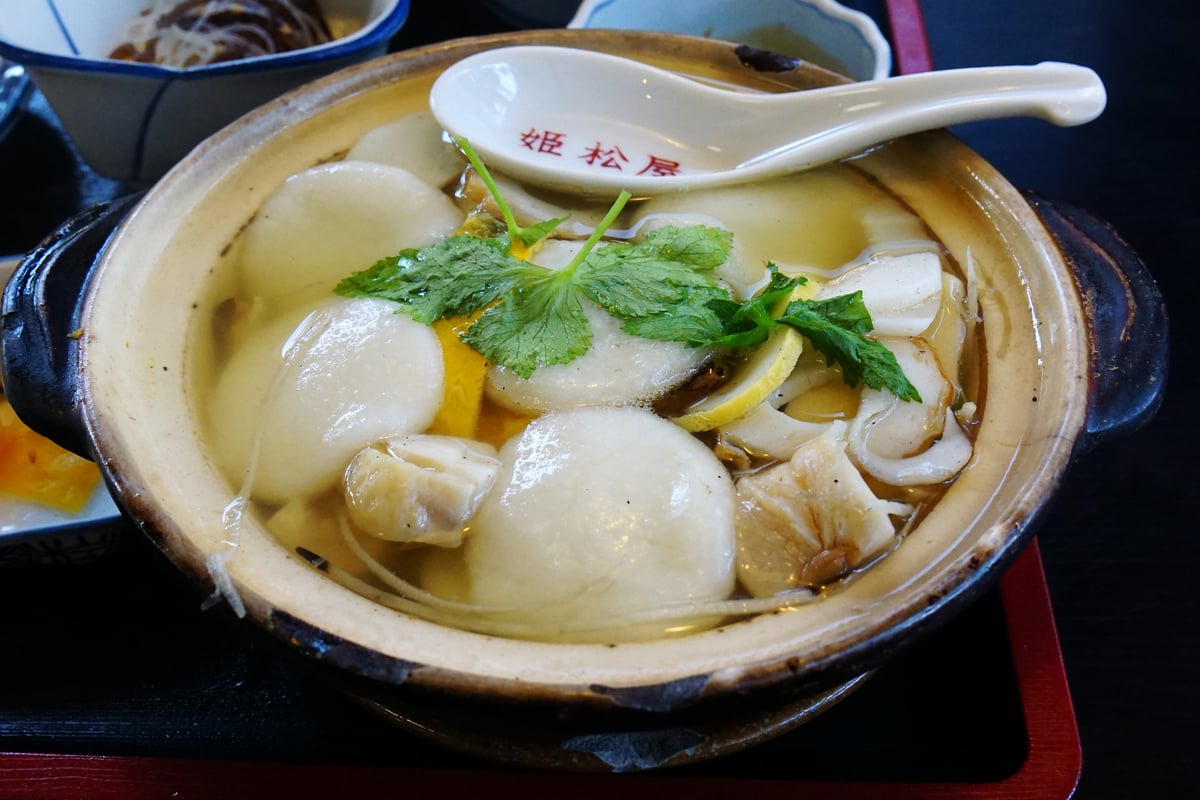
Shimabara guzoni is a zoni (mochi soup) packed with ingredients, handed down on the Shimabara Peninsula in Nagasaki Prefecture. Round mochi and many other ingredients, such as chicken, napa cabbage, burdock root, dried shiitake mushrooms and koya-dofu (freeze-dried tofu), are put into dashi broth, cooked in an earthenware pot and eaten straight from it. Some households also add grilled conger eel or tamagoyaki (rolled omelet). A well-known story of its origin is the legend of the Shimabara Rebellion, which began in 1637. It is said that when Amakusa Shiro and his followers were holed up in a castle, they boiled their stored mochi together with the bounty of the mountains and sea and ate it to build up their strength, and that this was the beginning. The first restaurant to serve guzoni is said to have been Himematsuya (姫松屋) in Shimabara, and this is said to have been in 1813 (Bunka 10). Locally, it has been eaten at New Year and on festival days. In 2007, it was selected as one of the Ministry of Agriculture, Forestry and Fisheries' '100 Selected Local Dishes of Farming, Mountain and Fishing Villages', and it is now a Shimabara specialty that can be enjoyed all year round.
Origin
According to the Ministry of Agriculture, Forestry and Fisheries, the beginnings of guzoni are said to go back to the Shimabara Rebellion, which broke out in 1637 (Kan'ei 14). The commander-in-chief, Amakusa Shiro, held out in a castle together with about 37,000 Kirishitan (Christians) and others. It is said that during this time they boiled their mochi provisions together with the bounty of the mountains and the sea and ate it, building up their physical and mental strength to prepare for the long battle. The castle where they held out was Hara Castle (in present-day Minamishimabara City), and the uprising was suppressed by the shogunate's army the following year, 1638.
History
Himematsuya, a restaurant in Shimabara, is said to have first served guzoni in 1813 (Bunka 10) and calls itself the 'ganso' (originator). It is said to have created the dish by changing the seasoning of the food from the Shimabara Rebellion. At home it was a dish eaten on auspicious days such as New Year and festivals, but as it became a local specialty, restaurants began serving it regardless of the season. In 2007 (Heisei 19), it was selected as one of the Ministry of Agriculture, Forestry and Fisheries' '100 Selected Local Dishes of Farming, Mountain and Fishing Villages'.
Features
Its hallmark is that the ingredients are cooked in dashi broth in an earthenware pot, and the pot is brought to the table as is. It is known as a zoni packed with ingredients made in an earthenware pot, which is rare even nationwide. The ingredients vary from household to household; round mochi, chicken, napa cabbage, carrots, burdock root, dried shiitake mushrooms and koya-dofu are common. Kamaboko (fish cake), grilled conger eel and tamagoyaki are sometimes added. A method of cooking the mochi in a separate pot before adding it has been introduced.
Main Ingredients
Food Culture
In households on the Shimabara Peninsula, guzoni has been eaten on auspicious occasions such as New Year and festival days. As a local dish representing the prefecture, it is sometimes served in school lunches. Many tourists are said to visit Shimabara for the purpose of eating guzoni.
How It Differs from Home Cooking
Home-made guzoni varies from household to household in both ingredients and seasoning. A recipe from the Nagasaki Dietetic Association combines kombu and katsuobushi (dried bonito flakes) dashi with the water used to rehydrate dried shiitake mushrooms, and also adds chikuwa (tube-shaped fish cake), satsuma-age (fried fish cake), lotus root and mizuna greens. Himematsuya serves it as a dish with 13 kinds of ingredients in a bonito and soy sauce broth.
Famous Shops
元祖 具雑煮 姫松屋本店
長崎県島原市城内1-1208-3
The restaurant said to have first served guzoni in 1813, located near Shimabara Castle. Its bonito and soy sauce broth contains 13 kinds of ingredients, including burdock root, shiitake mushrooms, mochi, kamaboko and conger eel. A travel guide lists guzoni at 1,300 yen. It is closed on the second Tuesday of the month. Prices are subject to change.
View details →| 島原工房 Guzoni Set | A frozen product by 大光食品 (Daiko Foods) in Shimabara City that recreates Shimabara's specialty guzoni. It is an assortment of five bags, each a 465g single serving of 275g soup, 150g ingredients and 40g mochi. The ingredients include napa cabbage, shiitake mushrooms, chicken, burdock root and kamaboko. It is offered as a return gift for Shimabara City's furusato nozei (hometown tax donation) program.Where to buy →PR |
|---|
FAQ
Q. Is it true that Amakusa Shiro made guzoni?
A. It is a story told as a legend and has not been confirmed by historical documents. Also, some tourist information says they 'held out in Shimabara Castle', but the castle where the insurgents held out was Hara Castle. Hara Castle is in present-day Minamishimabara City and is a different castle from Shimabara Castle in Shimabara City.