Image: Wikimedia Commons
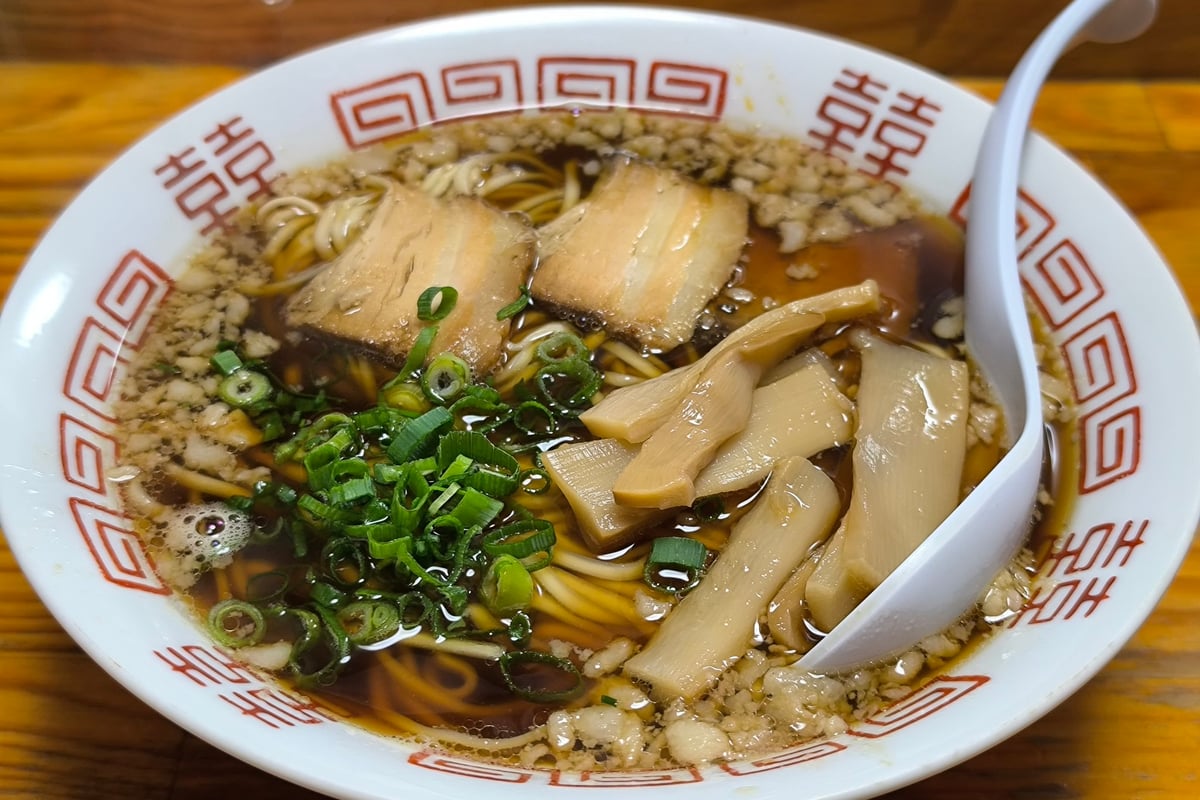
Onomichi Ramen is a local ramen (gotochi ramen) eaten mainly in Onomichi City, Hiroshima Prefecture. Its basic form is said to be a clear, soy sauce-based soup topped with minced pork back fat and paired with flat noodles. Many shops make the soup mainly from chicken bones (torigara), combined with seafood stock such as niboshi (dried small fish) from the Seto Inland Sea. Although the back fat adds sweetness and richness, its appeal is an aftertaste lighter than it looks. In Onomichi, a noodle dish called 'chuka soba' has long been popular at food stalls and diners. The name 'Onomichi Ramen' spread nationwide from the 1990s onward, and the sale of souvenir ramen is said to have been one of the triggers. Around Onomichi Station and in the shopping streets, long-established and new shops alike gather, and it is popular with tourists strolling this town of slopes and temples. Each shop has its own distinctive soup and noodles, and there are also shops serving old-fashioned chuka soba without back fat.
Origin
There are various theories about the beginnings of ramen in Onomichi. One theory holds that it began in 1928 (Showa 3), when a man named Zhang (張) from Fujian Province, China, sold it while going around with a street stall. On the other hand, another widely known theory traces its origins to the chuka soba served at a food stall around 1947, after the war, by Zhu Ajun (朱阿俊), who was from Taiwan. Zhu's stall later became a shop, 朱華園 (Shukaen), which gained popularity with its bowls of soy sauce soup and flat noodles topped with back fat.
History
The flavor of 朱華園 influenced other shops in the city and is said to have become one archetype of Onomichi chuka soba. In the 1990s, 阿藻珍味 (Amo Chinmi), a food maker in Tomonoura, Fukuyama City, launched a souvenir 'Onomichi Ramen' combining chicken-bone soup with stock from small Seto Inland Sea fish. This prompted an increase in shops of the same style, and the name became known nationwide. 朱華園 closed in 2019, but the following year, in 2020, relatives of its owner opened '朱' (Shu).
Features
Many shops make the soup mainly from chicken bones, combine it with stock from small Seto Inland Sea fish such as iriko (niboshi) and muroaji (mackerel scad), and season it with soy sauce tare. Some shops also add pork bones, kombu or katsuobushi (dried bonito flakes). The back fat floating on the surface is pork back fat minced into small pieces, and it adds sweetness and mellowness to the soup. Medium-thin flat noodles are common, but some shops use thin straight noodles.
Main Ingredients
Food Culture
Long-established shops in Onomichi often serve it under the name 'chuka soba,' and some shops serve 'tempura chuka' topped with kakiage (mixed tempura fritter). Many shops calling themselves Onomichi ramen are also found in the surrounding area, such as neighboring Fukuyama City, and some argue it should be called 'Onomichi-Fukuyama ramen.'
Famous Shops
つたふじ 本店
広島県尾道市土堂2丁目10-17
A chuka soba shop on the Onomichi Hondori shopping street, said to have started as a food stall and to have a history of more than 60 years. It is known for its mild soy sauce soup with seafood stock, and a travel information site (updated 2024) lists chuka soba (regular) at 650 yen. It is a small shop with 11 counter seats and is said to close once sold out.
めん処みやち
広島県尾道市土堂1丁目6-22
A long-established shop said to have been in business for more than 70 years, known for its light yet rich soup. Its signature menu item is 'tempura chuka' topped with kakiage, and a travel information site (updated 2024) lists the regular size at 780 yen.
中華そば 朱
広島県尾道市十四日元町6-16
Known as a shop that carries on the flavor and menu of 朱華園, which closed in 2019, it is located near Onomichi City Hall. Besides chuka soba, it also offers wonton noodles and yakisoba, and it is also well known for serving chuka soba soup with its yakisoba.
| 阿藻珍味 Onomichi Ramen | Shelf-stable fresh ramen made by 阿藻珍味 (Amo Chinmi), a food maker in Tomo Town, Fukuyama City. It comes with a light soy sauce-flavored soup made with stock from small Seto Inland Sea fish. It can be bought at souvenir shops in Onomichi and Fukuyama as well as by mail order, and a four-serving pack is listed at about 1,200 to 1,400 yen depending on the retailer. |
|---|
FAQ
Q. Which shop is the original Onomichi ramen?
A. It is said to be difficult to settle on one. There are said to be two lineages: one rooted in 朱華園, which began as a postwar food stall, and one rooted in 阿藻珍味, which spread the name through souvenir ramen in the 1990s. It is also said that today, 'Onomichi ramen' in general usage often refers to the latter lineage.