Kishu Umeboshi (Kishu Pickled Ume Plums)
Kishu Umeboshi (Kishu Pickled Ume Plums)
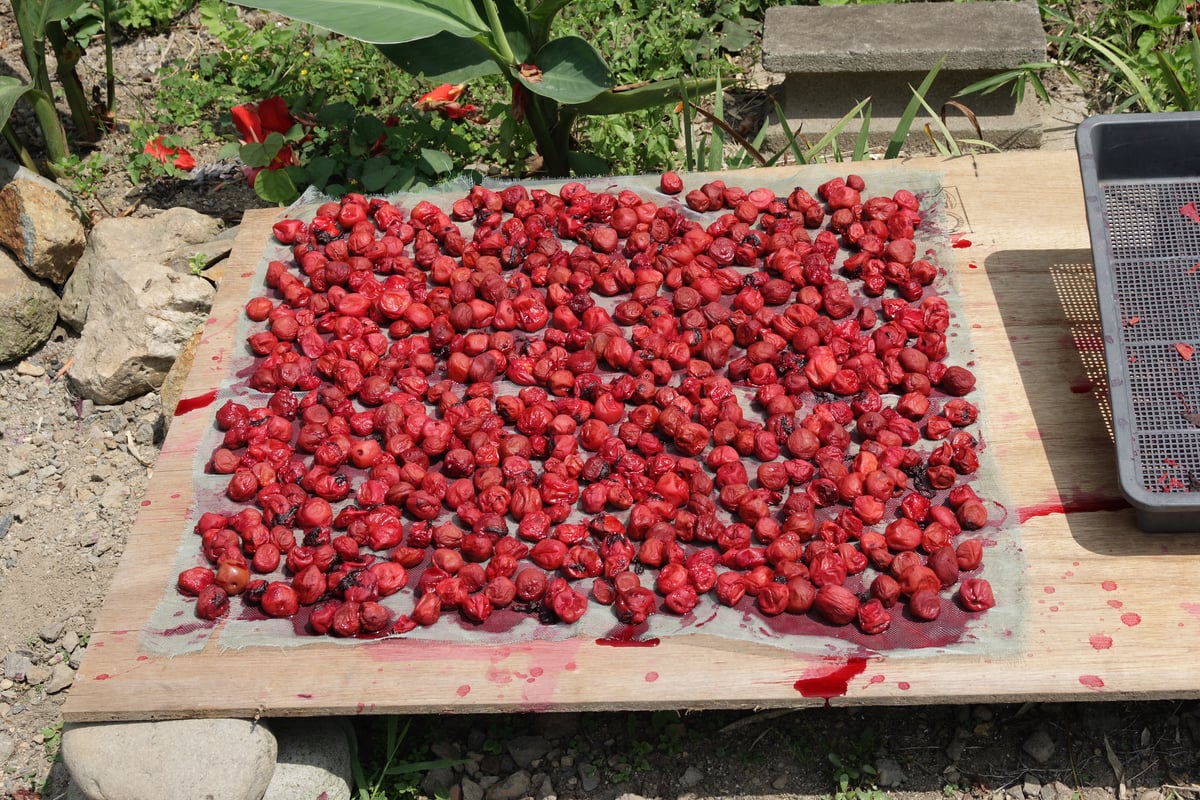
Image: Wikimedia Commons
Kishu umeboshi are umeboshi (pickled ume plums) made in Wakayama Prefecture. Wakayama Prefecture is Japan's leading ume-producing area, accounting for about 60% of the national harvest, with Minabe Town and Tanabe City at its center. The representative variety, Nanko ume, is large and fleshy, and when made into umeboshi it takes on a soft, melt-in-the-mouth texture. Ume cultivation in this area is said to have spread in the Edo period, on land with much poor soil and many slopes, thanks to encouragement and protection by 安藤直次, a chief retainer (karo) of the Kishu Domain. The harvested ume are pickled in salt and finished by drying them in the summer sun. The agricultural practice of combining ume orchards with coppice forests for firewood and charcoal on mountain slopes and making use of pollination by Japanese honeybees is called the 'Minabe-Tanabe Ume System.' This system was recognized as a Globally Important Agricultural Heritage System (GIAHS) in 2015. In recent years, many sweeter, lower-salt umeboshi have also been made.
Origin
The Minabe-Tanabe area has many slopes and soil poor in nutrients, so it was land unsuited to rice growing. According to the Ministry of Agriculture, Forestry and Fisheries, ume cultivation began in the Kishu Domain during the Edo period, and in the early 17th century the chief retainer 安藤直次 set about encouraging and protecting it. Because poor land that yielded no rice was exempt from the annual rice tax, it is also said that farmers in Tanabe, struggling under heavy taxes, planted ume. There is also a story that it began with the cultivation of 'yabu-ume' (wild ume) that grew naturally in the mountains.
History
In the Meiji period, demand for umeboshi rose because of epidemics and their use as military rations in the First Sino-Japanese War and the Russo-Japanese War. In 1902 (Meiji 35), the '高田梅,' which bears large fruit, was found among seedlings planted by 高田貞楠 in the former Minabegawa Village. In 1950 (Showa 25), a survey of superior mother trees began, and a group including 竹中勝太郎, a teacher at Minabe High School, spent five years selecting it as the finest variety. It is said to have been named 'Nanko ume' (南高梅) after '高田梅' and Minabe High School (南部高校), and registered in 1965 (Showa 40).
Features
Nanko ume have large fruit and thin skin, and the pit is fairly small for the size of the fruit. To make umeboshi, the sorted ume are pickled in salt on the same day and left for about 30 days. They are then dried in the summer sun for about three to four days, washed and sorted, and then seasoned. In addition to traditional 'shiraboshi' pickled with salt alone, in recent years, with growing interest in reducing salt, many sweet seasoned umeboshi with a salt content of 10% or less have been made.
Main Ingredients
Food Culture
Umeboshi are eaten every day as an accompaniment to rice, as a filling for rice balls, and as a snack with tea. In Wakayama, they are also used as a seasoning in dishes such as ume-ae (foods dressed with ume) and ume-ni (foods simmered with ume). They are sometimes used as a filling in mehari zushi from the Kumano region, and they are an indispensable part of Kishu dining.
Famous Shops
道の駅みなべうめ振興館
和歌山県日高郡みなべ町谷口538-1
A michi-no-eki (roadside station) in Minabe Town, Japan's top ume-producing town. It has exhibits where you can learn about the history and characteristics of ume through video and audio, and admission is free. The local specialty shop on the third floor offers a wide selection of umeboshi made with Nanko ume from Minabe Town.
紀州梅干館
和歌山県日高郡みなべ町山内1339
A facility attached to an umeboshi factory, where you can tour the production process. Panel exhibits introduce the history and benefits of ume, and umeboshi and other ume products can be bought at the direct sales shop. There is also a reservation-only 'My Umeboshi Making Experience' (270 g, about 2,500 yen), which you can join even on your own. Admission is free.
| 中田食品 'Umeboshi Inakazuke' | Umeboshi from 中田食品 of Tanabe City, which was founded as a rice merchant in 1897 (Meiji 30) and moved into ume processing in the Taisho period. Made with Kishu Nanko ume, they keep the salt content to about 6%. Prices vary by quantity, with products from about 2,000 yen. |
|---|
FAQ
Q. Are 'Kishu umeboshi' and 'Nanko ume' the same thing?
A. Kishu umeboshi refers to umeboshi made in Wakayama Prefecture in general, while Nanko ume is the name of an ume variety. Umeboshi made from Nanko ume are typical of Wakayama, but some are made with other varieties. The name Nanko ume comes from '高田梅' and Minabe High School (南部高校), which helped select the variety.