Taruto (Yuzu Bean Paste Sponge Roll)
Taruto (Matsuyama Castella Roll with Yuzu Bean Paste)
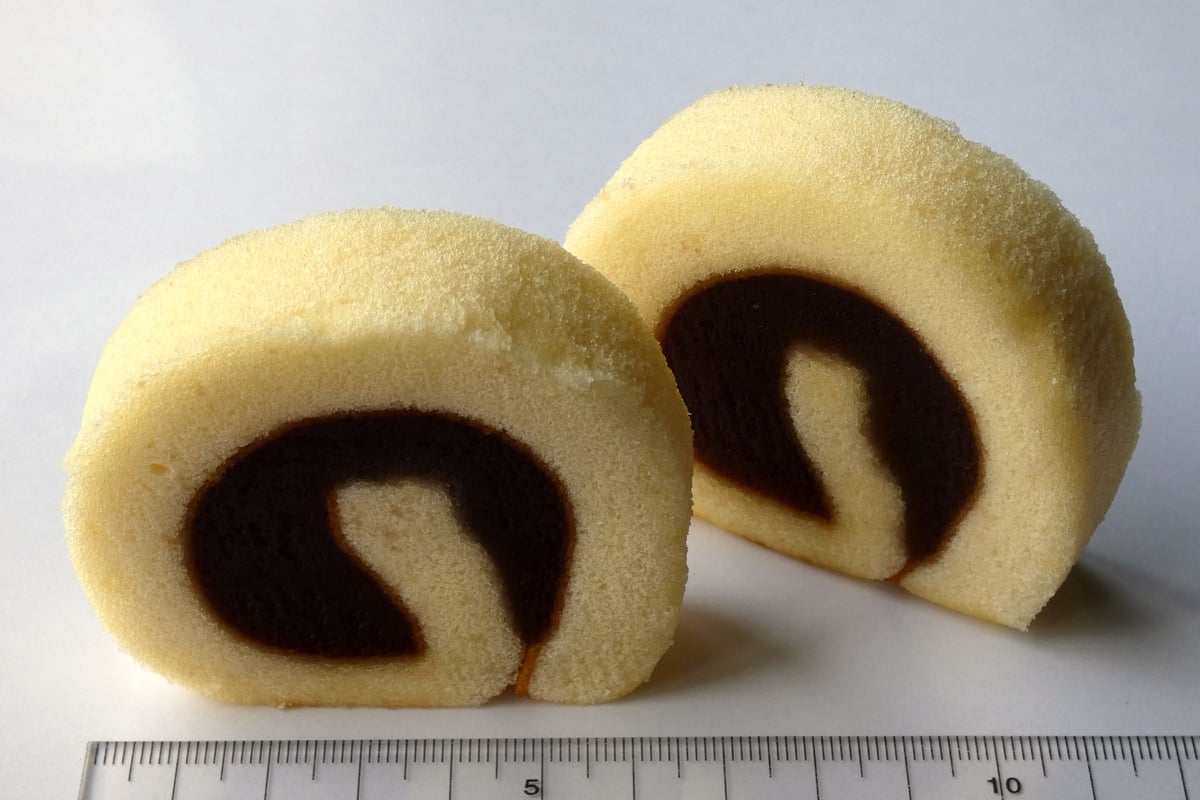 1 / 2
Image: Wikimedia Commons
Taruto is a confection representative of Matsuyama City, Ehime Prefecture. Shaped like a roll cake, it consists of soft castella sponge wrapped around smooth red bean paste (koshi-an) containing yuzu. A distinctive feature is that the swirl of bean paste in the cut surface looks like the hiragana character 'の' (no). It is said to have begun in 1647 (Shoho 4), when Matsudaira Sadayuki, the first lord of the Matsuyama domain, encountered a Nanban (European-style) confection called a tart in Nagasaki and brought its recipe back to Matsuyama. What he ate in Nagasaki was rolled around jam, and the bean paste filling is thought to be Sadayuki's own idea. The recipe became a family secret of the Hisamatsu family and spread to confectioners in Matsuyama from the Meiji period onward. Today it is made by many shops not only in Matsuyama City but throughout the prefecture, with 一六本舗, 六時屋, ハタダ and others each selling their own taruto. Depending on the season, some products use cherry blossom, amanatsu citrus or chestnut, and it is enjoyed as a sweet to serve with tea, a souvenir and a gift.
Origin
According to materials from 一六本舗, in 1647 (Shoho 4) Matsudaira Sadayuki, who also held the post of Nagasaki tandai, received word that two Portuguese ships had entered Nagasaki and took charge of guarding the coast. At that time he is said to have tasted the Nanban confection called a tart and brought its recipe back to Matsuyama. One theory holds that the name comes from the Dutch word 'taart' or the Portuguese 'torta,' both meaning cake.
History
The tart in Nagasaki was castella rolled around jam, and today's bean paste version is said to be Sadayuki's invention; it is also said that he added yuzu, a specialty of Shikoku, to give it a Japanese flavor. The recipe was guarded as a family secret of the Hisamatsu family and was passed on to Matsuyama confectioners (kashi-tsukasa) from the Meiji period onward. Many shops, starting with 一六本舗 founded in 1883 (Meiji 16), came to make it, and it grew into one of Shikoku's representative famous confections.
Features
Castella sponge baked from eggs and wheat flour is rolled around yuzu-scented smooth bean paste, then cut into slices to eat. The 'の'-shaped swirl in the cross section is its signature look. The flavor of the bean paste varies from shop to shop; some contain chestnuts, and there are also seasonal limited editions with cherry blossom or amanatsu bean paste. At some shops, craftspeople roll each log by hand. Besides whole rolls, many products are sold pre-sliced and individually wrapped.
Main Ingredients
Food Culture
It is eaten year-round and enjoyed as a sweet served to guests with tea, a souvenir and a gift. Handed down since the Edo period, taruto is now established not only in Matsuyama City but throughout Ehime Prefecture, and it can be bought at department stores across Japan and at some expressway service areas.
Famous Shops
一六本舗 勝山本店
愛媛県松山市勝山町2丁目8-1
A confectioner founded in 1883 (Meiji 16), whose name comes from its founding year. Its signature 'Ichiroku Taruto' wraps smooth bean paste made with Ehime-grown yuzu in soft sponge. It also has shops in front of Dogo Onsen Honkan, on Okaido and in Imabari City, among other places.
View details →六時屋 道後店
愛媛県松山市道後湯之町14-22
A long-established taruto maker founded in 1933 (Showa 8). Its name refers to 6 o'clock, when the hands of a clock form a straight line, and is said to express the wish to do business in a straightforward, honest way. Craftspeople roll each log by hand using house-made bean paste from Hokkaido azuki beans, and a 2021 article listed one small taruto at 756 yen.
ハタダお菓子館
愛媛県東温市牛渕1008-1
A facility of ハタダ, a confectionery maker headquartered in Niihama City. Visitors can watch the production line of its signature Kuri Taruto (chestnut taruto) through glass for free. The 'Kuri Taruto Dojo,' where you roll chestnut bean paste in sponge yourself, is reported to cost 1,200 yen and to require advance reservations.
FAQ
Q. Is it different from a Western-style tart?
A. Matsuyama's taruto is a roll-cake-shaped confection of castella sponge wrapped around bean paste, and its form differs from a Western tart, in which a filling is placed in a shell of pastry or similar dough. The name is said to come from the Dutch word 'taart' or the Portuguese 'torta,' both meaning cake.