Image: Wikimedia Commons
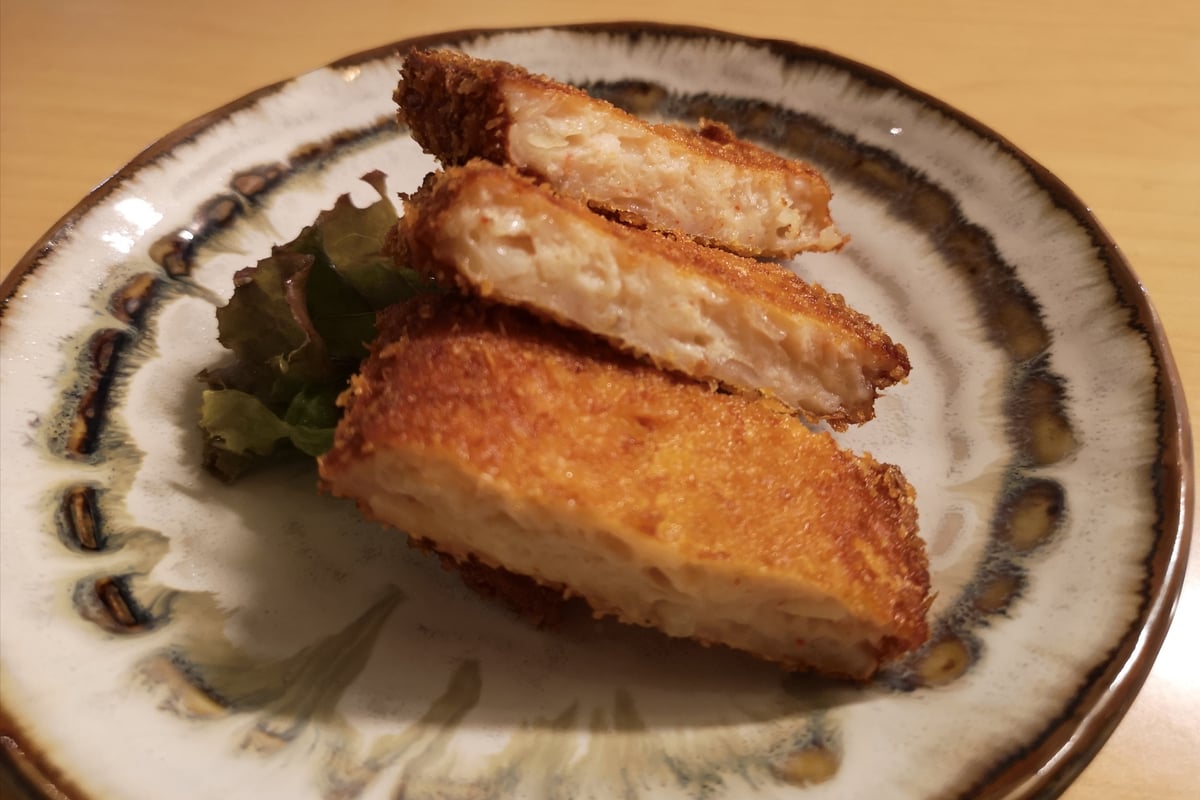
Gansu is a type of fried kamaboko (fish cake) loved in Hiroshima Prefecture. Fish paste (surimi) is mixed with chopped vegetables such as onion and with ichimi togarashi (ground red chili pepper), shaped into flat pieces, coated with panko breadcrumbs and deep-fried. Its appeal lies in the crunchy panko coating and a tangy heat that keeps you reaching for more. It is made in Kure City, parts of Nishi Ward in Hiroshima City, Osakikamijima and elsewhere, and is sold every day in local supermarkets. Besides being eaten as is or lightly grilled, it also serves as a snack with drinks or a side dish with rice. The name is said to come from a polite expression in the Hiroshima dialect. For a long time it was known only locally, but thanks in part to manufacturers' promotional efforts it has become known outside the prefecture, and today it is also popular as a Hiroshima souvenir.
Origin
Gansu is said to have first been made as a way to use up the leftover fish paste from kamaboko making. 三宅水産 (Miyake Suisan) of Kure City explains that it began in the Showa 20s, when leftover surimi was combined with onion and ichimi togarashi. However, there are several theories about who gave it its name, including the question of whether a kamaboko shop in Nishi Ward, Hiroshima City, or one in Hiro, Kure City, came first.
History
For a long time, gansu was a local food enjoyed in Kure City and the surrounding area. As consumption of kamaboko slumped after the collapse of the bubble economy, 三宅水産 stepped up its promotion from the mid-2000s, centered on face-to-face sales at supermarkets, stations and other venues. According to Hiroshima City's introduction of certified products, nearly 20 years of nationwide promotion made gansu so well known that people spoke of a 'gansu boom,' and it grew into the company's main product. Today there are also manufacturers outside Hiroshima Prefecture, such as in Ehime Prefecture and in Iwakuni City, Yamaguchi Prefecture.
Features
Gansu is often made rectangular and fairly thin, and is characterized by the toasty aroma and crunchy texture of panko fried golden brown. The sweetness of the onion kneaded into the surimi combines with the heat of ichimi togarashi. Some manufacturers make thicker versions. Besides being grilled, it is also simmered and bound with egg and used as a topping for rice bowls and noodle dishes. It is said, however, that gansu culture has not taken root much in the Bingo area in the east of the same Hiroshima Prefecture.
Main Ingredients
Famous Shops
三宅ShoP(三宅水産 直売店)
広島県呉市広古新開6丁目16-2
The direct sales shop of 三宅水産 (Miyake Suisan), a long-established maker of fish-paste products founded in 1950. Alongside its flagship product 'Umai de Gansu' (うまいでがんす), a wide variety of fish-paste products are on offer. Its official website states that it is closed on Sundays and Tuesdays.
View details →| 三宅水産 'Miyake no Umai de Gansu' (みやけのうまいでがんす) | Gansu made by 三宅水産 (Kure City), certified as Hiroshima City's 'The Hiroshima Brand' (ザ・広島ブランド). White fish surimi is kneaded with onion and chili pepper. The introduction of certified products lists a two-piece pack at 292 yen (tax included), and it is sold at Hiroshima Station, Kure Station, Miyajimaguchi Station, Hiroshima Airport, ひろしまブランドショップTAU (Hiroshima Brand Shop TAU) and elsewhere. |
|---|
FAQ
Q. What does the name 'gansu' mean?
A. 'Gansu' is a polite expression in the Hiroshima dialect, used toward one's superiors and equivalent to '-desu' or '-de gozaimasu' (it is). 三宅水産's product name 'Umai de Gansu' means something like 'oishu gozaimasu' (it is most delicious). The company explains that it chose the name to borrow the good associations of this polite expression, while hoping the product would become a familiar part of everyday meals.